


HARARE – In the bustling heart of Zimbabwe’s capital, Harare, along the prominent Samora Machel Avenue, stands the Reserve Bank of Zimbabwe (RBZ) – a symbol of national financial stability, and the nation’s most protected bank. Yet, within its very highly secured walls, a tale of desperation, theft, and the insidious grip of a digital addiction recently unfolded, casting a stark light on a growing national crisis.
This is the story of Petsi Napwaro, a 44-year-old general hand, whose life unravelled after he allegedly stole a significant sum from his workplace, not for survival, but to feed an insatiable hunger for the online betting game known as aviator, but popularly known in Zimbabwe as “Kandege”. His story is not an isolated incident but a chilling reflection of a wider societal tragedy gripping Zimbabwe, where the allure of quick riches in the digital realm is leading many down a path of ruin.
The Fall of a Bank Worker: Petsi Napwaro’s Desperate Gamble
The events that led to Napwaro’s downfall began on 25 April 2026. At approximately 09:30 hours, the Assets Manager, Benard Kenneth Chitenje, secured his office at the RBZ headquarters, leaving US$1,500 belonging to the institution in a drawer. What followed was a breach of trust and security that exposed a vulnerability far greater than a mere physical lapse. Napwaro, seizing an opportunity presented by a slightly ajar window, used a chair to gain unauthorised entry into the office. Once inside, he took the US$1,500 and vanished unnoticed.
The theft was swiftly discovered upon Chitenje’s return, triggering a police investigation that quickly led to Napwaro’s arrest. Under questioning, he confessed to the crime, revealing the devastating truth behind his actions. He had not stolen the money for personal gain in the traditional sense, but to fuel his addiction to Aviator betting, commonly referred to as “Kandege.” He admitted to having “already exhausted the stolen money through betting… using Tanatswa Honde’s and Lennon Masotha’s accounts”. This admission painted a picture of a man ensnared by a digital trap, desperate to recover his losses, or perhaps, to chase an elusive big win. Despite the money later being recovered, the court found Napwaro’s actions unlawful and deserving of a custodial sentence. He was handed a 57-month prison term, with 12 months suspended for five years and a further 10 months suspended on condition of restitution, leaving him with an effective 36 months behind bars.
Napwaro’s case brings into sharp focus not only the individual tragedy of addiction but also potential security vulnerabilities within a critical national institution. The ease with which a general hand could access a manager’s office, even through a window, raises questions about the robustness of internal security protocols at the Reserve Bank of Zimbabwe.
The Digital Plane That Never Lands: Understanding “Kandege” Addiction
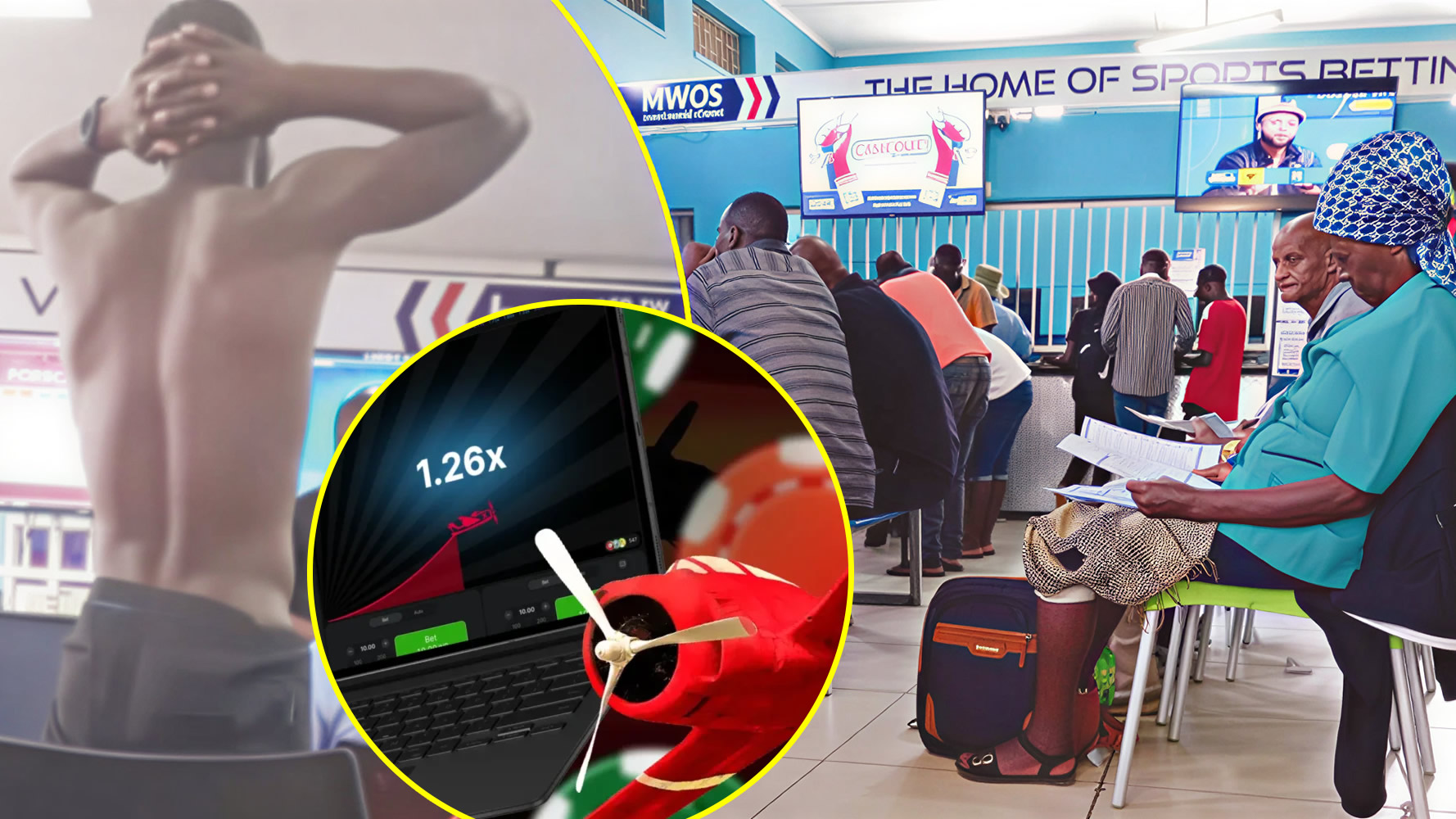
“Kandege,” or Aviator, is an online game developed by Spribe that has rapidly gained popularity across the globe, including in Zimbabwe. It is a social multiplayer game where players place bets on a virtual plane that takes off and flies higher and higher. A multiplier counter begins at 1x as soon as the plane starts its ascent, increasing as time progresses. The core mechanic is simple yet profoundly addictive: players must cash out their bets before the plane flies off the screen, which can happen at any unpredictable moment. The uncertainty of when the plane will disappear is precisely what fuels the game’s intrigue and its addictive nature.
The psychological underpinnings of “Kandege” are well-documented in the study of gambling addiction. The game masterfully employs several behavioural psychology tactics to keep players hooked. One such mechanism is the “near-miss” effect, where outcomes that are close to a win are perceived as more encouraging than complete losses, prompting players to continue in the belief that a win is imminent. This creates a powerful illusion of control, making individuals feel they can predict or influence the game’s outcome, despite its entirely random nature.
Another critical factor is variable ratio reinforcement, a schedule of reinforcement in which a response is reinforced after an unpredictable number of responses. This is the most effective schedule for maintaining behaviour, as the unpredictability of rewards keeps the player engaged and constantly anticipating the next win. The social multiplayer aspect further intensifies the addiction, as players witness others winning (or losing), fostering a sense of competition and a fear of missing out. Even individuals considered “smart” or rational can fall prey to these sophisticated psychological traps, as the game is designed to bypass logical reasoning and tap directly into primal reward systems in the brain.
A Trail of Tragedy: Lives Lost and Futures Shattered
Petsi Napwaro’s story, while significant, is merely one thread in a larger tapestry of despair woven by the “Kandege” curse across Zimbabwe. The game has left a devastating trail of financial ruin, broken families, and, in some tragic instances, loss of life. The human cost of this gambling epidemic is becoming increasingly apparent.
One of the earliest and most heart-wrenching casualties was Claude Jele, a 38-year-old police officer stationed in Gweru. In March 2025, Jele took his own life after losing a staggering US$3,000 on “Kandege,” money he had borrowed in a desperate attempt to chase his sports betting dream. He ingested an unidentified poison, leaving behind a poignant suicide note that laid bare his torment. In his final words, Jele wrote: “Having survived all these 38 years, I have reached a point where I feel like it’s all the same being on this earth or leaving. So, please do not accuse anyone or anything, it’s my personal decision to end my life this way”. He also sought forgiveness from his family and implored others not to cast blame upon his wife, attributing his tragic decision to his perceived failures in life. A source close to the matter, quoted by H-Metro, revealed the depth of his despair: “Officer vakakwereta mari ikanyudzwa nekandege. Zvavaremera kudzosa uye kuwana counseling kwakuzvitorera upenyu”.
Just under a year later, in February 2026, the community of Dzivarasekwa Extension in Harare was plunged into mourning following the suicide of 20-year-old Ashley Patrick Magarira. His young life was cut short after he lost US$800, money that was earmarked for his brother’s school fees, to the relentless grip of “Kandege”. This incident underscored the vulnerability of younger generations to the allure of online betting and the devastating consequences that can ripple through entire families and communities.
The epidemic is not limited to those who succumb to the ultimate despair. It also drives individuals to desperate acts of crime. William Gonese, a 28-year-old shift manager at Bakers Inn in Chitungwiza, found himself on the wrong side of the law in January 2025. He stole US$3,420 from his workplace during a single night shift, confessing to Harare magistrate Lynne Chinzou that he had lost the entire sum on “Kandege.” His motive, as he reportedly stated, was to “please his new lady”. Gonese’s case, like Napwaro’s, illustrates the destructive cycle where addiction leads to theft, further entrenching individuals in a web of legal and financial woes.
The National Epidemic: A Society Under Siege
The individual tragedies of Napwaro, Jele, Magarira, and Gonese are symptomatic of a much larger national crisis. Gambling addiction is rapidly becoming a significant mental health concern in Zimbabwe, with profound psycho-social impacts on individuals, families, and the broader society. Social workers and health authorities have reported a noticeable increase in gambling-related mental health issues, family conflicts, and financial instability.
The scale of the problem is reflected in the burgeoning gambling industry itself. In 2023, Zimbabwe’s gambling sector generated an estimated US$120 million in revenue, a figure that highlights the widespread engagement with betting platforms. The proliferation of online betting, particularly games like “Kandege,” has made gambling more accessible than ever, blurring the lines between entertainment and addiction.
In response to the escalating crisis, the Zimbabwean government has begun to implement measures, albeit with varying degrees of effectiveness. In 2026, new tax increases were introduced, with bookmakers now facing a 20% tax and bettors a 25% tax on winnings. While intended to generate revenue and potentially curb excessive gambling, the effectiveness of such fiscal measures in addressing the root causes of addiction remains a subject of debate. Furthermore, in July 2025, the Zimbabwe Republic Police (ZRP) issued a directive prohibiting uniformed police officers from entering betting shops or participating in gambling activities. This move, while aimed at maintaining discipline and public trust, implicitly acknowledges the pervasive nature of the problem, even within law enforcement agencies.
The rise of the “betting generation” has also led to a noticeable breakdown in family cohesion. Gambling often leads to strained relationships, conflicts, emotional distress, and ultimately, social isolation for those caught in its grip. The focus of gambling authorities is increasingly shifting towards reducing the incidence and prevalence of harm associated with this growing societal challenge.
A Cautionary Tale: The Plane Always Flies Away
The story of Petsi Napwaro and the countless others affected by the “Kandege” curse serves as a potent cautionary tale. It reveals the “hidden life” of individuals who, despite holding positions of responsibility or having promising futures, can lose everything to the deceptive allure of online betting. The promise of easy money, the thrill of the near-miss, and the psychological design of these games create a potent cocktail that can dismantle lives with terrifying speed.
The “digital plane” of Kandege, with its ever-increasing multiplier, always flies away eventually, leaving behind a trail of shattered dreams and devastating losses. The incidents highlighted in this article – from the theft at the Reserve Bank of Zimbabwe to the suicides and financial ruin – underscore the urgent need for comprehensive strategies to combat gambling addiction. This includes not only stricter regulation of online betting platforms but also increased public awareness campaigns, accessible mental health support services, and robust security measures within institutions to prevent such desperate acts. Only through a multi-faceted approach can Zimbabwe hope to mitigate the devastating impact of this modern-day curse and protect its citizens from the clutches of a game designed to take everything.