


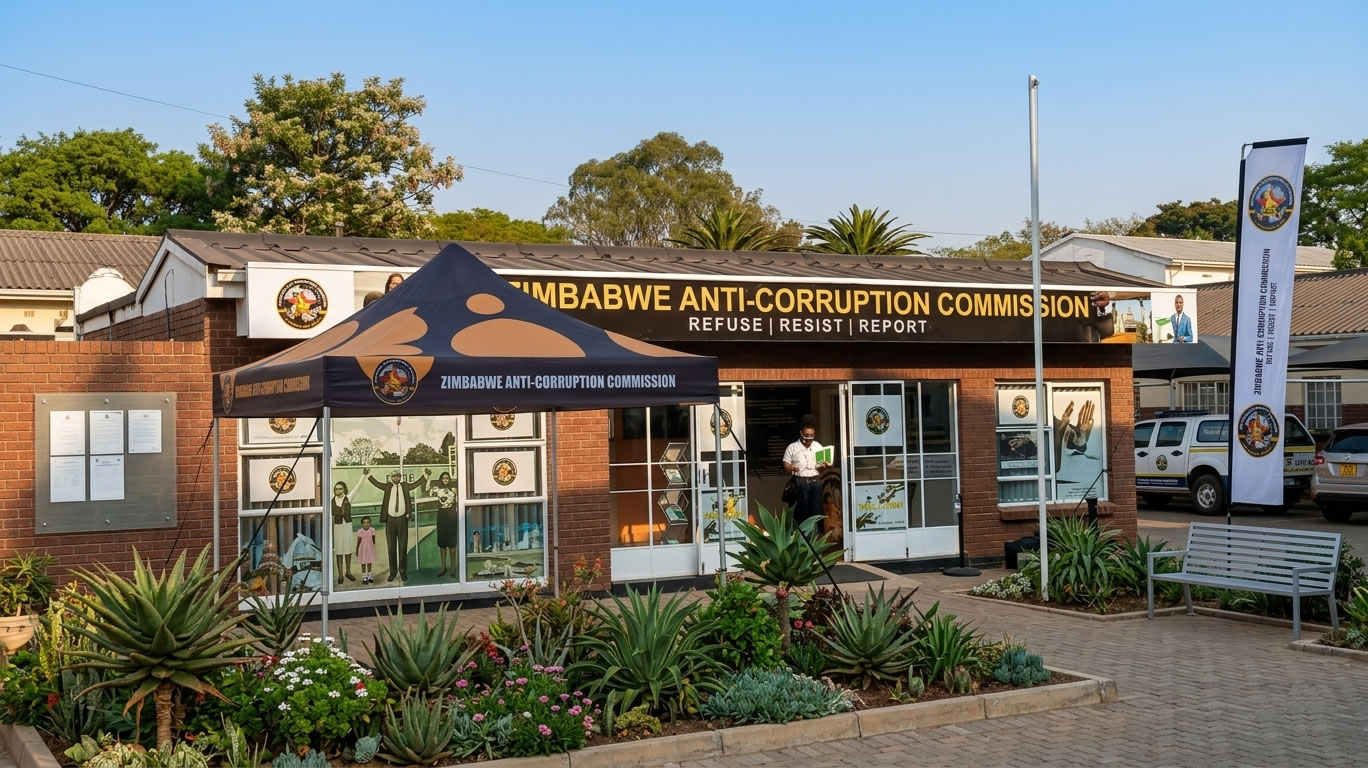
Zimbabwe’s anti-corruption commission is targeting US$10 million in asset recoveries by 2027 as the Government begins a new five-year campaign against graft, a drive launched as investigators pursue an alleged US$256,405 fraud involving a fishing-rig project in Binga.
The National Anti-Corruption Strategy 2, covering 2026 to 2030, was approved by Cabinet in November. It sets out a coordinated approach involving government agencies, businesses and the public, with ZACC expected to strengthen investigations and pursue the recovery of assets linked to corruption.
The strategy’s asset-recovery target comes as the commission investigates allegations that money intended for contractors building fishing rigs for communities in Binga was diverted. Binga Rural District Council chief executive Joshua Muzamba has reportedly been absent from work for several days and has not appeared in public as the inquiry continues.
Lovemore Siamuyi, the council’s executive officer for social services, was arrested on 10 November. Investigators have also called Binga North MP Chineka Muchimba to appear before the Zimbabwe Anti-Corruption Commission as the inquiry widens.
The cases are unfolding as the commission reviews its recent work. ZACC executive secretary Advocate Shepherd Manhivi said it had received 703 corruption reports and processed 231 dockets during 2026. Those investigations resulted in arrests and referrals to the National Prosecuting Authority, alongside 95 convictions.
“In 2026, we received 703 reports and processed 231 dockets. We then made arrests and referred cases to the NPA; 95 convictions were made. Our target for 2027 is to reach US$10 million in asset recovery,” Manhivi said.
The US$10 million target is set for 2027, within the wider strategy period that runs to 2030. The plan also calls for corruption prevention to sit alongside investigations and prosecutions, and for anti-corruption measures to be reflected in government work plans and budgets.
ZACC chairperson Michael Reza said the strategy was designed to improve co-operation among institutions and sectors.
“The strategy gives us a framework of cooperation and the idea of implementing a whole-of-government approach. It enables us to interact with society and other government agencies, the private and public sectors. The goal is the eradication of corruption, based on six pillars that include legal framework reforms, stronger institutions, effective Enforcement, and public engagement,” he said.
The six pillars are legal reform, stronger institutions, effective enforcement, public engagement, targeted action in high-risk sectors and digitalisation. The strategy also provides for results-based monitoring linked to national development plans.
The framework follows a period in which corruption investigations have included allegations over public money at different levels of government. In a separate case this month, six officials from the Ministry of Local Government and Public Works appeared in court over claims that they received duplicate travel and subsistence allowances for assignments connected to a nationwide audit of local authorities.
The six officials, including ministry chief director of local authorities Khonzani Ncube, were accused of claiming allowances from both the ministry and local authorities for the same work. The alleged claims were said to have prejudiced the State by more than ZiG300,000 and 10 local authorities by more than US$19,000. The officials were granted bail and the case was remanded to 24 November.
That case is separate from the Binga investigation, which centres on a Government-funded programme launched in 2021 through the Office of the President and Cabinet. The programme was intended to support fishing communities by building 21 fishing rigs, with Binga Rural District Council responsible for implementing it.
Three companies — Lweendo Ndulamfu Fisheries, Twiite Cooperative Society and Zangalili Better Investments — say they were deprived of payments due under the project. The combined amount under investigation is US$256,405.
The allegations centre on how contractors were selected and paid. Investigators say the council had been instructed by the Ministry of Local Government and Public Works to identify suitable companies to manufacture the rigs. Instead, Muzamba allegedly tasked Muchimba, who was involved in rig production, with coordinating the search for suppliers.
The project is alleged to have proceeded without a competitive tender or an exemption from the Procurement Regulatory Authority of Zimbabwe. Muchimba allegedly approached companies and told them he had been given authority to oversee the project and help arrange contracts.
The cost of each rig was initially estimated at about US$12,000, but investigators believe the amount later rose to US$26,000 per unit. In September 2021, representatives of the complainant companies travelled to Harare and reportedly received an initial US$15,250 each for building five rigs. Muchimba also received US$30,500 on behalf of two companies in which he was allegedly a co-director.
The contractors were told to carry out the work from premises linked to Muchimba. Investigators say the arrangement changed when he told the companies that funds would be paid into his personal Nostro account because they did not have similar foreign-currency banking facilities. The companies were reportedly persuaded to sign affidavits authorising the arrangement.
On 18 October 2021, the Office of the President and Cabinet allegedly released US$76,250 to Muchimba to distribute among the contractors. Investigators say the money was not passed on to them and was instead retained for personal use.
Siamuyi is accused of writing to the Office of the President and Cabinet to confirm that the companies had received their payments. The companies were later told they had been removed from the project because of alleged problems with their documents.
The complainants say they subsequently discovered that their contracts had not been cancelled. Investigators allege that Muchimba and Muzamba returned to the Government office on 3 November 2021 to seek more money, claiming the contractors had been underpaid. A further US$56,750 was allegedly released to Muchimba, who is accused of withholding that payment as well.
The investigation also concerns a transfer made in March 2023. An Office of the President and Cabinet employee, Paul Mutunzi, allegedly transferred US$123,405 into Muchimba’s foreign-currency account at AFC Commercial Bank for onward payment to the contractors.
The complainant companies later approached the Government office and were reportedly told that their contracts remained valid and that payments had continued to be made to Muchimba on their behalf. They lodged a formal complaint with ZACC in July 2026.
Siamuyi was arrested on 10 November and was being held at Binga Police Station, while ZACC’s inquiry continued. Muzamba’s reported absence and Muchimba’s role in the alleged handling of project funds have put senior council leadership and a serving legislator under scrutiny.
Under the new national strategy, ZACC is expected to pursue reforms to anti-corruption laws, strengthen oversight institutions, improve enforcement and expand public involvement. It also identifies vulnerable sectors for targeted action and promotes digital services and transparency tools intended to reduce opportunities for graft.
The commission has developed an implementation matrix to guide the work. Officials and stakeholders reviewed priorities, progress and gaps at a planning workshop in Masvingo, where the immediate tasks were aligned with the strategy’s longer-term objectives.
The recovery target gives the new framework a measurable enforcement goal for 2027. The Binga inquiry, meanwhile, concerns a specific public programme intended to provide equipment to fishing communities, and the alleged loss of more than US$256,000 from funds meant for its contractors.