
Motorists with unpaid traffic fines could soon be stopped at Zimbabwe’s tollgates as the Government moves to connect the electronic traffic management system to ZINARA’s tolling and vehicle records.
The measure is part of a wider expansion of automated road enforcement that will see highway and police patrol vehicles fitted with camera “enforcement bars” capable of scanning passing vehicles, identifying previous offences and alerting officers to stop them.
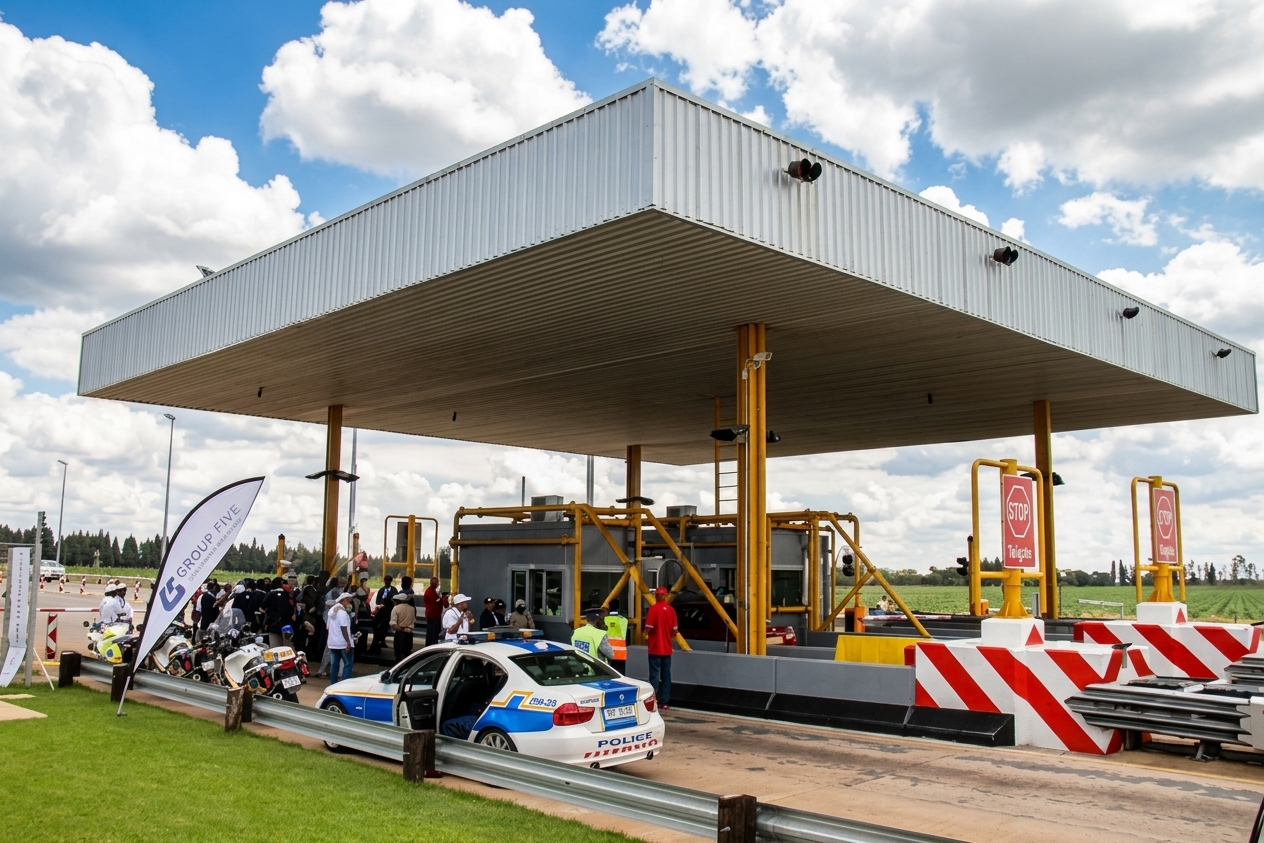
Home Affairs and Cultural Heritage Minister Kazembe Kazembe announced the tollgate plan during a strategic review workshop in Bulawayo on Monday. He said drivers would have to settle outstanding penalties before being allowed to continue through a tollgate once the systems are integrated.
“The Electronic Traffic Management System is working very well,” Kazembe said. “Our objective is to save lives. It is saving lives and dealing with corruption.”
He said the law had not changed and that the system was enforcing existing statutory fines rather than creating new offences. Each violation, he said, would continue to be dealt with according to its level, but technology would make it harder for motorists to avoid the consequences of repeated infringements.
“We are going to integrate with tollgates. When hit with a fine, the tollgate won’t let you pass,” he said. “We have seen people starting to drive responsibly. Phase 1 is done and more is coming.”
The proposed tollgate link will extend the consequences of an unpaid ticket beyond the point where it is issued. A motorist who ignores a notification could find the outstanding fine attached to the vehicle record and flagged when the vehicle reaches a tolling point. The system is also expected to draw on Central Vehicle Registry and ZINARA information, bringing together details used for traffic enforcement, vehicle licensing and road administration.
Authorities have already indicated that unpaid fines could affect the renewal of vehicle licences or road tax. The planned integration with tollgates would add another enforcement point on the country’s major roads, while the proposed patrol-car cameras would allow police to identify vehicles with a history of offences away from fixed intersections.
Patrol cars to scan vehicles on the move
The Zimbabwe Republic Police plans to deploy highway and police patrol vehicles equipped with camera enforcement bars. Mounted on patrol cars, the devices will scan registration plates as vehicles pass on highways and main roads. A vehicle linked to previous offences could be flagged for further action, allowing officers to stop it and check the record.
The mobile cameras are intended to extend the reach of the Smart Traffic Management System beyond fixed poles and intersection cameras. They will be particularly important on major routes where there are long stretches of road without permanent surveillance equipment.
The technology is expected to detect and record vehicles connected to offences such as speeding, disobeying traffic signals, illegal turns, driving against traffic, crossing continuous lines, using a mobile phone while driving, failing to wear a seatbelt and making illegal pick-ups or drop-offs.
The police system will not rely only on an officer’s immediate view of an offence. The patrol vehicle’s camera will capture the passing vehicle and its number plate, while the central system will compare the registration details with records held by the relevant authorities. Where a previous offence or unpaid penalty is found, police officers will be able to intervene on the road.
Officials have not announced a firm date for the deployment of the camera-fitted patrol vehicles. The plan comes as the Government prepares to move the smart traffic programme into more areas after the first phase was established in Harare.
Phase Two to reach highways and residential areas
Kazembe said Phase Two of the Smart Traffic Management System would expand surveillance cameras onto highways and into residential areas. The launch date has not yet been set, but the planned expansion will take the programme beyond the 20 sites already operating in Harare.
The first phase has focused on major intersections and roads in the capital. The cameras can record several categories of traffic offences, including speeding, running red lights, illegal turns, seatbelt violations, mobile-phone use and unlawful loading or unloading of passengers.
The wider programme has been designed in stages. After the initial 20 sites, officials have identified further locations for additional phases, with the stated aim of extending the system to other urban centres and major highways. Fixed cameras will continue to monitor intersections, while mobile enforcement bars will follow traffic along routes that cannot easily be covered by permanent equipment.
The system has already generated a large volume of records. Earlier figures showed more than two million detections in Harare, while police later said about 4.8 million flagged traffic violations were being reviewed during the validation process. A detection does not automatically become a payable fine. Control-room officers are required to examine the footage, registration number, time, date and location before a penalty is confirmed.
Police spokesperson Commissioner Paul Nyathi described the process in detail. “When we talk of validation, what do we mean? We mean that the videos are captured, the number plate is captured, and the date, time and place or site where a particular motorist would have violated the traffic regulations or road rules and regulations are recorded,” he said.
The review is intended to remove records where the camera captured a situation that did not amount to an offence. Officials have previously said officers must check factors such as whether a traffic light was working, whether a police officer was controlling an intersection or whether road markings were clear at the time of the incident.
Once a violation has been confirmed, registered vehicle owners are expected to receive an SMS or email notification. The message can include a link to photographs or video showing the offence, together with information on the amount due. Motorists can then check their records and pay through the official online platforms or at designated ZRP traffic stations.
Police have warned motorists to avoid third-party collection agents and to use official channels when checking or settling fines. The available online portals include paymyfines.co.zw, paymyfines.gov.zw, payfines.co.zw and payfines.gov.zw. Vehicle owners are also being urged to keep their registration details up to date so that notices reach the correct person.
Senator calls for lower penalties
The tougher enforcement programme has been accompanied by a fresh debate over the cost of traffic fines. Matabeleland South Senator Nonhlanhla Mlotshwa has called for ordinary penalties to be reduced from US$30 to between US$5 and US$10, arguing that the current amount is unaffordable for many Zimbabweans.
“In our current economic environment, a traffic fine of US$30 is very punitive,” she said. “Even if we benchmark these fines against the salaries of civil servants, we would realise that US$30 is beyond the reach of many ordinary Zimbabweans.”
Mlotshwa proposed a graduated system. Minor first-time offences would attract a warning, ordinary offences would carry a fine of US$5 to US$10, and more serious violations that endanger lives would continue to attract heavier penalties. She also called for motorists to have a clear and accessible way to contest a penalty.
“We cannot impose uniform penalties for offences that vary in seriousness,” Mlotshwa said. “Some offences arise from genuine human error, while others are deliberate violations of the law. Surely, there must be a distinction between the two.”
She said enforcement should improve road discipline and protect lives rather than place an excessive burden on households already struggling with high living costs.
“I am not advocating for lawlessness on our roads,” she said. “I am advocating for a fair and reasonable system that promotes road discipline without impoverishing our citizens.”
“The purpose of traffic fines should be to correct behaviour, promote discipline and save lives, not to generate revenue at the expense of already struggling citizens,” she said. “We cannot have first-world penalties in an economy where citizens are earning far less.”
The debate over the size of fines comes as the automated system continues to process records at a scale that would be difficult to manage through roadside policing alone. Justice Minister Ziyambi Ziyambi has said automated fines will continue, despite acknowledged errors being reviewed in the system. He warned that motorists who failed to settle penalties could face difficulties renewing vehicle insurance or registration.
The enforcement network is also intended to address corruption concerns surrounding roadside stops. With cameras recording the vehicle, the alleged offence and the actions taken in the control room, officials say there will be less room for informal negotiations between motorists and officers.
“People have been complaining that police officers are compromised because some of them end up using their discretion and some end up accepting bribes,” Nyathi said. “But with this system, which is fully monitored through the command centre, everything that is happening is captured.”
The Government’s next step is to connect these records across the road system. If the tollgate integration proceeds as announced, drivers will face a single enforcement chain beginning with a camera detection, continuing through digital notification and ending at a tollgate, licensing office or police stop if the fine remains unpaid.
For motorists, the message is clear: traffic offences recorded by fixed cameras or patrol vehicles will no longer be confined to a single encounter on the road. The record could follow the vehicle across the country, with ZINARA tollgates and licensing systems becoming part of the process used to enforce payment.