


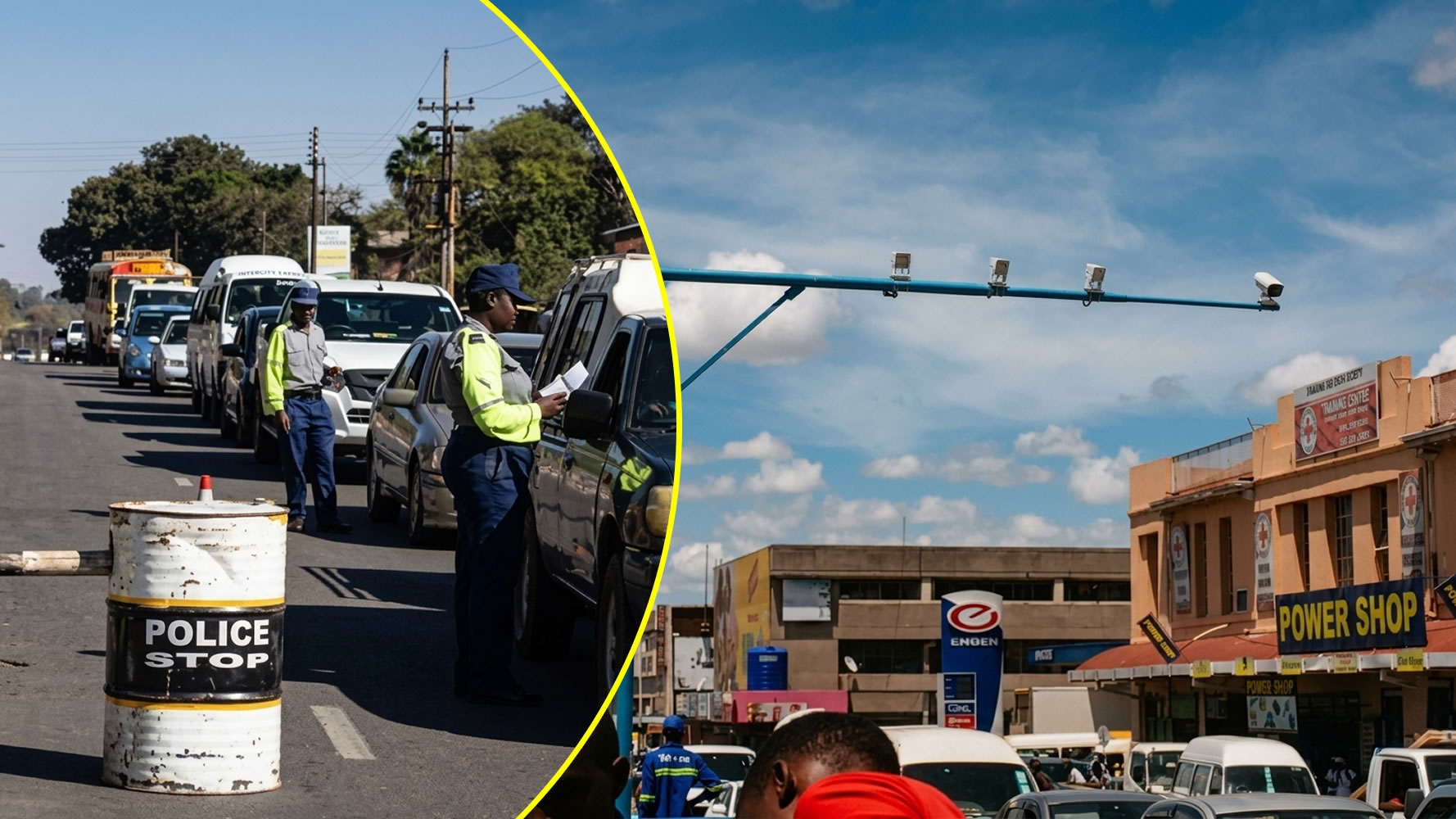
The Silent Sentinels: How AI Cameras Are Rewriting the Rules of Harare’s Roads
HARARE – The era of the “cat and mouse” game between motorists and traffic police on the streets of Harare is coming to a swift, digital end. In a massive technological shift that has caught thousands of drivers off guard, a new network of artificial intelligence (AI)-powered cameras has begun a relentless crackdown on traffic lawlessness. In just a short period since the system went live at 20 key intersections, more than 15,000 drivers have been captured committing various offences, marking a dramatic turning point in the government’s quest to modernise law enforcement.
For years, the Zimbabwean capital has been defined by its chaotic traffic. Commuter omnibuses, popularly known as kombis, often drive against the flow of traffic, while private motorists frequently treat red robots as mere suggestions. However, the introduction of the Electronic Traffic Management System (ETMS) has introduced a level of scrutiny that many did not believe was possible. According to authorities, the system is now detecting at least 3,600 traffic offenders every single day.
“The installation of automated traffic management infrastructure is moving with tremendous speed,” says Martin Chimombe, the Harare City Council’s chief traffic officer. Speaking to journalists recently, he noted that the pilot project has been an eye-opener regarding the scale of the problem. “The pilot phase has been a success and once the rollout is complete, we expect to capture more than 10,000 offending vehicles per week.”
The High-Tech Nerve Centre
At the heart of this operation is a sophisticated command and control centre located at the Criminal Investigations Department (CID) Headquarters. This facility serves as the “brain” of the entire network, receiving live feeds from high-definition cameras scattered across the city. The command centre is not just a room full of screens; it is an advanced data processing hub where AI algorithms work in real-time to identify violations.
The technology being deployed is a far cry from the traditional speed traps of the past. These “smart poles” are equipped with laser tracking technology, precision radar, and high-resolution cameras that can function in low-light conditions. The AI is trained to recognise vehicle registration plates, including both the old and new Zimbabwean formats, with near-perfect accuracy.
But it does not stop at just reading number plates. The system is designed to analyse driver behaviour. It can automatically flag a vehicle that jumps a red light, detects motorists exceeding the speed limit, and identifies those driving on the wrong side of the road. “Using AI-powered image recognition, the cameras will capture vehicle number plates and analyse driver behaviour without the need for constant human monitoring,” explains Ambassador Raphael Faranisi, the Permanent Secretary in the Ministry of Home Affairs and Cultural Heritage.
Where the Eyes Are Watching
The first phase of this project has focused on some of the most notorious bottlenecks and accident-prone areas in the city. If you are driving through Harare, you are likely being watched at several key junctions. These include:
- Leopold Takawira Street and Herbert Chitepo Avenue
- Robert Mugabe Road and Abdel Gamal Nasser Road
- Cripps Road and Remembrance Drive
- Jason Moyo Avenue and Simon Muzenda Street
- Samora Machel Avenue and Glenara Avenue
These intersections have been connected to high-speed fibre internet to ensure that data is transmitted to the CID Headquarters without delay. To prevent the system from being affected by the country’s frequent power outages, solar-powered backup systems have been installed at each site, ensuring that the “eyes in the sky” never blink.
A Paperless Punishment
Perhaps the most significant change for motorists is how they are notified of their “sins.” The days of being flagged down by a police officer and engaging in a lengthy, often contentious, negotiation on the roadside are numbered. The new system is fully integrated with national databases, including the Central Vehicle Registry (CVR) and the Zimbabwe National Road Administration (ZINARA).
When a violation is recorded, the system automatically identifies the owner of the vehicle. Within a short period, the offender receives a digital ticket via email or a text message on their mobile phone. This e-ticketing system is 95 per cent complete and is currently undergoing final user acceptance testing, including integration with the CBZ payment gateway.
Motorists can verify their offences online, viewing the photographic or video evidence captured by the cameras. Payment is equally modern, with options to pay through mobile banking platforms or at ZRP National Traffic offices. This shift is intended to reduce the need for physical interaction between drivers and enforcement officers, a move that many hope will curb the long-standing issue of corruption and bribery on the roads.
“The system will enable motorists to receive, verify and pay fines electronically, reducing the need for physical interaction with enforcement officers,” says Ambassador Faranisi. He believes that the adoption of automated systems will “improve efficiency, reduce human error and enhance consistency in traffic law enforcement.”
The Human Cost of Chaos
The push for this technology comes against a backdrop of alarming road safety statistics. Recent data shows that the number of road traffic accidents in Zimbabwe remains high. Between 15 and 26 December 2025, a staggering 2,412 road accidents were recorded nationwide, a sharp increase from the 1,211 recorded during the same period in 2024.
The human cost is even more sobering. Quantitative data covering the period from January 2020 to January 2024 shows over 191,000 reported accidents, resulting in more than 7,700 fatalities. Authorities hope that the increased likelihood of being caught will force a change in driving culture. “The system will improve road safety and compliance with traffic regulations while enhancing the efficiency of law-enforcement agencies through automated monitoring,” Faranisi adds.
A Blow to Corruption
For many Harare residents, the AI cameras represent more than just a tool for road safety; they are seen as a potential solution to the endemic corruption that has plagued traffic enforcement for decades. In the past, the lack of a digital trail meant that many offenders could avoid fines by paying small bribes to officers.
To complement the AI cameras, the Zimbabwe Republic Police has also begun deploying body-worn cameras for its officers. This multi-layered approach to surveillance is designed to ensure that both the public and the police are held accountable. By automating the detection and ticketing process, the opportunity for “roadside negotiations” is significantly diminished.
However, the transition has not been without its critics. Some legal experts and human rights advocates have raised concerns about the constitutional implications of such widespread surveillance. There are questions about data privacy and the use of facial recognition technology, which some fear could be used for purposes beyond traffic enforcement.
“Zimbabwean cities are being fitted with artificial intelligence cameras capable of facial recognition, prompting warnings from legal experts,” one report noted, highlighting the tension between public safety and individual privacy. There are also concerns about the accuracy of the system and whether innocent drivers might be wrongly ticketed due to technical glitches or errors in the vehicle registry database.
The Financial Impact
The scale of the crackdown is also a significant revenue generator for the cash-strapped Harare City Council. Last year alone, a record 58,830 vehicles were impounded by the council, generating more than US$1 million in traffic fines. In the first quarter of 2024, municipal police impounded more than 14,000 vehicles.
With the AI cameras now operational, these numbers are expected to skyrocket. However, the government has moved to regulate the cost of these offences. Under Statutory Instrument 41 of 2026, vehicle clamping fees have been capped at US$20 per incident, a directive aimed at preventing local authorities from imposing “excessive” fines.
Looking Ahead
The project, which is being fully funded by TelOne, is part of the government’s “Smart Zimbabwe 2030 Master Plan.” This ambitious roadmap seeks to transform the country into an upper-middle-income economy through the use of technology.
While the first phase is concentrated in Harare, the second phase will see the system extended to Bulawayo, with plans to eventually cover all major cities and towns across the country. “We are very happy that the ICT programme is decentralising automated traffic management systems to cities and towns across the country,” says Chimombe.
As the testing phase, which began in early June, transitions into full implementation, the message to Harare’s motorists is clear: the eyes of the city are watching, and they do not take bribes. For those used to navigating the capital with a sense of impunity, the “Goodbye Traffic Offenders” headline is not just a slogan—it is a digital reality.
The success of the system will ultimately be measured not by the number of fines collected, but by whether it can truly make the streets of Harare safer for everyone. For now, 15,000 drivers have already learned the hard way that the rules of the road have changed forever.
|
Location
|
Key Details
|
|
Jason Moyo Ave & Simon Muzenda St
|
Central Business District hub
|
|
Samora Machel Ave & Glenara Ave
|
Major artery for eastern suburbs
|
|
Leopold Takawira St & Herbert Chitepo Ave
|
High-traffic hospital/university zone
|
|
Robert Mugabe Rd & Abdel Gamal Nasser Rd
|
Busy eastern exit point
|
|
Cripps Rd & Remembrance Drive
|
Industrial and Mbare gateway
|
Key Features of the Smart Traffic Management System:
- AI Recognition: Automatically identifies vehicle makes, models, and number plates.
- 24/7 Surveillance: Solar-powered backups ensure operation during load-shedding.
- E-Ticketing: Fines sent directly via SMS or email, linked to CVR and ZINARA.
- Real-time Analysis: Data processed at CID Headquarters for immediate enforcement.
- Corruption Control: Reduces human interaction and potential for bribery.