

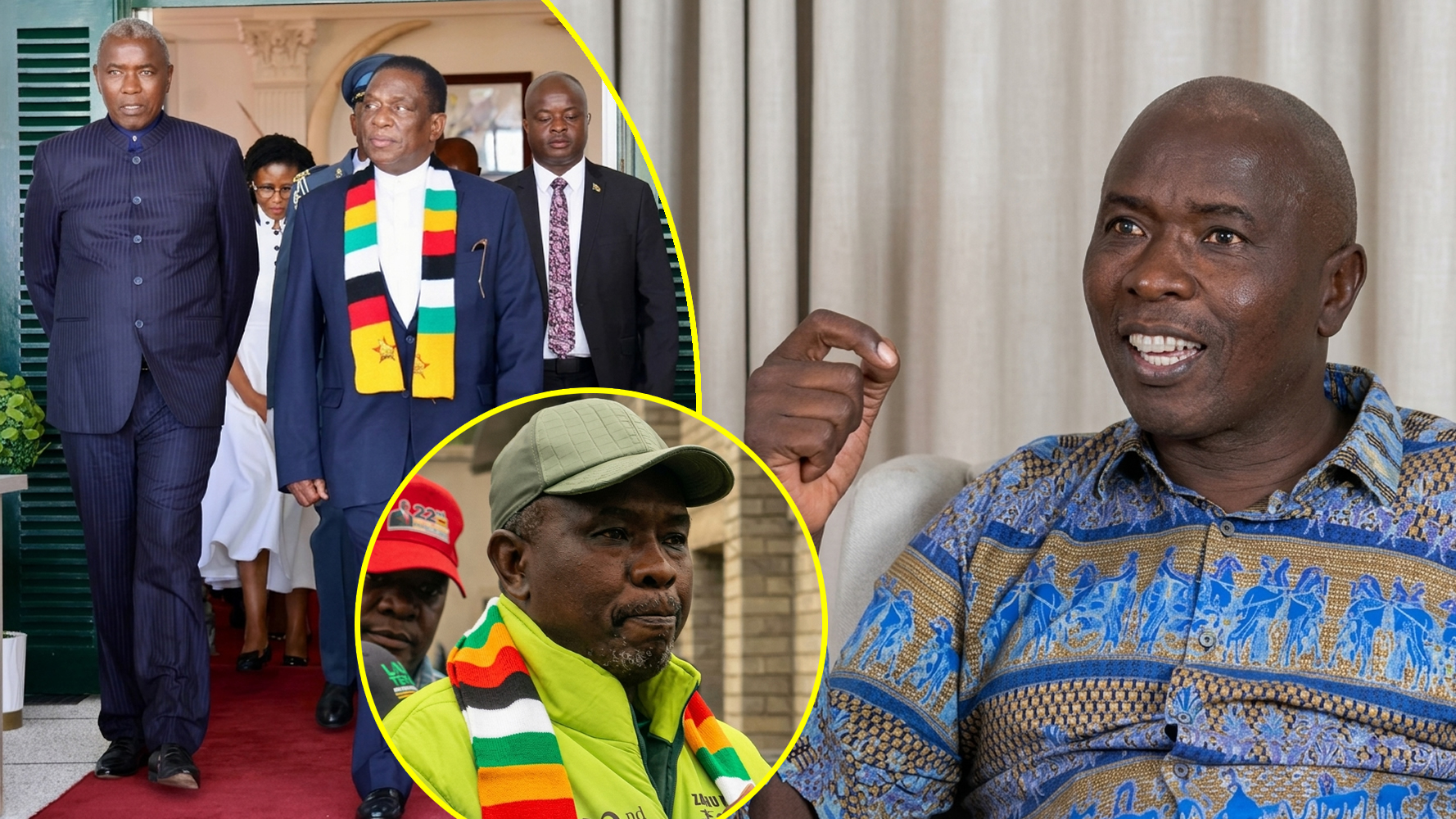
HARARE – President Emmerson Mnangagwa’s decision to give businessman Kudakwashe Tagwirei a substantially narrower formal portfolio followed a tense diplomatic exchange in Bangkok, where Zimbabwe was pressing international lenders for support to resolve its debt crisis, according to an official who attended the meetings.
The official said representatives of the International Monetary Fund and World Bank questioned why Tagwirei had been appointed to lead economic development and investment promotion while remaining under US and UK sanctions. The message was conveyed to Finance Minister Mthuli Ncube, who relayed it to Mnangagwa after the delegation returned to Harare, the official said.
Tagwirei was appointed on October 8 and sworn in on October 12, the opening day of the 2026 IMF and World Bank Annual Meetings. Ncube led Zimbabwe’s delegation to the Bangkok meetings, held from October 12 to 18, where officials sought backing for debt resolution, arrears clearance and renewed engagement with international creditors.
An official who attended the meetings described the exchange this way:
“When the Zimbabwean delegation arrived in Bangkok for the IMF and World Bank annual meetings recently, the Bretton Woods institutions delegations made it very clear that before any discussions, Harare must clarify the issue of Tagwirei. They wanted to know how a businessman on American and British sanctions could be put and fronted as Zimbabwe’s economic development and investment promotion face or ambassador.
“They expressed alarm, disbelief and displeasure, saying that will take Zimbabwe backwards in terms of engagement with them, the international community and investors. They feared it will undo all the progress made so far given where Zimbabwe is coming from in terms of economic, macroeconomic and currency stability. So they subsequently requested the Zimbabwean delegation to directly convey their position to the government and authorities in Harare, all the way to the top – to Mnangagwa.”
The public assignment of powers came more than a month later. On November 12, the Government published Statutory Instrument 181 of 2026, listing the Competition Act and the Census and Statistics Act under the Minister of Economic Development and Investment Promotion. A separate notice, SI 180, assigned a broad body of financial legislation to Ncube as Finance Minister.
The two Acts listed under Tagwirei’s portfolio cover competition regulation and official statistics. One concerns the rules governing competition between businesses, including matters such as market conduct and mergers. The other provides the legal framework for collecting and producing national statistics.
The schedule is narrow beside the range of laws assigned to the Finance Ministry, including legislation on taxation, banking, public finances, national debt, exchange controls and the Reserve Bank. Those rules shape how government raises and spends money, manages borrowing and regulates key parts of the financial system.
The Gazette notice does not, however, say that Tagwirei has only two functions. It also assigns him responsibilities conferred on him by other Acts, except where those responsibilities have been given to another minister. The two statutes are the only Acts specifically named in his schedule, but the wider clause leaves room for duties set out elsewhere in law.
The distinction matters because the new ministry was initially expected to take on a larger role. According to the official account, the Attorney-General’s Office had prepared draft functions that would have given Tagwirei authority over major investment and state-asset institutions, including the Mutapa Investment Fund and the Zimbabwe Investment and Development Agency. The account says the Office of the President and Cabinet then removed most of those proposed powers before the responsibilities were gazetted.
The final notices placed the principal fiscal and financial statutes with Ncube, while the two institutions named in the draft account remained outside Tagwirei’s assigned portfolio. The result was a sharp difference between the title of a ministry tasked with economic development and investment promotion and the two Acts expressly listed under its minister.
The timing put the portfolio question alongside Zimbabwe’s effort to persuade lenders and creditors that its economic conditions were improving. The delegation was led by Ncube and included talks with World Bank Eastern and Southern Africa Vice-President Ndiame Diop, IMF Africa Group 1 Executive Director Adriano Ubisse and IMF African Department Director Zeine Zeidane. The meetings also included a Zimbabwe roundtable on arrears clearance and investment.
Zimbabwe presented a two-stage debt plan. The first step was to complete a 10-month IMF Staff-Monitored Programme, launched on March 1. The next was to raise about US$2.7 billion to clear arrears with major international lenders, followed by a funded IMF arrangement and bilateral debt restructuring.
The scale of the challenge is substantial. Zimbabwe’s public and publicly guaranteed debt stood at about US$23.4 billion at the end of September 2025, according to government figures. External arrears were estimated at between US$7.4 billion and US$7.7 billion. The government’s plan depends on securing financing and support from creditors to address those overdue obligations and restore access to development funding.
The IMF’s public update on the programme, issued on October 7, said management had approved completion of the second review. It reported that all quantitative targets and structural benchmarks for the period through the end of June 2026 had been met, apart from an indicative floor on protected social and priority spending. The IMF put ZiG annual inflation at 3.7 per cent in September and projected economic growth of 5 per cent in 2026, slowing to 3.5 per cent in 2027 amid expected El Niño-related drought risks.
Ncube’s delegation also reported that the economy had rebounded by 8.3 per cent in 2025 after the 2024 drought. It presented that recovery, together with the fall in inflation and greater currency stability, as part of Zimbabwe’s case for renewed international backing. The lenders’ reported objections to Tagwirei’s appointment therefore landed during a campaign in which Harare was seeking to demonstrate both economic progress and credibility with investors.
The sanctions issue was not new. The US Treasury designated Tagwirei in 2020, saying he had used close relationships with senior officials to secure state contracts and preferential access to foreign currency. The UK sanctions record lists an asset freeze, travel ban and director-disqualification sanction. Its stated reasons refer to benefits Tagwirei and his company, Sakunda Holdings, received through the redemption of government Treasury Bills above their official value.
The appointments placed those sanctions in the spotlight because Tagwirei was presented as the face of investment promotion at a time when Zimbabwe was seeking lenders, investment and debt relief. The Bangkok account says the officials’ concern was that his appointment could damage the country’s re-engagement effort and reverse gains in relations with investors and financial institutions.
After the delegation returned, Ncube conveyed the message to Mnangagwa before the final ministerial functions were published, the official said. The November 12 notices set out the resulting division: Finance retained the major fiscal and financial laws, while Tagwirei’s ministry was specifically assigned competition and national statistics, alongside the functions assigned to him under other laws.