

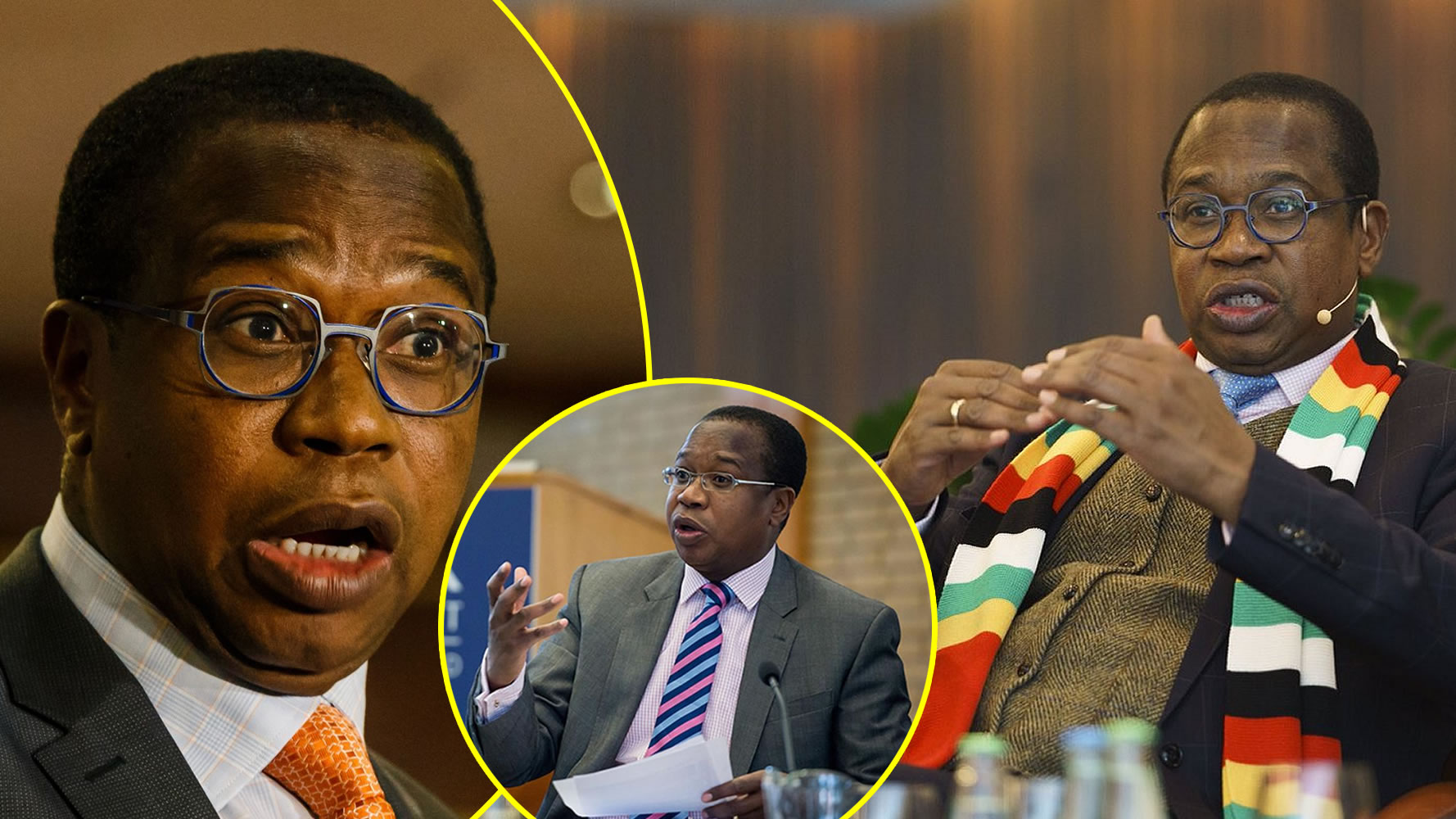
Zimbabwe scraps cellphone duty as budget offers tax relief and prepares for drought
HARARE — Zimbabwe has proposed removing the 25% customs duty on imported cellphones in 2027, raising the monthly personal income tax-free threshold to US$150 and reducing taxes on electronic transfers, in a budget that also sets aside funds for a forecast drought and allocates billions of ZiG to security ministries.
The cellphone duty would fall from 25% to zero under Finance Minister Mthuli Ncube’s 2027 National Budget. The change is intended to make phones more affordable and encourage wider use of mobile technology. But the price consumers ultimately pay will still depend on the other charges on imported devices and on how importers and retailers adjust their prices.
Information Communication Technology, Postal and Courier Services Minister Tatenda Mavetera welcomed the proposal, saying the cost of devices has held back digital access. She also called on businesses to pass any savings from the duty removal on to customers.
“The cost of devices has been one of the biggest barriers to digital inclusion in Zimbabwe. By removing this tax burden, we are making smartphones more affordable for students, farmers, vendors, young entrepreneurs and every Zimbabwean who needs to connect to digital services.”
The budget, presented at the New Parliament Building in Mt Hampden, sets out several measures aimed at easing costs for households and businesses. Ncube proposed increasing the monthly income threshold below which workers pay no personal income tax from US$100 to US$150, or the equivalent in ZiG, from January 1, 2027. The associated tax bands are also to be adjusted.
The threshold change means that workers would be able to earn an additional US$50 a month before becoming liable for personal income tax. The measure applies to the tax-free band; it does not remove tax on income above the revised threshold.
Ncube also proposed lowering the Intermediated Money Transfer Tax, known as IMTT, on local-currency transfers from 1.5% to 1.25%. The charge on foreign-currency transfers would fall from 2% to 1.75%. The reductions are scheduled to take effect on January 1, 2027.
The changes follow complaints during pre-budget consultations about the cost of moving money electronically. For a person or business making frequent transfers, the lower rate would reduce the tax charged on each covered transaction. It would not, by itself, remove bank charges or other service fees.
Ncube said the budget would not introduce new taxes or raise existing tax rates. “In this budget, there are no new taxes; secondly, there are no increases in the current taxes either, only relief measures for the public and corporates and a few fine-tunings here and there, but no new taxes,” he said.
The phone-duty proposal is one of the measures with a direct bearing on the price of imported goods. A phone with a customs value of US$100 currently attracts US$25 in duty before other import costs are considered. Removing that duty would take away that charge, but value-added tax, freight, insurance, exchange costs and shop margins would still affect the final retail price. The budget does not promise that a handset’s shelf price will fall by 25%.
The cellphone measure is also narrower than a general removal of taxes on technology products. Mavetera said her ministry would continue seeking relief on duties for manufacturing components and laptops, as well as lower taxes affecting telecommunications operators. She wrote: “Equally important is duty on manufacturing components , laptops then reduction of some taxes on our telco players. We will continue pushing i know we will get there. I can safely say one down 2 more to go.”
The minister urged the private sector to ensure that consumers benefit from the new rate. “I now call on the private sector to ensure these benefits reach the consumer,” she said. “My Ministry stands ready to work with all stakeholders to monitor implementation and deliver affordable, meaningful connectivity for every Zimbabwean.”
The budget document names cellphones among the information and communications technology goods affected by the proposed customs change. It does not set out a specific commencement date for the cellphone measure. The tax-free threshold and IMTT changes, by contrast, are set for January 1, 2027.
The government’s digital ambitions extend beyond the price of handsets. The budget reports internet penetration of 87.3% and mobile penetration of 108.5%, while also acknowledging that the digital divide remains wide and that cybersecurity risks persist. Mobile penetration is a measure of connections in relation to the population, rather than a count of unique people with a phone.
The Ministry of Information Communication Technology, Postal and Courier Services is allocated about ZiG1.029 billion in the 2027 estimates, more than twice its previous-year allocation, according to Mavetera. The ministry’s planned projects include ZiG50 million for ICT laboratories in schools and ZiG20 million each for last-mile connectivity, the Presidential Internet Scheme and an artificial-intelligence laboratory. Other proposed spending covers government data systems, cyber security, disaster recovery and connectivity infrastructure.
Those projects are intended to improve access and the state’s digital services, but they address different barriers from the handset duty. Cheaper devices do not automatically provide affordable data, reliable network coverage or access to electricity. The ministry has indicated that taxes affecting network operators and import duties on components remain among the issues it wants the government to address.
The budget also lowers customs duty on electric vehicles from 25% to 10%, a reduction intended to support the use of cleaner transport. That change leaves a 10% duty in place. Other provisions aimed at domestic production include a duty rebate on specified raw materials, intermediate inputs and equipment used in fertiliser manufacturing, and the suspension of customs duty on semi-knocked-down vehicle kits imported by approved local assemblers for certain vehicles.
Alongside the tax measures, the budget provides for a year of climate and food-security pressure. Zimbabwe is preparing for an El Niño weather pattern expected to bring below-average and erratic rainfall and above-average temperatures during the 2026/27 agricultural season. A recent food-security outlook forecasts that many areas which typically produce a grain deficit could face Crisis-level food insecurity through at least May 2027, as household stocks run down, incomes weaken and staple food prices remain high.
The government says it is building its strategic grain reserve towards 600,000 tonnes in 2027. By the end of October 2026, it had procured 365,000 tonnes. It has also taken out drought insurance through the African Risk Capacity, paying a US$3.4 million premium. After the 2023/24 El Niño drought, Zimbabwe received a US$31.8 million insurance payout that assisted more than 508,000 vulnerable households across 27 districts.
The 2027 budget includes a ZiG10.9 billion contingency buffer to respond to severe shocks. Its priority-area allocations include ZiG30.5 billion for agriculture, food security, climate resilience and environmental protection. The allocation comes as the government plans for risks to crop production, rural incomes and food availability over the coming season.
The spending estimates also show large allocations for security and essential public services. The main vote allocations for the Office of the President and Cabinet, Defence, and Home Affairs and Cultural Heritage total about ZiG59.6 billion: ZiG15.629 billion, ZiG23.440 billion and ZiG20.576 billion respectively. The Home Affairs vote also has a separate ZiG1.197 billion retention-fund allocation, taking the combined total for those three offices and ministries to about ZiG60.8 billion when that fund is included.
The budget lists ZiG47.7 billion for Primary and Secondary Education and ZiG35.5 billion for Health and Child Care, including their respective retention-fund amounts. Agriculture, Mechanisation and Water Resources Development is allocated ZiG27.6 billion. The figures sit within a national spending plan that also sets aside money for infrastructure, social protection, technology and climate resilience.
Ncube presented the budget under the theme “Accelerating Economic Transformation and Building Resilience to Climate and Global Shocks”. It projects 2027 revenue of ZiG349.5 billion and an overall expenditure ceiling of ZiG358.3 billion. Ministries had submitted spending bids far above that ceiling, leaving departments to work within the allocations approved in the final plan.
The relief measures are designed to affect different parts of household and business finances: the income-tax threshold raises the amount employees can earn before tax applies; lower IMTT rates reduce the tax on electronic transfers; and the cellphone duty proposal reduces the customs charge on imported handsets. The electric-vehicle measure lowers, but does not eliminate, import duty on those vehicles.
For phone buyers, the change will be most visible if importers and retailers reduce their prices when the customs rate changes. Mavetera has made that expectation explicit, calling on businesses to pass the benefit through. Her ministry says it will work with industry stakeholders to monitor the change as Zimbabwe pursues broader and more affordable access to digital services.