

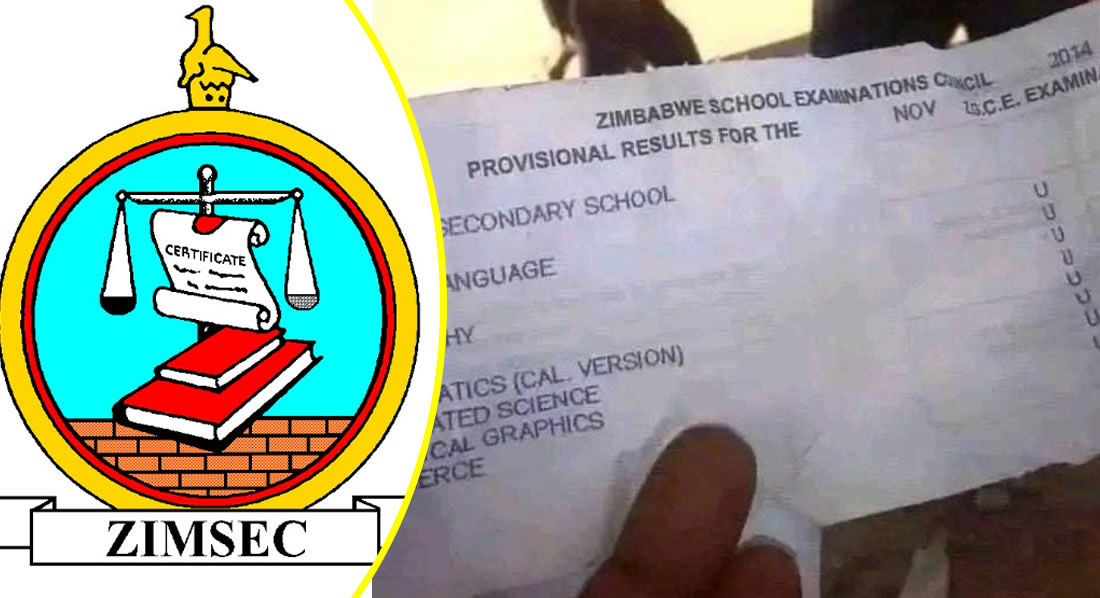
HARARE – The Zimbabwe School Examinations Council (Zimsec) has officially released the 2026 Grade 7 examination results, revealing that while the national pass rate climbed above the halfway mark for the first time in recent years to 50.94 per cent, nearly half of the candidates who sat for the primary school leaving tests did not pass all six subjects.
Announcing the results at a press briefing in Harare on Friday afternoon, Zimsec board chairperson Professor Paul Mapfumo confirmed that 395,530 candidates sat for the examinations across the country, meaning 49.06 per cent of pupils failed to meet the required pass threshold across their six subjects.
Prof Mapfumo stated that online access to the results opens at 4 pm on Friday, 27 November 2026, giving parents, guardians and candidates a five-day window to view their grades before physical slips are distributed through schools.
“The Zimbabwe School Examinations Council board and management would like to advise the nation of the release of the 2026 Grade 7 examination results,” he said.
“With effect from today, 27 November 2026 at 4 pm, Grade 7 examination results will be accessible to all candidates and authorised personnel online through the Zimsec portal, accessed via the website https://results.zimsec.co.zw/
“Please take note that this portal will be open for five days only. Heads of examination centres will be able to collect the results for their respective schools or centres from our regional offices on Monday, 30 November 2026,” said Prof Mapfumo.
How to Check Results Online and Avoid Scams
Parents and guardians looking to view their children’s scores must visit the official Zimsec results portal at https://results.zimsec.co.zw/ once the system goes live at 4 pm. To retrieve a candidate’s statement of results, users are required to enter the specific examination centre number for the pupil’s school alongside the candidate details. Parents who do not have their child’s centre number on hand can obtain it directly from the school administration, while heads of examination centres can also log into the same platform to pull records for their institutions.
Because the online portal will remain active for five days only, the digital window is set to close early next week around Tuesday, 1 December or Wednesday, 2 December 2026. Heavy nationwide web traffic typically slows down the servers immediately after the 4 pm launch as hundreds of thousands of households attempt to log in simultaneously. If the webpage fails to load during peak afternoon hours, parents are advised to wait and try again later in the evening or early the following morning when online congestion drops. Using a standard web browser such as Google Chrome rather than built-in browsers inside social media applications like WhatsApp or Facebook also helps pages load more reliably.
Families have also been cautioned to stay alert against fraudulent links circulating on WhatsApp and other messaging platforms. The only legitimate web address for viewing results is https://results.zimsec.co.zw/. Any website or forwarded message asking parents to pay a fee or enter an EcoCash PIN to unlock examination results is a scam!
Those who are unable to access the portal during the five-day online window will still be able to obtain official copies from their respective schools. Heads of examination centres will begin collecting printed result slips from Zimsec regional offices across the country on Monday, 30 November 2026, for onward distribution to pupils.
Gender Gap, Special Needs Candidates and Subject Performance
Out of 413,792 registered candidates, 395,530 actually sat for the 2026 tests, marking a slight increase from the 395,090 candidates in the previous year. Prof Mapfumo noted the 2.45 percentage point rise from 2025’s 48.49 per cent pass rate.
“The examination session recorded an overall national pass rate of 50.94% for candidates who sat for six subjects, reflecting an improvement of 2.45 percentage points from the 2025 pass rate. This positive trajectory demonstrates continued progress in learner achievement across the primary education sector,” he said.
Female candidates achieved a 56.39 per cent pass rate compared to 45.18 per cent for males, continuing a multi-year performance gap. Among special needs participants, 282 candidates sat for the exams and attained a 50.55 per cent pass rate. All examined subjects recorded pass rates above 50 per cent, led by indigenous languages like ChiShona and IsiNdebele with over 80 per cent passes.
First Cohort Under the Heritage-Based Curriculum
The 2026 exams represent the first cohort evaluated under the Heritage-Based Curriculum Framework, which replaced the CALA programme. Primary and Secondary Education Minister Torerayi Moyo welcomed the milestone prior to the release.
“I am pleased to inform parents, guardians, development partners and all stakeholders that the Zimbabwe School Examinations Council (ZIMSEC) will release the 2026 Grade 7 Examinations Results this Friday, November 27,” he said.
“I am optimistic that the pass rate will increase phenomenally as we celebrate our first examinations under the Heritage-based Framework. I wish all the candidates the best of luck,” said Minister Moyo.
The tests ran from September to October without any reported paper leakages or malpractice. Over a five-year span, national pass rates have steadily risen from 41.13 per cent in 2021 to 50.94 per cent in 2026.
How Grading Works and Top-Performing Schools
Grade 7 evaluations cover six subjects graded from 1 (highest) to 9 (lowest), requiring a total of 36 units or better to pass, with 6 units representing top distinction. While official national league tables are not published, elite mission, private, and uniformed-forces institutions frequently achieve pass rates between 98 per cent and 100 per cent.
In Mashonaland East, schools like Barnies Junior School and Wise Owl Learning Centre in Marondera, alongside Ruzawi School and Springvale House, perform strongly. Similar high marks are seen in Harare at Braeside ZRP Primary, Tynwald Primary, Greystone Park Primary, Ariel Primary, and Dudley Hall Primary in Norton. Manicaland highlights include Milestone Primary and John Cowie Primary in Rusape, Chancellor Junior School in Mutare, and Mt Melleray Primary in Nyanga. Other regional standouts include Riverton Academy in Masvingo, Anderson Adventist Primary in Gweru, Kwekwe Primary, and Fairview Primary in Bulawayo, while high-density council schools like David Livingstone Primary in Harare generate high volumes of top-tier 6-unit aggregate scores.
2027 Form 1 Enrolment Underway
Secondary school applications for 2027 are managed through the Electronic Ministry Application Platform (eMAP) at http://emap.co.zw/ until 31 December 2026. Applicants select up to three boarding schools, with competitive mission institutions such as Waddilove, Monte Cassino, and St Faith’s requiring between 6 and 8 units. Day secondary school placements, such as Rakodzi High School or Cherutombo High School in Marondera, are handled locally based on catchment areas and official result slips collected from regional offices.