
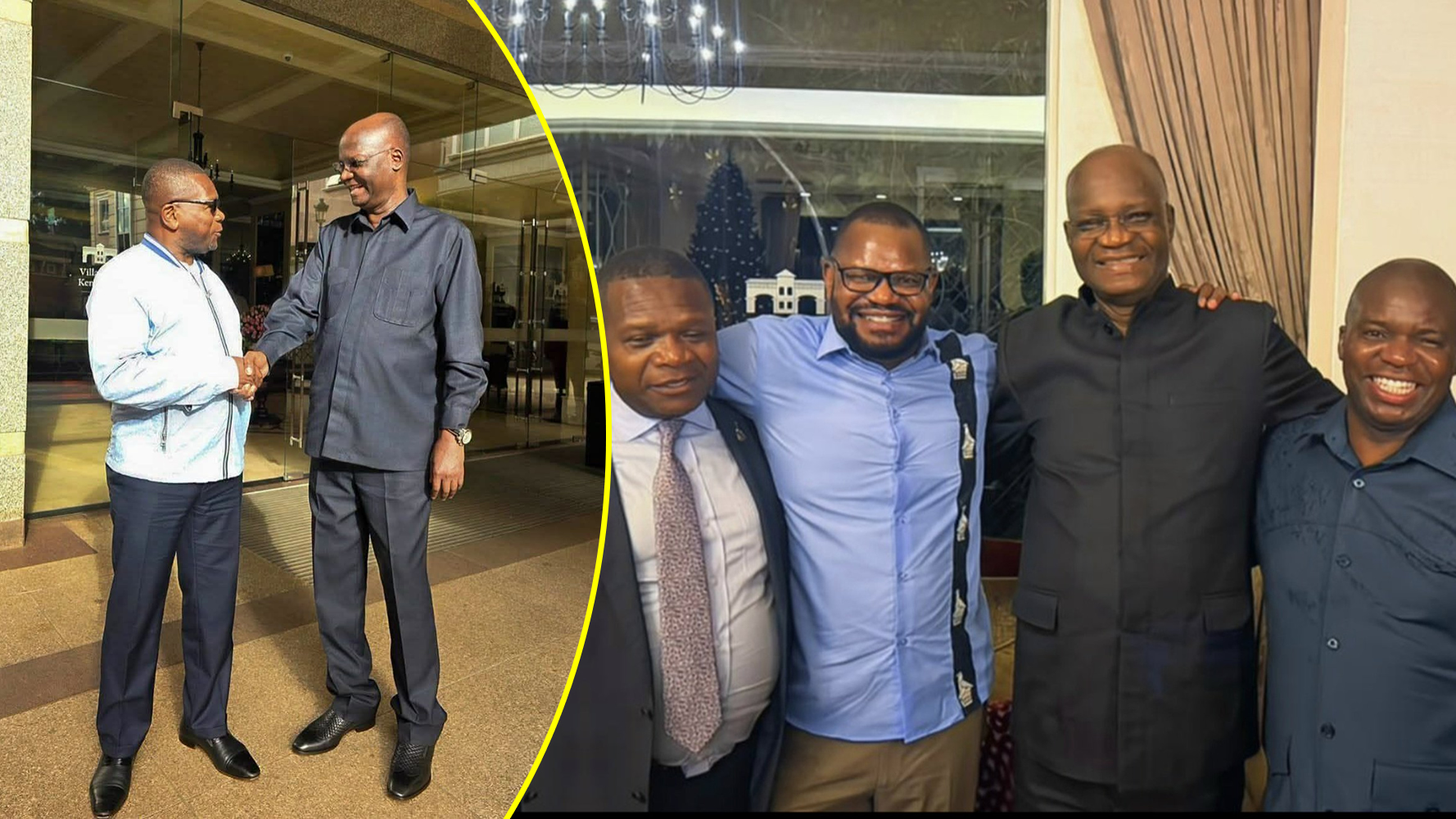
President Emmerson Mnangagwa held a closed-door, high-stakes meeting with exiled former cabinet minister Professor Jonathan Moyo at the Villa Rosa Kempinski in Nairobi, Kenya, on Thursday evening, November 26, 2026. The three-hour engagement, which ran from 8:00 PM to 11:00 PM, marks the first face-to-face encounter between the two political figures in nearly a decade.
Moyo fled Zimbabwe under a cloud of midnight gunfire and terror during the November 2017 military coup that ousted the late former president Robert Mugabe and initially brought Mnangagwa to power. Since living in self-imposed exile in East Africa, Moyo has operated behind the scenes as a Zanu PF political strategist and the lead consultant behind the far-reaching constitutional amendments that extended Mnangagwa’s presidential tenure by two years, pushing the end of his term from 2028 to 2030.
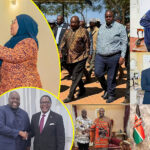
The Thursday night talks took place on the sidelines of President Mnangagwa’s official state visit to Kenya for the inaugural Zimbabwe-Kenya Bi-National Commission summit. Earlier in the day, Mnangagwa had met with his cabinet ministers and senior government officials to prepare for the bilateral summit, which was co-chaired on Friday at State House in Nairobi by Mnangagwa and Kenyan President William Ruto.
The encounter at the Villa Rosa Kempinski—the same luxury hotel where former United States president Barack Obama stayed during his visit to Kenya from July 24 to July 26, 2015—was carefully structured into three distinct parts.
Moyo arrived at the hotel around 8:00 PM and was received by a Zimbabwean embassy official in Kenya, Minister Counsellor Nothando Jamu. Jamu escorted the exiled former legislator and cabinet minister into the Presidential Suite on the 10th Floor, where he was introduced to the President, cabinet ministers, and senior state officials for an opening session.
The ministerial delegation present during the initial 30-minute gathering included Foreign Affairs Minister Amon Murwira, Home Affairs Minister Kazembe Kazembe, Justice Minister Ziyambi Ziyambi, and Economic Development and Investment Promotion Minister Kudakwashe Tagwirei. Alongside the cabinet ministers were senior state and security officials: Chief Secretary to the President and Cabinet Martin Rushwaya, Central Intelligence Organisation (CIO) Director-General Paul Chikawa, Attorney-General Virginia Mabiza, and Zimbabwe’s Chargé d’Affaires to Nairobi and Acting Ambassador Silibaziso Manyonga.
Following the introductory session with the wider delegation, Mnangagwa and Moyo retreated for the second phase of the evening: a private, one-on-one closed-door engagement that lasted for more than an hour. The specific details of what the two men discussed during their private meeting remain confidential and strictly under wraps.
After their private discussions concluded, Mnangagwa and Moyo rejoined the ministers and officials for the third part of the evening, sharing a group dinner. During the meal, Moyo was seated directly between President Mnangagwa and Foreign Affairs Minister Amon Murwira.
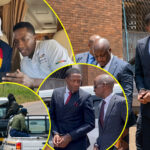
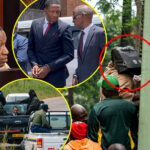
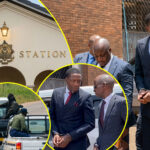
At the conclusion of the three-hour engagement at 11:00 PM, Moyo was photographed exiting the hotel alongside key figures from the Zimbabwean delegation. Walking from left to right in the photograph were CIO Director-General Paul Chikawa, Information Permanent Secretary Nick Mangwana, Professor Jonathan Moyo, and Geo Pomona Waste Management executive chairman and chief executive Dilesh Nguwaya. Witnesses on the ground noted that Moyo looked “happy, calm and relieved” as he departed the venue.
The Thursday night presidential summit followed days of behind-the-scenes groundwork in the Kenyan capital. Ahead of the meeting, on Sunday, Moyo posted a brief message on his social media platform stating: “When facts change, I change my mind”.
Two days later, on Tuesday, November 24, at 4:35 PM, Moyo was photographed at a hotel in Westlands, Nairobi, chatting with CIO Director-General Paul Chikawa on the sidelines of the preparatory meetings for the Bi-National Commission. The photograph was captured on a Galaxy S25 Ultra smartphone by an eyewitness at the venue.
The release of the Tuesday afternoon photograph triggered immediate debate across Zimbabwean social media platforms. Pro-government commentators pointed to the image as evidence of Mnangagwa’s re-engagement and national unity drive, describing the head of state as a unifying leader. Conversely, opposition-leaning users and anti-establishment critics focused on whether Moyo was negotiating his political return home from exile or coordinating his ongoing work on Zimbabwe’s constitutional overhaul.
Within hours of the Tuesday photograph circulating online, a coordinated counter-narrative emerged on X and Facebook aimed at discrediting the image. Anonymous social media accounts circulated edited, low-resolution crops of the picture alongside fabricated claims that a reverse image search proved the photograph did not show Moyo and Chikawa at all. These accounts claimed the picture was an older, unrelated news photograph of two Indian men attending a business conference in South Asia.
The claim that the photograph depicted two Indian men was false. The image was verified as an authentic photograph taken on Tuesday afternoon in Westlands, Nairobi, ahead of the arrival of the main presidential delegation, and neither Moyo, Chikawa, nor any government official denied its authenticity.
Moyo’s presence at the centre of the Nairobi meetings highlights his evolving political trajectory since the events of November 2017. In the aftermath of the coup fallout, Moyo had remained a vocal critic of the administration, even authoring a joint open letter on November 15, 2022, alongside fellow exiled former cabinet minister Patrick Zhuwao, addressed publicly to Zanu PF members.
However, Moyo later worked with Zanu PF during Mnangagwa’s 2023 re-election campaign. Starting in August 2024 and continuing up to the present, he took on a leading role as the principal consultant behind the constitutional amendment process.
That legislative drive culminated in the passage of the Constitution of Zimbabwe Amendment (No. 3) Act, widely referred to as CAB3 or CAA3, which was gazetted in February 2026, passed through Parliament in June 2026, and received presidential assent from Mnangagwa on July 7, 2026.
The constitutional overhaul introduced sweeping changes to Zimbabwe’s governance and electoral framework. Under the new provisions, the presidential term of office—alongside those of Parliament and local authorities—was extended from five years to seven years, with transitional clauses applying the extended tenure to current office-holders. As a result, the harmonised general elections originally scheduled for 2028 were pushed back to 2030.
In addition to extending term limits, the legislation abolished the direct popular vote for the presidency, replacing it with a system where the president is elected by members of Parliament sitting jointly. It also expanded the Senate from 80 to 90 seats by allowing the president to appoint ten additional senators based on professional skills and competencies, transferred voter registration duties from the Zimbabwe Electoral Commission to the Registrar-General, and established a presidentially appointed Zimbabwe Electoral Delimitation Commission.
Earlier in 2026, Moyo publicly defended the constitutional amendments on social media forums as “historic, strategic, forward-looking and deeply patriotic”. In earlier remarks defending the push to alter the supreme law, Moyo stated: “A proposal to amend the Constitution is just that; a proposal, nothing less and nothing more. It is not a crime or a civic wrong for anyone to want or to seek to amend the Constitution of Zimbabwe. A constitutional proposal cannot be unconstitutional.”
While the constitutional changes are currently the subject of ongoing legal challenges before Zimbabwe’s Constitutional Court, the political figures who gathered with Moyo at the Villa Rosa Kempinski on Thursday evening represent the legal, intelligence, administrative, and financial core of the campaign that steered the legislation onto the statute books.
Meanwhile, the official diplomatic business that brought President Mnangagwa to Nairobi continued on Friday, November 27, at State House. Following a 21-gun salute upon the start of his state visit, Mnangagwa joined President William Ruto to co-chair the inaugural Zimbabwe-Kenya Bi-National Commission.
The commission upgraded bilateral relations between Harare and Nairobi from a Joint Permanent Commission on Cooperation to a presidential-level engagement. During Friday’s proceedings, Kenya and Zimbabwe signed seven new bilateral agreements—adding to 17 existing pacts—to expand trade, investment, and regional cooperation across sectors including defence, agriculture, mining, renewable energy, transport, and the digital economy, as Kenya targets annual bilateral trade worth US$70 million with Zimbabwe. Among the accords signed on Friday were a Memorandum of Understanding on immigration cooperation signed by Kenyan Interior Cabinet Secretary Kipchumba Murkomen and Zimbabwean Home Affairs Minister Kazembe Kazembe, as well as a trade promotion agreement between the Kenya Export and Branding Agency and ZimTrade.