


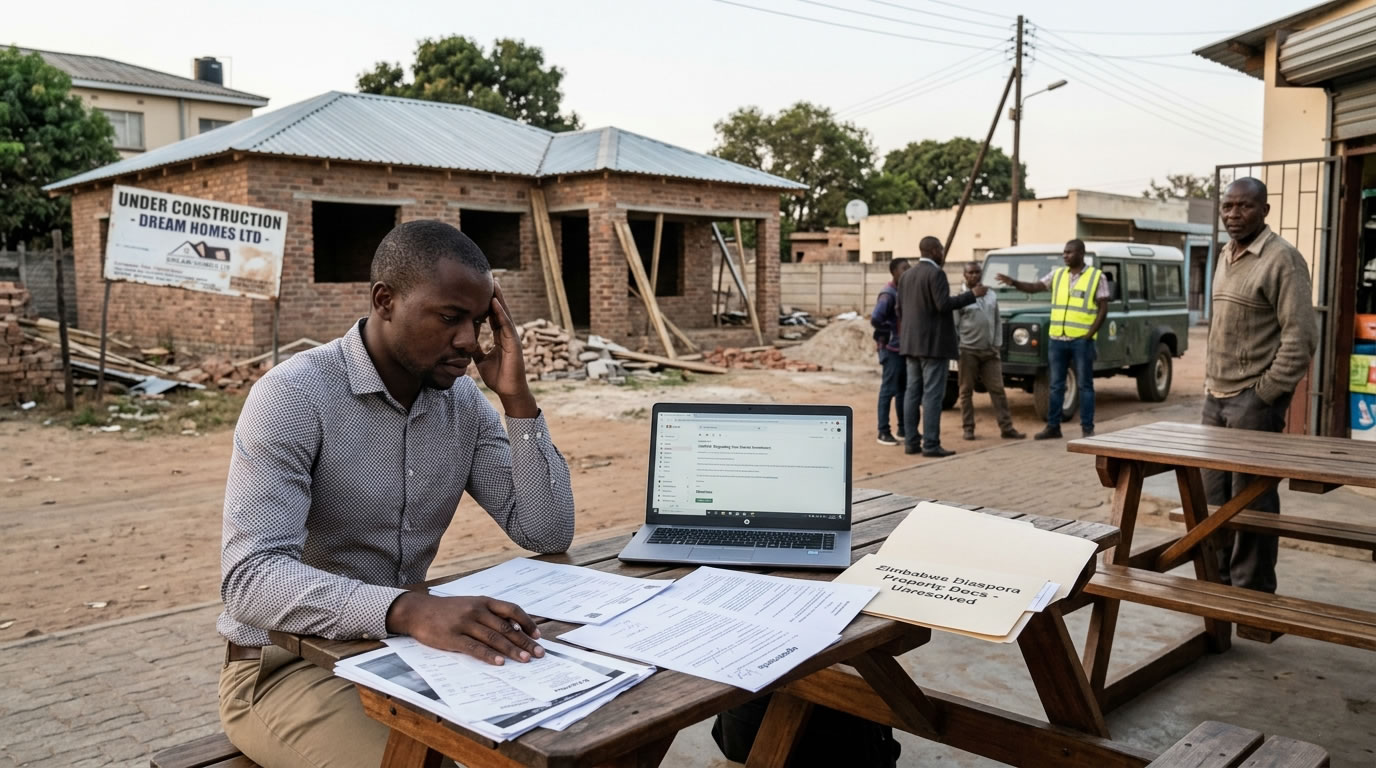
DIASPORA FOREX AT RISK: The Hidden Scams Lurking Behind Zimbabwe’s Real Estate Boom
Zimbabweans living abroad, often referred to as the diaspora, are a vital source of investment for their home country. Billions of dollars flow into Zimbabwe annually, with a significant portion directed towards real estate and farming. This influx of capital is widely celebrated, positioning the diaspora as a “critical national asset” crucial for national development. However, beneath the surface of this promising economic trend lies a deeply troubling reality: a pervasive network of sophisticated real estate scams that are systematically fleecing thousands of hardworking Zimbabweans of their life savings.
From the bustling streets of London and New York to the vibrant communities in Johannesburg, the dream of owning a piece of home is turning into a nightmare for many. The glossy brochures showcasing “gated communities” and lucrative agricultural ventures often conceal a treacherous landscape riddled with fraudulent Title Deeds, double-selling of properties, and the elusive presence of “ghost” developers. This investigative report delves into the dark underbelly of Zimbabwe’s property boom, exposing the syndicates, corrupt officials, and systemic vulnerabilities that allow these scams to thrive.
The Allure and the Deception
The Zimbabwean diaspora’s commitment to their homeland is undeniable. Many send remittances to support families, while others seek to make more substantial investments, viewing property and land as tangible assets that offer security and a connection to their roots. The desire to “build the nation” from afar is a powerful motivator, driving individuals to invest their hard-earned money, often accumulated over years of sacrifice in foreign lands. This strong emotional and financial tie makes them prime targets for unscrupulous individuals and organised criminal syndicates.
These fraudsters exploit the geographical distance and the trust that diaspora members place in local contacts or seemingly legitimate online platforms. Listings circulated via social media and WhatsApp groups, promising attractive deals and rapid returns, often bypass the traditional checks and balances that would normally safeguard property transactions. This digital convenience, while seemingly efficient, creates a fertile ground for deception, as remote buyers are unable to physically inspect properties or verify the authenticity of documents in person.
A Web of Deceit: Common Scams Unravelled
The methods employed by these syndicates are varied and increasingly sophisticated. One of the most prevalent and devastating is the “conveyancing trap.” This intricate scam involves the fraudulent manipulation of property ownership documents, often facilitated by corrupt elements within the Deeds Office. A single property can be illicitly sold to multiple unsuspecting buyers simultaneously, each believing they are the rightful owner. The victims only discover the fraud when they attempt to take possession of their land or when another claimant emerges, leading to protracted legal battles and immense financial loss.
Double-selling is another common tactic, where a property is sold to more than one buyer. This often occurs with the complicity of unscrupulous agents or even property owners who exploit the lack of oversight and the buyer’s inability to conduct thorough due diligence from abroad. The fraudulent Title Deeds, often expertly forged, lend an air of legitimacy to these illicit transactions, making them incredibly difficult for an ordinary buyer to detect.
“Ghost” developers represent another significant threat. These are individuals or entities that purport to be developing residential or commercial properties, often advertising attractive off-plan sales in desirable locations. Diaspora investors pay deposits or even full amounts for properties that either do not exist, are never completed, or are built on illegally acquired land. By the time the fraud is uncovered, the “developers” have vanished, leaving behind empty promises and devastated investors.
The Shadow of Land Barons and Demolitions
Perhaps the most egregious aspect of Zimbabwe’s real estate fraud involves “political land barons.” These powerful figures, often with deep political connections, illegally seize state land, subdivide it without proper authorisation, and then sell these unserviced stands to unsuspecting buyers. The allure of affordable land, particularly in rapidly expanding peri-urban areas like Ruwa and Chitungwiza, draws in many, including diaspora investors desperate to secure a future home or investment.
However, the dream quickly turns into a nightmare when municipal bulldozers arrive to demolish these “dream homes.” These demolitions, ostensibly carried out to enforce urban planning laws and clear illegal structures, leave thousands homeless and financially ruined. The victims, who often invested their life savings, are left with nothing but rubble, having lost their money to a system that appears to protect the powerful while punishing the vulnerable.
Recent reports from the Zimbabwe Republic Police (ZRP) highlight the scale of this crisis. In 2024 alone, the ZRP’s Fraud Division recorded property fraud cases valued at over US$15 million. This figure, however, is likely just the tip of the iceberg, as many cases go unreported or are caught in lengthy legal processes. Hotspots like Ruwa and Chitungwiza have seen a surge in fraud reports tied to unapproved subdivisions and duplicated plot sales. The “Mount Pleasant Heights Phase 2 (Lot 4 Zizalisari)” scam, which has left hundreds of buyers without title deeds for 17 years, demonstrates that even established suburbs are not immune to such unscrupulous practices.
A Personal Tragedy: Nyasha’s Story
The human cost of these scams is immense. Consider the plight of Nyasha, a Zimbabwean nurse working in the United Kingdom. She believed she was making a sound investment in a house back in Harare after discovering a “perfectly priced” stand in Ruwa through a WhatsApp group. Reassured by the “agent” that everything was fine, she was pressured to pay a deposit of US$6,000 by the weekend. By Monday, both her money and the agent’s WhatsApp number had vanished. Nyasha’s story is a stark reminder of how fraudsters exploit urgency, distance, and digital platforms to prey on the hopes of the diaspora.
Legal experts like Vengai Madzima have consistently urged Zimbabweans in the diaspora to exercise extreme due diligence when engaging in immovable property dealings. The weak or inconsistently enforced legal and regulatory frameworks in peri-urban areas, coupled with rampant land-governance corruption, exacerbate the risks. Informal processes dominate in many of these zones, making it easier for fraudsters to operate with impunity.
Safeguarding Your Investment: What to Look For
For those still contemplating investing in Zimbabwe’s property market, vigilance is paramount. Here are crucial “hidden details” and warning signs to help spot a real estate scam before it’s too late:
- Verify Title Deeds Independently: Never rely solely on documents provided by the seller or agent. Engage an independent, reputable lawyer to conduct a thorough search at the Deeds Office to confirm the authenticity and ownership of the property. Be wary of any resistance to this process.
- Physical Inspection is Non-Negotiable: If you cannot physically inspect the property yourself, appoint a trusted and independent representative (not associated with the seller or agent) to do so. They should verify the property’s existence, boundaries, and any ongoing construction or activity.
- Beware of Unrealistic Deals and Pressure Tactics: Scammers often offer properties at prices significantly below market value or create a false sense of urgency, demanding immediate payment. If a deal seems too good to be true, it almost certainly is.
- Scrutinise Developer Credentials: For off-plan purchases, thoroughly research the developer’s track record, completed projects, and financial stability. Seek references and independent reviews.
- Avoid Informal Channels: While convenient, social media and WhatsApp groups are breeding grounds for scams. Prioritise established, regulated real estate agencies and legal professionals.
- Understand the Conveyancing Process: Familiarise yourself with the legal process of property transfer in Zimbabwe. Any deviation from standard procedures should raise a red flag.
- Check for Council Approvals: For undeveloped land or new constructions, ensure all necessary council approvals, permits, and subdivision plans are legitimate and in place. Illegal subdivisions are a major source of future demolitions.
The Path Forward
The Zimbabwean government has acknowledged the issue of land barons and illegal settlements, with President Emmerson Mnangagwa ordering the publication of the Uchena Commission report, which is expected to expose widespread illegal land sales and associated losses of nearly US$3 billion. While such actions are a step towards accountability, more robust enforcement, transparent land administration, and public awareness campaigns are desperately needed to protect both local and diaspora investors.
Zimbabwe’s diaspora represents an invaluable resource, their investments capable of driving significant growth and development. However, until the hidden scams lurking behind the real estate boom are effectively dismantled, and a secure, transparent investment environment is established, these diaspora dollars will remain at grave risk, undermining trust and hindering the nation’s true potential. This is a must-read for anyone thinking of “building the nation” from abroad, exposing the dark side of Zimbabwe’s property boom that the government doesn’t want you to see.