


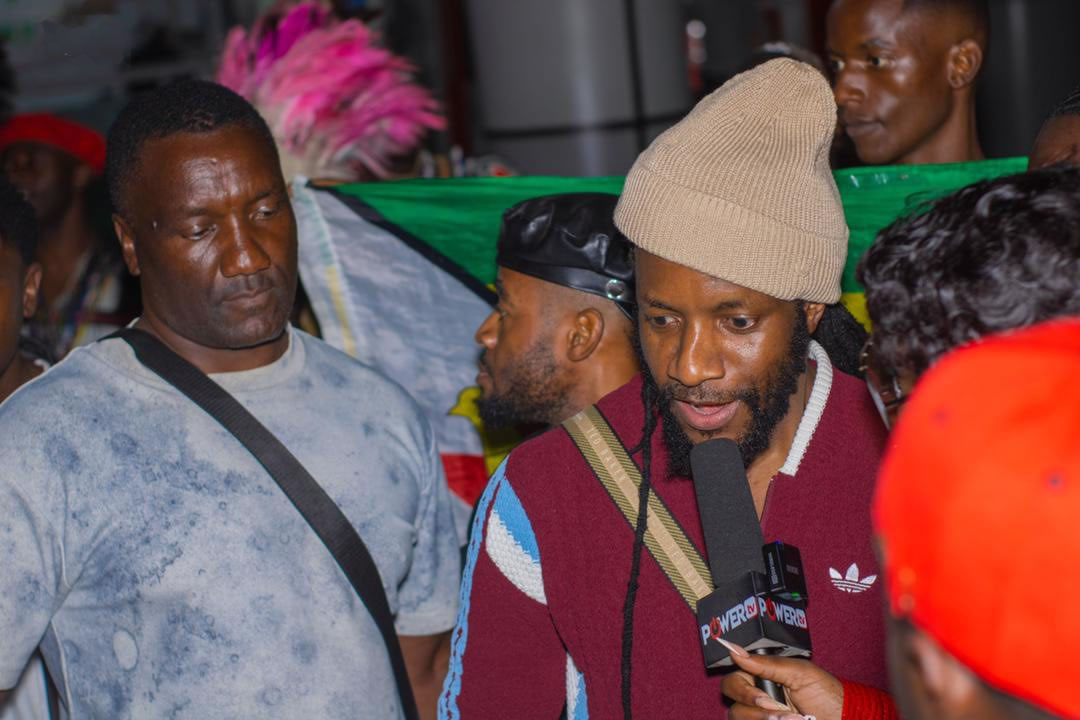
LUSAKA – The scene at Kenneth Kaunda International Airport on Wednesday, 8 April 2026, was nothing short of a royal welcome. As the aircraft carrying the Ninja President, Winky D, touched down in Lusaka, the atmosphere was thick with an electric anticipation that has become a rare commodity for the artist in his own backyard. Hundreds of Zambian fans, draped in Gafa merchandise and waving both Zimbabwean and Zambian flags, gathered to catch a glimpse of the man who has become a regional symbol of resilience. “Welcome the GAFA! Winky D DiBigman is here, and Zambia is buzzing with excitement as the legendary musician prepares to headline the Zam-Zim Braai Fest,” shouted one fan over the roar of the crowd. It was a stark, almost painful contrast to the cold shoulder the artist has been receiving from the state-aligned establishment in Harare.
While Lusaka prepares for a five-star performance at the Showgrounds Main Arena this Saturday, 11 April, the story back home in Zimbabwe is one of subtle restrictions and calculated snubs. The most recent and glaring example of this was the National Arts Merit Awards (NAMA) 2026, where Winky D’s chart-topping hit “Siya” was conspicuously absent from the Outstanding Song category. To the casual observer, it might look like a simple technicality or a matter of artistic preference by the judges. However, for those who follow the intricate details of the Zimbabwean music industry, the exclusion of “Siya” is seen as a deliberate political directive aimed at marginalising an artist whose social commentary has become too uncomfortable for the old guard.
The Gafa Factor is not just about catchy dancehall rhythms; it is about a message that resonates deeply with a youth population struggling with unemployment, inflation, and a sense of political hopelessness. Songs like “Ijipita” and “Siya” are more than just music; they are documentary-like chronicles of the Zimbabwean experience. “Siya,” in particular, touches on the themes of leaving a legacy and the struggles of the common man in a system that seems rigged against him. While the youth see these lyrics as prophetic, the state-aligned establishment views them as a threat to the status quo. This has led to what many observers describe as a silent ban on national radio.
Reports from within the Zimbabwe Broadcasting Corporation (ZBC) suggest that Winky D’s music is being systematically sidelined in favour of more compliant artists. “They banned Winky D on national Radio and promote Jah Prayzer,” claimed one social media commentator, reflecting a sentiment shared by thousands of fans who have noticed the sudden drop in airplay for the Ninja President’s latest tracks. This is not a formal, written ban—which would cause an international outcry—but a subtle one, where DJs are encouraged to play music that does not overtly challenge the political narrative. In a country where the airwaves are tightly controlled, this kind of censorship is a powerful tool for shaping the national discourse.
The irony of Winky D’s situation is that the more he faces restrictions at home, the more his legend grows abroad. The Zambian Invasion is a perfect example of how regional platforms are providing an alternative avenue for Zimbabwean artists who find their domestic space shrinking. Zambia has long been a second home for Winky D, but the current level of excitement is unprecedented. The Zam-Zim Braai Fest, where he will co-headline with Zambia’s own superstar Yo Maps, is expected to be one of the biggest musical events of the year in Lusaka. For Winky D, these international stages are not just about the money; they are about proving that his message cannot be contained by domestic censorship in Harare.
Our investigation into the NAMA 2026 snub reveals a pervasive lack of transparency among the organisers. While some have pointed to the controversy surrounding AI-generated music videos as a reason for certain exclusions, the “Siya” snub feels different. “Winky D Rejects His 2026 Nama Awards ‘Ingori Corruption’,” reported one news outlet, following rumours that the artist himself had spoken out against the perceived corruption in the awards process. If the premier arts awards in the country are being used to punish artists for their social commentary, then the very foundation of Zimbabwean culture is under threat. The message being sent to young artists is clear: if you want to win trophies, avoid controversial topics.
However, Winky D has never been one to chase trophies. His Ninja philosophy is built on the idea of resistance through art. By simplifying the complex struggles of the ghetto into relatable lyrics, he has built a loyal following that no subtle ban can break. The Ninja President does not need a NAMA award to tell him he is successful; the royal welcome at Kenneth Kaunda International Airport is all the validation he needs. The Gafa brand has become a transnational phenomenon, transcending the borders of Zimbabwe and finding a home in the hearts of anyone who feels marginalised by the system.
The generational divide in how Winky D is perceived is also a key part of this story. To the old guard, he is a troublemaker who uses his platform to highlight the failures of the state. To the youth, he is a hero who speaks the truth they are often afraid to voice. This divide was on full display during the One Big Party in January 2026, where Winky D commanded the stage with an electric performance that proved his relevance is higher than ever. “The atmosphere was electric as the Ninja President took over the stage,” noted one reviewer. It is this powerful connection with the people that the establishment fears the most.
The Zam-Zim music exchange is also a fascinating study in regional dynamics. While Zimbabwean authorities might seek to restrict Winky D, their Zambian counterparts are more than happy to embrace him. This creates a diplomatic challenge for those who wish to see him silenced. How does one explain to the world that a national treasure is being treated like a king in Lusaka while being effectively erased from the airwaves in Harare? The Zambian Invasion is a loud, musical defiance against the censors back home.
In many ways, Winky D is following in the footsteps of other Zimbabwean legends like Thomas Mapfumo, who also faced state-led pressure for his Chimurenga music. The difference is that in the digital age, a subtle ban is much harder to enforce. With social media and regional festivals, an artist can reach their audience without ever needing a single second of airtime on ZBC. Winky D’s Zambian Invasion is a masterclass in how to navigate the politics of artistic suppression. He is not fighting the restrictions with angry press releases; he is fighting it with powerful performances and royal welcomes in foreign lands.
As the Gafa prepares to take the stage in Lusaka this Saturday, the question remains: how long can the Zimbabwean establishment ignore the undeniable reality? One can snub him at the NAMAs, restrict his music on the radio, and promote other artists in his place, but one cannot silence a message that the people have already embraced. Winky D’s message is more powerful than any trophy, and his Zambian Invasion is proof that the Ninja President is far from being silenced. This is not just an entertainment story; it is a social struggle for artistic freedom. The hidden cost of the subtle restrictions is the loss of national pride in a talent that the rest of the world is more than happy to celebrate.
In conclusion, the Gafa thrives in Lusaka because Zambia recognises what Zimbabwe is attempting to suppress: that Winky D is a true voice of the people. Whether he is performing at the Zam-Zim Braai Fest or commanding a venue in Harare, his impact is undeniable. The subtle restrictions might be a temporary hurdle, but the Gafa Factor is a permanent part of the Zimbabwean cultural landscape. As we watch the Ninja President conquer Lusaka, we are reminded that a prophet is rarely honoured in his own country—especially when that prophet is telling a truth that the old guard does not want to hear.