


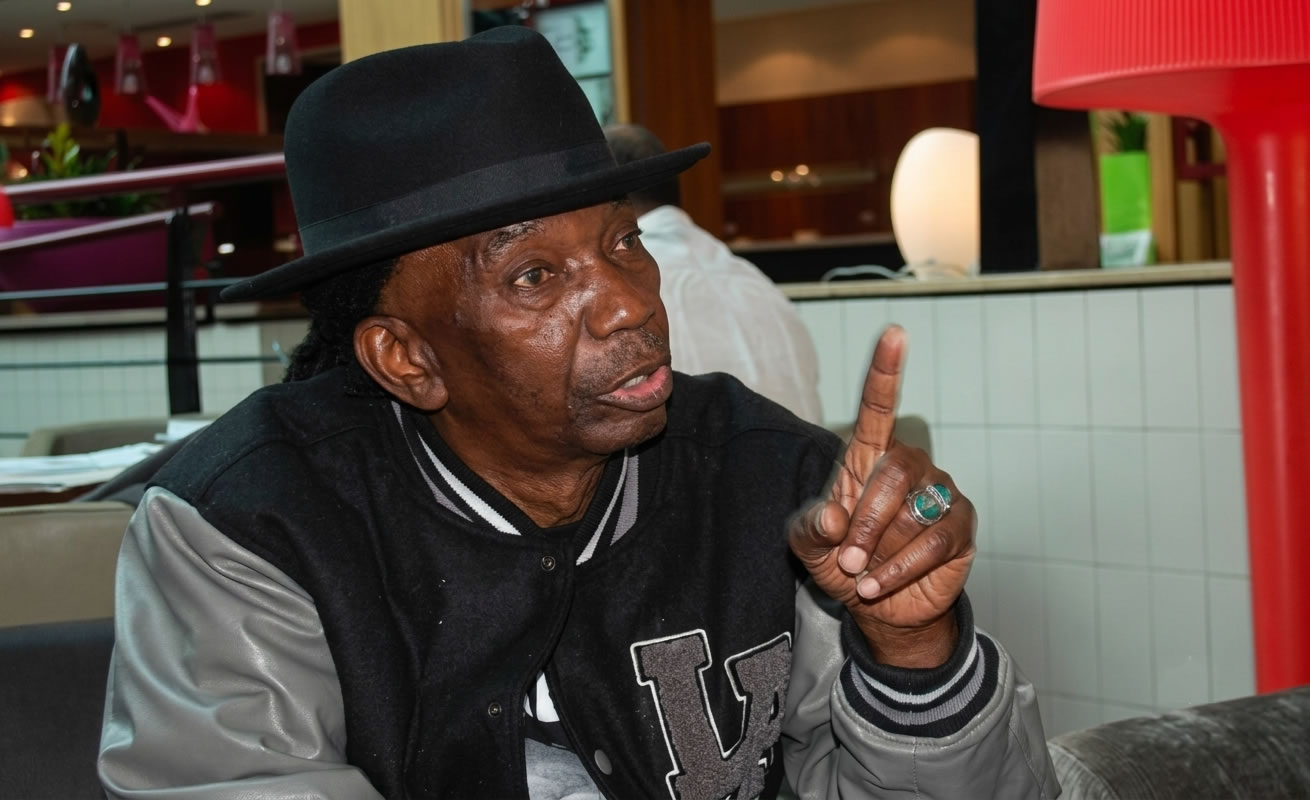
For decades, the name Thomas Mapfumo has been synonymous with the “Chimurenga” spirit — a musical and political resistance that once provided the soundtrack to Zimbabwe’s liberation struggle and, later, its most searing critiques of post-colonial corruption. Known as “Mukanya,” the dreadlocked lion of Zimbabwean music has lived in self-imposed exile in the United States for over twenty years, a man whose integrity was often considered as unshakeable as the traditional mbira rhythms he modernised. However, a recent announcement has left the nation reeling and fans grappling with a profound sense of cognitive dissonance.
The legendary musician has officially accepted a staggering US$1 million offer from the controversial and flamboyant businessman Wicknell Chivayo. The deal, which breaks down to US$500,000 per performance, will see Mapfumo return to his homeland to sing at Chivayo’s birthday celebration and the wedding of fellow superstar Jah Prayzah. For a man who only months ago dismissed Chivayo’s offers of luxury cars and houses as “dirty money,” this dramatic about-face has ignited a firestorm of debate across the Zimbabwean diaspora and the streets of Harare.
To understand the weight of this U-turn, one must look back to March 2024. At that time, Chivayo—a man whose “flex culture” involves splashing millions on luxury vehicles for musicians, church leaders, and ruling party loyalists—dangled a US$200,000 car and a US$300,000 house in front of Mapfumo. The catch was implicit: a public apology for his criticisms of the Zanu-PF government and a reconciliation with the establishment. Mapfumo’s response then was characteristically blunt. “I’m not that type to be bribed like that,” he told reporters. He went further, ridiculing younger artists who accepted Chivayo’s gifts. “These young musicians are poor. Don’t laugh at them for receiving the luxury car gifts, they haven’t seen cars like that before. They are accepting all these beautiful cars because they can’t afford them. I saw Jah Prayzah thanking him after receiving a car that he had never seen.”
Mapfumo’s previous rejection was framed as a moral stand against what he termed “profligate spending” in a country where hospitals lack basic medicines and poverty is the daily bread for millions. “They are donating expensive cars to musicians while ignoring the poor state of hospitals,” he had lamented. Yet, today, the same man who stood as the guardian of revolutionary purity is preparing to board a plane for a payday that dwarfs any other in the history of Zimbabwean entertainment.
The explanation from the Mapfumo camp is one of clinical pragmatism. In a video message that has since gone viral, the 81-year-old legend attempted to draw a clear line between political compromise and professional engagement. “I just want to let you know that I will be coming to Zimbabwe to perform at Wicknell Chivayo’s birthday and also at Jah Prayzah’s wedding. Jah Prayzah is my son, and I’m certain he will be thrilled to have me performing at his wedding,” Mapfumo said. He added a phrase that has become the mantra for his defenders: “Ndati ndikuudzei kuti ndirikuuya, ndezvebasa izvi (I just wanted to let you know that I’m coming. It’s all work and nothing else).”
By framing the million-dollar deal as “just work,” Mapfumo is attempting to navigate the treacherous waters of artistic independence in a highly polarised society. He argues that performing at an event is a service rendered for a fee, not an endorsement of the host’s character or political affiliations. It is a sentiment echoed by some cultural commentators who point to the late Oliver Mtukudzi, who managed to perform at government functions without ever being seen as “bought.” As one analyst noted, “An artist can perform without surrendering his soul. He can sing at your event, collect his fee and still disagree with your politics.”
However, the “just work” defence is difficult to reconcile with the sheer scale of the payment. US$500,000 for a single performance is not a standard professional fee in Zimbabwe; it is a life-changing windfall. Wicknell Chivayo himself was quick to highlight the record-breaking nature of the deal. “I am pleased to announce that I will wholeheartedly honour my commitment by paying a record-breaking US$1 million for these two shows at US$500,000 per show. This will make the legendary Thomas Tafirenyika Mapfumo the highest-paid singer ever in the history of our beloved country,” Chivayo boasted on social media. He added, “I say a big congratulations to you, Mukanya, for making this decision consciously and independently, without any influence from the naysayers who have never contributed anything meaningful to your welfare or to your extraordinary legacy.”
The motivations of Wicknell Chivayo, often referred to as “Sir Wicknell,” are under as much scrutiny as Mapfumo’s. Chivayo’s wealth has been a subject of intense speculation and several high-profile legal battles. From the Gwanda solar project, where his company Intratrek Zimbabwe was accused of failing to deliver after receiving a multi-million dollar advance, to more recent allegations involving a US$40 million tender for election materials for the Zimbabwe Electoral Commission (ZEC), Chivayo’s name is frequently linked to murky government contracts. His associates, Mike Chimombe and Moses Mpofu, were recently arrested in connection with a fraudulent US$7 million presidential goat scheme, further darkening the cloud over his inner circle.
For Chivayo, the association with a cultural icon like Mapfumo is a masterclass in image laundering. By positioning himself as the benefactor of a national treasure, he attempts to transform his public persona from a “tenderpreneur” under investigation to a patriotic philanthropist. “This is my small way of thanking you for your immense contribution to Zimbabwe’s music and arts industry over the years and, more importantly, for the inspiration your music provided during the liberation struggle,” Chivayo stated. It is a strategy that Simon Mann, the British mercenary who was once Chivayo’s cellmate in Chikurubi Maximum Prison, noted years ago. In his memoirs, Mann recalled Chivayo telling him, “In Africa the unsolicited gift is massively powerful.”
The economic reality for exiled artists cannot be ignored. Mapfumo has spent years in the United States, far from the lucrative touring circuits of his prime. In 2024, Chivayo had cruelly mocked Mapfumo’s financial situation, claiming the singer had “fallen on hard times” and was “stranded” during a previous visit to Zimbabwe. “Iye anei? [He] came to Zim and was stranded and had nowhere to stay. The opposition will use you and never help you,” Chivayo had sneered. While Mapfumo’s camp denies any financial desperation, the allure of a US$1 million retirement package is undeniable for an octogenarian legend.
The Zimbabwean music industry has a tragic history of legends dying in poverty, their contributions celebrated only in posthumous tributes. Many argue that Mapfumo has earned the right to financial security in his twilight years. “Far too many African legends die with applause but without money,” wrote one supporter on Nehanda Radio. “There is something deeply hypocritical about people who have made fortunes… suddenly becoming guardians of revolutionary purity when an elderly musician is offered a million dollars.”
Yet, the cost of this security may be the very legacy Mapfumo spent a lifetime building. For his most ardent followers, the acceptance of Chivayo’s cash feels like a betrayal of the lyrics in songs like Corruption and Mamvemve. They argue that by taking money from a man so closely associated with the system he once decried, Mapfumo is inadvertently validating the very “flex culture” and tender-driven wealth that has crippled the nation’s economy.
The Jah Prayzah connection adds another layer of complexity. Mapfumo’s decision to perform at the wedding of a man he once described as “poor” and “starstruck” by Chivayo’s gifts suggests a softening of his stance, or perhaps a desire to mend bridges with the younger generation of artists. “Jah Prayzah is my son,” Mapfumo now says, a far cry from his previous dismissive tone. This shift hints at a broader reconciliation, not just with individuals, but with the reality of the Zimbabwean cultural landscape as it exists today—one where wealth and politics are inextricably linked.
As the date for the performances approaches, the nation remains divided. Will Mapfumo’s return be a triumphant homecoming for a hero who has finally found a way to be paid his worth? Or will it be remembered as the moment the Lion of Zimbabwe finally stopped roaring and settled for a golden cage? Chivayo, ever the showman, has already invited Mapfumo to another event: a housewarming ceremony in Gandami later this year.
In the end, the story of Mapfumo’s U-turn is more than just a tale of a musician and a businessman. It is a reflection of the complex, often painful, relationship between art, wealth, and survival in modern Zimbabwe. As the music plays and the cheques are signed, the true price of the Chimurenga legend’s return may not be known for years to way. But for now, the man who once sang for the oppressed has made his choice, and he insists, with the weight of eighty-one years behind him, that “it is all work and nothing else.”