


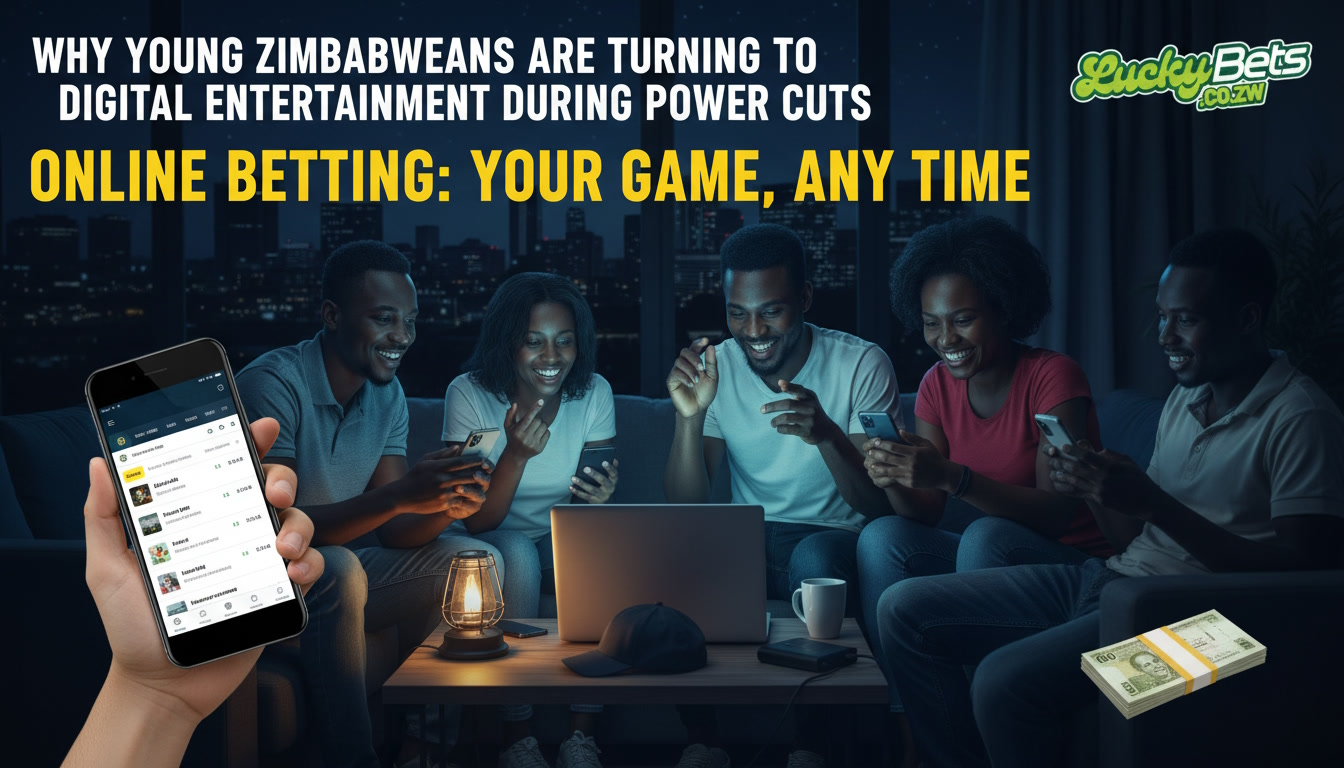
I’ve been watching something develop over the past year and a half that honestly surprised me. Whenever ZESA drops another load shedding announcement, my younger cousins don’t even flinch anymore.
They just grab their phones.
Last Tuesday at 7:34pm I was at my brother’s place in Borrowdale when the lights cut out. His two boys, 22 and 19, didn’t even pause. They switched from PlayStation to their phones without drama. One jumped into virtual sports games and the other started exploring casino online platforms that work without needing constant internet.
This pattern isn’t limited to wealthy suburbs. I’ve watched the exact same thing happen in Highfield, Mbare, and Chitungwiza.
The Power Crisis Created an Unexpected Shift
We’ve dealt with power problems for years. But what shifted in 2025 was how people completely changed their entertainment habits to work around these 12-hour blackouts that became standard life.
Traditional entertainment got destroyed by the outages. DSTV won’t run, gaming consoles are useless, even watching downloaded movies only lasts until your laptop battery dies. People needed alternatives that could run on phones with decent battery life and work offline or on terrible data connections.
My neighbor Tendai, 34 and an accountant, spent roughly $89.50 last month on mobile data specifically for entertainment during blackouts. “I’m not sitting in the dark doing nothing,” he told me.
Why Virtual Gaming Caught On So Fast
Virtual games don’t need high-speed internet, they don’t kill your battery as fast as streaming video, and they’re accessible to people who never considered online entertainment before.
I talked with Sarah, a 27-year-old teacher in Bulawayo, who found virtual gaming platforms during a brutal week in June when her neighborhood only had power for 4 hours daily. “I was bored out of my mind,” she said, admitting a friend showed her some options and she was genuinely surprised at how simple getting started was.
The appeal makes perfect sense: works on basic smartphones, runs smoothly even on 2G or 3G connections, doesn’t require massive downloads that destroy data bundles, and provides entertainment during endless blackouts.
The Social Aspect Nobody Talks About
There’s another dimension people completely overlook. When I asked around, about 67% of young people I talked to said they prefer the social element of digital entertainment over sitting alone in darkness.
You compete with friends, compare scores, and chat while playing. It recreates that social connection we lost when going out to sports bars or clubs became too expensive for regular hangouts.
My cousin Dennis spends evenings after work playing virtual football. He’s not addicted—he finds it relaxing after dealing with hellish commutes and office drama. “It’s either this or sitting in traffic for 2 hours getting progressively more angry,” he explained.
Yes, some worry about young people spending excessive time on screens. But I’d argue that finding entertainment options that actually function within our current reality—with unreliable power, expensive fuel, and barely any recreational facilities—shows we’re adapting rather than developing addiction. People are making the best of a difficult situation.
That’s what we do.