


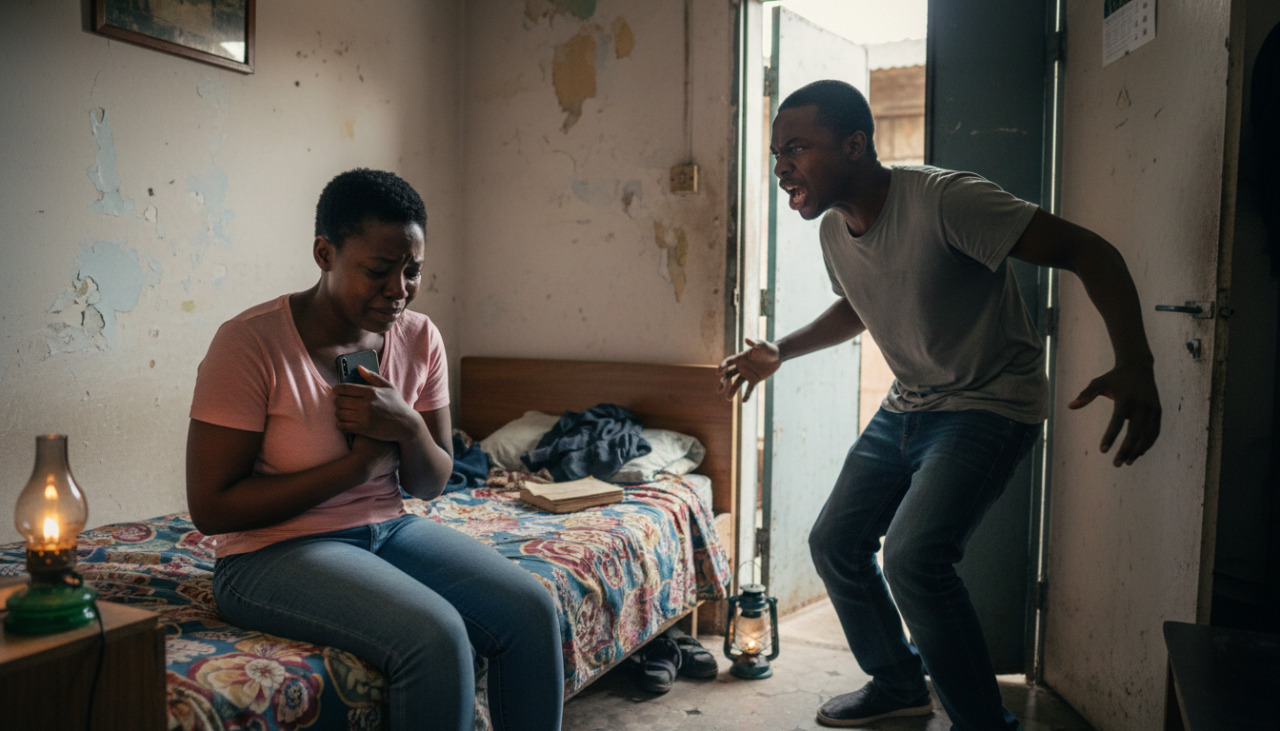
MUTASA – A young couple’s marriage is teetering on the edge of collapse in the rural district of Mutasa, after the wife made a request that left her husband speechless and ignited a firestorm of mistrust and recrimination. The simple, yet bewildering, plea, “Escort me to my ex,” has thrown the lives of Peter Nyamuda and his wife, Irene Mandishora, into turmoil, leading to a cycle of separations and a case before Chief Mutasa’s community court that has laid bare the fragility of their union.
The saga began, according to a distraught Nyamuda, when his wife made a startling confession. He testified before the court last week that his trust was irrevocably shattered when she openly admitted that her previous relationship had never truly ended.
“She told me that when we got married, she had an ex-boyfriend named Kuda whom she had not officially broken up with,” Nyamuda recounted to the court. “She said Kuda had moved to another area while she continued with her education, and that they had never formally ended things. At first, I did not take it seriously, but later events disturbed me.”
What began as a disconcerting admission soon escalated into a direct confrontation with the past. Nyamuda described an incident where his wife received a phone call in his presence, which she put on loudspeaker. The voice on the other end of the line announced that Kuda wished to speak with her. When the former lover came on the line, his message was blunt: “Come and see me.”
The request that followed from his own wife left Nyamuda questioning the reality of his marriage. “After the call, she asked me if I could escort her to meet him,” he explained, the disbelief still evident in his testimony. “I asked if she was serious. I refused. From that point, suspicion crept into the marriage.”
From that day forward, Nyamuda claimed a shadow of doubt was cast over his wife’s every move. Her departures from home began to mirror his own work schedule, raising his suspicions that she was leading a double life. “Each time I left for work, she would also leave home and return around the same time I did. She said she had gone to see her mother, but I suspected she was meeting that man,” he alleged.
Even the most mundane domestic chores became a source of anxiety and mistrust. “One day she said she was going to look for firewood. She left early in the morning and only came back at night. When I asked why it took so long, she again said she had met her mother,” Nyamuda stated. “These incidents eroded trust and turned our once peaceful home into a battleground of doubt.”
However, the narrative presented to the court was far from one-sided. The wife’s brother, Tinashe Mandishora, who brought the case before Chief Mutasa, painted a very different picture of the troubled marriage. He accused Nyamuda of being the one to repeatedly and callously send his sister packing, casting her out of their home over a series of allegations, some of them bizarre.
Mandishora claimed that Nyamuda had once fallen ill and blamed his wife, alleging she had slept with him while menstruating without his knowledge. “He said she would not tell him that she was on her periods and would proceed to sleep with him. We asked him if he had gone to the clinic and he said yes. But this is not the first time he has sent her packing,” Mandishora told the court.
He described a destructive pattern of abandonment and reconciliation that had produced three children, now aged nine, six, and a mere ten months. “He once divorced her and we took her back. They reconciled and had another baby. Now she has a 10‑month‑old child, and he has dumped her again,” he said. “This pattern is unfair to the children.” Mandishora argued that if infidelity was the genuine concern, it should be handled through dialogue, not by repeatedly making his sister and her children homeless.
This case is not an anomaly in Chief Mutasa’s court, which frequently adjudicates on matters of the heart that threaten the fabric of the community. The themes of lingering past relationships and broken trust are tragically common. Just weeks ago, on February 13, 2026, the same court heard the case of Gilbert Kapungu, a married man whose affair with his married ex-girlfriend, Verna Chikomba, resulted in the destruction of two marriages. Kapungu confessed that he rekindled the romance after she returned from South Africa, telling the court, “When she came back, she was more beautiful than before… I could not control myself.”
In that instance, Chief Mutasa delivered a stern judgement, ordering Chikomba to pay two beasts to Kapungu’s wife and Kapungu to pay four beasts to Chikomba’s husband as compensation. His words then echo the current crisis: “This is a sad story of two people who were not content with the partners they chose. They went back to their past and destroyed their homes.”
These personal dramas unfold against a backdrop of wider social trends. A recent poll by the Zimbabwe Ledger found that a staggering 53.8% of Zimbabweans view infidelity as the primary cause of divorce, a sentiment supported by academic studies which indicate that the betrayal of trust through cheating is a leading factor in marital breakdowns in the country.
In the case of Nyamuda and Mandishora, Chief Mutasa intervened with the weight of tradition and a deep-seated concern for the family unit. He offered stern counsel to both parties, starting with the wife, Irene Mandishora. “When you are married, your past must remain in the past. There is no wisdom in bringing former lovers into your home, whether through conversation or contact. It plants seeds of suspicion,” the chief declared.
He warned her about the dangers of allowing external forces to disrupt her home. “If there is a man who keeps calling a married woman and disturbing her peace, that must be handled firmly. If you do not want him, make it clear. If he continues, report the matter to elders. Do not allow someone from outside to control what happens in your home.”
The chief also had words for the wife’s mother, who Nyamuda claimed had been covering for her daughter’s suspicious outings. “A parent must build their child’s marriage, not protect wrongdoing. If your daughter is wrong, correct her. If your son‑in‑law is wrong, correct him. Taking sides without seeking truth only destroys families,” he cautioned.
But Nyamuda was not spared from criticism. The chief admonished him for his volatile treatment of his wife and the instability it created for their children. “You cannot marry today, send her away tomorrow, then take her back and have another child and repeat the same cycle. Children need stability. Marriage is not a door you open and close whenever you feel hurt,” said Chief Mutasa.
With the fate of the marriage hanging in the balance, the chief urged both families to seek a constructive resolution, noting that Nyamuda himself had admitted he still had feelings for his wife. The final directive was one of reconciliation and responsibility.
“If there is still love, let there be honesty and change. If trust has been broken, rebuild it properly. But do not make decisions in anger that will punish innocent children,” he concluded.
For now, the couple’s future remains uncertain. Their story serves as a poignant and cautionary tale, reflecting the complex interplay of past loves, present commitments, and the enduring challenge of trust in a society grappling with the sanctity of marriage.