


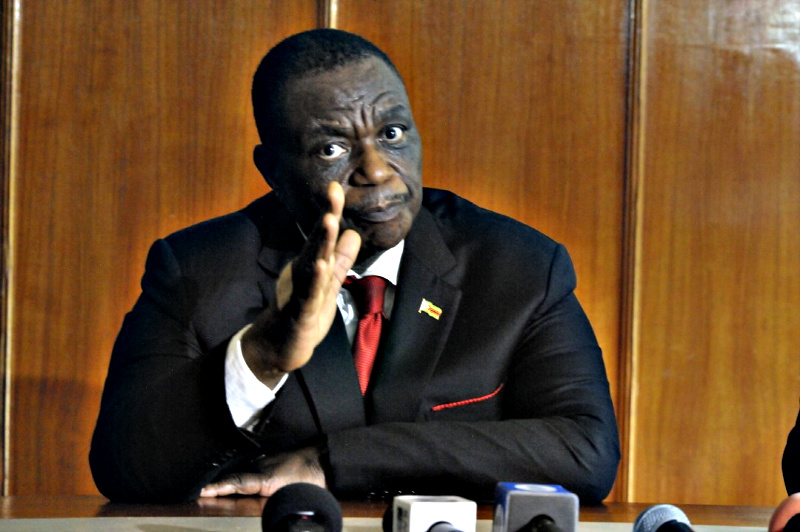
The corridors of power in Harare are usually shielded by layers of bureaucracy and high-level security, yet a digital breach has managed to bypass the armed guards and the tinted windows of government motorcades. A sophisticated cross-border fraud plot, orchestrated by what investigators are calling the “Nigerian Connection,” has directly targeted the highest offices in the land. This is not merely a common internet scam; it is a calculated assault on the personal brand and security of Vice President Constantino Chiwenga and his wife, Miniyothabo ‘Minnie’ Baloyi Chiwenga.
On 18 March 2026, the Zimbabwean government broke its typical protocol of quiet internal security to issue a frantic public warning. Mr George Charamba, the Deputy Chief Secretary for Presidential Communications, released a statement that laid bare the extent of the infiltration. He identified a series of foreign-registered telephone numbers, predominantly from Nigeria and South Africa, which were being used to impersonate the Second Citizen and his spouse. The numbers listed — +234 8083483315, +234 7038120794, and +277 25956982 — serve as the digital fingerprints of a syndicate that has successfully obtained the private contact details of Zimbabwe’s elite.
“The Department of Presidential Communications warns and alerts the public to individuals impersonating and/or claiming association with the Office of the Vice President, Gen Rtd CDGN Chiwenga, and his wife,” Mr Charamba stated. “These imposters are using, among other numbers, South African and Nigerian telephone numbers to contact citizens and foreigners, often with malicious intent and to solicit and extort money, services or personal information.”
The precision of these attacks suggests a deep security breach. For a fraudster in Lagos or Johannesburg to reach out to a high-net-worth individual or a foreign investor in Harare, claiming to be the Vice President, they require more than just a lucky guess. They need a “lead list”—a database of private mobile numbers and personal associations that are usually guarded with extreme care. Investigative sources suggest that these syndicates use “Social Engineering” to trick lower-level officials, bank employees, or telecommunications staff into revealing the contact details of the powerful. Once they have a foot in the door, the psychological manipulation begins.
Social engineering is the art of human hacking. It does not rely on complex coding or breaking through firewalls; instead, it exploits human nature. When a person receives a message from a number they believe belongs to a powerful General and Vice President, their natural instinct is to comply. The scammers often use “text blasters” to mask their origin, making it appear as though the messages are coming from legitimate local networks. They might request “urgent assistance” with a sensitive project or ask for “discreet” financial support for a charitable cause associated with the Vice President’s wife.
The choice of Vice President Chiwenga as a target is no coincidence. As a former military commander and a central figure in the nation’s political landscape, his name carries immense weight. To many, a request from his office is not a suggestion—it is an order. The syndicate understands this power dynamic perfectly. By impersonating him, they are not just stealing money; they are weaponising the respect and fear that his office commands.
This incident is part of a broader, more worrying trend of high-profile impersonations in Zimbabwe. In February 2026, the Ministry of Finance was forced to warn the public about an AI-generated scam that used a deepfake of Minister Mthuli Ncube to promote a fraudulent investment scheme. Even the flamboyant businessman Wicknell Chivayo has been a frequent victim of these digital dopplegängers. In June 2025, Chivayo went as far as to offer a US$50,000 reward for information leading to the identification of a woman who was using his name to scam unsuspecting Zimbabweans.
The vulnerability of the elite was further highlighted by the case involving Miniyothabo Chiwenga herself. Before the current impersonation scandal, she was embroiled in a botched US$1 million construction deal with the owners of Gray Homes. While the criminal charges in that case were eventually withdrawn, it served as a stark reminder that even those closest to power are not immune to sophisticated financial schemes. The “Nigerian Connection” has simply taken this a step further by assuming the identities of the victims themselves.
One of the most effective tools in the scammer’s arsenal is the “conspiracy of silence.” High-profile victims who have been duped into sending money or sharing information often choose not to report the crime. The embarrassment of being outsmarted, or the fear that reporting the incident might suggest a personal relationship with the fraudsters, keeps many silent. This silence is exactly what the syndicates rely on to continue their operations across borders.
To counter this, the Zimbabwean government has taken the unusual step of publicly disavowing any social media presence for the Vice President. “Both the Honourable Vice President and his wife do not have Twitter (X) accounts,” Mr Charamba emphasised. “Any such accounts claiming association with them, or purporting to project their views on any matter, are false and should be disregarded and dismissed with unreserved contempt.”
The investigation has now gone international. Zimbabwean authorities are reportedly collaborating with telecommunications regulators and police in Nigeria and South Africa to track the owners of the identified numbers. However, the nature of modern cyber-crime makes this a daunting task. Sim cards in these regions are often registered using stolen identities, and the money extorted is quickly moved through a web of “money mules” and cryptocurrency exchanges, making it nearly impossible to recover.
The table below outlines the key identifiers used by the syndicate in their recent attempts to infiltrate the Zimbabwean public and private sectors:
|
Number Identifier
|
Origin Country
|
Primary Target
|
Stated Objective
|
|
+234 8083483315
|
Nigeria
|
Business Executives
|
Soliciting “investment” funds
|
|
+234 7038120794
|
Nigeria
|
Government Officials
|
Requesting sensitive data
|
|
+277 25956982
|
South Africa
|
General Public
|
Extorting “processing fees”
|
This crisis highlights a significant gap in the nation’s cyber-security framework. While physical borders are guarded by the military, the digital borders remain porous. The ease with which international syndicates can impersonate the Second Citizen suggests that the private data of every Zimbabwean is at risk. It is a wake-up call for the telecommunications sector to tighten its KYC (Know Your Customer) protocols and for the government to invest in more robust digital identity verification systems.
As the investigation continues, the official advice remains simple but firm. “Any and all official communication involving the Vice President, his Office or his household follows proper, official channels,” Mr Charamba reminded the public. He urged anyone who receives a suspicious message to report it immediately to the Zimbabwe Republic Police. “Prompt reporting and public vigilance were critical in curbing cases of cyber fraud targeting high-profile public offices.”
The “Nigerian Connection” may be operating from thousands of miles away, but their impact is felt directly in the heart of Harare. By peeling back the layers of this syndicate, it becomes clear that this is a battle for the integrity of the nation’s communication channels. In an era where a single WhatsApp message can carry the weight of a Vice Presidential decree, the price of silence is far too high. The government’s frantic warning is not just about protecting the reputation of one man; it is about safeguarding the national security of Zimbabwe in an increasingly dangerous digital world.
The story of the Chiwenga impersonation is a cautionary tale for the modern age. It proves that no matter how much power one holds in the physical world, in the digital realm, everyone is a potential target. The “conspiracy of silence” must be broken, and the “Nigerian Connection” must be exposed, if Zimbabwe is to protect its sovereignty from the invisible hands of international cyber-criminals.