


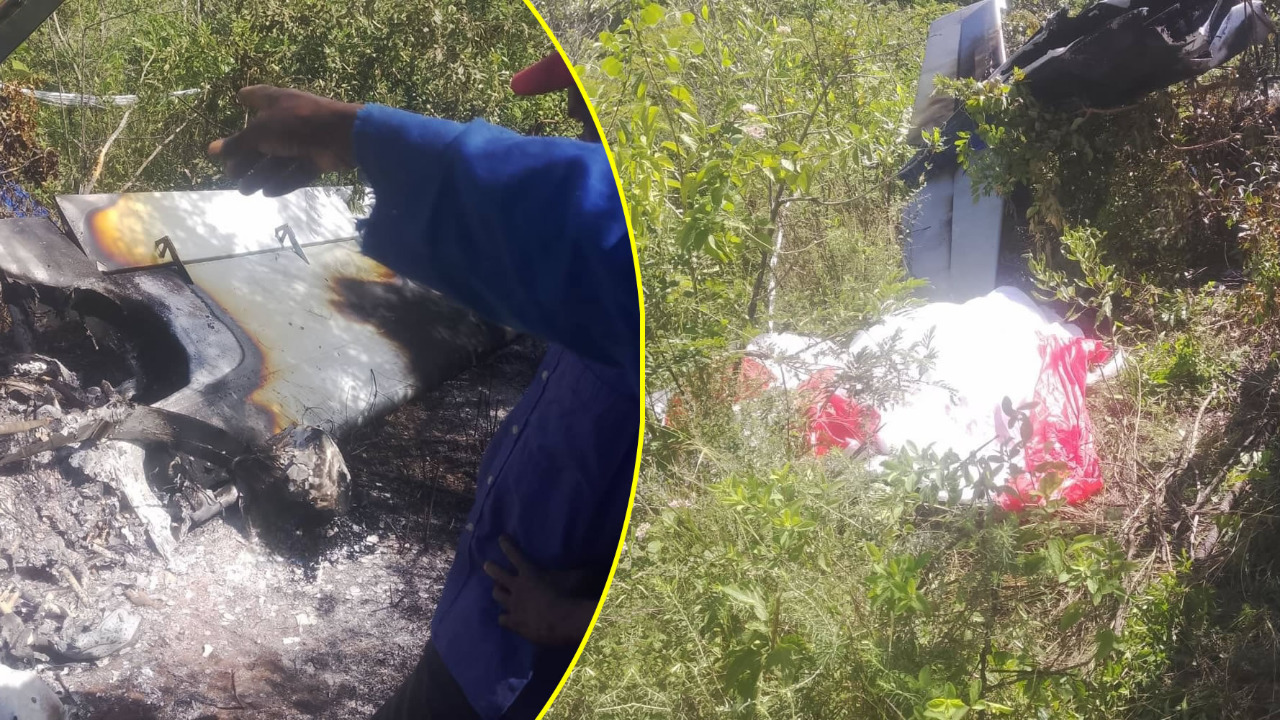
MASVINGO – The midday sun was beating down on the hills of Nyoka Village in Zaka, in Masvingo province, when the silence of the rural landscape was shattered by the spluttering of a low-flying engine. It was Sunday, 15 March 2026, and for the residents of Ward 2 in the Gondo area, the sight of a private light aircraft was not entirely unusual. What was strange, however, was the sound it made. According to police reports and eyewitnesses, the craft—which had departed from Komani Aerodrome in Mt Hampden, Harare, destined for Chipinda Pools—began emitting an “unusual sound” as it traversed the mountainous terrain approximately 85 kilometres southeast of Masvingo.
By the time the first villagers reached the crash site at around 11:00 AM, the wreckage was already being engulfed by a fierce blaze. The fuselage was scattered amongst the trees and tall grass, a mangled skeleton of what was once a high-performance private machine. One person lay dead—the pilot, whose identity is believed by locals to be Australian—while his wife was found a few metres away with both legs broken, having reportedly attempted a desperate mid-air escape. Within hours, the Zimbabwe Republic Police (ZRP) issued a statement through National Police Spokesperson Commissioner Paul Nyathi. “One person was killed while another person was injured when an aircraft carrying two occupants crashed before being engulfed by fire,” Nyathi confirmed, noting that the aircraft had reportedly developed a mechanical fault.
But some analysts have found discrepancies that suggest a much deeper story. In the world of “shadow aviation” in Zimbabwe, nothing is ever quite as routine as it seems. While the official word is “mechanical fault,” witnesses on the ground provided a narrative that adds a layer of complexity to the tragedy. These villagers, including Jairos Nyoka and Jeffrey Nyoka, who were among the first to arrive, described a plane that seemed to “burst” in mid-air before swerving and descending rapidly. “Something burst, and then it started swerving,” one witness remarked, describing the pilot’s desperate struggle to navigate the craft before it ultimately nose-dived into the valley.
This flight was officially destined for Chipinda Pools, a remote area within the Gonarezhou National Park. Yet, the path taken by the ill-fated aircraft led it directly over the sensitive mining zones of Zaka and the neighbouring Bikita district. These areas are home to some of the world’s largest lithium deposits, alongside significant gold veins that have drawn both legitimate mining giants and “high-profile” business interests. The question that remains unanswered is why a private plane, operating on what was described as a routine flight, would be flying at such a low altitude over a zone currently under intense scrutiny for its mineral wealth.
The background of the mission only adds to the intrigue. In a country where the Zimbabwe Revenue Authority (ZIMRA) and the Civil Aviation Authority of Zimbabwe (CAAZ) maintain strict oversight of commercial corridors, private flights often operate in a grey zone. Investigative experts in the region suggest that “shadow aviation” is frequently used to move gold and cash across borders, bypassing the usual checkpoints at major airports. Just days before this crash, ZIMRA officials at Robert Gabriel Mugabe International Airport seized nearly $80,000 from a businessman, a stark reminder of the constant flow of undeclared currency through the country’s aerial arteries.
|
Fact
|
Official Version
|
Witness/Investigative Detail
|
|
Flight Path
|
Harare to Chipinda Pools
|
Low altitude over sensitive mining zones
|
|
Cause of Crash
|
Mechanical Fault
|
Mid-air “burst” followed by rapid descent
|
|
Occupants
|
Two (Husband and Wife)
|
Believed to be Australians; wife attempted parachute escape
|
|
Rescue Effort
|
Ongoing Investigation
|
Villagers used tree logs to pull body from flames
|
The speed at which the wreckage in Zaka was cleared has also raised eyebrows. Usually, aviation investigators spend days or even weeks at a crash site, meticulously documenting every piece of debris to understand the mechanics of the failure. In this instance, while CAAZ investigators were dispatched, the site was rapidly secured. Furthermore, certain “black boxes” of information—specifically the flight data and communication logs between the pilot and ground controllers—are being kept from the public. If this was a simple case of mechanical failure, why is the data being treated with such a high level of confidentiality?
The cargo that was allegedly being moved under the cover of a “routine” flight remains a point of intense speculation. While the police have remained silent on the contents of the fuselage, the proximity of the crash to major lithium and gold operations cannot be ignored. In Zimbabwe, the movement of minerals is a tightly controlled state monopoly on paper, but in practice, it is a sieve. Small-scale miners and “high-profile” syndicates alike have been known to use the anonymity of private aviation to move precious metals without the legal requirement to sell to Fidelity Gold Refiners.
The survivor of the crash, the pilot’s wife, is currently under medical care. Witnesses described her screaming in pain, repeatedly asking if her husband was still alive while she lay in the grass with her parachute torn and caught in the aircraft’s wing. Her attempt to escape moments before impact is a rare and harrowing detail in Zimbabwean aviation history. If she recovers, her testimony could be the key to unlocking the Zaka mystery. However, given the “shadow” nature of this industry, there are many who would prefer that the full details of their mission remain undisclosed.
The aviation landscape in Africa has faced significant safety challenges, with the International Air Transport Association (IATA) reporting that the continent recorded the highest regional accident rate in 2025. Yet, in Zimbabwe, many of these accidents occur under circumstances that suggest more than just poor maintenance. They are the collateral damage of a high-stakes scramble for resources. When a plane goes down in the hills of Masvingo, it is often the final chapter of a “delivery gone wrong” that the state is desperate to keep quiet.
“Shadow aviation” has become a term synonymous with the bypass of ZIMRA checkpoints. By using private airstrips like the Komani Aerodrome and landing in remote spots like Chipinda Pools, operators can move millions of dollars in gold or cash without ever stepping foot in a major terminal. The Zaka crash appears to be a rare moment where this hidden world collided with the reality of the ground. The “unusual sound,” the mid-air “burst,” and the high-profile links all point to a mission that was never meant to be documented.
As the sun sets over the charred grass of Nyoka Village, the official narrative remains unchanged. The pilot is dead, the passenger is silent, and the wreckage is under investigation. But for the people of Zaka, the mystery remains. They saw the plane’s erratic descent; they heard the mechanical failure; and they know that in the hills of Masvingo, the truth is often as elusive as the minerals themselves. Was the Zaka crash a tragic accident, or was it a calculated risk that ended in fire? Until the authorities release the full flight data and identify the true nature of the cargo, the “mechanical fault” explanation will continue to ring hollow.
The world of shadow aviation thrives on silence and the absence of records. But as more details emerge from the witnesses on the ground and the backgrounds of those involved are scrutinised, the silence is beginning to break. This was not just a fatal flight; it was a glimpse into the machinery of an illicit trade that powers the elite while leaving the rest of the country in the dark. The Zaka mystery is far from solved, but one thing is certain: the authorities are telling us only what they want us to hear, and the most important parts of the story are the ones they have chosen to hide.