


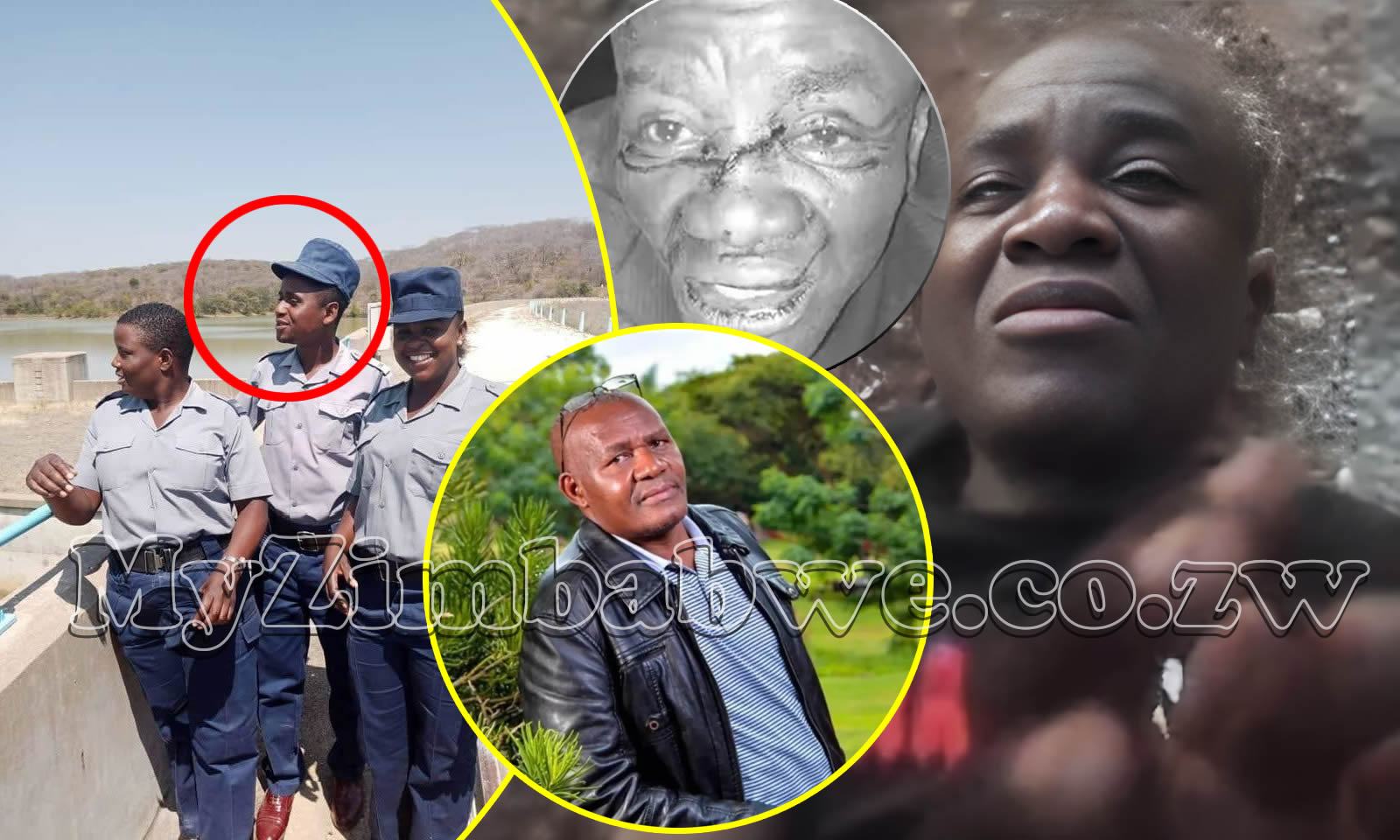
The silence of the night at Lisheen Estate in Ruwa was shattered shortly after midnight on 17 August 2025. Within the walls of his farmhouse, Joseph Mutangadura, a 67-year-old prominent businessman and owner of the popular Mutangadura Hideout, was sleeping when a gang of eight masked men descended upon his property. By the time the intruders vanished into the darkness, Mutangadura lay dead, a victim of what the Zimbabwe Republic Police (ZRP) initially classified as a “robbery gone wrong.” However, as the months passed, the trail of blood did not end at the farmhouse. Instead, it led to a series of high-stakes confrontations across the country, culminating in a “dead men tell no tales” pattern that has left many questioning whether the full truth will ever be told in a court of law.
On 19 March 2026, the investigation reached what the police described as its final chapter. Acting on a tip-off, detectives from the Criminal Investigations Department (CID) Homicide unit tracked a group of suspects to a service station in the Claremont suburb of Gweru. What followed was described by official sources as a “bloody shootout.” According to the ZRP, the suspects opened fire upon being confronted, forcing the officers to retaliate. When the smoke cleared, Valentine Mutasa, 34, was critically injured and later pronounced dead upon admission to a hospital. Two others, Solomon Wisdom Tariro, 28, and Samuel Munyunguma, 55, were taken into custody, while a fourth suspect, Obedience Mutasa, managed to escape the dragnet.
Following the Gweru incident, National Police Spokesperson Commissioner Paul Nyathi issued a definitive statement: “The public should take note that all the suspects in the murder of Joseph Mutangadura have all been accounted for by the police.” While the ZRP celebrated what they termed “efficient” law enforcement, the finality of the statement has raised eyebrows among legal experts and human rights advocates. The “accounted for” label, often used by the security forces to signal the closure of high-profile cases, frequently coincides with the death of key suspects who might have provided crucial testimony regarding the broader criminal networks operating within Zimbabwe.
The Mutangadura case is not an isolated incident of suspects meeting a violent end before they can stand trial. In October 2025, a similar scene played out near Norton, where four armed robbery suspects were killed in a fierce exchange of gunfire with detectives. In that instance, two detectives were reportedly injured, but the suspects—who were linked to several high-profile heists—were all killed. This emerging pattern of “shoot-to-kill” has prompted the Zimbabwe Human Rights NGO Forum to flag the policy, warning that such actions bypass the justice system and prevent the uncovering of “big fish” who may be orchestrating these hits from the shadows.
One of the most troubling aspects of the Mutangadura investigation is the link between the suspects and other violent crimes. Police established that the 9mm Canik pistol used to kill Mutangadura was the same weapon used in the fatal shooting of a police officer in Sanyati. This connection suggests a sophisticated and well-armed syndicate with access to a shared armoury, raising questions about the origins of these weapons. Are they being smuggled into the country, or are they being leaked from within the security forces themselves? The death of Valentine Mutasa in Gweru means that one more person who could have answered these questions is now silent forever.
Legal experts argue that the frequent “bloody shootouts” where only the suspects end up dead are statistically improbable and point towards a systematic “cleansing” of evidence. “The danger of a shoot-to-kill policy is that it serves as both judge and executioner,” says one legal analyst who requested anonymity for fear of reprisal. “When suspects are killed in custody or during arrest, we lose the opportunity to understand the mechanics of the crime. In the Mutangadura case, the question remains: was he killed for a few dollars and a ‘Kambudzi’ phone, or was this a professional hit disguised as a robbery?”
The reconstruction of the final moments of suspects like Solomon Wisdom Tariro and Samuel Munyunguma reveals inconsistencies in the official narrative. While the police report states that the suspects initiated the gunfire at the Claremont service station, witnesses in the area reported a swift and overwhelming tactical operation. The recovery of an Ekol 9mm blank pistol alongside a live 9mm Canik pistol at the scene further complicates the narrative. Why would seasoned armed robbers, allegedly responsible for the cold-blooded execution of a prominent businessman, engage a heavily armed CID Homicide unit with a blank pistol? This specific detail has led many to believe that the suspects were not prepared for a shootout, but rather for an execution.
The Mutangadura gang was not a group of amateurs. Among those previously arrested were Given Mandizadza, 34, and Aaron Nyamayaro, who were described as part of a “brothers in terror” syndicate. Mandizadza appeared before Harare regional magistrate Mrs Marehwanazvo Gofa in October 2025, charged with armed robbery and murder. However, the subsequent deaths of their alleged accomplices in Gweru have effectively severed the links that could have led investigators to the masterminds. The “dead men tell no tales” strategy appears to be a convenient way to close files that might otherwise lead to uncomfortable truths about rogue elements within the security forces.
The brutal nature of Mutangadura’s murder—shot while he slept in his own home—demanded a robust police response. But the transition from a genuine cleanup of Zimbabwe’s streets to what appears to be a systematic execution of suspects is a line that many believe has been crossed. The ZRP’s insistence that the case is “accounted for” does little to settle the unease in Ruwa and beyond. If the suspects were indeed part of a much larger criminal syndicate with potential ties to high-ranking individuals, their deaths serve as a permanent seal on the investigation’s most sensitive details. The community in Ruwa, while relieved that some measure of action has been taken, remains deeply sceptical of the official version of events.
In January 2025, a rare moment of accountability occurred when a police officer was sentenced to 20 years in prison for fatally shooting a robbery suspect. The court ruled that the use of lethal force was not justified, a verdict that was seen as a victory for the rule of law. Yet, the frequency of shootouts in the months following that ruling suggests that the “shoot-to-kill” culture remains deeply embedded within the CID Homicide units. The message being sent to the criminal underworld is clear, but the message being sent to the public is more ambiguous: is the state protecting its citizens, or is it protecting its own secrets? The judicial system is being bypassed in favour of a more immediate, and far more permanent, form of justice.
The investigation into the Mutangadura murder has been marked by a series of high-profile arrests and equally high-profile deaths. From the initial arrest of Given Mandizadza to the final shootout in Gweru, the narrative has been one of relentless police pursuit. Yet, the lack of live suspects to testify in open court means that the public is forced to rely solely on the ZRP’s version of the story. In a country where the line between the police and the criminal underworld is often blurred, this reliance is a cause for significant concern. The “efficient” law enforcement being celebrated by Commissioner Nyathi may, in fact, be a highly effective way of ensuring that certain secrets remain buried.
As the trail of blood from Ruwa to Gweru grows cold, the family of Joseph Mutangadura is left with a hollow sense of justice. While some of the men accused of pulling the trigger are behind bars, and others are in the morgue, the “big fish” remain at large, untouched by the law enforcement the ZRP so proudly advertises. The inconsistencies in police reports, the recurring “same gun” narratives, and the convenient deaths of key witnesses all point to a murder case that is far from closed in the minds of the public. The “accounted for” suspects are merely the foot soldiers in a much larger and more dangerous game.
This documentary-style report has followed the evidence from the silent farmhouse in Ruwa to the bullet-riddled service station in Gweru. What it has found is a pattern of state-sanctioned violence that may be burying the truth alongside the suspects. In the quest to “account for” every criminal, the Zimbabwe Republic Police may have inadvertently—or perhaps intentionally—accounted for the very evidence needed to dismantle the country’s most dangerous syndicates. Until the “shoot-to-kill” policy is replaced by a commitment to the judicial process, the question will remain: who really ordered the hit on Joseph Mutangadura, and why were the men who knew the answer never allowed to speak?
The “cleansing” of Zimbabwe’s streets continues, but at what cost to the truth? As long as dead men tell no tales, the shadows over the Mutangadura execution will only grow longer, leaving a nation to wonder if the police are truly fighting crime or simply managing its most inconvenient witnesses. The case may be “accounted for” in the police files, but in the court of public opinion, the investigation has only just begun. The families of the victims, both the murdered businessman and the executed suspects, deserve a transparency that the current system seems unable or unwilling to provide.
Furthermore, the social impact of these “shoot-to-kill” incidents cannot be ignored. When the public begins to view the police as an execution squad rather than a peacekeeping force, the very foundations of civil society are undermined. The Mutangadura case, with its high-profile victim and its equally high-profile resolution, has become a symbol of this erosion. In Ruwa, where Mutangadura was a respected figure, the news of the shootout in Gweru was met with a mixture of relief and dread. Relief that his killers were no longer on the streets, but dread that the full story of why he was targeted might never be known.
The link to the Sanyati cop killing is perhaps the most damning piece of evidence suggesting a wider conspiracy. If the same weapon was being used across different provinces by different members of the same gang, it points to a highly organised structure with a centralised armoury. Such a structure would require significant resources and, potentially, protection from within the state’s own security apparatus. By killing the men who used that weapon, the police have ensured that the chain of custody for that firearm remains a mystery. This is not just a failure of investigation; it is a failure of the state to protect its own integrity.
In conclusion, the Mutangadura execution remains a dark chapter in Zimbabwe’s recent criminal history. While the police have declared the case closed, the questions they have left unanswered continue to haunt the nation. Was this a genuine cleanup, or a systematic “cleansing” of evidence? As long as the “shoot-to-kill” policy remains in place, and as long as suspects continue to die in “bloody shootouts” where only they end up dead, the truth will remain as elusive as the “big fish” who continue to swim in the murky waters of Zimbabwe’s criminal underworld. The legacy of Joseph Mutangadura deserves better than a closed file and a trail of dead men who can no longer tell their tales.