


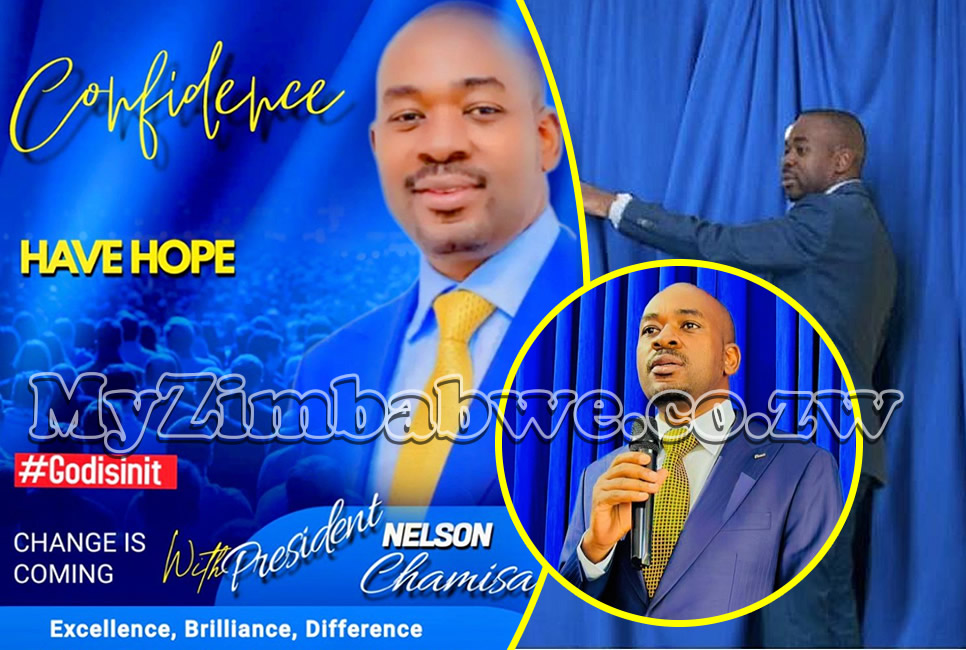
The corridors of Munhumutapa Building are reportedly filled with a new kind of anxiety these days. It is not the usual fret over inflation or the latest international sanctions. Instead, the source of this unease is a man who has been remarkably quiet for months: Nelson Chamisa. While the state-controlled media has been busy writing his political obituary, our investigation reveals that Chamisa’s “Agenda 2026” has triggered a high-level security alert within the Central Intelligence Organisation (CIO). The “Politics of Silence” that many mistook for defeat is, in fact, the camouflage for a sophisticated “Grassroots Ghost Network” that is being built outside the reach of traditional state repression.
For years, the Zimbabwean government has perfected the art of crushing the opposition by targeting its visible structures—arresting leaders, seizing headquarters, and infiltrating executive committees. However, “Agenda 2026” represents a clean break from this vulnerable model. According to sources close to the movement, Chamisa has abandoned the “big tent” political party structure in favour of a “cell-based” strategy. These cells are small, organic, and mass-based, operating without the traditional hierarchy that the state usually decapitates. This “Ghost Network” is designed to be invisible until it is too late to stop, making it a nightmare for a security apparatus built to fight visible enemies.
The timing of this shift is not accidental. The year 2026 has emerged as the “danger zone” for the current administration. As the country edges closer to the 2028 elections, the ruling ZANU-PF party is gripped by internal fractures over the proposed “Constitutional Amendment No. 3.” This controversial bill, which cabinet recently backed, seeks to extend presidential terms from five to seven years. If passed, it would effectively postpone the next election until 2030, allowing President Emmerson Mnangagwa to remain in power beyond the current two-term limit.
In his “Agenda 2026” statement, Chamisa did not mince his words about the state of the nation. He declared:
“Today, Zimbabwe is gripped by disputed national processes, deepening economic hardship, political uncertainty, social collapse and moral decay. Government services and support to citizens is upon partisan considerations. The unfolding instability has heightened national anxiety and eroded public trust. We have endured decades of crisis, political instability, political intolerance and national decohesion.”
This assessment of a “debilitating legitimacy crisis” is what makes the state so nervous. The government’s desperation to change the constitution is a clear admission that they fear a standard electoral contest in 2028. By pushing for a 2030 extension, the elite are trying to buy time to manage their own internal succession battles and to find a way to neutralise the growing “Third Force.”
This “Third Force” is perhaps the most significant revelation of our investigation. It is not a new political party, but a loose alliance of disgruntled war veterans and young military officers who have become disillusioned with what they describe as a “corrupt cabal” at the top. These are individuals who were once the backbone of the system but now find themselves struggling with the same economic hardships as ordinary citizens. One retired officer, speaking on condition of anonymity, noted that “the revolution has been hijacked by those who love the colour of money more than the soil of Zimbabwe.”
Chamisa seems to be tapping into this sentiment. His “Agenda 2026” is framed as a “New National Consensus” that goes beyond partisan lines. He argues that:
“Zimbabwe needs a NEW WAY. This NEW WAY is born out of long-term reflection on a critical truth: the challenge of our politics is that the alternative has too often been built on a rotten, compromised, exhausted, and sterile past. A past that stifles the organic emergence and growth of an authentic and credible alternative in Zimbabwe.”
This “clean break” strategy is designed to appeal to those within the system who are tired of the “vicious cycle of violence, disputes and tensions.” By focusing on “purpose over positions,” Chamisa is positioning himself not just as an opposition leader, but as the focal point for a national reset.
The state’s reaction has been swift and predictable. The sudden arrest and detention of figures like Tendai Biti and the continued harassment of activists are seen as attempts to provoke the opposition into a premature confrontation. The CIO is reportedly desperate to draw Chamisa out of his silence and force him into a traditional political battle where the state holds all the cards. But Chamisa remains steadfast in his new approach, stating:
“Agenda 2026 is about a clean break from the mistakes and missteps of the past. It is a commitment to reimagine Zimbabwe and to rebuild our nation on democratic values, constitutionalism, competence, and compassion. A fresh start means rejecting fear, violence, corruption, selfishness, greed and exclusion.”
Geopolitical risks are also weighing heavily on the 2026 outlook. Regional bodies like SADC are increasingly wary of Zimbabwe’s perpetual instability, which continues to drive millions of citizens into neighbouring countries. Chamisa has been actively engaging these stakeholders, reminding them that “the immigration issues affecting Zimbabweans are numerous, the harassment, embarrassment and humiliation they endure is despicable.” He is framing the Zimbabwean crisis as a regional security threat that can only be solved through a “Fresh Start.”
Inside the country, the “Politics of Silence” is creating a vacuum that the state is struggling to fill with its own narrative. The “2030 vision,” once touted as an economic milestone, is now widely viewed as a coded deadline for a lifetime presidency. The “Command Agriculture” failures and the mysterious “Mutapa Investment Fund” payouts have only added fuel to the fire, convincing even some ZANU-PF supporters that the current path is unsustainable.
The “Ghost Network” is reportedly busy “mobilising, organising, recruiting, conscientising, educating, and sustaining information flows.” Unlike the rallies of the past, these activities happen in small groups, in private homes, and through encrypted digital channels. This “citizenocratic” model makes it nearly impossible for the police to ban “gatherings” because there is no single gathering to ban.
As the “Coming Storm” gathers pace, the question remains: can the state’s “Constitutional Coup” succeed against a “New National Consensus”? The government is betting that it can use the “politics of money” to buy loyalty and the “politics of fear” to ensure silence. But as Chamisa points out:
“Real change is not delivered to citizens; it is built, defended, and driven by the citizens themselves. We are building an agency: the practical capacity to act. We aim to build a nation of leaders, not followers, where every citizen actively shapes policies, monitors government, drives development, and defends democracy.”
The 2026 Reset is more than just a political slogan; it is a fundamental shift in the Zimbabwean struggle. For the first time in decades, the state finds itself shadow-boxing against an opponent it cannot see, while its own foundations are being eroded by internal dissent and economic decay. The chess pieces are moving, and the hidden moves being made today will determine whether Zimbabwe finally gets its “Fresh Start” or remains trapped in the “exhausted and sterile past.”
The state’s panic is perhaps the most honest indicator of the situation. They know that a population that has “broken the yoke of fear” is the one thing no amount of military hardware or constitutional tampering can stop. As we move closer to 2026, the “Politics of Silence” may soon give way to a national crescendo that the corridors of power are simply not prepared to hear.