


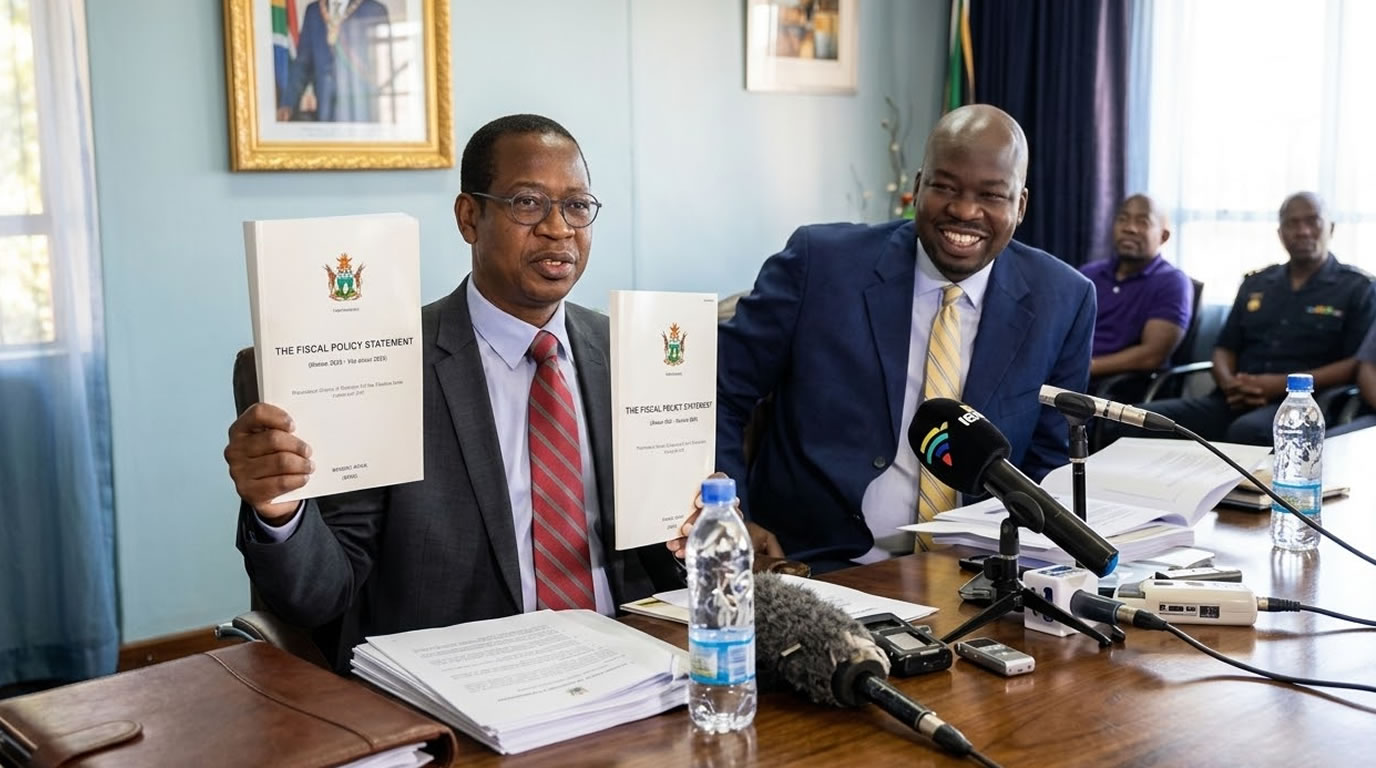
HARARE – Zimbabwe is forecasting its fastest growth in 14 years following a new “IMF deal.” But as the saying goes, “there’s no such thing as a free lunch.” Our investigation looks into the “Annex B” of the agreement—the secret conditions the government hasn’t publicised. We simplify the “austerity conspiracy”: the “fast growth” is predicated on massive cuts to social spending, the “privatisation” of key state assets to foreign entities, and a “tax overhaul” that will target the informal sector like never before.
The article explains the “growth paradox”—how the GDP can go up while the standard of living for the average Zimbabwean goes down. We reveal the “concessions” made on land and mineral rights that were part of the “re-engagement” package. We also analyse the role of “international middlemen” who stand to make a fortune from the “restructuring” of Zimbabwe’s debt. This investigative piece is a “reality check” for those hoping for an immediate economic miracle. We show that the “IMF deal” is a “double-edged sword” that could lead to “growth without development.” Readers will learn what the “structural adjustments” really mean for their schools, hospitals, and small businesses.
The headlines are painted with optimism. Government officials are touring the globe, touting a new era of prosperity. “The economy may expand by at least 8.5% in 2026 and rates could reach 9% to 10%,” declared George Guvamatanga, a senior Finance Ministry official, to a room full of investors at a recent mining conference in Cape Town. It is a bold claim, one that promises the fastest economic expansion Zimbabwe has seen in 14 years. This sudden burst of confidence is anchored in a newly minted Staff-Monitored Programme (SMP) with the International Monetary Fund (IMF), a 10-month informal agreement that officials claim will unlock the doors to international finance.
However, behind the glossy veneer of these macroeconomic projections lies a far more complex and troubling reality. Our investigation into the fine print of this arrangement—specifically the unpublicised “Annex B” conditions—reveals a starkly different picture. The promised “fast growth” is not a rising tide that will lift all boats. Instead, it is predicated on a brutal “austerity conspiracy” that involves massive cuts to social spending, the aggressive “privatisation” of key state assets to foreign entities, and a sweeping “tax overhaul” designed to squeeze the informal sector like never before.
This is the “growth paradox” in action: a scenario where the Gross Domestic Product (GDP) can soar while the standard of living for the average Zimbabwean plummets. While the government celebrates a projected 8.5% expansion, the IMF itself offers a more tempered forecast of 5%, noting that “gross international reserves remain low… covering less than one month of imports.” The discrepancy between these figures is telling, but it is the human cost of these “structural adjustments” that demands our immediate attention.
The Austerity Conspiracy and Social Spending Cuts
At the heart of the IMF deal is a commitment to severe fiscal tightening. Finance, Economic Development and Investment Promotion Minister Mthuli Ncube recently confirmed this trajectory, stating, “Treasury is geared to implement tough budget controls under the IMF SMP.” While “tough budget controls” may sound like prudent economic management to international creditors, on the ground, it translates directly into austerity.
For the average citizen, these controls mean that funding for public schools, hospitals, and essential social services will be slashed. The government, burdened by a staggering total debt of US$23.4 billion—of which US$7.7 billion is in arrears—has agreed to prioritise debt servicing and fiscal consolidation over social welfare. This “reality check” means that while the national ledger might begin to look more balanced to foreign observers, the queues at underfunded public clinics will grow longer, and the resources available to state schools will dwindle further.
The Privatisation Push and the Mutapa Fund
A critical component of the “Annex B” conditions involves the restructuring and “privatisation” of state-owned enterprises. Central to this is the Mutapa Investment Fund, formerly the Sovereign Wealth Fund, which now controls over 20 key state entities, including telecommunications giants NetOne and TelOne, the agricultural firm Cottco, and the transport operator ZUPCO.
The IMF has red-flagged the operations of the Mutapa Fund, calling for legal amendments and “enhanced disclosures.” Under the guise of improving efficiency, the secret conditions mandate the disposal of non-core assets and the opening up of these vital national resources to foreign entities. This is not merely an administrative reshuffle; it is a wholesale transfer of national wealth. The “privatisation” of these assets means that services previously subsidised or controlled by the state will now be driven by profit motives, inevitably leading to higher costs for consumers and potential job losses for thousands of workers.
Targeting the Informal Sector: A Tax Overhaul
Perhaps the most immediate and painful impact of the IMF deal is the aggressive “tax overhaul” that came into force in January 2026. In a bid to widen the tax base and satisfy the revenue targets set by the SMP, the government has unleashed a barrage of new levies that disproportionately target the informal sector and everyday consumers.
The standard Value Added Tax (VAT) rate has been increased to 15.5%, instantly raising the cost of basic goods. More insidiously, a new 15% Digital Services Withholding Tax has been introduced, targeting payments made to foreign digital platforms. Furthermore, landlords renting out business premises now face a 15% Presumptive Rental Income Tax. This measure is explicitly designed to formalise and extract revenue from the informal rental economy, a move that will inevitably lead to higher rents for small businesses and market stallholders who are already struggling to survive.
These taxes represent a concerted effort to squeeze revenue from the very people who have been forced into the informal economy by years of formal sector collapse. It is a strategy that punishes the most vulnerable while protecting the interests of large-scale capital.
Concessions on Land and Mineral Rights
The “re-engagement” package also includes significant “concessions” regarding Zimbabwe’s land and mineral wealth. The mining sector, which is the primary driver of the projected GDP growth through gold and platinum exports, is undergoing a profound transformation. While the government has introduced new export taxes, such as a 10% levy on lithium and antimony, the broader framework of the IMF deal encourages the facilitation of foreign direct investment in the extractive industries.
These concessions often come at the expense of local communities and environmental safeguards. The rush to exploit mineral resources to meet macroeconomic targets means that the long-term sustainability of these practices is being ignored. The wealth generated from the ground is largely exported, leaving behind degraded landscapes and communities that see little to no benefit from the riches extracted from their ancestral lands.
The Role of International Middlemen
As Zimbabwe navigates its Arrears Clearance and Debt Resolution Roadmap, a shadowy group of “international middlemen” stands to make a fortune. The “restructuring” of the country’s massive US$23.4 billion debt is a lucrative business for financial advisory firms, legal consultants, and international brokers who facilitate these complex negotiations.
Eyerusalem Fasika, the incoming African Development Bank (AfDB) country manager for Zimbabwe, recently noted, “The programme is a clear signal to the international community that Zimbabwe is taking decisive steps to stabilise its economy and address structural fiscal challenges.” While institutions like the AfDB play a formal role, the mechanics of debt restructuring involve numerous private actors who extract hefty fees for their services. These middlemen profit immensely from the country’s financial distress, siphoning off funds that could otherwise be used for national development.
Growth Without Development
The narrative being spun by the government and its international partners is one of impending economic salvation. However, our investigation reveals that the “IMF deal” is a “double-edged sword.” The projected 8.5% growth is a mirage for the majority of the population. It is a classic case of “growth without development,” where macroeconomic indicators improve on paper, but the lived reality of the citizens deteriorates.
The secret conditions embedded in “Annex B” dictate a future where social safety nets are dismantled, national assets are sold off to the highest bidder, and the informal sector is taxed into oblivion. The “structural adjustments” demanded by the IMF are not a pathway to prosperity for the average Zimbabwean; they are a blueprint for entrenched inequality.
As the government pushes forward with its “tough budget controls” and sweeping tax reforms, the people must brace themselves for the harsh realities of this agreement. The “fast growth” promised by officials is built on the backs of the working class and the poor. It is a delusion that masks the profound and lasting changes that will reshape the socio-economic landscape of the country. There is indeed no such thing as a free lunch, and the price of this particular meal will be paid by generations of Zimbabweans to come.