


A Nation Under Siege: Violence and Coercion Mar Zimbabwe’s Constitutional ‘Consultations’
HARARE — The promise of democratic participation in Zimbabwe was violently upended this week as parliament opened public hearings on a controversial set of constitutional amendments. What was intended to be a series of nationwide consultations on the Constitutional Amendment No. 3 Bill quickly descended into a harrowing display of state-sponsored intimidation, abductions, and targeted assaults against those daring to dissent.
From the bustling streets of Harare to the halls of Bulawayo and the mining towns of the Midlands, the story was the same: a systematic effort to silence the Zimbabwean people. The amendments at the heart of the storm seek to fundamentally redesign the nation’s political landscape, most notably by extending the presidential term from five to seven years. Critics argue this is a thinly veiled “grand heist” designed to keep President Emmerson Mnangagwa in power until at least 2030, bypassing the current two-term limit that should see him step down in 2028.
Blood on the Floor of Democracy
The violence was not abstract; it was visceral. In Bulawayo, the atmosphere at Nketa Hall turned toxic on Monday when a woman, wearing a T-shirt emblazoned with the words “No to 2030”, stood up to challenge the proposed changes.
“When we went to vote, we voted for the president to be in that seat for five years. What is he going to achieve in two years that he failed to achieve in 10 years?” she demanded.
The response was swift and brutal. She was heckled, shouted down, and eventually forced out of the hall. The ordeal did not end at the exit; witnesses described a terrifying scene as she was chased through an open field and pelted with stones by a group of unidentified men. The hearing, presided over by MP Elizabeth Masuku, chairperson of the Justice, Legal and Parliamentary Affairs Committee, collapsed shortly thereafter as organisers failed to restore order.
In the aftermath, Denford Sithole, a student leader who had spoken against the bill, was led away from the hall by an unidentified man in civilian clothes. For hours, his whereabouts were unknown, sparking fears of another political abduction—a tactic that has become a grim hallmark of Zimbabwean politics. He was eventually located at Bulawayo Central Police Station. Former CCC MP Gift Ostallos Siziba noted that Sithole had been “charged simply for wearing a Zimbabwe National Students Union Learnmore Jongwe T-shirt.”
The Assault on the Legal Fraternity
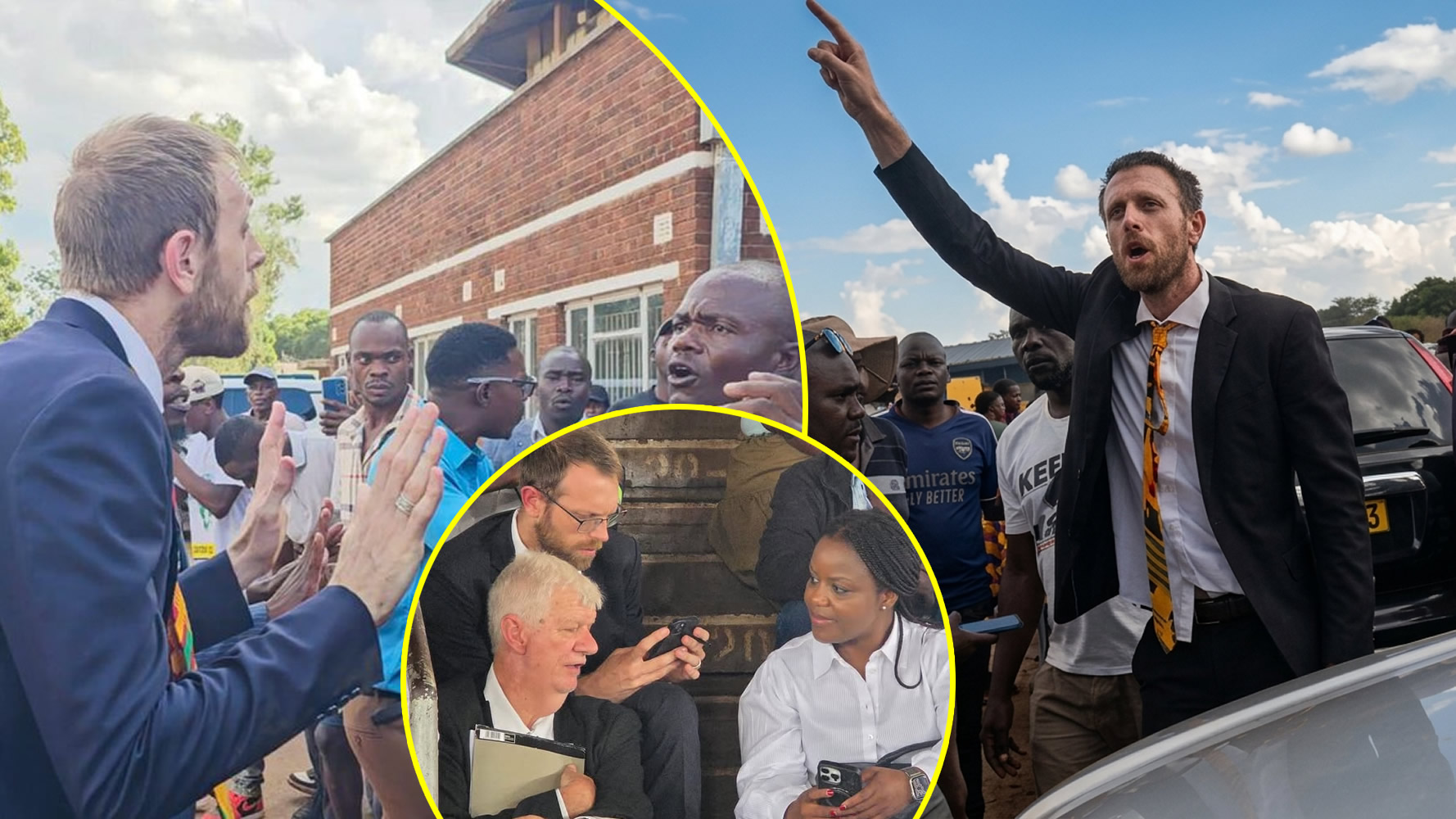
The chaos reached a fever pitch in the capital on Tuesday. At the City Sports Centre in Harare, the hearings were rocked by reports of violence and the theft of personal property. Doug Coltart, a prominent human rights lawyer, was violently assaulted as he attempted to leave the venue. A group of suspected ZANU PF supporters attacked him, stealing his mobile phone and eyeglasses in broad daylight.
Coltart was not the only high-profile target. Opposition figures including Tendai Biti, Fadzayi Mahere, and Morgen Komichi were subjected to relentless booing and heckling, making it nearly impossible for their contributions to be heard. Journalists attempting to document the proceedings were blocked from filming or taking photographs, with many reporting instances of direct intimidation by party loyalists.
David Coltart, the Mayor of Bulawayo, described a deliberate strategy of exclusion. Attending a hearing at the Large City Hall, he observed that opposition voices were “studiously ignored” by the chair.
“I was there on time, sat in the front row, put my hand up every time a call was made for people to contribute, and stood up with my hand raised when it was clear the chair was studiously ignoring me,” the Mayor remarked. “The meeting was brought to an abrupt end at about 11.30AM, and as a result, both Judith Todd and I were denied the right to contribute and give our views.”
A Manufactured Consensus
The pattern of “bussing” supporters to hearing venues has emerged as a central pillar of the government’s strategy. In Bindura, Kwekwe, and Chiredzi, reports flooded in of ZANU PF supporters being transported in large numbers to drown out local residents. In Chiredzi, participants appeared to be using a choreographed system—raising three fingers—to signal to the moderator who should be given the microphone.
In Kwekwe, the hearing at the Kwekwe Theatre ended prematurely after Melody Chingarande, the sole participant to speak against the bill, was booed and ejected. She had to be escorted to the police station by sympathisers as she faced threats from a crowd packed with outsiders.
The Zimbabwe Human Rights Monitors reported even more sinister developments in Chitungwiza. Two men, Anyway Ngona and Charles Andersen, who had voiced their opposition at the Aquatic Complex, were reportedly abducted by a group known as Black Vendetta. The monitors stated the men were severely beaten before being dumped in the city centre.
The 2030 Agenda: A Constitutional Crisis
At the core of this unrest is Constitutional Amendment No. 3. The Bill proposes 22 clauses, but the extension of the electoral cycle is the lightning rod for public anger. While government ministers insist the changes are about “stability” and “governance,” the timing—coming just as Mnangagwa nears the end of his constitutional limit—has raised alarms.
The legal community is already preparing for a protracted battle. Tendai Biti, leading the Constitutional Defenders Forum, has labelled the outreach a “sham prepaid process.” Lawyers argue that extending the terms of parliament and the president requires a national referendum, and that even if such a vote were held, the incumbent president cannot legally benefit from the extension.
The current wave of violence is not an isolated incident but part of a disturbing trend. Reports from human rights watchdogs indicate that political violations have surged in 2026, with over 110 incidents recorded in January alone. The use of abductions, arbitrary arrests, and “bussed-in” crowds to manufacture support reflects a deepening crisis of legitimacy for the ZANU PF administration.
A History of Coercion
The tactics witnessed this week—the use of “war veterans” and party youth to disrupt public gatherings—echo the darkest periods of Zimbabwe’s history. From the state-sponsored violence of the early 2000s to the brutal crackdown following the 2008 elections, the playbook of the ruling party has remained remarkably consistent: when the law does not serve their interests, they change the law; when the people object, they use force.
In Bindura, student leader Tafara Magodora was reportedly snatched from a bus stop near the university. While police later claimed he was arrested for a prior assault and had paid a fine, the initial report of his disappearance added to the climate of fear.
The Road to May
As the parliamentary outreach continues through April 2, the nation remains on edge. The vote in parliament is scheduled for May, and with ZANU PF holding a significant majority, the passage of the bill seems a foregone conclusion to many. However, the level of resistance encountered this week suggests that the “2030 Agenda” will not be implemented without a fight.
For the ordinary Zimbabwean, the hearings were supposed to be a chance to shape the future of their country. Instead, they became a theatre of conflict. As one resident in Bulawayo noted, the exercise has “collapsed under its own weight.”
The international community and regional bodies like SADC are being urged to intervene, but for now, the streets of Zimbabwe remain a battleground for the soul of its constitution. The question remains: can a constitution born of such violence and exclusion ever truly claim to represent the will of the people?
The voices of the silenced—the woman stoned in Bulawayo, the lawyer assaulted in Harare, and the students detained for their T-shirts—provide a chilling answer. In the quest for 2030, it appears the first casualty has been the truth of the consultation process itself.
Table: Key Incidents During Constitutional Amendment No. 3 Public Hearings
|
Location
|
Date
|
Incident Type
|
Key Details
|
|
Nketa Hall, Bulawayo
|
30 Mar 2026
|
Assault / Stoning
|
Woman in “No to 2030” shirt chased and stoned; Denford Sithole detained.
|
|
City Sports Centre, Harare
|
31 Mar 2026
|
Assault / Theft
|
Rights lawyer Doug Coltart attacked; phone and glasses stolen.
|
|
Kwekwe Theatre
|
30 Mar 2026
|
Intimidation
|
Melody Chingarande ejected and threatened by bussed-in crowds.
|
|
Aquatic Complex, Chitungwiza
|
30 Mar 2026
|
Abduction / Assault
|
Anyway Ngona and Charles Andersen abducted and beaten by “Black Vendetta”.
|
|
Large City Hall, Bulawayo
|
30 Mar 2026
|
Exclusion
|
Mayor David Coltart and Judith Todd ignored by the chairperson.
|
|
Bindura
|
30 Mar 2026
|
Arrest
|
Student leader Tafara Magodora arrested following reports of abduction.
|