


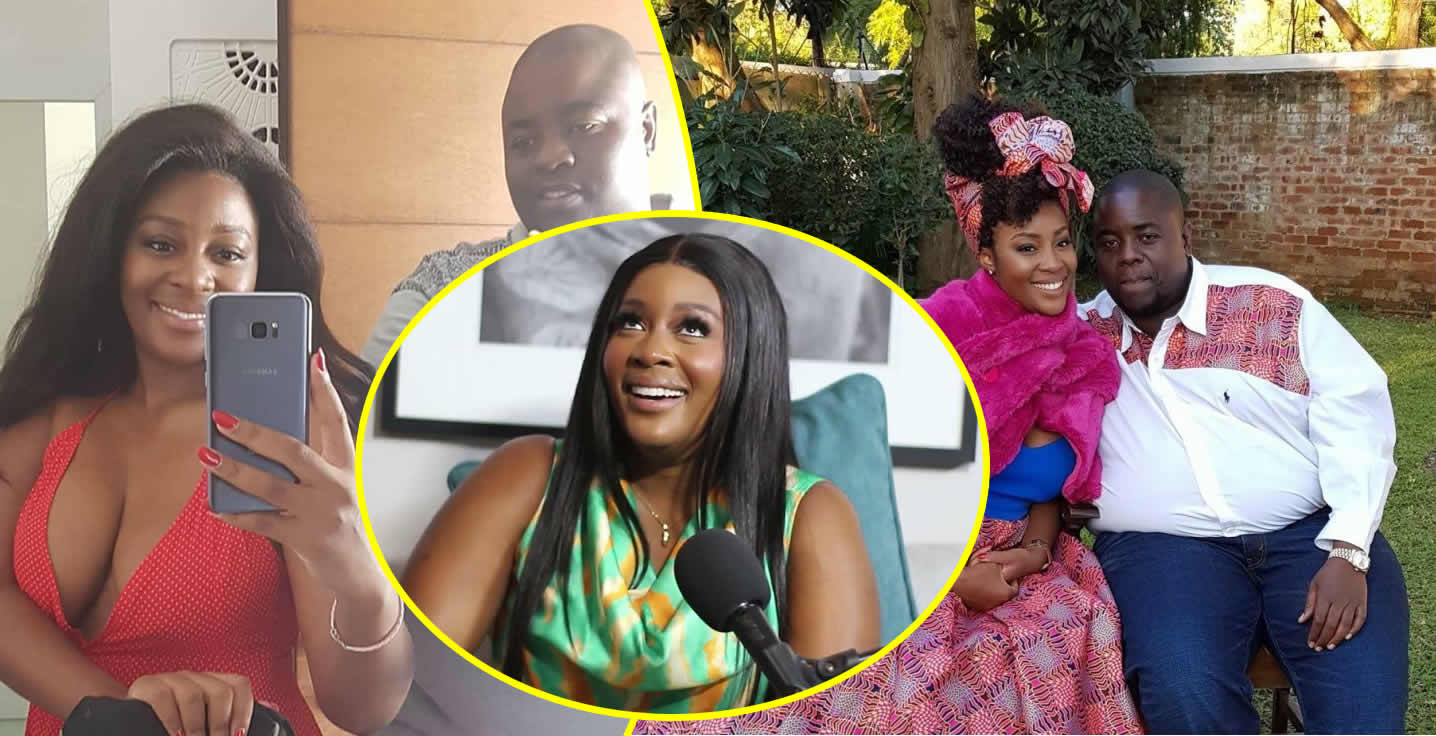
The US$5 Million Secret: What Wicknell Chivayo is Desperately Trying to Hide
Flamboyant businessman Wicknell Chivayo is no stranger to controversy, but his recent US$5 million divorce and custody settlement with his estranged wife, Sonja Madzikanda, has set the internet ablaze. While Chivayo’s camp initially attempted to dismiss the figures as fabricated, High Court documents and consent agreements tell a different story. Chivayo has already paid US$2.2 million, with the remaining balance due within 30 days, granting Madzikanda primary custody of their children.
But what is the real story behind this astronomical payout? Investigative whispers suggest that this is not merely a standard maintenance agreement, but a calculated move to buy silence. Sources close to the couple hint that Madzikanda holds “deadly secrets” regarding Chivayo’s business dealings and political connections—secrets that, if exposed, could unravel his empire.
This article will peel back the layers of Chivayo’s carefully curated public image to examine the financial and legal mechanics of this historic settlement. We will simplify the High Court rulings and explore the implications of such massive wealth changing hands in a country grappling with economic hardship. By analysing the timeline of their public fallout and the sudden, quiet resolution in the courts, the story will ask the ultimate question: Is this US$5 million a genuine provision for his children, or is it the ultimate hush money to protect the billionaire’s hidden skeletons?
A Quiet Resolution in the High Court
The legal battle between Wicknell Chivayo and Sonja Madzikanda reached a critical juncture before Justice Amy Shupikai Tsanga at the High Court of Zimbabwe. The court granted a consent order that effectively ended the immediate dispute over child custody and maintenance. The figures involved are staggering. According to the court documents, the parties agreed on a US$5 million maintenance package for their minor children.
Of this amount, US$2.2 million has already been invested. The remaining US$2.8 million is to be paid into the same investment accounts within 30 days. Madzikanda will control the bank account, while Chivayo retains oversight. For the first 12 months, Chivayo is personally required to cover all reasonable living expenses for the children while the investment portfolio is established.
The agreement also outlines strict custody and access terms. Madzikanda was awarded primary custody. Chivayo is entitled to collect the children every Friday after school and return them on Sunday evening, plus one uninterrupted week per school month on dates to be agreed upon in advance. Crucially, the order stipulates that he must be personally available during these access periods and cannot delegate parental responsibilities to third parties. Furthermore, neither party may remove the children from Zimbabwe without the other’s prior consent.
This settlement resolves an urgent chamber application Chivayo filed in March 2026. In his founding affidavit, he accused Madzikanda of “systematically and unilaterally” withholding access to their two children, born in January 2018 and March 2019, unless he complied with financial demands. He described the situation as the “extortionate weaponisation of the children.”
“The weaponisation of the children and the restriction of my access to them have caused me great concern and anguish and collaterally affected the well-being of the children,” Chivayo stated under oath. He added, “No court order lawfully restricts my contact with the children,” noting that direct engagement, mediation proposals, and written correspondence had all failed.
The Larger Battle for Assets
While the US$5 million settlement addresses the immediate needs of the children, it is merely a sideshow to a much larger and more contentious battle over the dissolution of their union and the division of assets. This broader dispute continues under case number HCHF 62/2026.
Madzikanda, who maintains that she and Chivayo were married under customary law in July 2017, is seeking a massive financial payout. Her demands include a US$25 million lump sum maintenance payment and US$40,000 per month in spousal maintenance until she remarries.
Beyond the cash, she is also claiming a share of Chivayo’s extensive fleet of luxury vehicles. The list of assets reads like a catalogue of extreme wealth, including three Rolls-Royces (one of which is a 2025 Cullinan Series 2 Black Badge), a Lamborghini Urus, a Mercedes-Benz Maybach, and a private jet.
The sheer scale of these demands, coupled with the swift agreement on the US$5 million child maintenance package, has fuelled speculation. Why would a man who initially tried to hide the settlement figures suddenly agree to such a massive payout?
Hush Money and Deadly Secrets
Investigative sources suggest that the US$5 million is not just about providing for his children. Instead, it is widely viewed as a strategic move to buy Madzikanda’s silence. As his wife, she has had a front-row seat to his business operations and political manoeuvring. The “deadly secrets” she allegedly holds could be devastating if made public, especially given the intense scrutiny Chivayo is currently facing from multiple angles.
Chivayo’s wealth is deeply intertwined with lucrative government contracts, many of which have been marred by allegations of corruption and fraud. In July 2024, he was implicated in a massive scandal involving the supply of election materials to the Zimbabwe Electoral Commission (ZEC). The contract, originally between ZEC and a South African printing firm called Ren-Form CC, was allegedly inflated by up to 235%, resulting in a R570 million (approximately US$40 million) payout.
The fallout from the ZEC scandal was significant. The Electoral Commission of Zambia (ECZ) subsequently cancelled a US$14 million contract awarded to Ren-Form due to its links to the controversy. Furthermore, in April 2025, South African financial regulators launched a probe into Ren-Form for possible money laundering offences linked to kickbacks from the Zimbabwe deal.
The pressure on Chivayo intensified in mid-2024 when leaked audio recordings surfaced. In these recordings, his former business partners, Mike Chimombe and Moses Mpofu, were heard angrily demanding payment from Chivayo for proceeds from the election tender, claiming he had betrayed them. Chimombe and Mpofu were later convicted in October 2025 of a separate US$7 million fraud related to the Presidential Goat Pass-on Scheme, further highlighting the murky waters in which Chivayo operates.
The Half-Billion Dollar Cancer Contract
As if the ZEC scandal was not enough, Chivayo’s business dealings came under fire again in June 2025. Reports emerged of a nearly half a billion dollar contract (valued between US$412 million and US$437 million) awarded to a South African company linked to Chivayo. The contract’s stated purpose is the supply, delivery, installation, and commissioning of cancer treatment equipment at various government hospitals.
What makes this deal particularly controversial is that it reportedly bypassed the standard public tendering process. Furthermore, allegations surfaced that a US$52.5 million advance payment was made. In a country where the healthcare system is severely underfunded and citizens struggle to access basic medical care, the awarding of such a massive, opaque contract to a controversial figure has sparked outrage.
If Madzikanda possesses internal documents, communications, or intimate knowledge of how these deals were structured and who else benefited from them, her testimony could be explosive. The US$5 million settlement, therefore, appears to be a necessary expense to protect a much larger, highly lucrative, and potentially fragile empire.
Political Patronage and Public Image
To understand Wicknell Chivayo, one must look at his carefully curated public image and his deep political connections. He is known for his flamboyant lifestyle, frequently flaunting his wealth on social media. But his wealth is not just for show; it is a tool for political patronage.
Chivayo has openly declared his support for President Emmerson Mnangagwa and the ruling ZANU-PF party. He has been pictured with Mnangagwa and other African heads of state, including Uganda’s Yoweri Museveni and Kenya’s William Ruto. He is widely considered a key financier of ZANU-PF activities.
His loyalty to the party is absolute, and he expects the same from those he supports. In 2024 and 2025, he made headlines by gifting numerous luxury cars, including Mercedes-Benzes and Toyota Fortuners, to gospel musicians, church members, and social media influencers who publicly support ZANU-PF. He recently gifted brand-new 2025 Toyota Land Cruisers and US$100,000 each to ZANU-PF Provincial Chairpersons for development. When handing out these gifts, he explicitly warns the recipients never to criticise the ruling party.
This political protection seems to have shielded him from the consequences of his controversial business dealings. Despite the numerous scandals surrounding him, the Zimbabwe Anti-Corruption Commission (ZACC) has frequently cleared him of wrongdoing. This has led to widespread public skepticism and allegations that his political connections render him untouchable.
The Ultimate Question
The US$5 million settlement between Wicknell Chivayo and Sonja Madzikanda is a story of extreme wealth, bitter legal battles, and the dark underbelly of political and business patronage in Zimbabwe. While the High Court order ensures that their children will be financially secure, the context surrounding the payout cannot be ignored.
In a nation grappling with severe economic hardship, where the majority of citizens struggle to make ends meet, the casual exchange of millions of dollars is jarring. It highlights the stark divide between the politically connected elite and the rest of the population.
As the larger battle over the US$25 million lump sum and the fleet of luxury cars looms, the public will be watching closely. Will Madzikanda continue to push for her share of the empire, or will the US$5 million be enough to secure her silence?
The evidence suggests that Wicknell Chivayo is a man with much to lose. His business dealings are under investigation in multiple countries, his former partners are in prison, and his massive government contracts are facing intense public scrutiny. In this high-stakes game, US$5 million might just be the cost of doing business—the ultimate hush money to keep the billionaire’s hidden skeletons firmly locked away.