


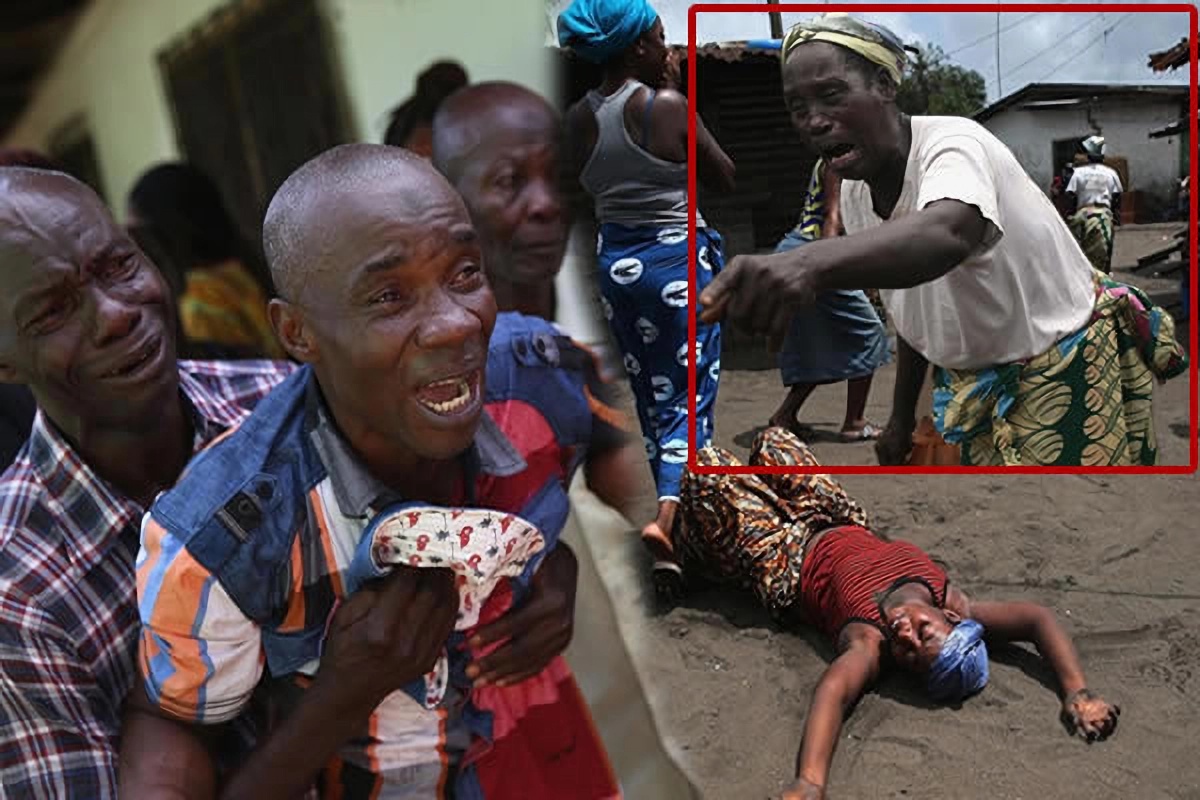
GOKWE — The quiet dust of Huni Compound near the Zenda Business Centre was shattered recently by a horrific act of violence that has left a community in mourning and a family searching for answers. Nancy Sumburani, a 26-year-old woman described by those who knew her as talented and full of life, was brutally stabbed to death. The man accused of this heinous crime is her 30-year-old ex-boyfriend, Leanard Tomu, who allegedly could not accept that their relationship had reached its end.
This tragic incident, occurring under the jurisdiction of Chief Chireya in Gokwe North, serves as a grim reminder of the lethal intersection between obsession and the refusal to accept a woman’s autonomy. Investigative details reveal a sequence of events that began with a plea for reconciliation and ended in a blood-soaked tragedy that has left the Midlands province reeling.
The Fatal Encounter at Huni Compound
The afternoon began with an air of tension when a seemingly lula lula-starved Leanard Tomu, a resident of Village 24A under Headman Fakazi, arrived at the Huni Compound. His mission was clear: he wanted his former lover Nancy Sumburani back. However, Nancy, who had already moved on from the relationship, was steadfast. She was at home with her brother, Alerta Makore, when Tomu made his approach.
In an attempt to resolve the matter through traditional channels, the family sought the mediation of Nancy’s uncle, Jonathan. In many Zimbabwean communities, elders play a pivotal role in settling domestic disputes. Yet, even under the watchful eye of her elders, Nancy remained firm. She said “NO” to the reconciliation, a decision that reportedly ignited a fuse within Tomu.
Inspector Emmanuel Mahoko, the Midlands police spokesperson, detailed the escalation. “It is alleged that Tomu visited Huni Compound wanting to ask the now deceased to reconcile with him, but Sumburani refused,” he noted. The rejection reportedly caused Tomu to become disruptive, creating a scene that forced him to leave the premises. But the peace was temporary.
A Calculated Return and a US$100 Dispute
Thirty minutes later, Tomu returned. This time, his focus had shifted from love to perceived debt. He demanded the return of a mobile phone he had given Nancy during their time together — a device he valued at US$100. In a region where economic stability is often precarious, such a sum carries significant weight, but in this context, it appeared to be a mere pretext for further confrontation.
The argument over the phone quickly spiralled out of control. Witnesses describe a heated exchange that culminated in Tomu producing a knife. Without hesitation, he allegedly plunged the weapon into Nancy. The “talented” young woman, who had so much ahead of her, died on the spot. The life she had built and the potential she held were extinguished in a matter of seconds.
Nancy’s body was later moved to the Gokwe North mortuary for a post-mortem, while Tomu was apprehended and is expected to face the full weight of the law in court. The community is left to grapple with the reality that a simple “no” led to such a final and violent “yes” from her attacker.
A Broader Crisis: Femicide in Zimbabwe
The murder of Nancy Sumburani is not a freak occurrence; it is a symptom of a systemic crisis of femicide and intimate partner violence (IPV) that plagues Zimbabwe. Investigative research into recent trends shows that the Midlands province has become a hotspot for such violent outbursts.
|
Statistic Category
|
National Figure (Zimbabwe)
|
Midlands Province Context
|
|
Physical Violence Experience
|
1 in 3 women (ages 15-49)
|
High concentration of rural IPV cases
|
|
Sexual Violence Experience
|
1 in 4 women
|
Often linked to “reconciliation” disputes
|
|
Murder Cases (Jan-Sept 2025)
|
Increasing nationwide
|
124 murders recorded in Midlands
|
|
Femicide Risk
|
5x global average for IPV murder
|
Frequent use of sharp objects in domestic attacks
|
The numbers provided by the United Nations Population Fund (UNFPA) and UN Women highlight a terrifying reality: nearly 40% of Zimbabwean women have experienced physical abuse since the age of 15. In many cases, like Nancy’s, the violence occurs when a woman attempts to assert her independence or terminate a relationship.
The Mberengwa Connection: A Pattern of Impulsive Violence
As if to underscore the volatility of the region, another fatal stabbing occurred just days earlier in Mberengwa, also within the Midlands province. While not a case of IPV, the murder of 22-year-old Elvis Gwatimba by his 19-year-old friend, Jimson Sibanda, follows a chillingly similar pattern: a perceived slight, a period of “cooling off” that only served to intensify the rage, and a return with a lethal weapon.
The incident took place at the Deo Night Club at York Centre. Gwatimba had allegedly mocked Sibanda, claiming he had contracted a sexually transmitted disease from a local prostitute. Deeply offended, Sibanda left the bar, only to return an hour later with a kitchen knife. He lured Gwatimba to a secluded spot and stabbed him in the chest. Gwatimba died upon arrival at Mberengwa District Hospital.
Inspector Mahoko, who handled both cases, expressed deep concern over this trend. “Cases of fighting often result in others losing their lives or being injured,” he warned. The recovery of the kitchen knife in the Mberengwa case and the premeditated nature of the return in both Gokwe and Mberengwa suggest a breakdown in traditional conflict resolution and a rise in impulsive, lethal retaliation.
The “Sex-Starved” Narrative and Masculinity
In many investigative circles, the motive of “sexual starvation” or the denial of “conjugal rights” is often cited by perpetrators as a justification for their rage. This narrative suggests a dangerous belief that a man’s sexual desires or his “investment” in a relationship (such as a US$100 phone) entitle him to a woman’s body and compliance.
Cultural analysts argue that “African manhood” is in a state of crisis, where traditional roles are being challenged by economic hardship and shifting social dynamics, leading some men to resort to extreme violence to reassert control. The refusal of a woman to reconcile is seen not as a personal choice, but as a direct assault on the man’s honour.
“We once again implore members of the public to engage elders and counsellors whenever they have differences. People who witness disagreements should seek mediators such as the police, headmen, chiefs, or other leaders in their areas.” — Inspector Emmanuel Mahoko, Midlands Police Spokesperson
The Economic Factor: US$100 and the Price of a Life
The demand for the US$100 phone in Nancy’s case highlights the “transactional” nature that some relationships have taken on. When a relationship ends, gifts are often re-categorised as debts. In Zimbabwe’s current economic climate, US$100 is a significant amount, equivalent to several months’ wages for some. However, using this as a trigger for murder reveals a terrifying devaluation of human life.
In a similar investigative vein, the police have recorded a rise in “revenge stabbings” linked to small debts or property disputes. The Midlands province, known for its mining and agricultural activities, often sees transient populations where social ties are weaker, and disputes can escalate more quickly than in more stable urban environments.
The Role of the Police and the Community
The Zimbabwe Republic Police (ZRP) have been proactive in their messaging, yet the body count continues to rise. Inspector Mahoko has been vocal about the need for mediation, but the reality on the ground is that many of these incidents happen behind closed doors or in the dead of night, away from the eyes of potential mediators.
The ZRP Midlands has even gone as far as providing direct hotlines — 0542221073 or 0778 069 322 — encouraging citizens to report domestic tensions before they boil over. But for Nancy Sumburani, the intervention of her brother and her uncle was not enough to stop a man determined to kill.
Conclusion: A Call for Urgent Reform
The story of Nancy Sumburani is a tragedy that should never have happened. She said no to a relationship that no longer served her. She sought the protection of her family. She followed the “rules” of traditional mediation. And yet, she was still hunted down and killed in her own home.
As Zimbabwe moves forward, the focus must shift from merely “warning” the public to implementing robust legal and social protections for women. The “talented” Nancy Sumburani is gone, but her story must serve as a catalyst for change. The cycle of violence in the Midlands—from the night clubs of Mberengwa to the compounds of Gokwe—must be broken. Until “no” is respected as a complete sentence, the blood of innocent women will continue to stain the soil of this nation.