


The Invisible Chains of Chipinge: A Family’s Descent into Spiritual and Legal Limbo
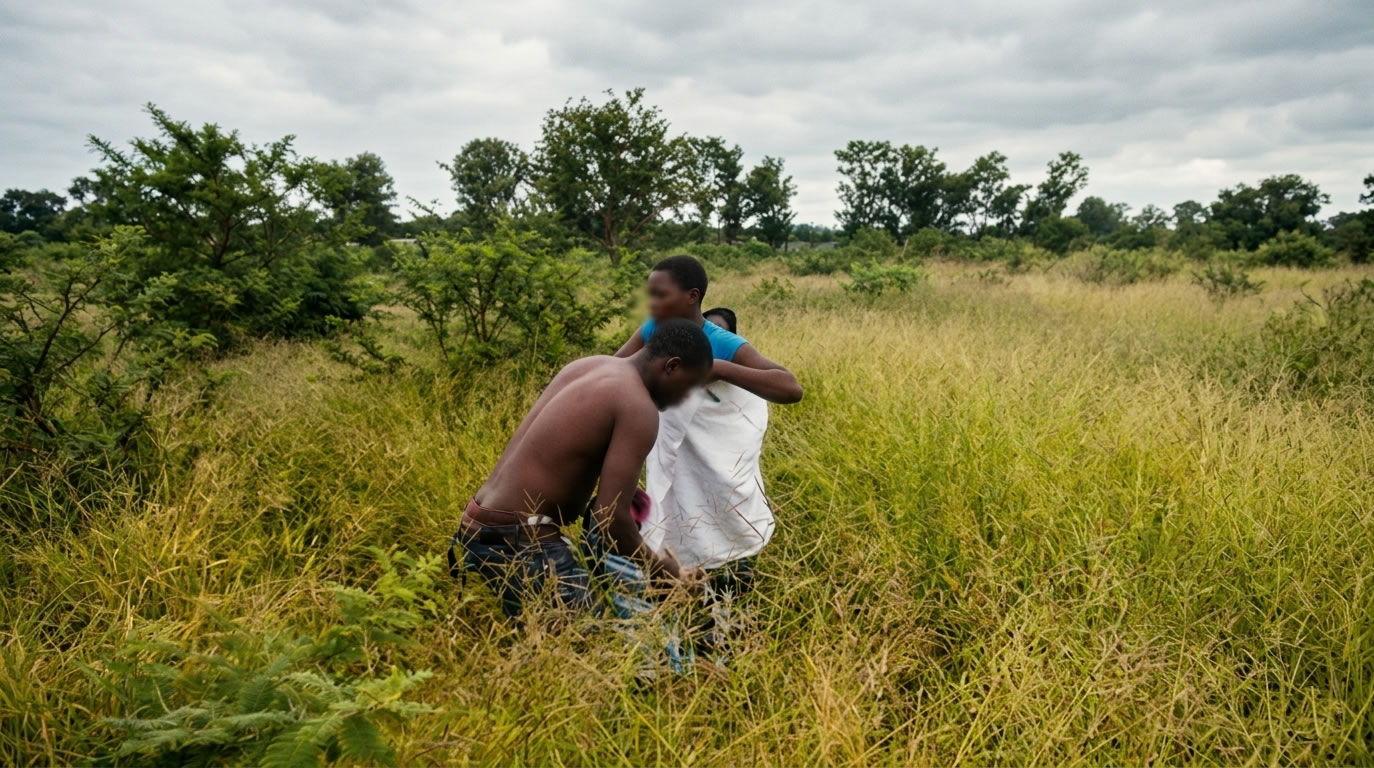
CHIPINGE – In the dense thickets of the Sana farms, under the jurisdiction of Chief Musikavanhu in Chipinge, a family is unravelling. They do not live in houses of brick or mortar, but in makeshift shelters constructed from the debris of the forest. They do not have surnames, identity documents, or a clear sense of where they belong in the modern state of Zimbabwe. According to twenty-five-year-old Jesca, who knows herself only by that single name, her family is “living like animals,” trapped between a vengeful spirit from the past and a bureaucratic system that does not recognise their existence.
The tragedy of Jesca’s family is a harrowing intersection of ancient tradition, spiritual terror, and the modern crisis of statelessness. It is a story that began decades ago with a custom known as kuzvarirwa — the pledging of a young girl in marriage — and has culminated in a multi-generational cycle of mental illness and social exclusion.
The Debt of the Mother
The root of the family’s suffering lies with Jesca’s mother, Grace. When Grace was a child, not even six years old, her parents allegedly pledged her to a man named Martin Dhliwayo. This was done under the traditional custom of kuzvarirwa, where a man pays a bride price for a young girl and waits for her to reach puberty before taking her as his wife. In this instance, Dhliwayo is said to have paid six cattle to secure his future bride.
“My mother was so young that she would go to this man’s house to sweep in accordance with traditional customs, to show that she would become his wife,” Jesca explains. “The problem reportedly started when my mother grew up and became a young woman; she refused to go to this man and ran away to another man with whom she lived and had two children.”

Grace’s act of defiance, though a modern assertion of her right to choose her partner, carried heavy traditional consequences. The six cattle paid by Dhliwayo were never returned. In the eyes of traditional belief, this created a debt that transcended the physical world. When Dhliwayo died, his spirit allegedly became a ngozi (an avenging spirit), seeking the compensation he was denied in life.
The consequences for Grace were immediate and devastating. Shortly after fleeing to the man of her choice, she reportedly began to lose her mind. She abandoned her partner and began wandering the forests of Chipinge with her two children. Her life became a series of tragedies; she was repeatedly raped by different men in the bush, leading to the birth of four more children, including Jesca.
“We don’t know the name of the first man my mother lived with, and the other four of us were born after my mother was allegedly raped by different men,” Jesca says. “We don’t know our fathers. So, we don’t know our surnames, and none of us six, including our mother, have birth certificates.”
A Harvest of Madness
Today, the family exists on the absolute margins of society. Grace remains mentally unstable, a nomad in the forests she has called home for years. The mental illness that claimed her has now seemingly spread to her offspring. Of the six children, three are confirmed to be suffering from mental health issues. A brother, whose mental state is unknown, disappeared into South Africa years ago and has not been heard from since.
“Our mother is mentally ill; she just wanders around Chipinge, and all my three older siblings are also mentally ill,” Jesca says. “We don’t know where the boy is. We don’t know if he is also mentally ill because he is said to be in South Africa.”
The family’s search for answers has led them to the doorstep of traditional healers and spiritualists. The diagnosis is always the same: the restless spirit of Martin Dhliwayo is the architect of their misery.
“When we inquire about the mental illness in the family, we are told that it is the avenging spirit of Martin Dhliwayo that wants to be compensated for his bride price, since he was never given his wife,” Jesca reveals.
The demands of the spirit have only grown more extortionate with time. It has now reportedly manifested through Jesca’s older sister, Tsitsi, demanding a staggering interest on the original debt. The spirit is no longer satisfied with the return of the six cattle; it now demands nine, plus a human life—a new wife to replace the one it lost.
“The spirit of the avenging spirit is coming, saying that you have not yet suffered enough, I will make you suffer and torment you, I am Martin Dhliwayo, you ate my cattle,” Jesca recounts. “I want you to return nine cattle from the six I gave you, plus a wife on top of that. When you start collecting this wealth, I will lead you to my home where my relatives are.”
The Law vs. The Spirit
The demand for a human being as compensation—a practice known as kuripa ngozi—is strictly illegal under Zimbabwean law. The Domestic Violence Act and the national constitution explicitly forbid the use of people to settle spiritual debts or crimes. However, in the remote corners of Chipinge, where the reach of the state is often faint, the fear of the ngozi often outweighs the fear of the magistrate.
“It doesn’t matter that the law of the country does not allow compensating an avenging spirit with a person; among our children, we can just take one girl and give her away,” Jesca says, her voice reflecting the desperation of a family that sees no other escape. “But we don’t have cattle. If only we could find our maternal relatives’ home.”
The tragedy is compounded by the fact that the family does not know where Dhliwayo’s relatives are, nor do they know the location of their own maternal kin who received the original cattle. When Grace lost her mind, the vital links to their family history were severed.
Mr. George Kandiyero, head of the Zimbabwe National Traditional Healers Association (Zinatha), emphasises the urgency of the situation. “This family needs to be helped quickly so that the avenging spirit can be appeased,” he states. Yet, the path to appeasement is blocked by poverty and a lack of identity.
The Ghost of Statelessness
Beyond the spiritual torment, Jesca’s family faces a more modern haunting: the lack of documentation. In Zimbabwe, birth certificates are the “master key” to citizenship. Without them, a person cannot attend school, sit for examinations, vote, or seek formal employment.
For Jesca’s family, the problem is exponential. Because Grace has no documents, her children cannot get them. Because her children have no documents, their own children—Grace’s fifteen grandchildren—are also undocumented. In total, twenty-one members of this single family are legally invisible.
“The problem of not having birth certificates is also affecting their children, so that all together, they have 21 people without these documents,” Jesca notes. “No one in our house went to school, I am the only one who finished Grade 7, but I did not write the examinations because I didn’t have a birth certificate.”
Jesca’s story is a microcosm of a much larger crisis. According to Amnesty International and the UNHCR, approximately 300,000 people in Zimbabwe are at risk of statelessness. Like Jesca’s family, many are trapped in a cycle where the lack of a parent’s document prevents the child from ever obtaining one. These “invisible” citizens are often excluded from healthcare and education, living as what one Amnesty report described as “stray animals.”
The desperation of their situation recently drove Jesca to Harare. She followed an older sibling who was being treated for mental health issues by a prophet. But the “madness” that haunts her family seemed to follow her to the capital.
“I also had a problem that I started to act as if I was losing my mind, tearing clothes and throwing a child in the street, and then I was taken by the police,” she admits.
A Contested Narrative
As Jesca’s story has gained attention on social media, a new layer of complexity has emerged. Various individuals have surfaced, claiming to be relatives or former partners, and they have begun to challenge her account.
“Some people are emerging on various social media platforms claiming to be relatives of Jesca and others who say that she was married to their relative, who are saying words that contradict this woman,” the reports suggest. These voices claim that Jesca’s narrative is untrue, though she remains steadfast in her testimony.
Whether the details of the ngozi are a literal spiritual manifestation or a psychological manifestation of deep-seated trauma and poverty, the suffering of the twenty-one undocumented people in the Sana farms is undeniable. They are a family living in the shadows of the past, waiting for a resolution that may never come.
“We only know my mother’s first name, Grace, but we don’t know her surname,” Jesca says, a final, haunting indictment of their condition. “It’s the same with us children—we don’t have surnames; we just live like animals.”
As the sun sets over the Chipinge forests, the family remains in their shacks, caught between a spirit that demands cattle they do not have and a state that requires documents they cannot obtain. In the silence of the bush, the voice of Martin Dhliwayo—real or imagined—continues to whisper of a debt that can only be paid in blood or cattle, while the modern world simply looks the other way.