


The Shadow Over Hillbrow: A Mother’s Sacrifice and the Brutal Reality of Johannesburg’s Inner City
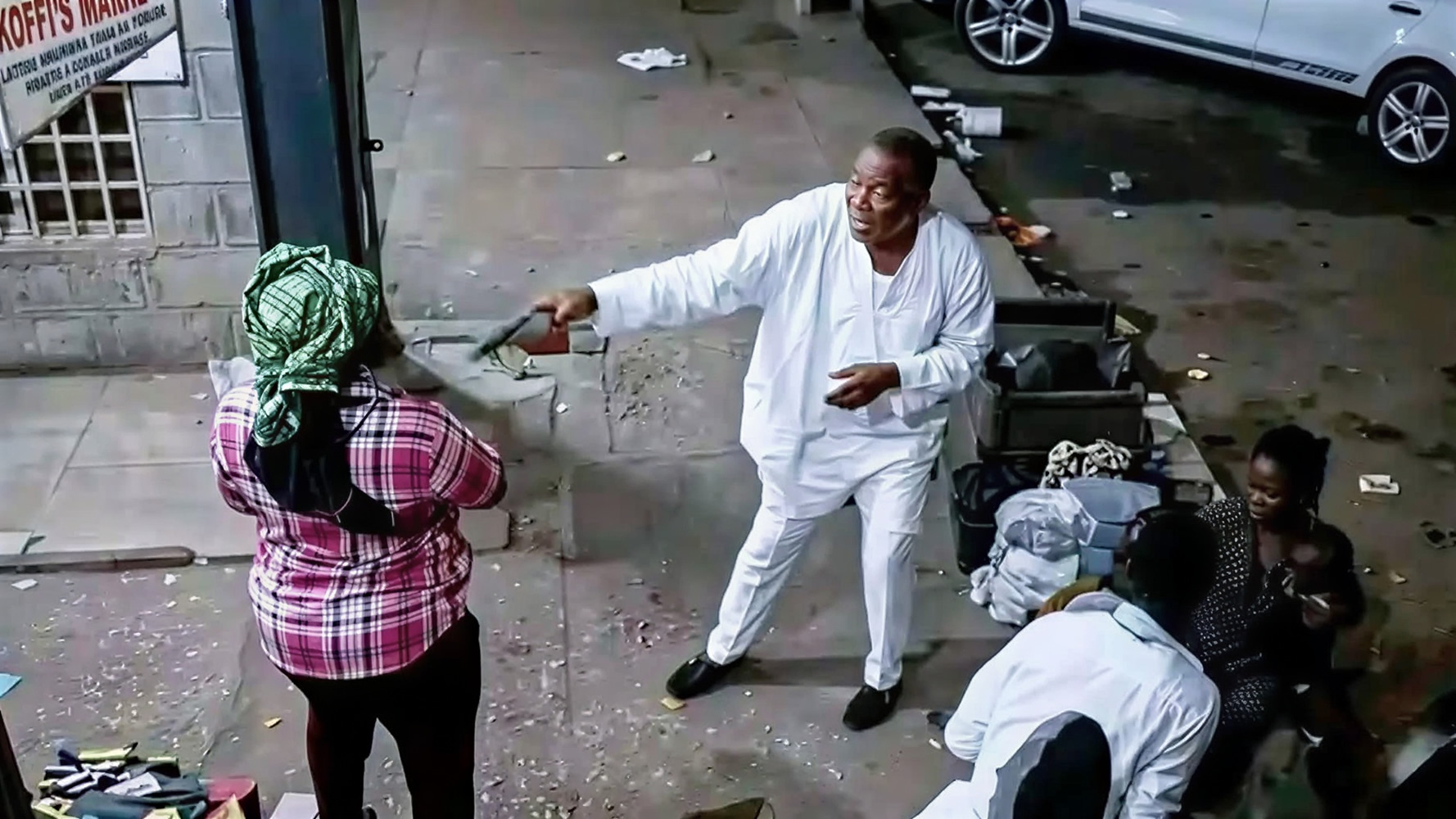
The sun had not yet touched the jagged skyline of Johannesburg when the silence of the early hours was shattered by three sharp, clinical reports of a firearm. On the corner of Wanderers Street and Smith Street, in the heart of the notorious Hillbrow precinct, a woman lay dying on the cold pavement. Her name was Tabeth Chidziva, a 42-year-old Zimbabwean mother of three. She was not a statistic of a random robbery or a stray bullet in a gang war. She was killed, according to those who knew her, for the most primal of reasons: she was a mother standing between her child and a group of predators.
The murder of Tabeth Chidziva on April 19, 2026, has pulled back the curtain on a reality that many in the leafy suburbs of South Africa prefer to ignore. It is a reality where the law of the gun often supersedes the law of the land, and where a mother’s instinct to protect her own can carry a death sentence. For Benjy Chimusoro, a man who once called these treacherous streets home, the news of Tabeth’s death was a grim echo of a past he fought hard to leave behind.
“Hillbrow is something else my brother and things that happen there, if you have never lived in that area, you will struggle to believe that is the truth and it’s not fiction,” Chimusoro told H-Metro. Now back in Zimbabwe, working as a Master of Ceremony and a stadium announcer for Premiership matches, Chimusoro — known to many as Sancho Zamorano — still carries the mental scars of the inner city. “The streets there are very dangerous, especially when it’s night time and I can say that once it’s past 10 o’clock at night, everything changes and what happens on those streets is something you cannot even imagine.”
Reports indicate that the confrontation began when Tabeth’s pregnant daughter was blocked and assaulted by a group of men near their home. In the vulnerable hours between 2 a.m. and 3 a.m., the young woman ran to her mother for protection. Tabeth did what any mother would do; she stood up.
Her brother, Happymore “Bvondo” Chidziva, an opposition Member of Parliament in Zimbabwe, has been vocal in his grief and his demand for justice. In a public statement that resonated far beyond the borders of South Africa, he laid out the tragedy in stark terms. “Our hearts are broken beyond words,” he said. “We speak today not just as a family in mourning, but as people shattered by a cruel and senseless act of violence that has taken away our beloved sister, Tabeth Chidziva.”
The details he shared paint a picture of a woman who died because she refused to look away from a wrong. “Killed for protecting her daughter. Killed for being a mother. Killed for standing against wrong,” Chidziva stated. He described the agony of watching the digital record of his sister’s demise. “I watched a video of her falling… and in that moment, I held onto hope, praying she would rise again. But time has cruelly confirmed what my heart refuses to accept — that you are truly gone.”
|
Key Information
|
Details
|
|
Victim
|
Tabeth (Thabetha) Chidziva, 42
|
|
Date of Incident
|
April 19, 2026
|
|
Location
|
Corner of Wanderers and Smith Streets, Hillbrow
|
|
Cause of Death
|
Three gunshot wounds to the head and throat
|
|
Survivors
|
Three children and a pregnant daughter
|
|
Burial Site
|
Granville Cemetery, Harare (April 26, 2026)
|
Hillbrow has long been the dark heart of Johannesburg. Once a trendy, cosmopolitan neighborhood in the 1970s, it has devolved into a densely populated warren of “hijacked” buildings and crumbling infrastructure. The crime index in Johannesburg stands at a staggering 80.8, with a safety rating of only 19.2. It is a place where even the police are targets. Only two years ago, on April 30, 2024, an officer walking from a restaurant at midnight was pinned to the ground by three men who stole his wallet, badge, and mobile phone. One of the attackers, Oupa Johannes Dunn, was eventually sentenced to 15 years in prison, but the incident serves as a reminder that the badge offers little protection on these streets.
Chimusoro remembers the geography of danger with clinical precision. He lived through the robberies and the constant threat of the gangs that claim various corners as their own. “I lived on those streets and I had my own brushes with danger and with time you begin to understand what you can do and can’t do, where you can go and can’t go if you want to live,” he explained. “Things can happen in an instant and I was robbed on those streets, it’s common because there are gangs everywhere you go, and being robbed is something that is considered a petty incident.”
The list of streets he provided reads like a map of a battlefield: Quartz Street, Esselen, Twist Street, Claim Street, Caroline Street, Van de Merwe Street, Pretorius, and King George Street. He warns that vigilance is required both day and night in areas like Joubert Park, Berea, Yeoville, and Jeppestown. Even as Tabeth was being laid to rest at Granville Cemetery on Sunday morning, the cycle of violence continued unabated. Another murder was reported that same day at the intersection of Claim and Kaptein Streets, just blocks away from where Tabeth took her final breath.
The issue of “hijacked” buildings—structures abandoned by owners and taken over by criminal syndicates who then rent out space to the desperate—is central to the decay. These buildings are often death traps. In August 2023, a fire at the Usindiso building in the nearby CBD killed 77 people, exposing the horrific living conditions and the lack of municipal oversight. In the years since, the city has intensified property inspections, and courts have been bogged down with eviction orders for buildings like Clarendon Heights, where occupiers face the constant threat of being removed from the only shelter they can afford.
Despite the grim statistics, there are those who argue that progress is being made. Acting Police Minister Firoz Cachalia recently noted that while violent crime remains at “unacceptably high levels,” there has been a downward trend in some categories. Between October 1 and December 31 of the previous year, murder rates reportedly dropped by 17.6% compared to the same period two years prior. “Most violent crime categories, including murder, rape, robbery and most property related crimes like theft and burglary continued to decrease,” Cachalia said. “This trend may well be attributable to enhanced policing operations.”
However, for the families of victims like Tabeth Chidziva, these percentages offer cold comfort. Of the 30 highest murder precincts in the country, only half recorded decreases. In Hillbrow, while total reported crimes dropped by 9.5%, nearby areas like Jeppe saw an increase. The reality on the ground is often far removed from the optimistic reports of officials. The streets remain “rife with crime,” as Chimusoro puts it, and the sense of safety is a luxury few can afford.
The investigative gaze must also turn to the systemic failures that allow such environments to persist. Johannesburg is Africa’s financial capital, a city of immense wealth and staggering poverty. It attracts business, tourism, and international investment, yet its core is hollowed out by neglect. Business Insider Africa noted that while the city offers “cultural vibrancy, commerce, and urban opportunity,” residents are forced to rely on private security and gated communities to survive. For the migrants and the working poor in Hillbrow, there are no gates and no private guards. There is only the street.
The death of Tabeth Chidziva is more than just a local tragedy; it is a diplomatic and social flashpoint. As a Zimbabwean living in South Africa, her death highlights the vulnerability of the migrant population. Many Zimbabweans flee economic hardship at home only to find themselves in the crosshairs of South Africa’s violent crime wave. The Chidziva family’s prominent status in Zimbabwe has ensured that Tabeth’s name will not be forgotten, but thousands of others die in Hillbrow without a headline or a demand for justice from an MP.
“Tabeth, this world did not deserve your ending,” Happymore Chidziva wrote in a message that captured the collective grief of a nation. “You were not just my sister, you were a piece of my soul. We are angry. We are hurting. We are lost. But above all, we are grieving a life that meant everything to us.” His words are a reminder that behind every CCTV clip is a human being with a history, a family, and a future that was stolen.
The South African Police Service (SAPS) has launched “Operation Shanela” in an attempt to clamp down on violent crime and remove illegal firearms. In April 2026 alone, intensified operations led to the arrest of over 900 suspects in Gauteng. Across the country, a week-long operation in late March resulted in the arrest of more than 18,000 individuals. Yet, the guns remain. The unlicensed firearms that claimed Tabeth’s life are part of a massive, untraceable arsenal that fuels the daily carnage in the inner city.
As we look at the streets Chimusoro mentioned—Nugget Street, End Street, Marshall Street—we see a landscape that requires a level of vigilance that is exhausting. “Areas where you need to be very vigilant, whether its night or day, are Joubert Park, Hillbrow, Berea, Yeovil, Jeppestown,” he warned. The tragedy is that for many, these are not just areas to avoid; they are the places where they must live, work, and raise their children.
The investigation into Tabeth’s murder continues, with authorities under pressure to identify and arrest the men seen in the CCTV footage. The family has refused to let her life be reduced to silence. They are demanding that the perpetrators face the full weight of the law. But in a precinct where police badges are stolen and murders happen in broad daylight, the path to justice is often long and treacherous.
|
Street
|
Status
|
Known For
|
|
Wanderers Street
|
Extremely Dangerous
|
High robbery rates, site of Tabeth’s murder
|
|
Smith Street
|
High Risk
|
Drug-related violence, gang activity
|
|
Claim Street
|
Active Crime Zone
|
Frequent murders and muggings
|
|
Twist Street
|
High Risk
|
Hijacked buildings, street robberies
|
|
Quartz Street
|
Dangerous
|
Night-time violence, drug trafficking
|
In the end, the story of Tabeth Chidziva is a story of a mother’s love in a place that has forgotten what love looks like. It is a story of a man like Benjy Chimusoro who remembers the “flood of memories” that such a death evokes. And it is a story of a city that continues to struggle with its own demons, caught between its aspirations as a global hub and the brutal reality of its most vulnerable streets.
The “cultural vibrancy” and “urban opportunity” mentioned by economists are real, but they exist alongside a darkness that is just as tangible. For Tabeth, the opportunity ended on a street corner in Hillbrow. Her sacrifice for her daughter is a testament to a strength that the gangs and the gunmen can never truly understand. As her brother pledged, her memory will be carried by those who loved her, even as the shadow over Hillbrow remains.
The investigation into the broader issues of Hillbrow reveals a cycle of poverty and crime that is difficult to break. The “hijacked” buildings provide a base for criminal operations, and the lack of effective policing allows these operations to flourish. While the total crime statistics might show a slight decrease, the fear among residents remains palpable. The streets are active and unpredictable after dark, and the casual nature of the violence means that anyone can become a victim at any time.
As we conclude this report, the words of Benjy Chimusoro serve as a final warning to those who might underestimate the danger of the inner city. “Once it’s past 10 o’clock at night, everything changes.” For Tabeth Chidziva, the change was permanent. For the rest of Johannesburg, the question remains: how many more mothers must stand before a bullet before the streets of Hillbrow are finally made safe?
The demand for justice for Tabeth is not just a demand for the arrest of her killers. It is a demand for a fundamental change in how the inner city is governed and protected. It is a call to reclaim the streets from the gangs and to provide a future where a mother’s protection does not have to end in a cold-blooded murder. Until then, the memories of Hillbrow will continue to be haunted by the reports of gunfire and the sight of a woman falling on the corner of Wanderers and Smith.