


“I Watched Her Die”: MP’s Heartbreak as Sister’s Murder in South Africa Goes Viral, Exposing Brutal Reality for Foreigners!
The dusty streets of Glen View in Harare were thick with more than just the winter haze this week; they were heavy with a grief so profound it seemed to stifle the very air. As the casket of Tabetha Chidziva was lowered into the earth, the silence was broken only by the rhythmic thud of soil and the raw, guttural sobs of a family torn apart by a single, senseless moment of violence thousands of kilometres away. Tabetha, a sister, a mother, and a pillar of her community, had returned home—not as the vibrant woman who had left to seek a better life in South Africa, but in a cold, wooden box, the victim of a brutal execution in the heart of Johannesburg.
The story of Tabetha Chidziva is not merely a chronicle of a life cut short; it is a harrowing window into the perilous reality faced by Zimbabwean nationals living in the shadows of South Africa’s most dangerous precincts. Her death, captured in a chilling video that has since haunted social media feeds across the continent, has become a rallying cry for justice in a region where life often feels tragically cheap.
A Mother’s Final Act
The events that led to the fatal confrontation began in the early hours of Sunday, April 19, 2026. In the notorious Hillbrow district of Johannesburg—a place where the neon lights of the city often mask a darker undercurrent of lawlessness—the Chidziva family’s world collapsed between 2:00 am and 3:00 am.
According to her brother, the prominent opposition Member of Parliament for Glen View North, Happymore “Bvondo” Chidziva, the tragedy was sparked by an act of maternal instinct. Tabetha’s pregnant daughter had been confronted and violently assaulted by a group of men near their residence. The young woman, terrified and in pain, fled to the one person she knew would protect her.
“In the quiet, vulnerable hours of the night—between 2 a.m. and 3 a.m.—her pregnant daughter was attacked by a group of men near their home in Hillbrow, Johannesburg,” Happymore Chidziva recounted, his voice thick with the weight of the loss. “She was not only blocked from passing, but violently assaulted. In pain and fear, she ran to her mother. And like any loving mother would, Tabeth did not hesitate. She rose. She stood up for her child.”
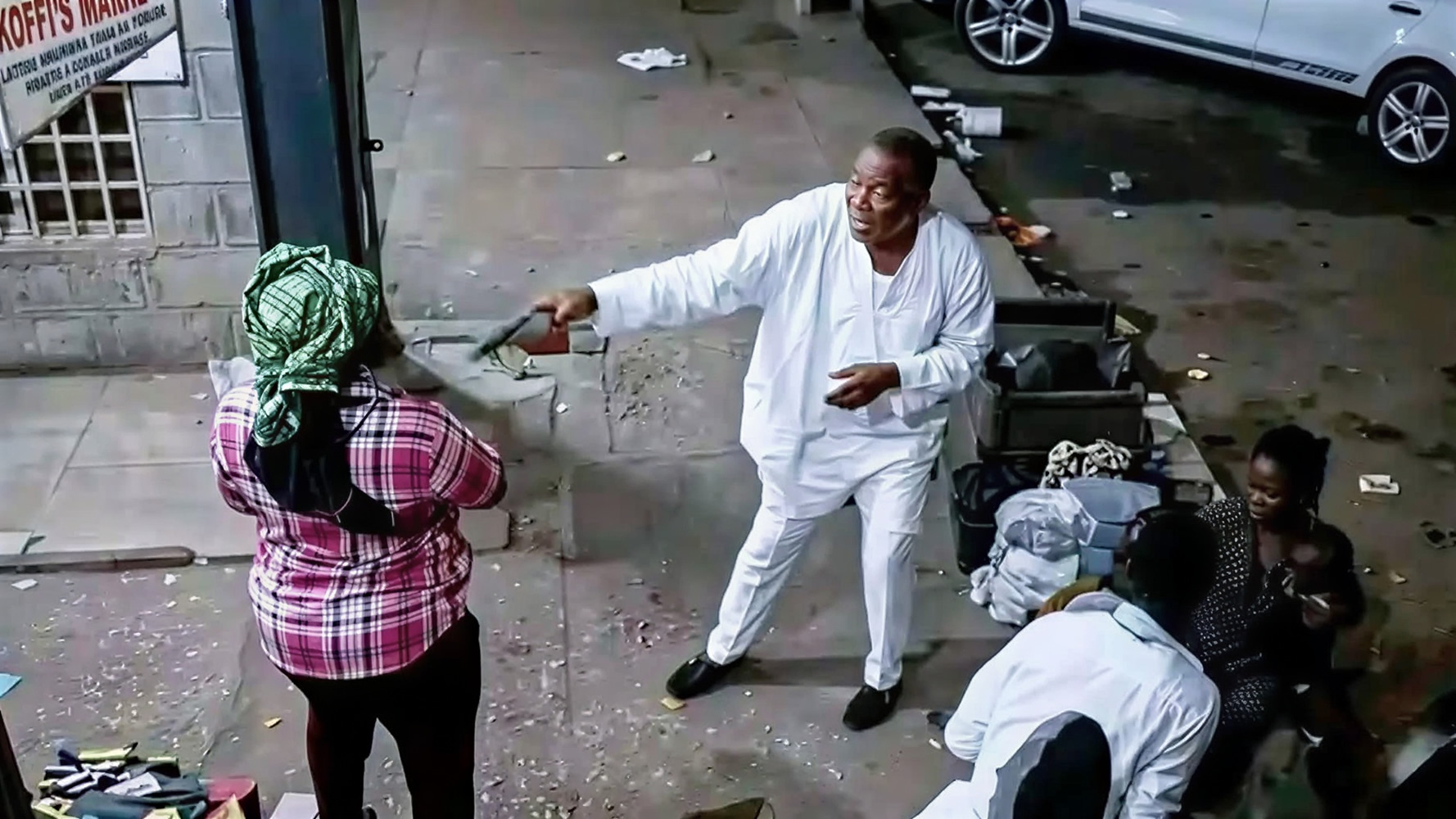
It was this act of courage that would prove fatal. Reports from the scene suggest a dispute escalated rapidly. Some accounts indicate the confrontation involved a customer who refused to pay for services or goods, while others focus on the immediate defense of her daughter against the marauding group. Regardless of the initial spark, the conclusion was singular and devastating. A man, described by witnesses as being of South African origin, drew a firearm and fired multiple rounds at close range. Tabetha was struck in the head and throat, dying instantly on the cold pavement.
The Video That Haunts a Nation
For the Chidziva family, the nightmare was compounded by the digital age’s most cruel byproduct: the viral video. The footage of Tabetha’s final moments spread with a speed that outpaced the official notification of her death. For her brother, watching the recording was a form of torture that no sibling should ever endure.
“My heart is shattered beyond words,” he wrote in a statement that resonated across Zimbabwe. “Yesterday at around 2am, I lost my sister, my blood, my friend Tabeth Chidziva to a senseless act of gun violence in Hillbrow, Johannesburg. I watched a video of her falling… and in that moment, I held onto hope, praying she would rise again. But time has cruelly confirmed what my heart refuses to accept — that you are truly gone.”
The video shows a woman standing her ground before the sudden, sharp crack of gunfire sends her to the ground. It is a document of a cold-blooded murder, one that has left an indelible mark on those who knew her. “Tabeth, this world did not deserve your ending,” her brother added. “You were not just my sister, you were a piece of my soul.”
A Pattern of Peril
Tabetha’s death is not an isolated incident but part of a grim tapestry of violence targeting foreign nationals, particularly Zimbabweans, in South Africa. The Johannesburg Central Business District (CBD) and Hillbrow have long been flashpoints for such conflict. Just months prior, in January 2026, another brutal shooting in Atteridgeville, Pretoria, left five Zimbabwean nationals dead in a midday massacre that remains etched in the collective memory of the diaspora.
|
Date
|
Incident Location
|
Victims
|
Outcome
|
|
April 19, 2026
|
Hillbrow, Johannesburg
|
Tabetha Chidziva
|
Fatally shot at close range
|
|
January 23, 2026
|
Atteridgeville, Pretoria
|
5 Zimbabwean Nationals
|
Midday shooting, all deceased
|
|
Late 2025
|
Johannesburg CBD
|
Unnamed Zimbabwean Trader
|
Assaulted and killed in a dispute
|
|
Ongoing 2026
|
Gauteng Province
|
Various Foreign Nationals
|
Targeted in “Operation New Broom”
|
South Africa’s crime statistics paint a terrifying picture of the environment Tabetha inhabited. With over 70 killings recorded daily across the country, the risk for those in high-crime precincts like Hillbrow is astronomical. For Zimbabweans, this risk is often magnified by xenophobic undertones and the precarious nature of their legal status, which can make them hesitant to seek police protection.
The Investigation and the Silence
As the Chidziva family mourns, the wheels of justice appear to be turning with agonizing slowness. While the murder was caught on camera, providing clear evidence of the perpetrator’s actions, the South African Police Service (SAPS) has been criticized for its perceived lack of urgency.
In the crime-infested corridors of Hillbrow, allegations of corruption often cloud the path to accountability. Recent reports have surfaced suggesting that police officers at several stations, including Hillbrow and Johannesburg Central, have been involved in a cycle of arresting foreign nationals only to release them upon payment of bribes. This environment of lawlessness provides a fertile ground for violent criminals to operate with a sense of impunity.
“We are grieving. We are angry. We are broken,” Happymore Chidziva stated during the burial. “But we are also demanding justice. We refuse to let Tabeth’s life be reduced to silence. Those responsible must be found. They must answer. They must face the full weight of the law.”
The family’s demand for justice is echoed by human rights groups who point to the increasing frequency of “Operation New Broom” and other movements like “Operation Dudula,” which, while framed as efforts to restore order, often lead to heightened tensions and violence against vulnerable migrant populations.
A Community in Mourning
The burial service in Mbare and the subsequent interment in her hometown were attended by hundreds of mourners, including political figures, community leaders, and ordinary citizens moved by the tragedy. The atmosphere was one of profound loss, but also of simmering anger at the circumstances of her death.
Moreboys Munetsi of the Great Hope group, who assisted the family in repatriating Tabetha’s remains, spoke of the emotional toll such cases take on the Zimbabwean community in South Africa. “Every time we see one of our own return in a casket, a piece of our collective hope dies,” he remarked. The logistics of bringing Tabetha home were arduous, a final hurdle in a journey that began with the hope of a better life and ended in a Johannesburg morgue.
Tabetha Chidziva was more than a statistic in South Africa’s crime ledger. She was a woman who, in her final moments, chose the safety of her child over her own life. “Killed for protecting her daughter. Killed for being a mother. Killed for standing against wrong,” her brother lamented.
The Broader Implications
The death of an MP’s sister has brought the issue of the safety of Zimbabweans in South Africa to the forefront of national discourse in Zimbabwe. It raises uncomfortable questions about the economic conditions that drive millions across the Limpopo River into such hazardous environments.
For many in Glen View and beyond, Tabetha’s story is a mirror reflecting their own fears for loved ones working in South Africa. The “Joburg CBD” is often spoken of in hushed tones, a place of opportunity but also of extreme danger. The tragedy of Tabetha Chidziva serves as a stark reminder that for many, the price of seeking that opportunity is far too high.
“Our hearts are broken beyond words. We speak today not just as a family in mourning, but as people shattered by a cruel and senseless act of violence that has taken away our beloved sister, Tabeth Chidziva.” — Happymore Chidziva
Seeking Accountability
As the soil settles on Tabetha’s grave, the focus shifts to the South African authorities. The presence of video evidence provides a rare opportunity for a clear-cut prosecution in a district where many crimes go unsolved. However, the history of such cases suggests that without sustained pressure, the investigation may stall.
The Chidziva family has vowed to keep Tabetha’s memory alive by fighting for the justice she was denied in life. “I will carry you with me always… You may be gone from this world, but you will never leave my heart,” her brother promised.
The investigative journey into Tabetha’s death reveals a disturbing intersection of crime, maternal sacrifice, and the systemic failures that leave foreign nationals exposed to the worst elements of South African society. Her story is a testament to a mother’s love, but it is also a damning indictment of the violence that continues to plague the streets of Johannesburg.
For now, the family waits. They wait for a phone call from the SAPS, they wait for an arrest, and they wait for the day when no other mother has to make the choice Tabetha Chidziva made on that dark April morning. But in the heart of Glen View, the mourning continues, a sombre reminder of a life that meant everything to those she left behind, taken by a bullet in a city that didn’t know her name.
Investigative Findings Summary
Our investigation into the death of Tabetha Chidziva has highlighted several key areas of concern regarding the safety of Zimbabwean nationals in South Africa:
- Vulnerability in High-Crime Precincts: Areas like Hillbrow and the Johannesburg CBD remain extremely hazardous, with high rates of gun violence and limited effective policing.
- Targeting of Foreign Nationals: There is a discernible pattern of violence and extortion targeting migrants, often exacerbated by socio-political movements.
- Systemic Failures in Justice: The slow response of authorities, even when clear evidence like video footage exists, points to deeper issues within the criminal justice system.
- The Impact of Social Media: The viral nature of crime footage adds a layer of psychological trauma to the families of victims, complicating the grieving process.
The tragedy of Tabetha Chidziva is a call to action for both the South African and Zimbabwean governments to address the safety and security of their citizens, ensuring that the cost of motherhood—or simply the cost of living—is never again paid with a life.