


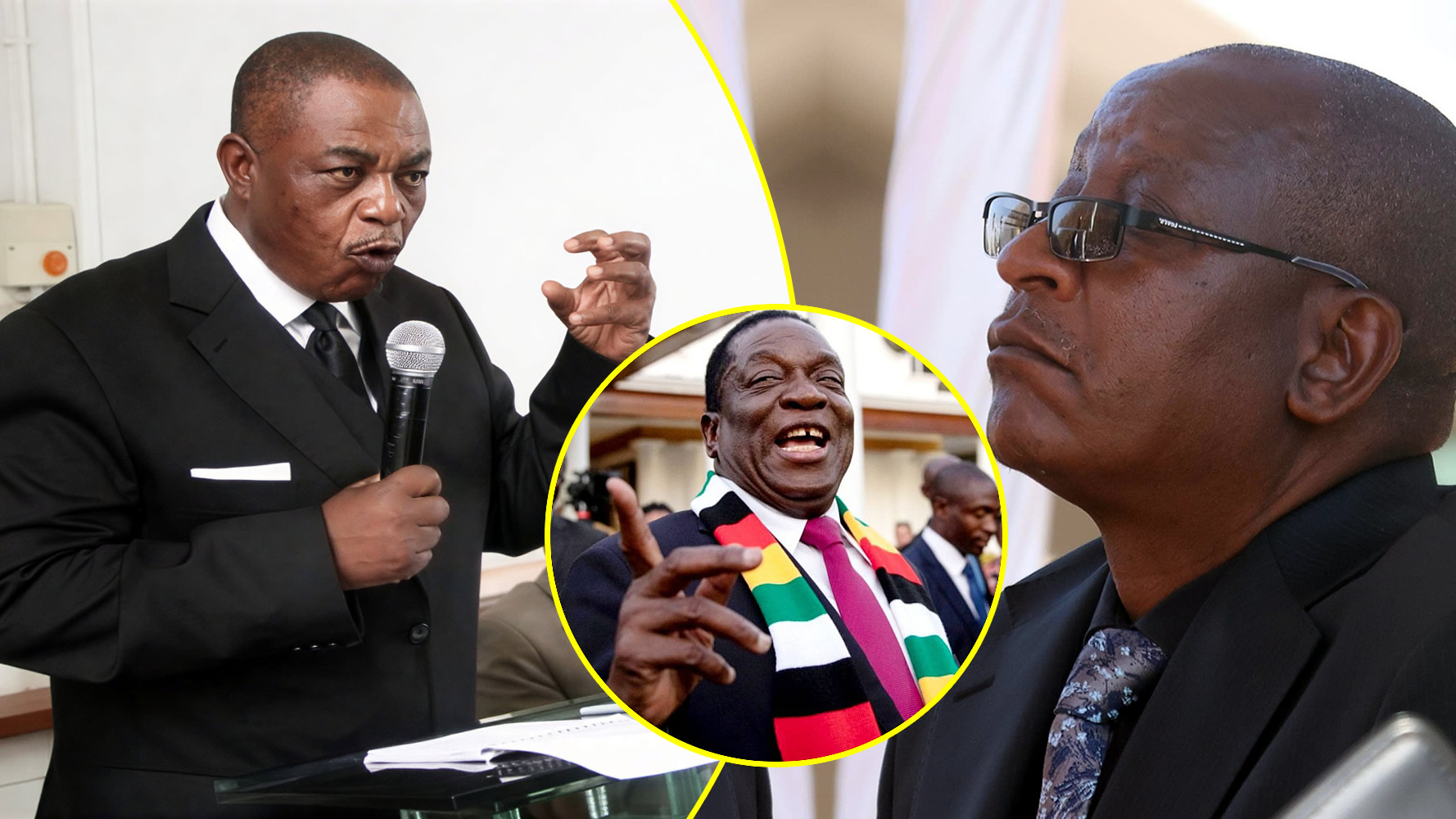
HARARE – Vice President General (Retired) Constantino Chiwenga has ignited a fervent debate within Zimbabwe’s political circles, delivering a cryptic sermon that many interpret as a direct challenge to President Emmerson Mnangagwa’s alleged ambitions for a third term. Speaking at a recent church gathering, the former military general invoked the biblical narrative of King Hezekiah, cautioning that “extra years are not always a blessing.” This pronouncement arrives amidst a growing clamour for the “ED2030” slogan within certain factions of the ruling Zanu PF party, advocating for a constitutional amendment to permit the President to serve beyond his stipulated two-term limit.
Our investigative team has meticulously examined the underlying currents of this sermon, dissecting its subtext and potential ramifications. For an extended period, the “silent war” between Zimbabwe’s two most influential figures has been a subject of hushed conversations and speculation within the corridors of power. However, General Chiwenga’s deliberate choice of a religious platform to convey such a pointed message signifies a notable shift in strategy. By employing scripture, he effectively circumvents party censorship mechanisms, communicating directly to the nation’s populace, particularly the traditional and religious constituencies that form the bedrock of Zanu PF’s support base.
Insiders privy to the party’s internal dynamics suggest that the General’s “Hezekiah warning” is a meticulously calculated manoeuvre. It is perceived as a clear signal to the military establishment and the party’s old guard that the alleged 2017 transition agreement, which reportedly encompassed a power-sharing arrangement and a succession roadmap, must be honoured. While loyalists of President Mnangagwa are actively mobilising support for Constitutional Amendment Bill 3 (CAB3), General Chiwenga’s camp appears to be bracing for a significant political confrontation.
This article aims to demystify the intricate conspiracies veiled within the sermon. We will undertake a comprehensive analysis of why King Hezekiah’s “fifteen extra years” ultimately led to the birth of Manasseh, a monarch whose reign brought considerable ruin to his nation, and how this historical parallel resonates with contemporary anxieties surrounding a prolonged presidency in Zimbabwe. Is the nation standing at a critical juncture? We will meticulously unpack the nuances of the succession battle, a topic that even the most seasoned political analysts often shy away from addressing directly, providing our readers with the in-depth, “documentary-like” perspective that has become synonymous with My Zimbabwe News.
The biblical narrative of King Hezekiah, as recounted in the Book of Isaiah, serves as the cornerstone of General Chiwenga’s cautionary tale. Hezekiah, a righteous king of Judah, was gravely ill and prophesied by Isaiah to die. In a fervent prayer, Hezekiah pleaded with God, who subsequently granted him an additional fifteen years of life. General Chiwenga, in his sermon, recounted this story, emphasising that “When God asks you to do something, never question why. Why has God done this?”
He further elaborated on Hezekiah’s subsequent actions, stating, “Hezekiah reigned over Judah for a very long time, and became a very prominent king. He began to see himself as not fit for death and thought he was supposed to reign over Judah forever.” The General then dramatically added, “Hezekiah would have none of it, hitting on the walls of the palace: ‘What kind of a God are you? There is no any other king who can reign like me.'” Chiwenga’s interpretation suggests that despite the divine favour, Hezekiah’s judgment became clouded during these extended years. He highlighted that God gave Hezekiah the extra fifteen years, but his judgment was compromised, leading him to reveal military secrets to Babylonian spies.
Furthermore, Chiwenga asserted, “He never managed even three months (as king) of the extended period. He spent the extended 15 years down in jail. God did not take away the 15 years, he let him have them, but he was in jail.” This particular interpretation, where Hezekiah spent his extended years in a metaphorical or spiritual “jail,” adds a layer of profound misery and consequence to the notion of undeserved longevity, directly linking it to potential political downfall or spiritual bondage, even if the biblical text itself does not explicitly state this imprisonment.
The most poignant aspect of the Hezekiah narrative, and one that holds significant weight in the current Zimbabwean context, is the birth of his son, Manasseh, during these additional fifteen years. Manasseh, tragically, grew to become the most wicked king in Judah’s history, undoing many of his father’s reforms and leading the nation into idolatry and moral decay, ultimately contributing to its eventual downfall and Babylonian exile.
The parallel drawn by General Chiwenga is stark: the pursuit of “extra years”—interpreted as a third presidential term or the “2030 plot”—could inadvertently usher in a period of ruin or produce a “Manasseh-like” legacy for Zimbabwe. The General’s warning, “Extra years are not always a blessing,” thus transcends a mere religious admonition; it functions as a potent political metaphor, hinting at the potentially catastrophic consequences of clinging to power beyond a divinely or constitutionally appointed time.
The political landscape in Zimbabwe is currently dominated by the contentious Constitution of Zimbabwe Amendment (No. 3) Bill 2026, widely known as CAB3. This proposed legislation seeks to fundamentally reshape the country’s political architecture in ways that many believe are designed to consolidate President Mnangagwa’s power and neutralise potential rivals, including General Chiwenga himself. Key provisions of CAB3 include the abolition of the direct election of the president by popular vote, proposing instead that the president be elected by Members of Parliament in a joint session of the Senate and National Assembly. Furthermore, the bill aims to erode the principle of automatic succession by the Vice President, effectively closing a clear path to the top office for both General Chiwenga and Kembo Mohadi, the second Vice President. Perhaps most controversially, CAB3 proposes extending both presidential and parliamentary terms from five to seven years, a move that would significantly prolong President Mnangagwa’s tenure until 2030, aligning with the “ED2030” slogan.
The public consultation phase for CAB3 officially concluded on 2 April 2026. However, this period was marred by widespread reports of intimidation, torture, and abductions, raising serious concerns about the legitimacy and fairness of the process. Opposition figures and human rights activists have consistently accused the ruling party of employing coercive tactics to stifle dissent and manipulate public opinion in favour of the amendments. The pressure on Zanu PF provinces to endorse President Mnangagwa’s continued rule until 2030 has been immense, with numerous reports indicating that party structures are being compelled to align with the “2030 Agenda.”
The “silent war” between President Mnangagwa and General Chiwenga, often described as Zimbabwe’s “Deadliest Political War,” has been simmering beneath the surface for years. This rivalry traces its roots back to the 2017 military-backed coup that ultimately brought Mnangagwa to power, with General Chiwenga playing a pivotal role. It is widely believed that this transition was predicated on an unwritten power-sharing and succession roadmap, an agreement that many now feel is being disregarded by the current administration. The General’s public pronouncements, such as his recent biblical warning, are therefore not isolated incidents but rather strategic interventions in this ongoing power struggle.
Recent incidents underscore the escalating political tensions. On 21 April 2026, a Zanu PF Youth Leader was reportedly arrested after publicly denouncing the “2030 plot,” highlighting the risks faced by those within the party who dare to challenge the prevailing narrative. Just four days later, on 25 April 2026, seven members of the opposition Movement for Democratic Change (MDC) were apprehended following nationwide protests against CAB3, further illustrating the government’s intolerance for dissent. Earlier, on 21 March 2026, prominent lawyer and former finance minister Tendai Biti was arrested in Mutare while attempting to organise a rally, a move widely condemned as an attempt to silence critical voices. These arrests and acts of intimidation are often attributed to groups like “Vakomana 4ED” (Young Boys for ED), who are alleged to be involved in political violence and harassment during the CAB3 campaign.
The growing opposition to the “2030 Agenda” is not confined to individual activists or opposition parties. In January 2026, five political parties in Matabeleland formed a united front specifically to resist Zanu PF’s controversial plans, demonstrating a broader coalition against the proposed constitutional changes. This collective resistance signals a deepening political crisis, with various stakeholders expressing profound concerns about the erosion of democratic principles and the potential for a return to authoritarian rule.
General Chiwenga’s public statements have consistently hinted at his discomfort with the current trajectory. Beyond the Hezekiah sermon, he has previously clashed with Mnangagwa loyalists over the constitutional amendment, indicating a clear divergence of opinion within the party’s upper echelons. His poignant remark that “future generations will ‘spit on our graves’ over minerals plunder” further reveals his apprehension regarding governance and accountability, suggesting a deep-seated concern for the nation’s long-term welfare. Reports of cabinet clashes between Chiwenga and the Attorney General over legal examples, particularly concerning South Africa, also point to underlying tensions and disagreements on fundamental legal and constitutional matters.
The implications of General Chiwenga’s biblical warning are far-reaching. It is not merely a theological discourse but a carefully calibrated political statement, designed to resonate with various segments of Zimbabwean society. By framing his concerns within a religious context, he taps into a deeply ingrained cultural and spiritual consciousness, making his message accessible and potent. The reference to Manasseh, the wicked son who brought ruin, serves as a powerful allegory for the potential dangers of unchecked power and the pursuit of extended terms. It suggests that while a leader may gain “extra years,” these years could ultimately lead to a destructive legacy, not only for the individual but for the entire nation.
The question remains: Is General Chiwenga finally breaking his silence on Mnangagwa’s 2030 plot? His recent actions and pronouncements suggest a strategic shift from subtle dissent to more overt expressions of concern. While he has not directly named President Mnangagwa, the context of his sermon, coupled with the ongoing political developments surrounding CAB3 and the “ED2030” campaign, leaves little room for alternative interpretations. The General, a key architect of the 2017 transition, appears to be reminding the nation, and indeed the President, of the implicit agreements and expectations that underpinned that change of leadership.
Zimbabwe stands at a critical crossroads. The outcome of the current political manoeuvring, particularly concerning CAB3 and the “2030 Agenda,” will undoubtedly shape the nation’s future for decades to come. General Chiwenga’s biblical warning, therefore, serves as a powerful and timely intervention, urging reflection on the perils of ambition and the enduring importance of constitutionalism and good governance. The nation watches with bated breath to see whether this warning will be heeded, or if the pursuit of “extra years” will indeed lead to unforeseen and potentially ruinous consequences.