


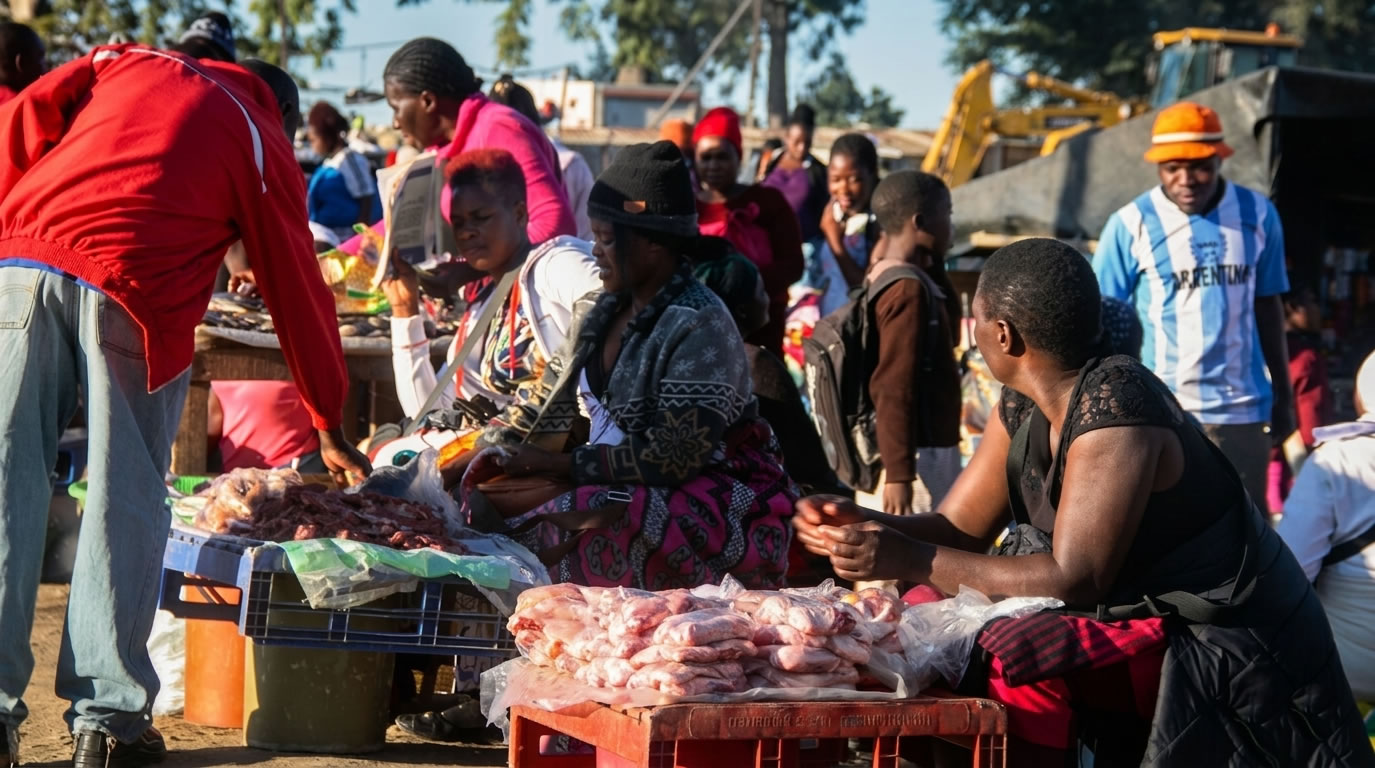
HARARE – In a sweeping operation dubbed “Nyama Yabvepi” – a Shona phrase meaning “Where did the meat come from?” – the Zimbabwe Republic Police (ZRP) has launched a massive crackdown on illegal meat sales across the nation. This isn’t merely about curbing stock theft; it’s a chilling exposé into the uninspected, chemically treated meat that is finding its way onto dinner plates in homes across Zimbabwe, particularly in urban centres like Chitungwiza and Harare. This investigative report delves into the murky depths of a clandestine trade, revealing how diseased carcasses are being ‘doctored’ to appear fresh, posing grave health risks to an unsuspecting populace.
The ZRP’s intensified blitz, which commenced in April 2026, targets butcheries, abattoirs, and individual meat vendors suspected of involvement in the illicit trade. Commissioner Paul Nyathi, the police spokesperson, confirmed the nationwide operation, stating its aim is to enforce strict compliance with regulations governing livestock movement, slaughter, and meat distribution. The police have noted a disturbing trend where organised criminal syndicates are stealing livestock, predominantly cattle and goats, from farms and rural communities. These animals are often slaughtered in remote, unhygienic locations before their meat is transported to urban markets, frequently concealed in vehicle boots or buckets.
The scale of the problem is alarming. Registered businesses, including seemingly reputable butcheries and food outlets, are reportedly fuelling this illegal trade by purchasing meat from unverified suppliers, bypassing crucial health and safety inspections. Law enforcement agents are conducting rigorous stop-and-search patrols and mounting roadblocks, specifically targeting vehicles suspected of transporting illicit meat. Furthermore, inspections have been significantly ramped up at both registered and unregistered abattoirs, butcheries, sausage producers, and other food establishments to verify the origin and legality of all meat products. Commissioner Nyathi issued a stern warning, emphasising that all butcheries are legally mandated to maintain meticulous records detailing their meat sources, including supplier information and proof of lawful acquisition. Abattoirs, too, have been instructed to ensure that all livestock presented for slaughter is accompanied by valid police clearance and veterinary certification. “Individuals and entities found on the wrong side of the law, including transporters, buyers, butcheries, abattoirs, vendors and suppliers, will be arrested without fear or favour,” asserted Commissioner Nyathi.
At the heart of this dark trade lies the sinister practice of ‘meat doctoring’ – a deceptive process where unscrupulous traders employ dangerous chemicals to mask the signs of decay in rotting flesh. Investigations by The Sunday Mail Society have uncovered the widespread use of formalin, a chemical mixture primarily used for embalming corpses, to make meat appear fresh and extend its shelf life. Formalin, or formaldehyde, is a potent preservative that temporarily prevents decomposition. However, its application to food products is highly illegal and profoundly hazardous to human health.
Beyond formalin, other chemicals are also in play. Sodium metabisulfite, a white chemical, is frequently mixed with water and sprayed onto meat to maintain a deceptive reddish hue, creating the illusion of freshness. Some butchers even admit to sprinkling soda water on meat for the same cosmetic effect. These chemicals, when used in larger quantities, can deter flies and preserve meat for up to two months, effectively concealing its true, often putrid, state. The motivation behind such dangerous practices is often economic, exacerbated by erratic power supplies that render conventional refrigeration unreliable. As one butchery worker, Cosmas Mtandwa, revealed, “My products, meat and mackerel, were going bad every day because of the power cuts. Someone advised me to try embalming fluids (formalin) to keep the meat fresh”.
The health implications of consuming chemically treated meat are dire. Dr George Chirimbo, a gastroenterologist, warned that while small quantities of formalin might not have an immediate effect, “prolonged consumption is really dangerous”. Short-term symptoms can include burning sensations in the eyes, nose, and throat, accompanied by unexplained coughing, nausea, and skin irritation. The long-term consequences are far more severe, potentially leading to cancer, kidney and liver damage, heart disease, and a compromised immune system. Ronald Tirivavi, a food science student, echoed these concerns, stating that such contaminated food can cause candida, pneumonia, diarrhoea, and respiratory distress, ultimately weakening the body’s immunity and exposing it to opportunistic infections.
Victims of this illicit trade are already experiencing the consequences. Winnie, a Mbare resident, recounted her distressing experiences: “Every time I buy meat from these butchers, I experience stomach pains and heartburn. The meat looks very fresh and enticing but when cooked, it’s something else”. The ease with which these dangerous chemicals are obtained is also deeply troubling. Formalin, for instance, can be purchased from pharmacies over the counter with no questions asked, or even from mortuary attendants for as little as US$5 to US$10, depending on the quantity.
The investigation also uncovered other disturbing practices, such as the injection of steroids into both living animals and packed meat to artificially increase their weight. Furthermore, sick cattle, some found to contain antibiotics in their blood, are being illegally slaughtered and sold for human consumption. Even beyond meat, food vendors at Mbare Musika have been found using baking soda and Panadol pills to accelerate the cooking process for tough cuts like trotters and beef bones. Pharmacist Dr Yasin Sabako explained that while Panadol contains acetaminophen, which softens food, boiling it at high temperatures alters the chemical’s normal functioning, potentially leading to cancer and damaging vital organs like the liver, kidneys, and heart.
Beneath the surface of this public health crisis lies a suspected network of high-profile individuals. The summary of this investigation points to a conspiracy where some influential “businessmen” are alleged to be the masterminds behind these stock theft syndicates, leveraging political connections to circumvent health inspections and operate with impunity. While specific names are often shrouded in secrecy, past incidents offer glimpses into this shadowy world. For example, a Harare businessman, Mr Jameson Rushwaya, a ZANU PF official, has previously faced 12 counts of stock theft in a US$472,000 case. Such cases underscore the potential for powerful figures to be involved in what has been described as a “mafia-style” operation that preys on the desperation of hungry citizens.
The ZRP’s “Nyama Yabvepi” operation is a critical step towards dismantling this dangerous network and safeguarding public health. However, its success hinges not only on law enforcement efforts but also on heightened public awareness and vigilance. Consumers are urged to be cautious, question the origin of their meat, and report any suspicious activities to the authorities. The fight against the “Butcheries of Blood” requires a collective effort to ensure that what ends up on our plates is safe, wholesome, and free from hidden killers.
After reading this, you’ll never look at a “special offer” sign at your local butchery the same way again.