


THE BLOOD ON THE KITCHEN KNIFE: A CITY IN GRIEF AS KADOMA CONFRONTS A DARK WAVE OF VIOLENCE
KADOMA — The morning sun usually brings a sense of industrious purpose to Kadoma, a city defined by the rhythmic thud of mining stamps and the vast, golden stretches of its farming hinterland. But this week, the air in the Victory Park suburb feels heavy, thick with a silence that is not peaceful, but profoundly unsettled. The people here are not just mourning; they are searching for a language to describe an act of violence so intimate and so savage that it has defied the city’s collective understanding of human nature.
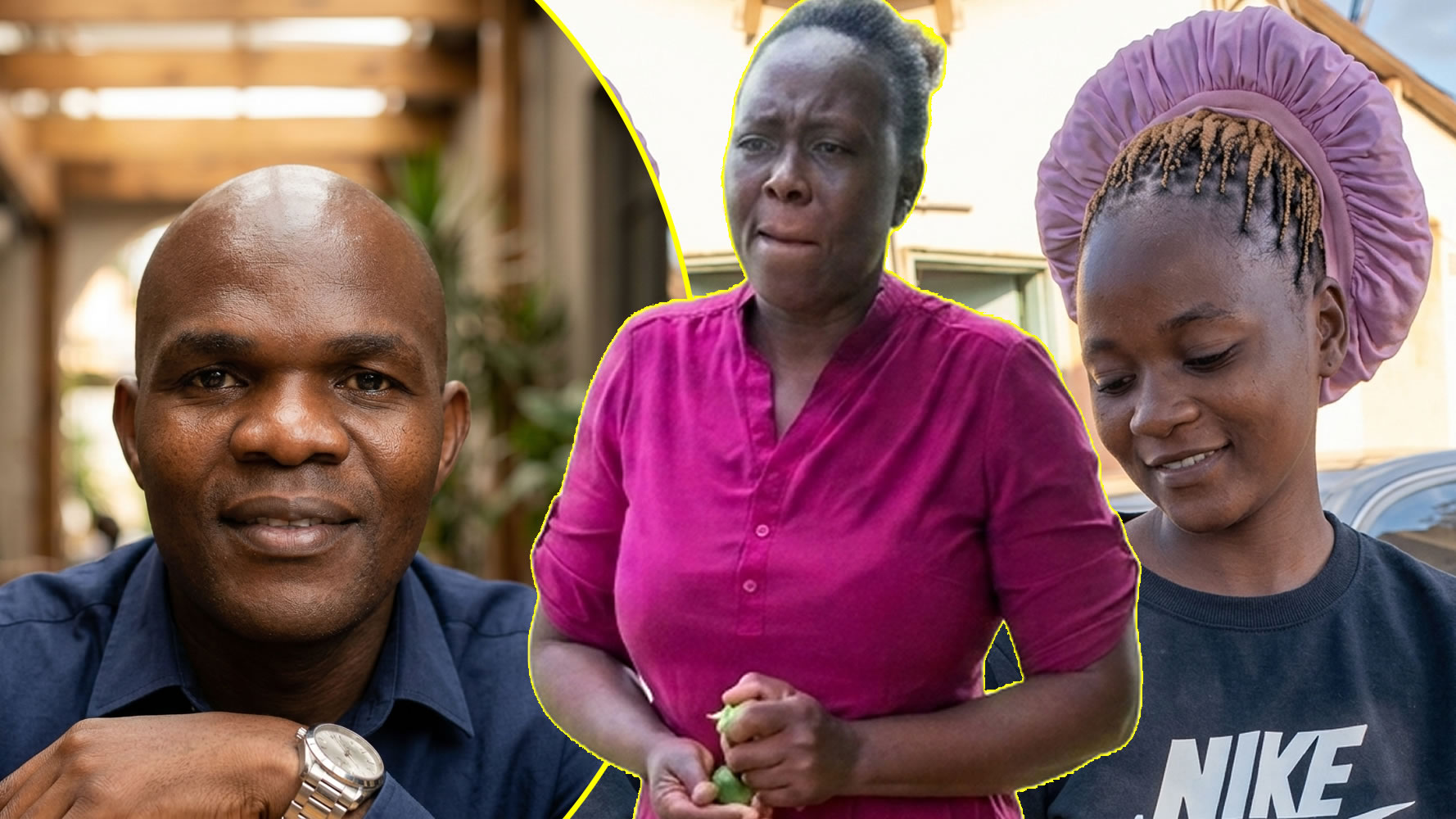
At the centre of this tragedy is a 45-year-old man named Obert Namurokosi. He is currently in police custody, facing the grim reality of two counts of murder. The victims were not strangers met in a dark alley or rivals in the city’s sometimes volatile mining pits. They were his own family: his wife, Cynthia Namurokosi, also 45, and his daughter, Takudzwa Namurokosi, who was just 23 years old.
The detail that has most deeply wounded the conscience of this community is that Takudzwa was nine months pregnant. She was mere days, perhaps even hours, away from bringing a new life into the world. Instead, both she and her unborn child were lost in a frenzied attack that has left the “City of Gold” questioning its own safety and the shadows that lurk behind closed doors.
A Refuge Turned Into a Killing Floor
The sequence of events that led to the bloodshed began not with a sudden explosion, but with a desperate search for safety. According to official reports from the Zimbabwe Republic Police (ZRP), the domestic environment at the Namurokosi household had become untenable. On a Saturday that should have been ordinary, Cynthia Namurokosi fled her home. She sought refuge at the residence of her daughter, Takudzwa, hoping that the presence of her child and the sanctity of a different roof would provide a shield against the brewing storm.
It was a hope that proved tragically misplaced.
National police spokesperson, Commissioner Paul Nyathi, confirmed the grim details of what followed. On Sunday, Obert Namurokosi allegedly followed his wife to the daughter’s home. He did not come to reconcile or to talk. He came armed with a kitchen knife—a common domestic tool that, in a matter of minutes, was transformed into a weapon of slaughter.
The assault was relentless. Police records indicate that Obert first turned the blade on his daughter. Takudzwa, heavily pregnant and likely unable to defend herself effectively, was stabbed multiple times. The sheer brutality of attacking a woman on the verge of childbirth is a detail that has left even seasoned investigators shaken. Once his daughter was incapacitated, Obert allegedly turned the knife on his wife, Cynthia, stabbing her in the neck.
Both women succumbed to their injuries. The “sanctity of life,” a phrase often used by Commissioner Nyathi in his appeals to the public, was not just violated; it was obliterated. “The Zimbabwe Republic Police confirms the arrest of a Kadoma man in connection with two cases of murder which occurred on Sunday in Victory Park, Kadoma,” Comm Nyathi stated. “The suspect allegedly had a domestic dispute with his wife who sought refuge at their daughter’s residence on Saturday. On the following day, the suspect reportedly followed her there, armed with a kitchen knife, and attacked both victims.”
The Shadow of Suspicion
In the aftermath of such a crime, the community inevitably asks: Why? What could drive a father and a husband to butcher his own blood? Sources close to the family and residents of Victory Park have whispered of a motive rooted in one of the oldest and most volatile of human emotions: jealousy.
Obert was said to have accused Cynthia, who worked as a teacher in Karoi, of engaging in an extra-marital affair. In the warped logic of domestic abusers, a suspicion — whether founded in reality or manufactured in a mind clouded by possessiveness — becomes a justification for ultimate control.
A Kadoma resident, speaking to local reporters under the weight of the tragedy, expressed the bewilderment felt by many. “It’s scary my brother, it’s something from a horror movie, something you never think you will come across but we are dealing with it right now as a community,” the resident said. “You wonder what would have really happened for a human being to go this far and destroy his own blood, and the woman who gave him that child, in such a savage way.”
The resident’s words highlight the particular horror of Takudzwa’s death. “Okay, let’s say he was having problems with his wife, which is normal in households, he should have resolved the issues with his wife and I’m not saying that he should have killed her. So, where does the daughter come in here and she has her own life and she was carrying another life and almost ready to deliver and it ends like this, I can tell you that this is the worst possible nightmare for a daughter.”
A Pattern of Bizarre Brutality
While the Namurokosi murders are singular in their cruelty, they are part of a disturbing trend of violent incidents that have plagued Kadoma in recent months. The city, which once enjoyed a reputation as a relatively safe hub for the Midlands’ mining and farming sectors, is finding that reputation increasingly under siege.
Only months ago, in January, the city was rocked by another case of familial violence that seemed to belong in a dark work of fiction. Benjamin Harry, a 78-year-old man, was arrested for the murder of his own son, 30-year-old Kudakwashe Harry. The circumstances were sordid: Kudakwashe had allegedly caught his elderly father in bed with his own wife, Evelyn Mashava.
The confrontation that followed ended in a sickening display of violence. Benjamin Harry allegedly armed himself with an iron bar and struck his son, killing him instantly. In a desperate attempt to cover his tracks, the father—along with several accomplices including the daughter-in-law and her brothers—allegedly tried to stage the scene as a suicide. They dangled Kudakwashe’s body from a tree branch, hoping the community would believe he had taken his own life out of shame.
However, a post-mortem examination told a different story, revealing significant head trauma consistent with a heavy blow rather than a hanging. The case, recorded under number Kadoma Rural 27/1/26, exposed a deep-seated rot in the domestic fabric of some of the city’s households, where the traditional respect for elders and the bonds of fatherhood were replaced by betrayal and bloodlust.
The Dangers of the Bush
The violence in Kadoma is not always confined to the home. It spills out into the streets and the neglected corners of the city’s infrastructure. In February, 42-year-old John Nazaza became a victim of a different kind of tragedy—one that highlighted the intersection of failing municipal services and opportunistic crime.
Nazaza was attacked while relieving himself in a bushy area near Munyaradzi High School. Because the toilets in his neighbourhood of Rimuka had been blocked for some time, residents were forced to use the nearby bush under the cover of darkness. It was there that two unidentified men set upon him, stabbing him for the sake of a small mobile phone he was using as a torch.
Leo Nazaza, the family spokesperson, recounted the heartbreaking final moments. “John developed a running stomach at around 7pm and said that he was going, as usual, to a nearby bush, just some metres away from the house, to relieve himself,” he said. “Moments later, the family was notified that John was lying in a pool of blood and was badly injured. He said that two young men had attacked him when he was about to relieve himself and that they had stabbed him and robbed him off his small phone and they had run towards the railway line.”
The tragedy was compounded by the fact that it was entirely preventable. “If our toilets were functioning well John would not have been attacked, he lost his life due to the lack of a functional toilet system along Makufa Street in Rimuka,” Leo added. John Nazaza was laid to rest at Rimuka Cemetery, another name on a growing list of those lost to the city’s darkening streets.
The Mining Nexus: A Culture of Violence?
To understand the surge in violence in Kadoma, one must look at the economic engine that drives the region: gold. While mining brings wealth, it also brings a transient population, intense competition, and a culture where physical strength often dictates success.
Recent statistics from the business and human rights sectors indicate that Kadoma and its neighbouring districts have become some of the most violence-prone areas in Zimbabwe. In one three-month period, at least 105 murders were reported in the mining areas surrounding the city. The rise of “machete gangs”—groups of artisanal miners who use the agricultural tools as weapons in territorial disputes—has created a climate of fear.
In February 2026, a Kadoma man was sentenced to 25 years for a vile home invasion and rape, an incident linked to the “machete terror” that has gripped the region. These gangs do not just fight each other; their presence disrupts local communities, leading to social breakdowns and a desensitisation to violence that eventually seeps into the domestic sphere.
The pressure of the mining life, combined with the economic stresses facing many Zimbabweans, creates a tinderbox. When a man like Obert Namurokosi feels his control over his household slipping, or when a man like Benjamin Harry is confronted with his own moral failings, the proximity to a culture of violence makes the transition from argument to murder terrifyingly short.
The Femicide Crisis
The deaths of Cynthia and Takudzwa Namurokosi are not isolated incidents of domestic strife; they are part of a broader, systemic crisis of gender-based violence (GBV) in Zimbabwe. Data from the United Nations Population Fund (UNFPA) suggests that 1 in 3 women in Zimbabwe aged 15 to 49 have experienced physical violence.
Femicide—the intentional killing of women because they are women—is a growing concern. In the first half of 2025, domestic violence was the only crime rate that showed a consistent rise across the region. Despite legislative advances like the Domestic Violence Act and the National GBV Strategy, the implementation of these protections remains a challenge in a society where patriarchal norms often silence victims.
Cynthia Namurokosi did what the “system” tells women to do: she left. She sought a safe space. But in a environment where an abuser feels entitled to follow and finish what he started, a “safe space” is a fragile concept. The fact that Obert allegedly used a kitchen knife—an item found in every home—serves as a chilling reminder that for many women, the most dangerous place they can be is their own kitchen or the home of a loved one.
A City Asking for Answers
As Kadoma prepares to bury another mother and daughter, the questions remain. Lloyd Mwale, a reporter who has covered the city for years, noted that the horror of the Namurokosi incident has left the city “shaken in a way he has not seen before.” It is a different kind of fear than the one inspired by machete gangs in the gold pits. It is a fear that the person sitting across from you at the dinner table might be capable of unimaginable cruelty.
The Zimbabwe Republic Police have been vocal in their condemnation. Commissioner Nyathi has repeatedly urged the public to “stop domestic violence and respect the sanctity of life.” But words, no matter how stern, cannot bring back Takudzwa or the child she was about to deliver. They cannot return Cynthia to her classroom in Karoi.
The people of Kadoma are now left to pick up the pieces of their shattered sense of community. They are looking to the courts to provide justice, but they are also looking to each other, wondering how many more families are currently living in the “Saturday” of this story—the period of tension and flight—before the “Sunday” of the kitchen knife arrives.
In the mining pits and the farm stalls, the talk is no longer just about the price of gold or the yield of the maize. It is about the Namurokosi women. It is about a 23-year-old girl who was ready to be a mother and a 45-year-old teacher who just wanted to be safe. It is about a city that is tired of the blood on its hands and the silence in its streets.
As investigative journalists, we look for patterns, for motives, and for failures in the system. In Kadoma, we found all three. We found a city where infrastructure failure leads to death in the bushes, where family betrayal leads to murder with an iron bar, and where a kitchen knife can end three generations of life in a single afternoon.
The story of Obert Namurokosi is now in the hands of the law. But the story of Kadoma, and its struggle to reclaim its safety and its soul, is a long way from over. The city is asking for answers, but more than that, it is asking for a way to stop the bleeding.
Key Incidents in Kadoma’s Recent Wave of Violence
|
Date
|
Incident
|
Victim(s)
|
Weapon/Method
|
Context
|
|
May 2026
|
Double Murder
|
Cynthia & Takudzwa Namurokosi
|
Kitchen Knife
|
Domestic dispute; suspected jealousy.
|
|
February 2026
|
Robbery/Murder
|
John Nazaza
|
Knife
|
Attacked while using bush due to blocked toilets.
|
|
January 2026
|
Familial Murder
|
Kudakwashe Harry
|
Iron Bar
|
Caught father having sex with his wife.
|
|
Ongoing
|
Machete Terror
|
Various Residents
|
Machetes
|
Territorial disputes in artisanal gold mining sectors.
|