


Zimbabwe’s Deepening Crisis: Ramaphosa’s Urgent Intervention Amidst Coup Fears and Constitutional Strife
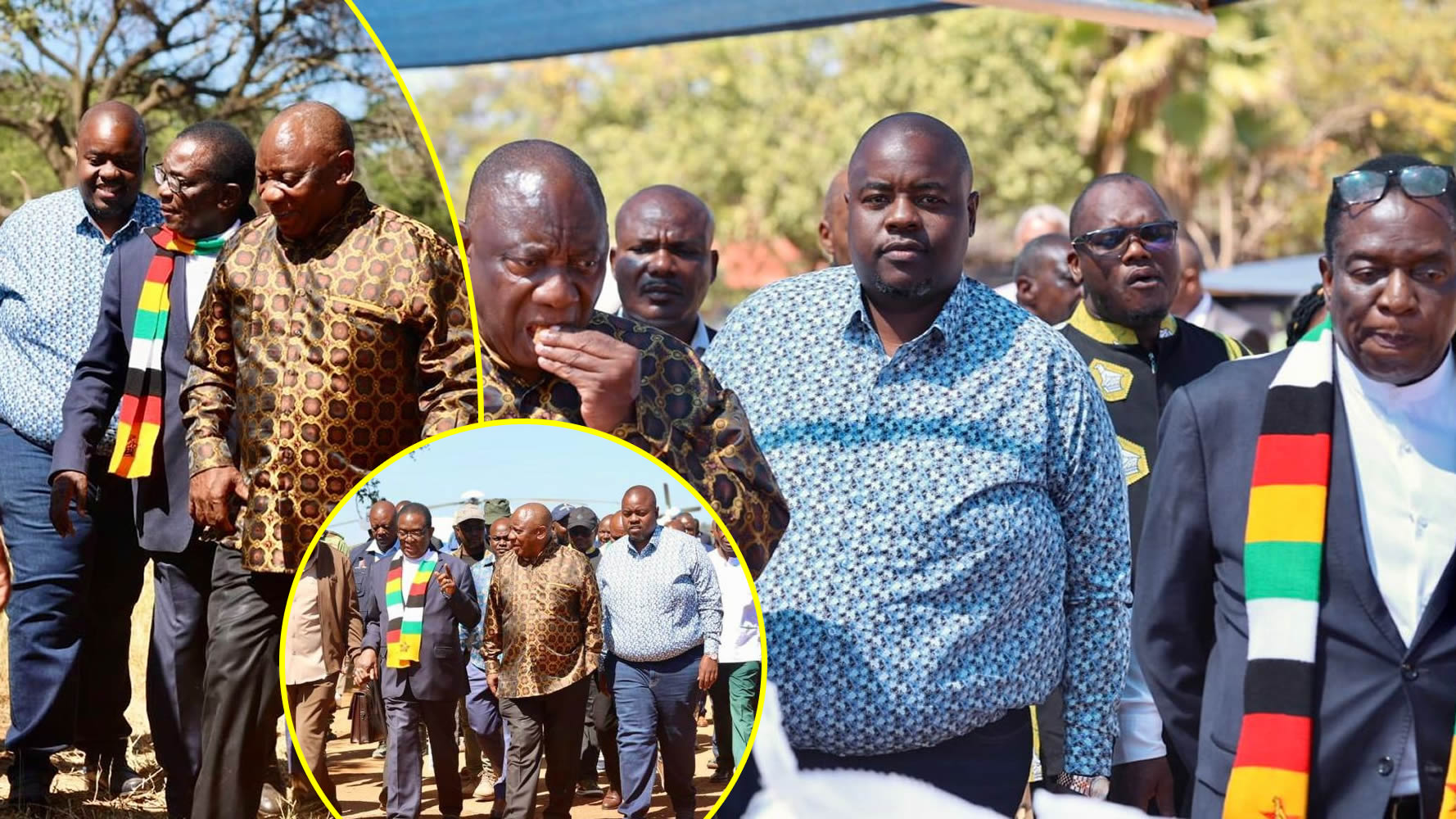
Harare – A palpable tension hangs over Zimbabwe as South African President Cyril Ramaphosa made an urgent, unannounced visit to President Emmerson Mnangagwa’s private Precabe Farm in Kwekwe. This clandestine meeting, shrouded in official ambiguity, has ignited a firestorm of speculation and concern across Southern Africa, with many interpreting it as a desperate attempt to avert a looming political catastrophe. While Pretoria vaguely termed it a “working visit” to discuss “mutual and bilateral interests,” insiders and political analysts suggest a far more critical agenda: Ramaphosa delivered stern warnings to Mnangagwa regarding the contentious Constitutional Amendment Bill No. 3 (CAB3) and a perilous plot to dismiss Vice President Constantino Chiwenga.
Rutendo Matinyarare, a former ally of Mnangagwa and a prominent activist, has been unequivocal in his assertions, claiming Ramaphosa’s visit was a “crisis management intervention” to prevent Zimbabwe from teetering into a coup or even a civil war. Matinyarare’s claims, widely circulated and echoed by various political commentators, underscore the gravity of the situation. He argued that it was inconceivable for the leader of Africa’s most powerful nation, grappling with its own internal challenges like xenophobia and an influx of Zimbabwean economic migrants, to undertake such an unscheduled trip merely for a casual weekend visit. Instead, he posited that Ramaphosa’s true mission was to caution Harare against both CAB3 and the potential removal of Chiwenga, actions that could severely destabilise Zimbabwe and, by extension, the entire Southern African region.
While Harare said his visit was private, Pretoria described it as a “working visit” where issues of mutual and bilateral interests were discussed. Matinyarare, claimed there was no way Ramaphosa could have come for a weekend off in Harare considering the immigrants’ crisis he is facing at home due to Zimbabwe’s poor governance.
“Ramaphosa, the leader of the most powerful nation in Africa and a member of the G20, would not make an unscheduled emergency trip to a small country like Zimbabwe, which only imports 2.3% of South Africa’s exports but discharges thousands of refugees that are costing the ANC power, to come and support an illegal Constitutional Amendment Bill No.3(CAB3) to extend the President’s term in office,” said Matinyarare.
“Why? Because CAB3 has the potential to destabilise Zimbabwe and discharge more refugees into South Africa, in a South African election year where migration might cost the ANC local government. It is diplomatic logic that Ramaphosa would not come to support a government that has just been condemned by its own Chapter 12 Human Rights institution for beating, jailing, abducting, and burning the offices of those who oppose the Bill, to prolong Mnangagwa’s stay in power.
Added Matinyarare: “Do not be fooled by fake reports: Ramaphosa came to tell Harare to stop CAB3 and to not even think about firing the Vice President because this will destabilise Zimbabwe and the region. The bottom line is that Ramaphosa’s visit was a crisis management intervention because Zimbabwe is on the brink of a coup, if not a civil war. We have been warning Harare that CAB3 is a national and regional security risk, and this visit-along with the false narratives around it-is confirmation that those concerns are materialising faster than expected.”
The Constitutional Conundrum: CAB3 and Mnangagwa’s Power Play
The Constitutional Amendment Bill No. 3 (CAB3) lies at the heart of the current political turmoil. Gazetted on 16 February 2026, the Bill initiated a 90-day public consultation period set to conclude on 15 May 2026. This legislative manoeuvre is widely perceived as an attempt by President Mnangagwa to consolidate power and potentially extend his tenure beyond the constitutionally mandated two terms. The Bill’s provisions, as highlighted by analyst Wellington Muzengeza, are not merely administrative adjustments but represent a significant “constitutional regression”.
Muzengeza argues that CAB3 is the “legislative climax” of a trajectory initiated by the November 2017 military intervention that ousted Robert Mugabe. What was initially presented as a democratic rebirth, a “Second Republic” promising reform and accountability, has, in Muzengeza’s view, devolved into a “carefully managed succession” designed to perpetuate ZANU-PF’s dominance. The coup, he contends, was not about genuine liberation but a “rebranding of authoritarianism,” where “illusion triumphed over substance”. CAB3, with its twenty-one clauses, is seen as a further dismantling of the democratic architecture established by the 2013 referendum, systematically eroding presidential and parliamentary term limits, politicising electoral administration, and undermining judicial independence.
While publicly, ZANU-PF figures like Patrick Chinamasa boast that CAB3 will “swiftly sail through Parliament” with no opposition, there are whispers of significant internal dissent. Political analysts suggest that many senior ZANU-PF politburo members and officials, while outwardly supporting the Bill, are secretly apprehensive about its implications. One analyst claimed that “22 Politburo members and dozens of top officials who publicly endorse CAB 3 are secretly pleading with me to keep fighting” against it. This covert opposition highlights a deep-seated unease within the ruling party, where the pursuit of individual power by the presidential faction risks alienating key party structures and potentially fracturing ZANU-PF.
The Chiwenga Factor: A Dangerous Precedent and the ‘Zvigananda’ Controversy
Central to Ramaphosa’s alleged warnings was the plot to fire Vice President Constantino Chiwenga. Chiwenga, a former military general, played a pivotal role in the 2017 coup that brought Mnangagwa to power. His potential dismissal carries immense risks, reminiscent of the events that precipitated Mugabe’s downfall. In November 2017, Mugabe’s decision to fire then-Vice President Emmerson Mnangagwa triggered the military intervention that ultimately ended his nearly four-decade rule. The historical precedent suggests that removing a powerful figure like Vice President Chiwenga, who commands significant loyalty within the military, could plunge Zimbabwe into severe instability.
Adding another layer of complexity to this internal power struggle is the ongoing feud between Chiwenga and a group of politically connected businessmen he disparagingly refers to as “zvigananda.” This term, meaning “tenderpreneurs” or individuals who accumulate wealth through illicit means due to political connections, has been publicly directed at figures such as Wicknell Chivayo, Kuda Tagwirei, and Paul Tungwarara. These individuals were conspicuously present at Mnangagwa’s Precabe Farm during Ramaphosa’s visit, while Chiwenga and his key allies were notably absent.
This selective guest list at such a critical, private meeting speaks volumes. It suggests a deliberate exclusion of Chiwenga’s faction from sensitive discussions, reinforcing the perception of a deep rift within ZANU-PF. The presence of the “zvigananda” at the farm, often seen as staunch supporters of Mnangagwa’s agenda, further fuels speculation that the meeting was designed to solidify support for the President’s controversial plans, potentially at Chiwenga’s expense. Political observers interpret Chiwenga’s public criticism of these tenderpreneurs as a veiled attack on Mnangagwa’s inner circle and their alleged corrupt practices, highlighting the intense factionalism that characterises contemporary Zimbabwean politics.
SADC’s Unease and the Regional Ramifications
South Africa, as a regional hegemon and the current chair of the Southern African Development Community (SADC), has a vested interest in Zimbabwe’s stability. The continuous political and economic crises in Zimbabwe have had direct repercussions on South Africa, most notably through the mass migration of Zimbabweans seeking economic opportunities and refuge. This influx has exacerbated social tensions and contributed to xenophobic sentiments in South Africa, a significant concern for the ruling African National Congress (ANC) in an election year.
Ramaphosa’s visit, therefore, was not merely a bilateral engagement but a reflection of SADC’s broader anxieties about Zimbabwe’s trajectory. The regional body has historically adopted a policy of “quiet diplomacy” towards Zimbabwe, a stance that has often been criticised for its perceived ineffectiveness. However, the urgency of Ramaphosa’s private visit suggests a departure from this passive approach, indicating that the situation in Zimbabwe has reached a critical juncture that demands direct intervention.
Gabriel Manyati, a Zimbabwean journalist and analyst, critically observed that Ramaphosa’s “cosy meeting with Mnangagwa exposes regional failure”. He argued that the optics of the South African President mingling with Zimbabwean tenderpreneurs at a lavish farm, while millions in both countries face severe economic hardship, was a “calculated middle finger to the suffering masses”. Manyati suggested that this was not a meeting about regional integration or economic relief, but rather a “gathering of the untouchables” discussing the “preservation of a system that has served them exceptionally well”. This perspective underscores the deep cynicism with which many view the regional leadership’s handling of the Zimbabwean crisis, seeing it as a form of “elite protection” rather than genuine efforts to foster democracy and stability.
Prophetic Warnings and Historical Echoes
The political climate in Zimbabwe is further charged by prophetic pronouncements, particularly those of Prophet Ian Ndlovu. Ndlovu has gained considerable attention for his prophecies concerning Zimbabwe’s future. Notably, he has prophesied that May 2026 will bear a striking resemblance to 1980, the year Zimbabwe gained its independence. This comparison is significant because 1980 was a year of immense hope and transformation, a stark contrast to the political landscape of 2017, which saw a military-backed transition of power.
The reference to 1980, a year of liberation and new beginnings, offers a glimmer of hope for some, while for others, it serves as a stark reminder of unfulfilled promises and the cyclical nature of political struggles in the country.
The Unfolding Drama: Will Mnangagwa Heed the Warnings?
The critical question remains: will President Mnangagwa heed Ramaphosa’s warnings and reconsider his path regarding CAB3 and the potential dismissal of Vice President Chiwenga? The answer is complex, influenced by a confluence of internal and external pressures.
Internally, Mnangagwa faces a delicate balancing act. While he seeks to consolidate his power, alienating Chiwenga and his military backing could prove disastrous, potentially triggering a backlash from within the security forces that could mirror or even surpass the events of 2017. The covert opposition to CAB3 within ZANU-PF also indicates that pushing through the amendments could further fragment the party, weakening its overall control and legitimacy. The “zvigananda” faction, while seemingly loyal to Mnangagwa, represents a narrow base of support, and relying too heavily on them risks deepening public resentment and accusations of corruption.
Externally, the pressure from SADC, channelled through Ramaphosa, is significant. South Africa’s economic leverage over Zimbabwe is considerable, and a complete breakdown of order in Zimbabwe would have severe economic and social consequences for its neighbour. While SADC has historically been reluctant to directly interfere in the internal affairs of member states, the perceived threat of a coup or civil war in Zimbabwe could force a more assertive stance. The international community, already wary of Zimbabwe’s human rights record and democratic deficits, would likely condemn any actions that further undermine constitutionalism and stability.
However, Mnangagwa has consistently demonstrated a strong will to maintain power. His administration has shown a willingness to suppress dissent and push through controversial legislation, often under the guise of national interest or reform. The allure of extending his presidential term, as facilitated by CAB3, is a powerful motivator. Furthermore, the political culture within ZANU-PF often prioritises party unity and loyalty to the leader, making it difficult for internal dissent to openly challenge presidential directives.
Considering these factors, it is likely that Mnangagwa will face immense pressure to at least appear to consider Ramaphosa’s advice. He may attempt to find a middle ground, perhaps by delaying certain aspects of CAB3 or offering concessions to Chiwenga’s faction, without fully abandoning his long-term objectives. However, a complete capitulation to Ramaphosa’s warnings seems improbable given Mnangagwa’s history and the deep-seated desire within his camp to secure his political future. The political landscape in Zimbabwe is characterised by high stakes and entrenched interests, making any significant deviation from the current trajectory a challenging prospect for the incumbent president.
The coming weeks, particularly leading up to the conclusion of the CAB3 public consultation period in May, will be crucial in determining whether Zimbabwe veers further towards instability or finds a path towards genuine reform and reconciliation. The eyes of the region, and indeed the world, remain fixed on Harare, watching for the next move in this high-stakes political chess game.