


THE PRICE OF GOLD: WHEN FEAR OVERTAKES THE DOCK IN MUTARE
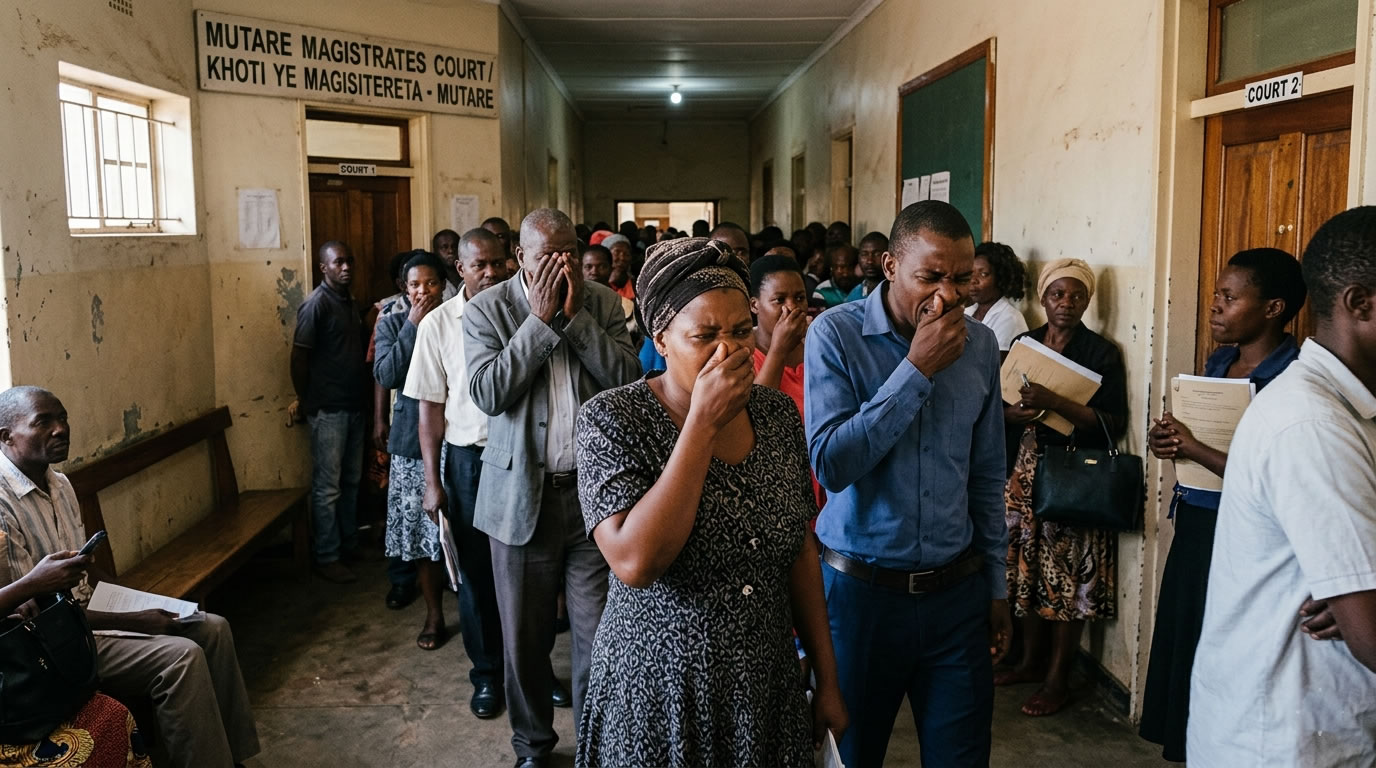
The atmosphere inside the Mutare Regional Court is usually one of rigid formality, a place where the weight of the law is felt in the hushed whispers of lawyers and the stern gaze of the presiding magistrate. However, last week, the decorum of the court was punctured by a visceral display of human terror. Ernest Gwayakwaya, a 22-year-old gold panner from Mushati Village under Chief Zimunya, found himself at the centre of a scene that was as pathetic as it was dramatic. Before the hammer of justice could fall, and before the prosecutor could even begin his final line of questioning, Gwayakwaya’s composure shattered in the most public and humiliating way possible: he soiled himself right there in the dock.
The proceedings were briefly paused as the court grappled with the biological manifestation of the young man’s dread. Gwayakwaya had been convicted of attempted murder, a charge that carries the heavy shadow of years behind bars. As he stood before Magistrate Ms Phathekhile Msipa, the reality of his situation appeared to have bypassed his mind and struck his body with overwhelming force. Yet, as the mess was cleared and the air in the courtroom settled, it became clear that this involuntary plea for mercy would have no bearing on the legal outcome. The law, in its cold and calculated nature, remained unmoved.
Gwayakwaya was subsequently sentenced to five years in prison. His case is a window into the desperate and often violent world of Zimbabwe’s artisanal gold miners, known locally as makorokoza. It is a world where the lure of a few grammes of gold ore can lead to life-altering decisions and, ultimately, the kind of soul-crushing fear that was witnessed in the Mutare Regional Court.
The Midnight Patrol at Sino Africa Mine
The events that led to Gwayakwaya’s undignified moment in court began on the evening of April 12. According to the facts presented by prosecutor Mr Last Goredema, the setting was the Sino Africa Mine, a site that has often been a flashpoint for tension between corporate interests and illegal prospectors. Mr Clifford Mutya and Mr Prosper Tavengwa, two security guards employed by the mine, had started their shift as the sun dipped below the horizon. They were armed with a 303 rifle, loaded with just two bullets—a meagre defence against the unpredictable nature of the mining bush.
At midnight, as they patrolled the perimeter fence, the guards stumbled upon the telltale signs of illegal activity: a freshly dug pit in an area that should have been silent. There was no one in sight at that hour, only the dark, gaping wound in the earth that spoke of a frantic search for wealth. The guards noted the location and continued their rounds, knowing that the “gold fever” would likely bring the diggers back.
At 6:00 am the following morning, the guards returned to the site. This time, they did not find an empty pit. Instead, they discovered Gwayakwaya and five of his associates deep within the earth. The scene was one of blatant theft; the group had already filled several sacks with gold ore and were preparing to haul their illicit prize out of the mine.
When the guards ordered the group to exit the pit and surrender, the situation turned from a simple trespass into a violent confrontation. Gwayakwaya and his colleagues did not go quietly. They emerged from the pit wielding an arsenal of makeshift weapons: knives, shovels, and metal bars. It was this moment of violent resistance, this decision to choose combat over surrender, that elevated the charges against Gwayakwaya to attempted murder.
A Pattern of Collapse: The Physicality of Sentencing
While Gwayakwaya’s loss of bowel control was particularly striking, it is part of a broader, recurring phenomenon in Zimbabwean courtrooms where the body reacts when the mind cannot process the severity of a sentence. Investigative records show that the dock is frequently a place of physical collapse.
In 2017, a 33-year-old man in Gweru fainted instantly after being handed an effective 15-year sentence for a heinous rape conviction. Similar scenes played out in Victoria Falls that same year, where another man collapsed upon hearing he would spend a decade and a half in prison. In 2021, a South African drug mule, caught at Robert Mugabe International Airport, crumpled to the floor of a Harare court when she was slapped with a 12-year jail term.
The physical toll is not limited to the accused. In Bindura, the wife and sister of a man sentenced to 12 years for rape both screamed and fainted as the magistrate delivered the verdict. Perhaps most unusual was a 2022 case in Bulawayo, where a 27-year-old man accused of aggravated indecent assault fainted in the dock at the exact same moment his mother collapsed in the public gallery.
These incidents, ranging from soiling to total loss of consciousness, highlight the immense psychological pressure of the Zimbabwean judicial system. For many, like Gwayakwaya, the courtroom is the first place where the consequences of their actions truly crystallise. The “macho” exterior of the makorokoza—men who face the dangers of collapsing mine shafts and gang wars daily—often evaporates when faced with the cold, sterile finality of a prison sentence.
The Violent World of the Makorokoza
To understand why a 22-year-old would risk an attempted murder charge for a few sacks of ore, one must look at the escalating violence within Zimbabwe’s artisanal mining sector. The term makorokoza has become synonymous with a specific type of lawlessness, often referred to as the “machete wars.”
In mining hubs like Kwekwe and Shurugwi, gangs known as MaShurugwi have long terrorised both rival miners and local communities. These are not merely desperate individuals; they are often organised groups that use gratuitous violence to seize productive pits. In Kwekwe alone, “machete wars” have claimed dozens of lives in recent years, with 14 deaths reported in a single particularly bloody period.
The violence is often intimate and brutal. Just last November, in Filabusi, another 22-year-old gold panner named Proud Mathe was jailed for five years—the same sentence as Gwayakwaya—after a vicious axe attack on a fellow villager. In Masvingo, miners were recently arrested for the fatal beating of a colleague over a dispute regarding the sharing of gold. The tools of the trade—shovels, picks, and the ubiquitous machete—are easily turned into weapons of war.
The Sino Africa Mine, where Gwayakwaya was caught, has its own history of conflict. In early 2025, the mine was the subject of intense local controversy, with residents of the Mutasa District clashing with the company over issues of pollution and unfulfilled promises. This environment of tension between large-scale corporate mining and the local population often creates a vacuum where illegal activities flourish, and where young men like Gwayakwaya feel they have more to gain from a midnight raid than from legal employment.
The Interpreter’s Testimony
In court, the case against Gwayakwaya was bolstered by the testimony of those who witnessed the fallout of his actions. Mr Nyasha Chinake, an interpreter for Sino Africa Mine, represented the company’s interests. His presence in court served as a reminder of the linguistic and cultural barriers that often exist in these high-stakes mining environments, where foreign investment meets local desperation.
The prosecutor, Mr Goredema, was methodical in his presentation. He painted a picture of security guards who were simply trying to do their jobs against a group of men who had “become violent, wielding knives, shovels, and metal bars.” The use of such weapons against guards who were carrying a rifle—even one with only two bullets—demonstrated a level of aggression that the court could not overlook.
Gwayakwaya’s attempt to evade justice through a show of force on the mine grounds ended in a display of utter weakness in the courtroom. His five-year sentence is intended to serve as a deterrent, but in the gold-rich mountains of Manicaland, where poverty and opportunity collide, the cycle of violence shows little sign of slowing down.
A Community Under Pressure
The Mutare River and its surrounding hills have been the site of massive crackdowns by security forces. In recent months, police and military units have been deployed to flush out illegal miners from the riverbeds and mountains. These operations are often a response to the environmental degradation caused by panning, but they also aim to curb the rising tide of “makorokoza” violence.
For the villagers of Mushati, Gwayakwaya’s fate is a cautionary tale. He is a young man who will now spend his formative years in a Zimbabwean prison, a place far removed from the dreams of gold-funded wealth. His moment of physical failure in the Mutare Regional Court will likely be remembered by those who were there as a stark reminder of the human cost of the gold trade.
As Gwayakwaya was led away to begin his sentence, the smell of his fear may have lingered in the room, but the gears of the justice system had already moved on to the next case. In the world of the makorokoza, gold is often bought with blood, and the price of failure is a humiliation that even the thickest prison walls cannot hide.