


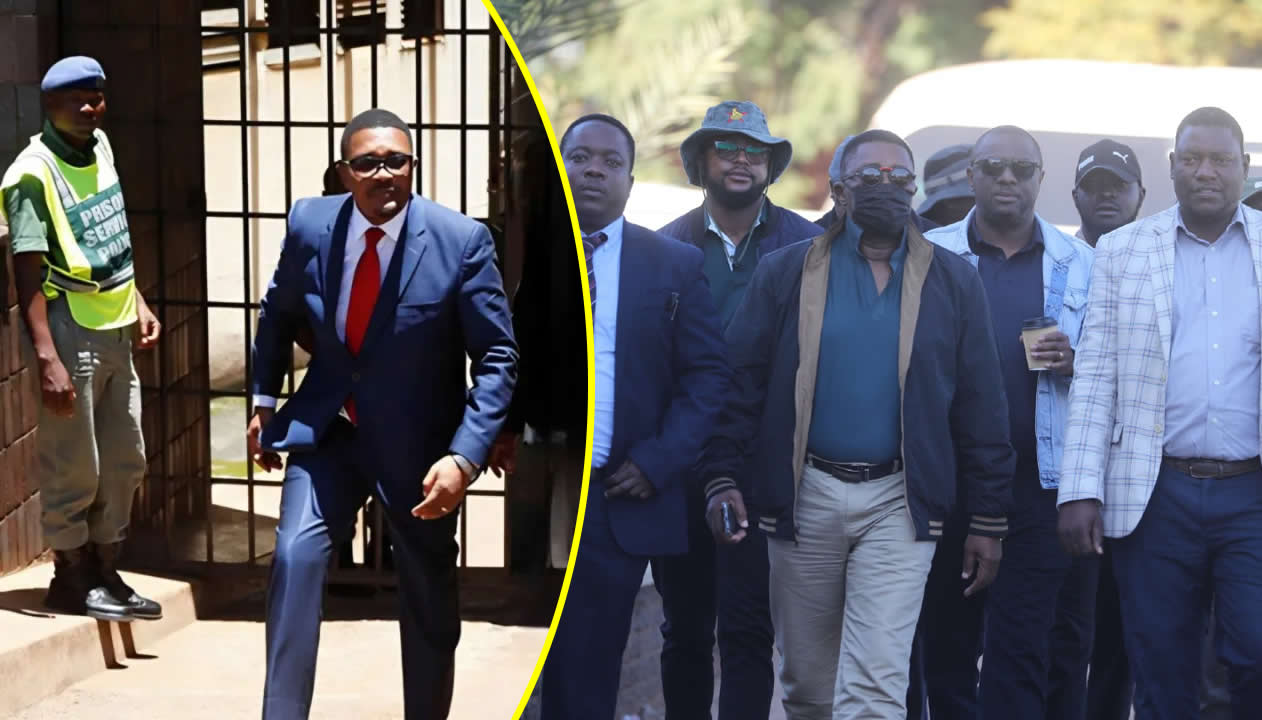
Harare – Former Foreign Affairs Minister Walter Mzembi has been found not guilty of criminal abuse of office after a High Court judge ruled the state had fatally undermined its own case by failing to call its most critical witness. This verdict, delivered on 13 May 2026, has left many political observers and the Zimbabwean populace questioning whether an unseen hand played a pivotal role in Mzembi’s unexpected freedom.
The acquittal has ignited a firestorm of speculation, particularly given its proximity to a discreet visit by South African President Cyril Ramaphosa to President Emmerson Mnangagwa’s private farm in Kwekwe.
Mzembi, who had endured approximately a year in incarceration, was granted bail shortly after Ramaphosa’s unannounced visit on 4 May 2026. This timing has fuelled intense debate, prompting a deeper look into the intricate web of political manoeuvring and diplomatic undercurrents that often characterise Zimbabwean politics. While state media initially remained silent on Ramaphosa’s visit, images of the South African leader alongside Mnangagwa and prominent businessmen like Kuda Tagwirei and Wicknell Chivayo quickly surfaced on social media, adding to the intrigue.
Mzembi endured a protracted period of incarceration, spending approximately 325 days in remand prison after his arrest in June 2025 on charges of criminal abuse of office and fraud. Throughout this nearly year-long detention, Mzembi was repeatedly denied bail by both the Magistrates and High Courts, with reports indicating at least six distinct attempts to secure his temporary release were unsuccessful. However, a remarkable shift occurred on 4 May 2026, coinciding precisely with an unofficial working visit by South African President Cyril Ramaphosa to Zimbabwe. On the next day, Mzembi was granted US$1,000 bail by the High Court, leading to his release from Harare Remand Prison on 5 May 2026. This sudden and unexpected turn of events, following numerous prior denials, has fuelled speculation regarding the potential influence of diplomatic interventions or regional political pressure in securing his prompt freedom.
The Acquittal: A Judicial Scrutiny
The High Court’s ruling, presided over by Justice Benjamin Chikowero, found Mzembi not guilty of criminal abuse of office. The core of the prosecution’s case revolved around the alleged unlawful donation of 16 public-viewing television sets to churches, an act valued at approximately US$1.6 million or linked to a misappropriation of that amount. However, the court meticulously dissected the State’s evidence, ultimately concluding that it failed to prove its case beyond reasonable doubt.
Justice Chikowero’s judgment highlighted several critical shortcomings in the prosecution’s approach. A significant point of contention was the State’s failure to call Margaret Sangarwe, the former Permanent Secretary, as a witness. The judge underscored that Sangarwe was a material witness who could have clarified whether Mzembi had personally authorised the donation. “In short, the two were not relevant witnesses to assist in the state’s case. The state’s failure to call other witnesses was fatal to its case,” Justice Chikowero stated, referring to other witnesses, Zvinechimwe Churu and Thokozile Chitepo, who, despite being former Permanent Secretaries, lacked direct knowledge of Mzembi’s personal involvement.
Furthermore, documentary exhibits presented in court clearly indicated that the Ministry, and not Mzembi in his personal capacity, was responsible for the donation of the television sets. An asset check conducted by Florence Nhekairo confirmed that the screens remained recorded on the ministry’s inventory sheets as state property. This evidence directly contradicted the prosecution’s narrative of an unlawful donation by Mzembi. The judge also criticised the investigating officer, Eric Chacha, for what he deemed a failure to conduct a proper investigation, noting that evidence from Admire Mango, a senior overseer with PHD Ministries, also failed to incriminate Mzembi.
Justice Chikowero further clarified that, based on the evidence, no actual donation had taken place, which fundamentally undermined the State’s case. This judicial scrutiny paints a picture of a prosecution built on shaky foundations, ultimately leading to Mzembi’s exoneration. However, the timing of this legal victory, coming just days after a high-profile, yet secretive, diplomatic engagement, has inevitably led to questions about external influences.
Ramaphosa’s Covert Visit: More Than a “Private Friendship”?
South African President Cyril Ramaphosa’s visit to President Mnangagwa’s Precabe Farm in Kwekwe on 4 May 2026 was anything but ordinary. Described as a “private visit,” it was conducted with a level of discretion that immediately raised eyebrows. Neither Pretoria nor Harare officially flagged the visit in advance, and it was only through social media that the public became aware of the high-level meeting.
The official narrative suggested a casual, informal meeting, with Ramaphosa reportedly touring maize fields, inspecting cattle operations, and observing a stocked dam. However, ZimLive reported that the trip was far more than a mere agricultural excursion. Sources indicated that Ramaphosa’s primary objective was to caution Mnangagwa against proceeding with the Constitutional Amendment Bill Number 3 (CAB3), which seeks to extend the presidential term and replace direct presidential elections with an electoral college vote by Members of Parliament. Such constitutional changes, critics argue, risk destabilising Zimbabwe and undermining democratic accountability.
The meeting also involved a coterie of influential Zimbabwean businessmen: Wicknell Chivayo, Kudakwashe Tagwirei, and Paul Tungwarara. These individuals, whose fortunes are closely tied to state patronage, have faced accusations from Vice President Constantino Chiwenga of “capturing the state.” Their presence at such a sensitive meeting further complicates the narrative, suggesting a convergence of political, economic, and diplomatic interests.
The Political Chessboard: CAB3 and Internal Power Struggles
Ramaphosa’s intervention, if accurately reported, underscores the deep regional concerns surrounding Zimbabwe’s political stability. The proposed CAB3 has ignited a fierce internal battle within the ruling Zanu PF party. The bill aims to extend both presidential and parliamentary terms from five to seven years, effectively prolonging Mnangagwa’s incumbency. This move has been met with significant opposition, with critics arguing it consolidates executive power and fundamentally disrupts the constitutional order.
Vice President Constantino Chiwenga, a retired army general, is widely regarded as the most formidable challenger to Mnangagwa’s bid for an extended term. The political landscape within Zanu PF is fraught with internal power struggles, and any move to alter the constitution to favour the incumbent is likely to exacerbate these tensions. Ramaphosa’s visit, therefore, could be interpreted as an urgent attempt to mediate a dangerous rift between the President and his Vice President, fearing further destabilisation and a potential surge in Zimbabwean migration into South Africa.
This concern is particularly pertinent given the backdrop of rising xenophobic tensions in South Africa. In May 2026, South Africa experienced renewed xenophobic violence and protests against illegal immigration, prompting several African nations, including Zimbabwe, to issue safety advisories to their citizens. The prospect of increased instability in Zimbabwe, leading to a fresh wave of economic migrants, is a significant worry for South Africa, which already grapples with its own socio-economic challenges.
Connecting the Dots: A Strategic Realignment?
The convergence of Mzembi’s acquittal, Ramaphosa’s clandestine visit, and the ongoing political turmoil surrounding CAB3 presents a compelling narrative of strategic realignments and external pressures. Was Mzembi’s freedom a quid pro quo, a concession made within a larger diplomatic bargain to secure regional stability or influence internal Zanu PF dynamics? The timing, just nine days after Ramaphosa’s visit, is difficult to dismiss as mere coincidence.
While there is no direct evidence to definitively link Ramaphosa’s visit to Mzembi’s acquittal, the sequence of events invites considerable speculation. The High Court’s thorough dismantling of the State’s case against Mzembi, coupled with the reported diplomatic pressure from South Africa regarding CAB3, suggests a complex interplay of factors. It is plausible that Mzembi’s prolonged detention and subsequent acquittal could be a strategic move within this intricate political chessboard, possibly influenced by external diplomatic efforts or internal realignments within the ruling party.
This unfolding drama highlights the opaque nature of power dynamics in the region, where judicial outcomes can sometimes appear intertwined with political expediency. The questions raised by Mzembi’s acquittal and Ramaphosa’s visit will undoubtedly continue to resonate, prompting further scrutiny into the unseen hands that shape the political destiny of nations.