


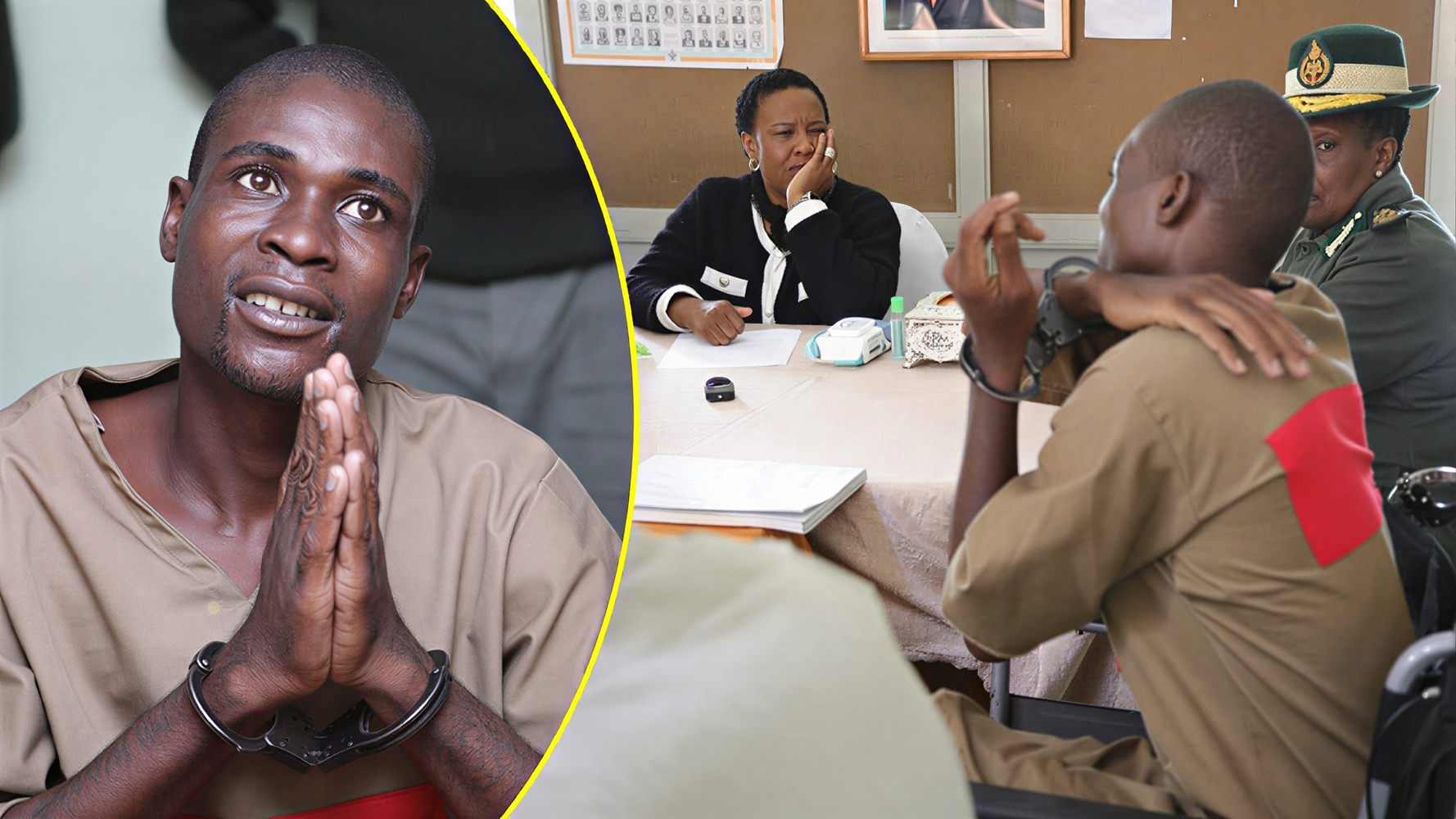
The just-delivered sentencing of Anymore Zvitsva to an effective 89 years in prison for a chilling spree of rapes, attempted murders, and robberies in Guruve, Zimbabwe, has brought a semblance of closure to a community ravaged by fear. However, this legal outcome, while significant, has done little to quell the deep-seated anxieties and unanswered questions that continue to plague the region. The official narrative, which largely frames Zvitsva as a lone perpetrator, stands in stark contrast to the disturbing allegations of ritualistic killings and the grotesque trade in human body parts, purportedly involving influential figures, including self-styled prophets.
Anymore Zvitsva, a 33-year-old man hailing from Vheremu village under Chief Chipuriro in Guruve, unleashed a reign of terror that spanned from April 2024 to December 2025. His methods were consistently brutal and calculated. He would typically strike under the cloak of darkness, often forcing entry into homes, where he would then use snare wire to strangle his victims. Many of these horrific encounters were compounded by sexual assault. Beyond strangulation, Zvitsva employed a terrifying arsenal of weapons, including knives, machetes, spears, and even poison, to execute his heinous acts. The sheer scale and barbarity of his crimes plunged Guruve into a prolonged nightmare, transforming once-tranquil villages into landscapes of pervasive dread.
Initially, Zvitsva appeared before Harare regional magistrate Mr. Francis Mapfumo, pleading guilty to 10 counts encompassing rape, attempted murder, and robbery’ Yet, as the investigation progressed and more evidence surfaced, the true extent of his depravity began to unravel. Police national spokesperson Paul Nyathi later confirmed that Zvitsva was facing an astonishing 25 counts of murder, in addition to further charges of attempted murder and rape’ This dramatic escalation in the number of charges, from the initial 10 to a potential 25 murders, underscores the prolonged and extensive nature of his criminal enterprise. It also raises critical questions about how such a prolific killer could operate undetected for such an extended period, leaving a trail of devastation across the Guruve district.
Among the most horrifying aspects of Zvitsva’s alleged crimes were the night-time home invasions that shattered the peace of countless families. In late November 2025, Zvitsva is accused of violently entering a two-roomed house in Nyakapupu, where he proceeded to strangle three women to death in their beds using snare wire. Just days later, in Zimuna village, he allegedly forced his way into a one-roomed dwelling, killing three occupants in the same brutal fashion. In a particularly chilling detail, he then abducted a fourth victim, whom he subsequently raped and murdered as she desperately tried to escape, burying her body in the rugged terrain of the Nyakapupu mountain range’ These accounts paint a grim picture of a remorseless predator who violated the sanctity of homes and extinguished lives with chilling efficiency.
Zvitsva’s victims were not confined to their homes; he also targeted individuals engaged in routine daily activities, turning everyday chores into deadly encounters. In April 2024, a woman herding cattle in Nyakapupu was ambushed by Zvitsva. He dragged her into a gum plantation, raped her at knifepoint, strangled her with wire, and then hanged her from a tree. Her lifeless body was discovered the following morning after a frantic village search. In October 2025, another woman faced a similar fate, reportedly threatened with a machete before being strangled with wire, her body later found in the open’ These incidents highlight the pervasive terror that gripped Guruve, where even the simplest tasks carried the risk of encountering the ‘monster’.
The court also heard distressing details of Zvitsva’s attack on Jane Dube in March 2025. After demanding money at her Rangwani village homestead, Zvitsva allegedly pursued her and her three-year-old child into a maize field. There, he repeatedly assaulted her with an iron rod, leaving her for dead before making his escape’ The involvement of a young child in this terrifying ordeal further illustrates the indiscriminate and brutal nature of his violence, leaving an indelible scar on the community.
However, it is the persistent and deeply unsettling allegations of ritualistic motives and the trade in human body parts that truly distinguish this case and fuel the community’s lingering unease. Police spokesperson Paul Nyathi confirmed that investigations were actively pursuing claims that Zvitsva had accomplices and that certain individuals had allegedly received or accessed body parts from Zvitsva in exchange for money’ These claims, though still under verification, introduce a sinister dimension to an already horrific case, suggesting a motive far beyond that of a conventional serial killer.
Disturbingly, Zvitsva himself reportedly confessed to cooking and consuming human flesh. He also admitted to dismembering bodies, specifically cutting off breasts, which he then sold to a local miner for use in rituals at a mine. Furthermore, he claimed to have sold blood from his victims to self-styled prophets. These shocking admissions, made during a visit by the First Lady to Chikurubi Maximum Security Prison, lend considerable weight to the community’s fears that Zvitsva was not operating in isolation. Instead, they suggest the existence of a dark network of individuals who profited from his gruesome acts. The alleged involvement of “big fish” in these illicit activities, as hinted at by community sources, points to a deeply entrenched criminal enterprise that extends far beyond Zvitsva himself’
Zvitsva’s own chilling account of his first kill provides a disturbing insight into his descent into depravity. He recounted how an initial attempt at theft, driven by hunger, escalated into murder. He returned to a home he had previously burgled, seeking money. When confronted by the homeowner, he panicked, striking her with the back of a knife. A struggle ensued, during which the woman managed to grab her child and Zvitsva’s phone, fleeing into the bush. Driven by fear that his phone would be used as evidence, he pursued her. When she refused to surrender the phone, hitting him with a brick, he became enraged and fatally stabbed her. “That is when I realised I had stabbed someone. This was when my journey of killing people began in 2024,” he confessed’
His second victim was his own niece, whom he accused of being a “traitor” for suspecting him of theft. He strangled her with a wire she intended to use to lock her door. He then pursued her three-to-five-year-old child, whom he also killed, fearing that if left alive, the child could identify him. He buried the child in a shallow grave. It was after this second murder that the most gruesome details emerged. Zvitsva recounted dismembering the niece’s body, specifically cutting off her breasts for a man named Nathan Churweni, who allegedly wanted them to “boost a gold mine”‘
Zvitsva further confessed to roasting and tasting human flesh, though he claimed his conscience prevented him from consuming it entirely. The remaining parts were burned, and the ashes were mixed with cooking oil to be used as a lotion for fortune-telling. He believed these ashes, combined with magical trees, granted him the ability to foresee events and locate hidden money. He even used these ashes to construct a shop, driven by the belief that such acts would bring him wealth’ These confessions paint a picture of a man deeply entangled in a web of superstition and dark rituals, a narrative that resonates with the community’s long-held fears of witchcraft and ritualistic practices.
The alleged involvement of self-styled prophets in this macabre trade is particularly disturbing. Zvitsva explicitly named Junioius Kasinauyo and Gidza Dhorobha as individuals to whom he supplied human blood. He claimed to have received US$200 for the blood of one woman he killed, though he professed ignorance regarding its intended use’ These allegations, if proven true, expose a sinister underbelly where spiritual leaders, revered by some, are implicated in the most heinous of crimes, exploiting the vulnerable for perceived power or wealth. This aspect of the case has profound implications for the community, eroding trust in figures who are traditionally seen as moral guides.
The community’s distrust of the official narrative is palpable. Many believe that the police have deliberately overlooked or downplayed the more complex and disturbing aspects of the case, particularly the ritualistic elements and the alleged involvement of accomplices. This perceived lack of transparency has left a void of unanswered questions and a lingering sense of injustice for the victims whose murders remain unaddressed in the current sentencing. The official portrayal of Zvitsva as a lone, deranged individual clashes sharply with the persistent local whispers of a wider conspiracy, where powerful individuals, the so-called “big fish,” might be implicated. This disparity between the official account and local perception creates a fertile ground for speculation and a continued sense of insecurity, as residents grapple with the unsettling possibility that not all perpetrators have been brought to justice.
The prolonged period during which Zvitsva operated with such impunity, committing numerous murders, rapes, and robberies, is another critical area that demands further scrutiny. How could one man evade capture for so long, despite the escalating body count and the growing terror in Guruve? Zvitsva himself described his evasive tactics, including walking barefoot and avoiding roads to prevent being traced, and hiding in bushes and forests for extended periods’ He also claimed to carry traditional spears, similar to those associated with spirit mediums, which might have contributed to the fear he instilled and his ability to elude authorities. The deployment of soldiers to hunt for him highlights the severity of the situation and the challenges faced by law enforcement in apprehending him.
In conclusion, while Anymore Zvitsva, the ‘Guruve Monster’, is now behind bars, the shadow of doubt continues to loom large over Guruve. The 89-year sentence, while a significant legal victory, has not entirely quelled the community’s thirst for complete truth. The unanswered questions surrounding his prolonged operation, the alleged involvement of accomplices, and the disturbing claims of ritualistic motives and body part trade, suggest that the full story of the Guruve killings remains buried in the shadows. Until these deeper mysteries are thoroughly investigated and transparently addressed, the community will continue to grapple with the unsettling possibility that justice, in its fullest sense, has yet to be served.