


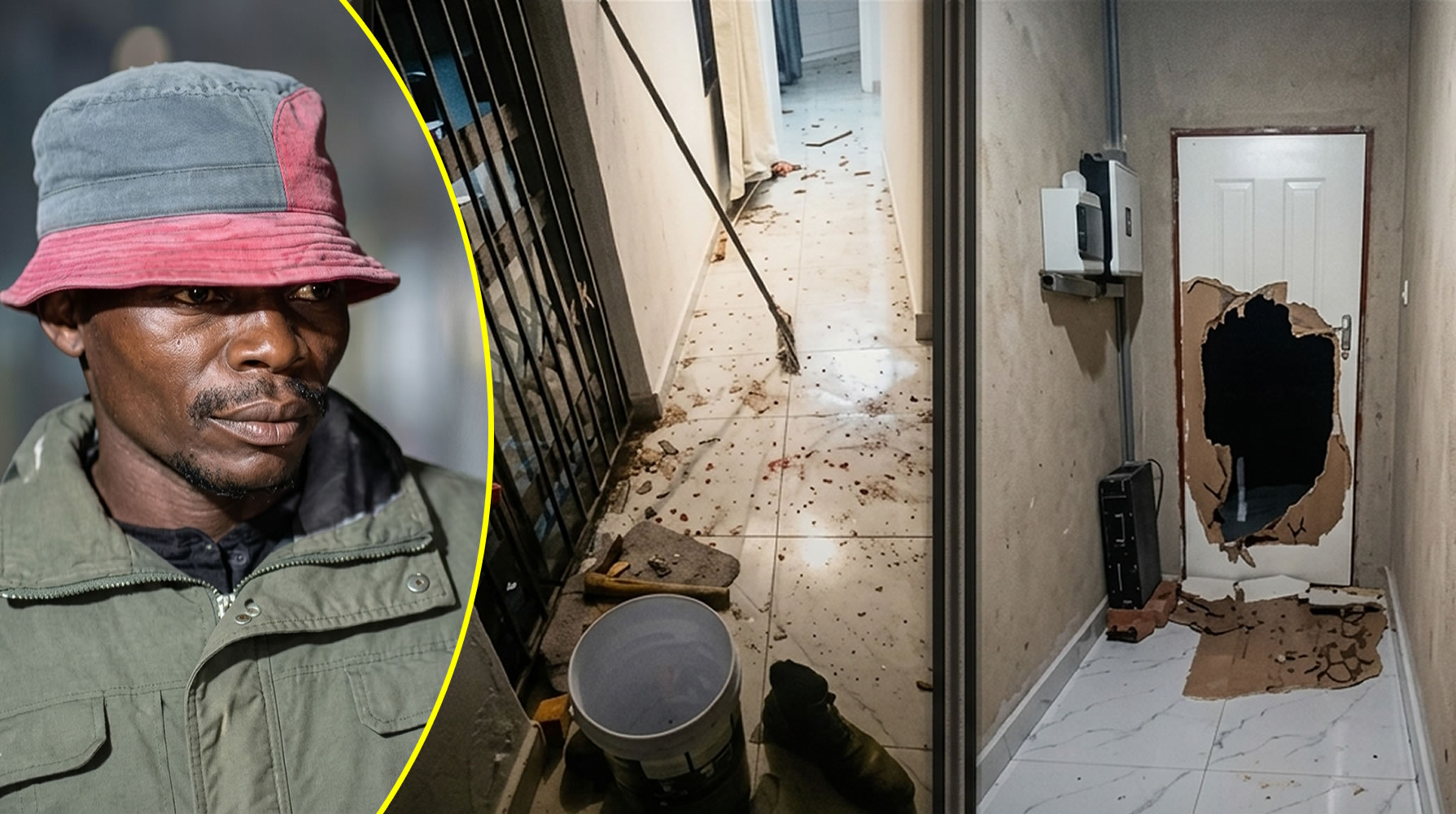
Midnight Shadows: The Violent Siege of Mahatshula and Bulawayo’s Battle Against a Ruthless Syndicate
BULAWAYO – In the quiet, leafy streets of Mahatshula East, the darkness of night has become a source of profound dread. What used to be a sanctuary for middle-class families has transformed into a hunting ground for a ruthless criminal syndicate. For five families in just four days, the sanctuary of their homes was shattered by the sound of breaking glass and the cold glint of steel.
The terror began on a Saturday and did not relent until the following Wednesday. During this period, five separate households were systematically targeted in a wave of violent midnight attacks. These were not mere opportunistic thefts; they were coordinated, aggressive invasions of privacy and safety. The attackers, often masked and heavily armed, demonstrated a chilling disregard for the lives of their victims, leaving behind a trail of physical injuries and psychological trauma that has gripped the suburb.
One of the most harrowing accounts comes from a family whose twelve-year-old daughter became a direct victim of the gang’s brutality. It was approximately 1:00 am when the silence of their home was broken. The young girl, whose name is being withheld to protect her identity, initially thought the rustling noises were simply the household maid moving about. The reality was far more sinister.
“Suddenly they started banging violently on the bedroom door. When they got in, they slapped me and demanded money,” the young girl recalled, her voice still trembling from the memory. The robbers, seemingly indifferent to her age, ransacked the house, eventually making off with clothes, a mobile phone, and US$90. However, it was the psychological warfare they employed that left the deepest scars.
“They even said the shoes they stole from me would be used during future robberies so police would suspect me. They kicked almost every door in the house and damaged them all. I was terrified,” she said. During the struggle, she sustained a painful injury to her eye after being struck by one of the assailants.
The tactics used by the gang suggest a high level of sophistication and physical preparedness. Despite many of the homes in Mahatshula East being protected by high perimeter walls, electric fencing, razor wire, and reinforced burglar bars, the criminals found ways to bypass or destroy these security measures. They arrived armed with an assortment of weapons, including axes, crowbars, bricks, and metal pipes.
Residents describe a group that moves with military precision, striking under the cover of total darkness and vanishing into the thick bushy areas that border the suburb before any meaningful help can arrive. The threat of violence is their primary tool of control. “They told us if we did anything, they would come back and harm us,” said one resident, who spoke on the condition of anonymity for fear of retaliation.
The sense of helplessness was echoed by Malvin Bill, who recounted a desperate plea for help from a friend in the early hours of the morning. “My friend told me unknown men were attacking him and smashing windows while threatening to kill him if they got inside,” Bill explained. By the time Bill arrived with a caretaker, the attackers had already retreated into the dense vegetation behind the property.
“When we got inside, several windows had been broken and my friend was bleeding from different parts of his body,” Bill added. The caretaker reportedly spotted one of the suspects perched atop a boundary wall, watching the house, before the gang realised the community was mobilising and fled into the night.
The escalation of violence in Mahatshula is not an isolated phenomenon but appears to be part of a broader, more systemic surge in organised crime across Bulawayo. Many residents now believe that the gang terrorising their neighbourhood is the same group responsible for the infamous “Night of Long Knives” in Luveve and Gwabalanda. On 17 April 2026, a gang of armed men laid siege to Masina Beerhall and several adjacent shops. In a brazen display of lawlessness, they stole cash, groceries, and emptied gaming machines, all while assaulting anyone who dared to interfere.
Similar patterns of violence have been observed in other suburbs such as Buena Vista and Manningdale. On 14 April 2026, a single night of terror saw six houses raided within a four-hour window. The common thread in these incidents is the use of overwhelming force and a specific focus on high-value targets, particularly those believed to be holding significant amounts of foreign currency.
In one Mahatshula incident that has since gone viral on social media, a homeowner described how he was forced to surrender US$2,000 to save his family. “My wife heard the burglar bar opening because it always makes a distinctive sound,” he said. Upon checking, she was confronted by two men. One was masked in a balaclava, while the other—whose face has since become widely known through circulated footage—stood menacingly with a weapon.
The homeowner was ordered to sit down while the robbers shone powerful torches into his eyes, blinding him and preventing him from seeing their movements clearly. “They said they were not playing games. I became frightened for my family’s safety and handed over the money,” he admitted. The robbers were so confident in their impunity that they claimed to be “well-known thieves,” mocking the victims by suggesting that the police were already aware of their identities and would do nothing to stop them.
However, the wheels of justice have begun to turn. In a significant breakthrough, the Zimbabwe Republic Police (ZRP) recently announced the arrest of 28-year-old Joseph Phiri. National police spokesperson, Commissioner Paul Nyathi, confirmed that Phiri is linked to at least nine armed robberies committed between 15 December 2025 and 13 May 2026.
According to police investigations, Phiri was a central figure in two different criminal syndicates. He initially operated alongside Challenge Lucky Neta (38), Trust Adam Mvubundi (35), and Wellington Nyakurima, also known as “Dombadomba” (33). This group is alleged to have carried out seven robberies using pistols, knives, and sjamboks. While his three accomplices were previously arrested and are currently remanded at Khami Prison, Phiri managed to remain at large, allegedly forming a second syndicate to continue the spree.
This second group, which included Pauros Hadebe (alias Mengezi), Oscar Ndlovu (alias Mao), and Jomo Chomu, is believed to be responsible for the most recent attacks in Mahatshula East. It was during one of these raids that Phiri was captured on a security camera wearing a distinctive maroon and grey bucket hat and a grey jacket—the very image that went viral and eventually aided in his identification. At the time of his arrest, Phiri was reportedly found in possession of a firearm that had been stolen from security guards during a previous robbery.
Despite Phiri’s capture, the threat remains. Several members of his second syndicate are still at large, and the fear they have instilled continues to linger. The community of Mahatshula has refused to remain passive. Following an emergency meeting, residents, led by Councillor Mxolisi Mahlangu, resolved to take their safety into their own hands by hiring a professional private security firm to patrol the streets.
“Residents can no longer live in fear while criminals continue terrorising our community under cover of darkness,” Councillor Mahlangu stated firmly. The move reflects a growing trend in Bulawayo’s suburbs, where the perceived inadequacy of traditional policing has forced communities to invest in private security to protect their families.
The psychological toll on the victims is immense. For many, the physical wounds will heal long before the mental scars fade. The simple act of going to sleep has become a source of anxiety. The memory of the “Night of Long Knives” and the subsequent raids in Mahatshula serve as a stark reminder of the vulnerability of even the most secure homes.
As the investigation continues, the ZRP has appealed for public assistance in locating the remaining suspects. Commissioner Nyathi urged anyone with information to contact the National Complaints Desk or their nearest police station. The battle for the streets of Bulawayo is far from over, but the arrest of Joseph Phiri represents a critical victory in the effort to dismantle the syndicates that have turned the city’s nights into a theatre of terror.
For the residents of Mahatshula, the hope is that the shadows will eventually stop harbouring threats, and that the peace they once took for granted can finally be restored. Until then, the community remains on high alert, watching the darkness and waiting for the justice that they so desperately seek.