


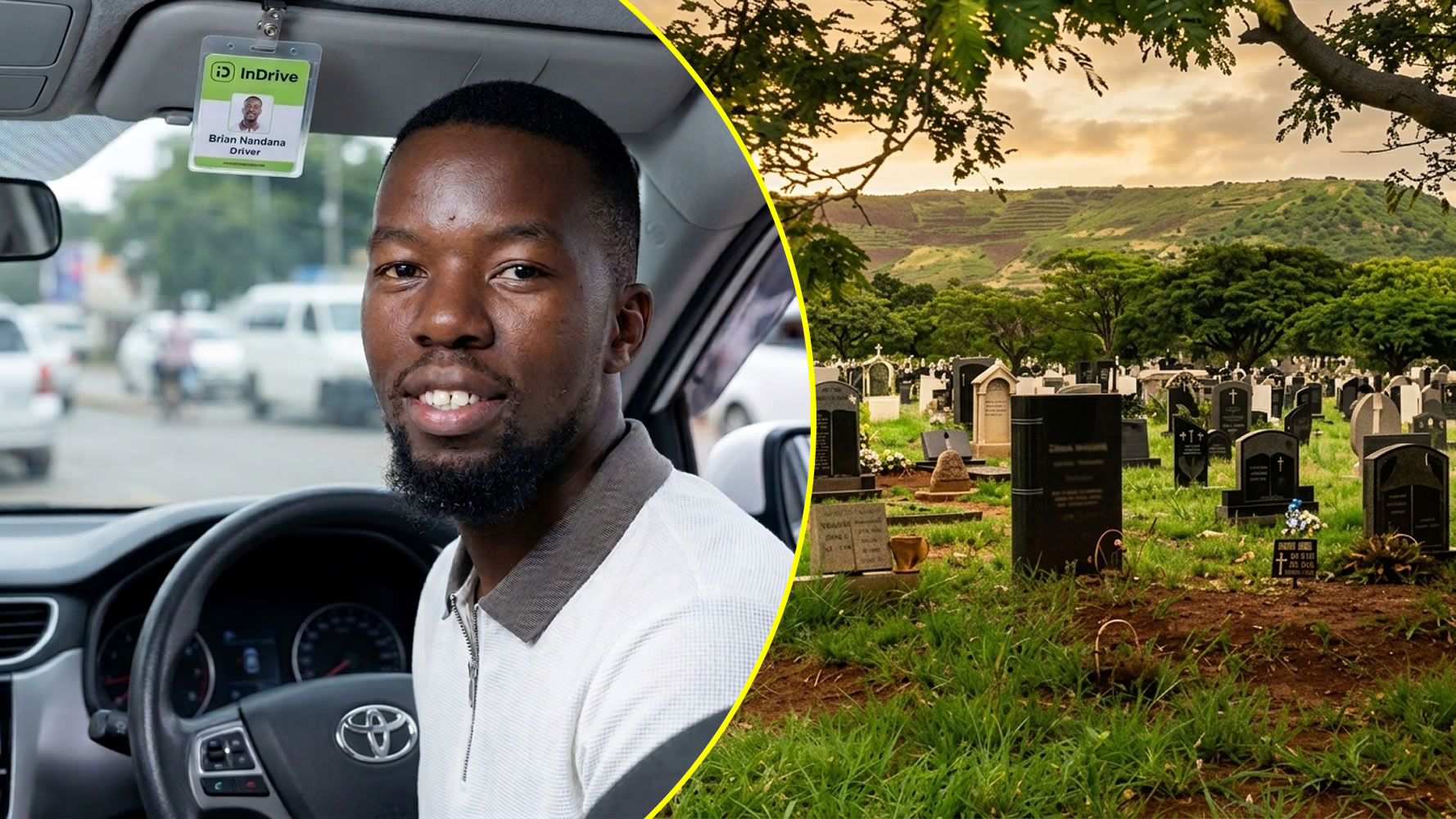
The Shadow Over Warren Hills: Inside the Chilling Confession of Harare’s ‘Vampire’ Killer
HARARE — The first light of dawn had yet to touch the granite kopjes surrounding Warren Hills Cemetery when a police patrol stumbled upon a sight that would unravel one of the most macabre criminal cases in the history of the Zimbabwean capital. It was approximately 4:00 AM on Tuesday, May 19, 2026. In the eerie silence of the sprawling graveyard, a white Toyota Aqua, registration number AGO 2804, sat abandoned amongst the headstones. When officers approached the vehicle, they found it wasn’t just empty; it was a rolling crime scene, its interior slick with fresh, dark blood.
What followed was a swift and harrowing investigation that led to the arrest of 28-year-old Shepherd Severa, a resident of Warren Park D. His confession, delivered to the Zimbabwe Republic Police (ZRP), has left even seasoned investigators reeling. Severa did not just admit to murder; he described a ritualistic act of violence that belongs more to the dark folklore of the past than the modern streets of Harare. He confessed to slitting the throat of his friend, Brian Nandana, with a kitchen knife and, in a detail that has gripped the city in a mixture of horror and disbelief, sucking the blood from the dying man’s veins.
The victim, Brian Nandana, was a well-known figure in the local e-hailing community, often working through the inDrive application. On the morning of his disappearance, he had been reported missing by “Crime Watch ZW” after failing to return from an early morning trip. His friends and family had spent hours sharing his photograph online, hoping for a lead, unaware that his final moments were being played out in the shadows of the very cemetery where his car would later be found.
National police spokesman Commissioner Paul Nyathi confirmed the details of the arrest in a formal statement on Thursday. “Subsequent police investigations led to the arrest of the suspect who confessed to killing his friend Brian Nandana by cutting his throat with a kitchen knife before sucking his blood,” Nyathi said. The Commissioner further revealed that Severa led investigators to a shallow grave within the cemetery grounds. There, the body of Nandana was retrieved, bearing the marks of a brutal end: a deep, jagged cut across the neck and a significant scar on the back of the head.
To understand the gravity of this incident, one must look beyond the immediate violence and into the troubling history of ritualistic crimes in Zimbabwe. The case of Shepherd Severa is not an isolated outburst of madness; it echoes a dark pattern that has surfaced periodically over the last decade. For many in Harare, the details of the Nandana murder immediately brought back memories of Alois Tapiwa Nduna, the man dubbed the original “vampire killer” in 2015.
Nduna, who was arrested in May 2015, confessed to the murder of at least 12 women across the country, claiming he was initiated into a “Satanic cult” in South Africa that required him to drink the blood of his victims to gain strength and wealth. His trial revealed a terrifying underworld of occult beliefs that persist in the fringes of society. Like Severa, Nduna described his actions with a chilling lack of remorse, treating the consumption of human blood as a necessary ritual. The parallels between the two cases—the slitting of the throat, the drinking of blood, and the disposal of bodies in remote or symbolic locations—suggest a resurgence of these occult-driven motives.
The location of the crime, Warren Hills Cemetery, adds another layer of grim significance to the case. In recent months, the cemetery has been at the centre of a series of disturbing reports regarding grave vandalism. Earlier this year, Harare City Council officials were forced to investigate the destruction of over 100 graves. Headstones were smashed, and graves were partially excavated, leading to widespread suspicions of witchcraft and the harvesting of human remains for ritual purposes. While the police have not yet formally linked Severa to these previous acts of vandalism, the choice of the cemetery as both the site of the murder and the burial ground for his victim is seen by many as a deliberate ritualistic choice.
Investigations into the full circumstances of the murder are continuing, but the preliminary details paint a picture of a friendship betrayed in the most horrific manner imaginable. Brian Nandana and Shepherd Severa were known to be associates. In the close-knit suburbs of Warren Park, the idea that a friend could lure another into the dead of night to perform such an act has left a heavy silence over the neighbourhood.
The social and economic climate of Zimbabwe often provides a fertile ground for these types of crimes. As the country grapples with various pressures, the allure of “juju” or ritual strength becomes a desperate recourse for some. Between January 2024 and February 2026, police records indicate a troubling trend in ritualistic violence. While overall murder rates in some districts have seen a slight decrease, the brutality and occult nature of specific cases have intensified. The murder of young Tapiwa Makore in 2020 remains a benchmark for this kind of horror, where a seven-year-old boy was killed by his own uncle for body parts intended to bring prosperity to a business.
In the case of Brian Nandana, the motive remains under investigation. Was it a dispute over the earnings from the inDrive trips, or was it, as Severa’s confession suggests, a pre-planned ritual? The presence of a kitchen knife—a domestic tool turned into a weapon of sacrifice—suggests a level of premeditation that investigators are currently untangling.
The recovery of the Toyota Aqua at 4:00 AM was the crucial break in the case. The vehicle, often the pride and livelihood of an e-hailing driver, became the silent witness to Nandana’s final struggle. Blood spatter analysis within the car suggests the attack began inside the vehicle before the victim was dragged to the shallow grave. The scar on the back of the head, noted by forensic teams, indicates that Nandana may have been struck and incapacitated before his throat was slit, rendering him unable to defend himself against his attacker.
As the legal process begins for Shepherd Severa, the family of Brian Nandana is left to pick up the pieces of a shattered life. Nandana was described by colleagues as a hardworking and reliable driver, a man who navigated the often-dangerous night shifts of Harare to provide for his future. His death has highlighted the risks faced by those in the gig economy, where the line between a routine fare and a fatal encounter can be perilously thin.
The Zimbabwe Republic Police have urged the public to remain vigilant and to report any suspicious activities, particularly in secluded areas like cemeteries. Commissioner Nyathi’s statement emphasised that “investigations into the full circumstances of the murder are continuing,” as detectives seek to determine if Severa acted alone or if he is part of a larger network of individuals involved in ritualistic practices.
The story of the “vampire” killer of Warren Park is more than just a headline; it is a stark reminder of the shadows that still linger in the modern world. In a city that is constantly moving forward, the ancient and terrifying beliefs that drove Shepherd Severa to suck the blood of his friend represent a dark undercurrent that society has yet to fully confront. For now, the gates of Warren Hills Cemetery remain a place of mourning, not just for those buried there long ago, but for a young man whose life was taken in a ritual of unimaginable cruelty.
The case has also sparked a broader conversation about mental health and the influence of extremist cults. In previous “vampire” cases, such as the one in Gokwe in 2015, defendants were sometimes found to be suffering from severe psychological disorders, though the ritualistic elements often pointed to a cultural framework that validated their delusions. Whether Severa will be subjected to psychiatric evaluation remains to be seen, but his calm confession and the systematic way he disposed of the body suggest a man who was fully aware of his actions.
As the sun sets over Harare today, the lights of the city flicker on, but the darkness of the May 19th discovery remains. The blood-stained Toyota Aqua has been towed away, and the shallow grave has been filled, but the questions surrounding the death of Brian Nandana will haunt the capital for a long time to come. The “vampire” killer is behind bars, yet the beliefs that fueled his crime continue to whisper in the dark corners of the country, waiting for the next person to listen.
The investigative team will continue to follow this story as it moves through the courts, looking for answers to the “why” behind an act that defies human logic. For the people of Harare, the hope is that justice for Brian Nandana will be swift and that the shadow over Warren Hills will finally be lifted.
|
Key Fact
|
Detail
|
|
Suspect
|
Shepherd Severa (28)
|
|
Victim
|
Brian Nandana (inDrive driver)
|
|
Date of Crime
|
May 19, 2026
|
|
Location
|
Warren Park D / Warren Hills Cemetery
|
|
Weapon
|
Kitchen knife
|
|
Vehicle
|
Toyota Aqua (AGO 2804)
|
|
Confession
|
Slit throat and sucked blood
|
|
Previous Precedent
|
Alois Tapiwa Nduna (2015)
|
The investigation remains open, and further details regarding the kitchen knife’s origin and any potential accomplices are expected to be released in the coming days. The ZRP has maintained a heavy presence in the Warren Park area since the arrest, ensuring that the local residents feel a sense of security while the legal proceedings take their course.
In the end, the tragedy of Brian Nandana serves as a grim testament to the fact that sometimes, the most terrifying monsters are not found in stories, but are the people we call friends, hiding their darkest desires until the moon rises over the silent graves of Warren Hills.