


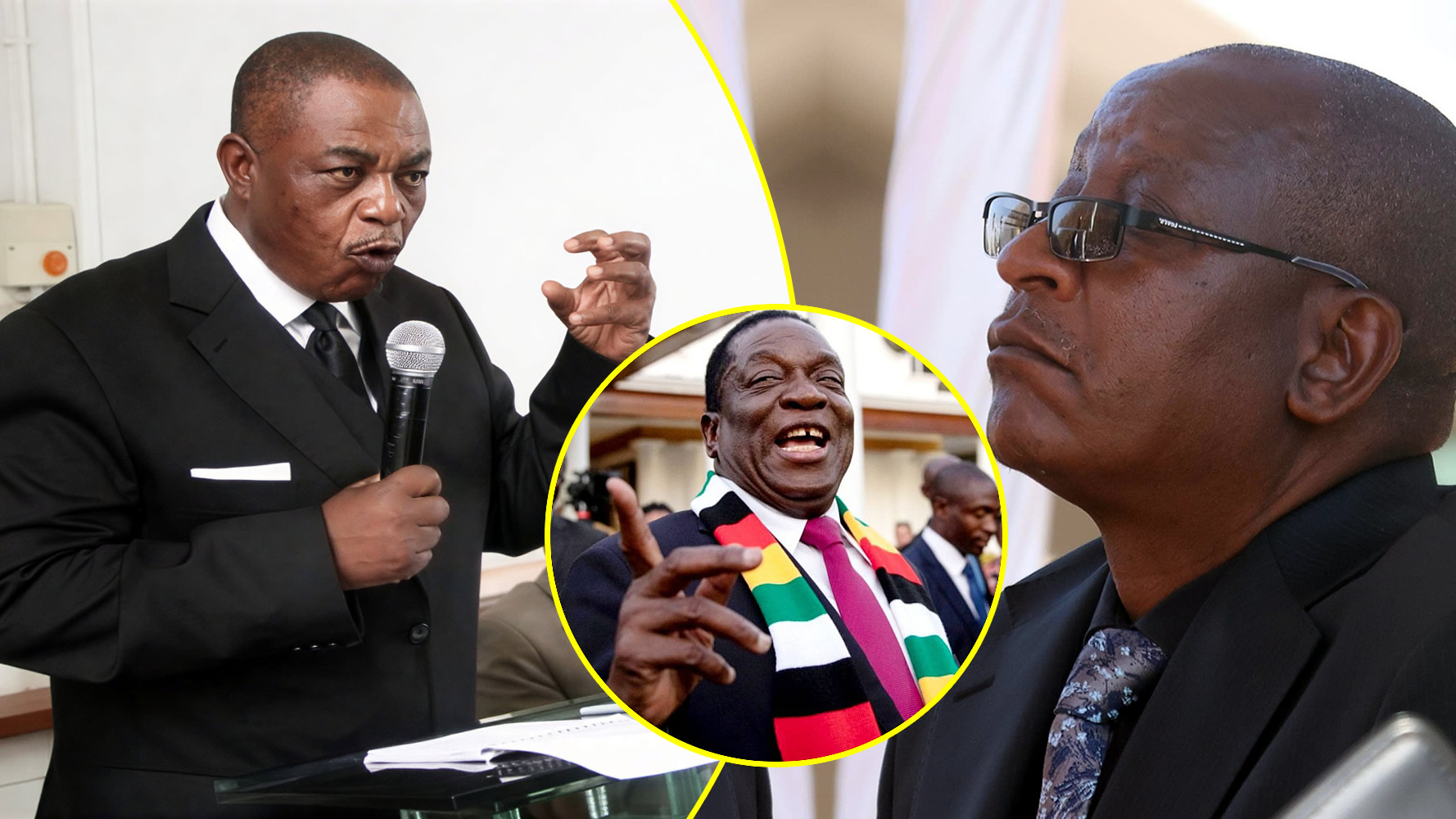
Zimbabwe’s Ruling Party Tightens Grip on Power, Threatening Democratic Principles with Public Vote on Constitutional Amendment Bill No. 3
Harare – The political landscape in Zimbabwe is currently gripped by a profound crisis of democratic integrity as the nation braces for a pivotal parliamentary vote on the Constitutional Amendment Bill Number 3 (CAB3). While public discourse has largely centred on the bill’s controversial provisions, including the potential extension of presidential term limits, a more insidious development has emerged from the corridors of power: the outright ban on a secret ballot for the vote. Justice Minister Ziyambi Ziyambi has unequivocally declared that the vote will be conducted through a public “division of the house,” a move that has ignited widespread concern among opposition parties and civil society organisations.
This investigative report delves into the true motivations behind the ruling ZANU PF party’s decision to forgo a secret ballot, exposing the deep-seated fears and internal divisions that underpin this authoritarian manoeuvre. The party’s leadership, despite projecting an image of unwavering unity, appears to harbour significant apprehension regarding the loyalty of its own Members of Parliament (MPs). By compelling a public vote, ZANU PF is effectively wielding a powerful tool of intimidation, holding its representatives to account in a manner that stifles dissent and undermines the very essence of democratic representation.
Minister Ziyambi’s explicit warning that any MP who votes against the bill will face immediate “recall” serves as a stark admission that the party does not trust its own members to align with the party line in a private setting. This revelation uncovers a “conspiracy of silence” within ZANU PF, hinting at potential factions quietly uncomfortable with the systematic dismantling of the 2013 Constitution, which was once hailed as a beacon of democratic progress. The refusal of a secret ballot is, therefore, the ultimate proof that the government fears its own shadows, preferring overt control over genuine consensus.
The Mechanics of Intimidation: How the ‘Division of the House’ Works
The “division of the house” voting method, as outlined by Justice Minister Ziyambi Ziyambi, mandates that MPs openly declare their stance on CAB3. This process involves physically separating MPs into two groups: those voting ‘Aye’ (yes) and those voting ‘Nay’ (no). Parliamentary officials then openly count the votes. This method, while seemingly transparent, strips individual MPs of the protection afforded by a secret ballot, leaving them vulnerable to political pressure and potential retribution from their party leadership. Ziyambi defended this approach, stating, “When it comes to voting some will say MPs were bought but we use a party parliamentary system where the party’s chief whip leads direction of the party. We will divide the House, those who say yes on one side and those who say no on the other side. There will be no secret ballot but a party democratic system. The party is supreme, what the party says is what you will do.”
This declaration underscores the ZANU PF’s rigid adherence to the party parliamentary system, where loyalty to the party line is paramount. Ziyambi further elaborated that party caucuses would determine who would nominate and second motions during the debate process, ensuring a choreographed display of unity. “The chief whip will call for a caucus to decide who will nominate and who will second. Those who are chosen will do so since we are an organised party,” he said. “That’s how the vote will proceed. What the people want will be done through the party. There will be no selling out. Even our party constitution is clear that if you go against party you will be out of Parliament.”
This statement leaves no room for individual conscience or independent judgment, effectively reducing parliamentary representatives to mere instruments of party will.
The Weaponisation of ‘Recall Powers’
The threat of “recall” is a particularly potent weapon in ZANU PF’s arsenal of intimidation. This mechanism allows for the removal of an MP from Parliament, effectively ending their political career. While recall provisions exist in many democratic systems, their application in Zimbabwe, particularly in the context of a public vote on a contentious constitutional amendment, raises serious concerns about their use as a tool for suppressing dissent. The Justice Minister’s explicit linkage of a ‘no’ vote to immediate recall transforms this constitutional provision into a direct threat, designed to ensure total compliance from ZANU PF MPs.
Opposition parties have vehemently condemned this tactic. Douglas Mwonzora, leader of the Movement for Democratic Change (MDC), had previously written to the Speaker of Parliament, demanding a secret ballot to protect MPs from intimidation and political pressure.
The MDC’s Presidential Spokesperson, Lloyd Damba, sharply criticised Ziyambi’s declaration, arguing that constitutional amendments, which alter the social contract between the state and its people, should not be subjected to rigid party control. “The MDC rejects the declaration by Justice Minister Ziyambi Ziyambi that voting on Constitutional Amendment Bill No. 3 will not be conducted by secret ballot,” Damba stated. “Constitutional amendments are not ordinary legislation. They alter the social contract between the State and the People.”
Damba further emphasised that MPs, when voting on matters of such national importance, are representing millions of Zimbabweans and should act according to their conscience and the national interest, not merely party instruction. “When Parliament votes on CAB 3, each Member of Parliament and Senator is voting on behalf of millions of Zimbabweans on issues that touch presidential term limits, executive power, and the independence of institutions,” he said. “That is a matter of conscience and national interest, not party instruction.”
The MDC warned that denying MPs a secret ballot would expose them to intimidation, political coercion, and suppress independent judgment, thereby reducing Parliament to a “rubber stamping instrument.”
Constitutional Erosion: The Broader Implications of CAB3
Constitutional Amendment Bill Number 3 is not an isolated incident but rather the latest in a series of legislative manoeuvres by ZANU PF to consolidate executive power and weaken democratic safeguards. The bill proposes several far-reaching changes, including extending presidential and parliamentary terms from five to seven years, which would prolong President Mnangagwa’s tenure until 2030. This move is particularly contentious given that the 2013 Constitution, enacted after years of struggle, included a two-term limit for the presidency, aimed at preventing the authoritarianism that characterised the previous era.
Previous amendments have already chipped away at the independence of key institutions. In 2017, the first amendment removed public interviews for the most senior judges, and four years later, the second amendment dropped the requirement for public interviews in appointing the Prosecutor General and promoting judges. CAB3 further supercharges this erosion by proposing to remove direct presidential elections, replacing them with a parliamentary selection process. This would leave the Zimbabwean President uniquely insulated from conventional forms of democratic accountability, as the legislature, dominated by ZANU PF, would become the primary selector of the head of the executive.
The government attempts to justify these changes by arguing they are essential for mitigating election-related “toxicity” and fostering long-term economic growth. However, critics argue that these justifications are a smokescreen for a deliberate strategy to entrench ZANU PF’s dominance and circumvent popular will. The bill’s silence on transitional details and the Minister’s ambiguous statements regarding the retroactive application of term extensions further fuel suspicions of a calculated effort to mitigate public backlash and blunt legal challenges.
The Fragile State of Internal Party Politics
The ZANU PF’s insistence on a public vote, coupled with the explicit threat of recall, reveals a deep-seated insecurity within the ruling party. Despite its parliamentary supermajority, which includes over 190 seats out of 280 in the National Assembly, the leadership evidently fears internal dissent. ZANU PF Chief Whip Cde Pupurai Togarepi expressed optimism that CAB3 would pass smoothly due to the party’s numbers, stating, “All ZANU PF parliamentarians will vote in favour, there’s no doubt about that. I can safely confirm that the bill will become law without fail.”
He further asserted that ZANU PF parliamentarians are party deployees obligated to abide by party resolutions.
However, the very need for such overt control suggests that the party’s unity is more superficial than genuine. The “conspiracy of silence” within ZANU PF indicates that some members may privately disagree with the constitutional amendments but are unwilling to express their dissent publicly for fear of political reprisal. This psychological warfare, designed to ensure total compliance, bypasses the very essence of democratic representation, where elected officials are expected to represent the interests of their constituents, not just their party.
A Mockery of Constitutionalism
The implications of ZANU PF’s actions extend far beyond the immediate passage of CAB3. By undermining the principle of a secret ballot and weaponising recall powers, the ruling party is making a mockery of constitutionalism and democratic principles in Zimbabwe. The 2013 Constitution was meant to entrench open constitutionalism, but these recent developments suggest a regression towards a more authoritarian style of governance. The MDC has called on the Speaker and the Clerk of Parliament to ensure that Parliament independently determines the voting procedure, asserting that Zimbabweans deserve a Parliament that votes freely, transparently, and without fear.
This pivotal moment in Zimbabwe’s political history will undoubtedly shape the future of its democratic institutions. The world watches as ZANU PF attempts to solidify its grip on power, raising critical questions about the role of parliamentary democracy and the protection of individual liberties in the face of overwhelming party control. The refusal of a secret ballot is not merely a procedural matter; it is a profound statement about the value placed on dissent, independent thought, and the very foundations of a free and fair society.