


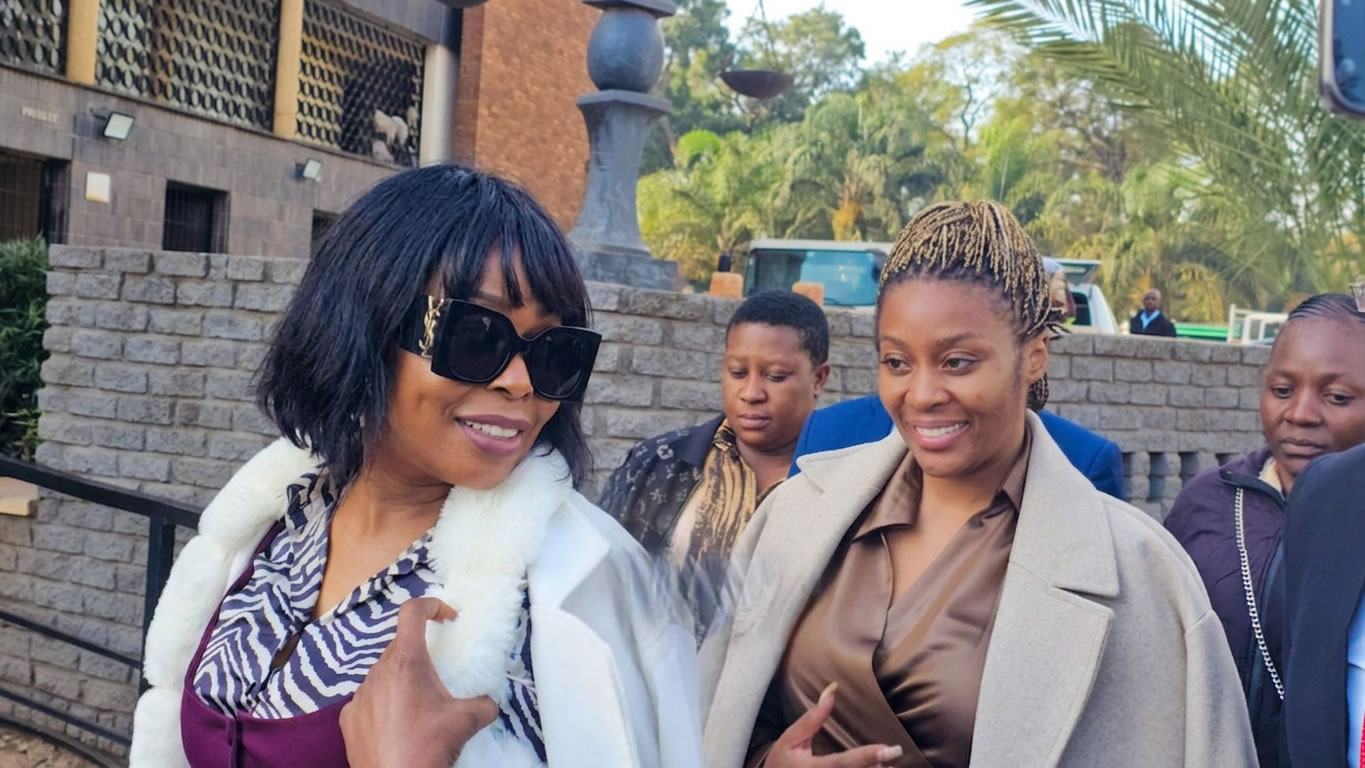
HARARE – Flamboyant Zimbabwean businessman Wicknell Chivayo has once again captured national attention, this time by dramatically withdrawing charges against his estranged ex-wife, Sonja Madzikanda, and her mother, Tabitha Madzikanda. The decision, announced on 22 May 2026, comes after the pair had spent time in custody facing serious allegations of cyberbullying and harassment. Chivayo, known for his larger-than-life persona and often controversial dealings, stated that he had ‘thought twice’ and forgiven them for the sake of his children, a sentiment he encapsulated with the colloquial Shona phrase, “Vanzwa butter” – roughly translating to “They have felt the pinch” or “They got what they deserved”
The unexpected turn of events brings a temporary halt to a high-profile legal battle that had gripped the nation, offering a glimpse into the intricate personal and public life of one of Zimbabwe’s most talked-about figures. The saga began with the arrest of Tabitha Madzikanda, a 62-year-old senior manager in compliance at FBC Bank, on 18 May, followed by Sonja Madzikanda’s arrest a day later. They appeared before the Harare Magistrates Court, where they were remanded in custody pending a bail hearing. The State had opposed their release, citing the gravity of the charges.
The core of the charges against Sonja and Tabitha Madzikanda revolved around “cyber-bullying and harassment as defined in Section 164B of the Criminal Law (Codification and Reform) Act [Chapter 9:23]”. Prosecutors highlighted the involvement of “Artificial Intelligence-generated photographs and videos” which were intended to be produced as exhibits. This detail added a modern, technological twist to what was already a deeply personal dispute, suggesting a sophisticated level of alleged digital manipulation. Investigations were slated for completion by 3 June, with four witnesses prepared to testify, and Detective Sergeant Chimera listed as the investigating officer.
Prior to their court appearance, Sonja Madzikanda had publicly claimed her arrest stemmed from allegations of stealing Chivayo’s mobile phone and denying him access to their two children. Reports also suggested that her mother, Tabitha, was implicated in attempts to alter trust fund administration arrangements, specifically to remove Chivayo as a signatory. However, these particular allegations were not formally charged during their court appearance, focusing instead on the cyberbullying and harassment aspects. The period spent in police custody, though brief, underscored the seriousness with which the authorities were treating the case, reflecting the potential impact of such charges under Zimbabwean law.
In an interview following his decision to withdraw the charges, Mr Chivayo articulated his reasons, emphasising the welfare of his children. “She’s the mother of my children, so I have forgiven her,” he stated. “My kids have been calling, asking, where is mommy? So, once it involves my kids, I’m defeated because they are the people I love the most”. This emotional appeal to parental responsibility served as his primary justification for the withdrawal. However, his statement was not without a hint of defiance and a clear assertion of his position. He maintained that he had no regrets about their initial arrest, particularly pointing to his mother-in-law’s alleged circulation of fake pictures depicting him alongside South African President Cyril Ramaphosa. “For my mother-in-law to circulate fake pictures of President Ramaphosa and me, I think that was a bit out of order. She went to the extreme. Citizens must respect Heads of State. That was uncalled for”. This comment underscored his belief that the Madzikandas had crossed a line, justifying the initial legal action.
‘Vanzwa butter” – Wicknell Chivayo has no regrets about getting ex-wife Sonja and her mum Tabitha Madzikanda locked up for nearly a week on charges that they circulated AI images of him with SA leader Cyril Ramaphosa. Says he withdrew charges because kids asked: “Where is mummy?” pic.twitter.com/GRXnSmw5ry
— ZimLive (@zimlive) May 22, 2026
Chivayo also addressed the financial underpinnings of the dispute, which had been hinted at in earlier reports. He clarified that while no fraud had ultimately been committed, his ex-wife and mother-in-law had allegedly attempted to misuse funds designated for their children. “But she attempted to buy some piece of land worth US$1.4 million with my children’s investment,” he explained. He further elaborated on a High Court order that stipulated a US$5 million cash investment for his children, over which he played an oversight role. “The money belongs to my kids, so I just play an oversight role. So for her to try and remove my name so that she and her mother can go and build clusters, that’s unacceptable”. This revelation painted a picture of a complex financial entanglement intertwined with the personal animosity, suggesting that the dispute was not merely about cyberbullying but also about significant monetary assets intended for his offspring.
Beyond this personal drama, Wicknell Chivayo’s public life has been consistently marked by controversy and high-stakes dealings. His name has frequently appeared in headlines concerning government tenders and allegations of corruption, painting a picture of a businessman operating at the intersection of wealth, power, and public scrutiny. One of the most prominent examples is the Gwanda Solar Project. Awarded a US$172.8 million tender to his company, Intratrek Zimbabwe, for the project, Chivayo faced accusations of receiving substantial payments without delivering commensurate work. Critics pointed to his previous criminal record, arguing it should have precluded his company from securing such a significant government contract. A decade later, in December 2024, the project site reportedly remained abandoned, with US$5 million already spent, raising serious questions about accountability and the use of public funds.
More recently, Chivayo found himself embroiled in a massive R570 million corruption scandal involving the Zimbabwean Electoral Commission (ZEC) and a South African printing firm, Ren-Form. Leaked documents and claims from his former business partners, Mike Chimombe and Moses Mpofu, alleged that Ren-Form, acting as an agent for Chivayo, inflated prices for election materials such as ballot papers, biometric voter registration kits, and even portable toilets. In one egregious instance, Ren-Form reportedly invoiced the ZEC R23 million for a server that typically costs R90,000. Chimombe and Mpofu, who felt sidelined from the deal, accused Ren-Form and Chivayo of inflating costs by up to 235%. The total amount paid to Ren-Form by the ZEC was at least R570 million, with some reports suggesting it could be as high as R1.8 billion (US$100 million).
Chivayo vehemently denied these allegations, dismissing the leaked documents as fakes and attributing the claims to a “sustained character attack” from his former partners, whom he labelled “briefcase businessmen”. He also faced scrutiny over leaked audio clips where he allegedly discussed sharing proceeds from the ZEC tender with partners and senior officials, and claimed President Mnangagwa referred to him as “my son.” While Chivayo denied his voice was on the clips and apologised for any “adverse impression” created, the president’s spokesperson condemned the “name-dropping”. The Zimbabwe Anti-Corruption Commission (ZACC) launched an investigation, though it later closed its probe in December 2025, stating it found no “contractual evidence” linking Chivayo directly to the deal. However, a South African investigation by the Financial Intelligence Centre (FIC) concluded that Ren-Form received over R1 billion from Zimbabwe’s Ministry of Finance and Economic Development, with more than R800 million subsequently transferred to Chivayo’s company, Intratrek. This ongoing investigation in South Africa suggests the full story of the ZEC scandal is yet to unfold.
Amidst these controversies, Chivayo has also cultivated a public image as a philanthropist, frequently making headlines for his lavish donations. In March 2026, he gifted Bishop Nehemiah Mutendi of the Zion Christian Church a 2026 Mercedes-Benz Maybach S680 valued at US$450,000, along with a US$2 million donation to the church itself. He has also been noted for donating numerous vehicles, including 50 Toyota Aqua vehicles worth US$400,000 to church members, and 12 brand new 2026 Toyota Fortuner 4x4s, each valued at US$75,000, to other church leaders, often accompanied by additional cash gifts. These acts of generosity, often widely publicised on social media, present a contrasting facet to his controversial business dealings, contributing to his complex and often contradictory public persona.
Chivayo’s decision to drop charges against his ex-wife and mother-in-law, while framed as a move for the sake of his children, cannot be entirely separated from the broader context of his public image and ongoing legal and financial entanglements. The phrase “Vanzwa butter” encapsulates a sense of vindication, suggesting that the legal process, however brief, served its purpose in delivering a lesson. Yet, the underlying issues of alleged cyberbullying, financial disputes, and the shadow of larger corruption scandals continue to define the narrative surrounding Wicknell Chivayo, leaving observers to ponder the true motivations behind his actions and the long-term implications for all involved.