


Is Former General Henry Muchena the Key to Unlocking Political Secrets?
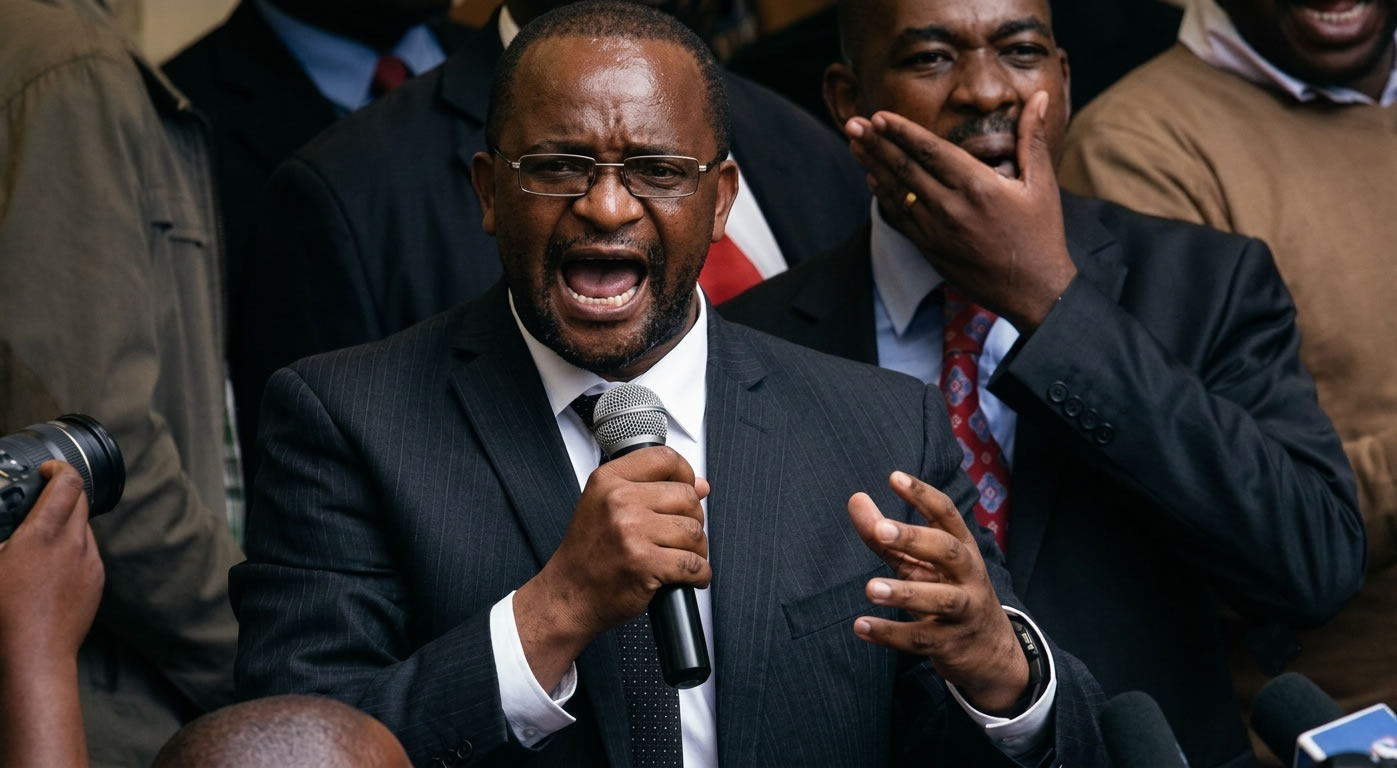
HARARE – In the volatile theatre of Zimbabwean politics, courage often comes with a steep price. Movement for Democratic Change (MDC) leader Douglas Mwonzora has recently found himself at the centre of a storm, publicly defying alleged death threats linked to his planned meeting with retired Air Marshal Henry Muchena.
This defiant stance comes amidst escalating political tensions surrounding the controversial Constitution Amendment Bill No. 3 (CAB 3), a legislative proposal that has deeply polarised the nation. The threats suggest a deeper, more sinister undercurrent in Zimbabwe’s political landscape, raising critical questions about who stands to gain or lose from Mwonzora’s interactions with Muchena. Is the ex-general the key to unlocking political secrets that certain factions are desperate to suppress?
The Catalyst: Constitution Amendment Bill No. 3
To understand the gravity of the threats against Mwonzora, one must first examine the catalyst: Constitution Amendment Bill No. 3 (CAB 3). Gazetted in February 2026, the Bill proposes sweeping changes to Zimbabwe’s electoral and governance structures. Most notably, it seeks to extend the terms of the President, Members of Parliament, senators, and councillors from five to seven years. Furthermore, it proposes changing the method of electing the President from a direct popular vote to a parliamentary process.
Critics argue that these changes are a calculated move to allow President Emmerson Mnangagwa to remain in office beyond his constitutionally mandated final term, which is set to end in 2028. The government, however, maintains that the amendments are designed to strengthen institutions rather than benefit individual officeholders. The debate over CAB 3 has triggered intense public scrutiny, legal challenges, and a wave of intimidation targeting activists and political figures who dare to oppose it.
The Muchena Factor: A Voice from the Old Guard
Retired Air Marshal Henry Muchena is no ordinary political figure. A veteran of the liberation struggle, Muchena commanded operations in Masvingo Province as a ZANLA combatant. Following independence, he served in the Zimbabwe National Army before transferring to the Air Force of Zimbabwe, where he rose to the rank of Air Vice-Marshal before retiring in 2010. His post-military career saw him deeply embedded in the ruling ZANU-PF party’s commissariat department, where he was tasked with revamping party structures.
However, Muchena’s relationship with ZANU-PF has not been without friction. In 2015, he was among several officials fired from the commissariat department, accused of working with former Vice President Joice Mujuru to topple then-President Robert Mugabe. Despite this, he remained a significant figure within the party’s broader network.
In March 2026, Muchena emerged as a prominent voice of opposition against CAB 3. He led a group of retired generals and senior civil servants—all former liberation war combatants—in submitting a written petition to Parliament. The group argued that the proposed amendments undermined the principle that political power derives from the people, calling for a national referendum on the issue. They invoked the legacy of the liberation struggle, asserting that the revolution was built on the idea that power belongs to the citizens, not the elite.
The petition caused panic within ZANU-PF, drawing comparisons to the events that preceded the military-backed removal of Robert Mugabe in 2017. The group’s subsequent meetings with President Mnangagwa reportedly ended without resolution, with the President allegedly stating, “whoever wins, wins”. In a further statement issued in June 2026, the group accused Mnangagwa of being the “principal architect and principal beneficiary” of the Bill, alleging that a US$31 million fund had been set aside to buy parliamentary votes.
The Threats: A Desperate Attempt to Silence Dissent
It is against this backdrop of high-stakes political manoeuvring that Douglas Mwonzora received a chilling warning. On a Saturday in early June 2026, the MDC confirmed that Mwonzora had received a death threat via text message. Written in Shona, the message was unequivocal: “Siyana zvako nekuda kusangana naMuchena ndoopauchafira iwe” (Don’t meet Rtd General Muchena, that is where you will die).
Mwonzora’s response was one of unyielding defiance. Speaking to NewsDay, he revealed that while he had not initially planned to meet Muchena, the threat had pushed him to consider doing so.
“What they cannot do is threaten Zimbabweans and Muchena is a Zimbabwean. I meet every person if the need arises,” Mwonzora stated.
The timing of these threats, coinciding with critical legislative debates on CAB 3, hints at a desperate attempt to silence dissenting voices or prevent the exposure of uncomfortable truths. Is Muchena privy to sensitive information regarding the alleged bribery fund or other covert operations designed to push CAB 3 through Parliament? The orchestrators of the threats clearly believe that a meeting between Mwonzora and Muchena could be detrimental to their agenda.
A Widening Atmosphere of Intimidation
Mwonzora is not the only target of this campaign of intimidation. The atmosphere of fear appears to be widening, ensnaring activists and ordinary citizens who oppose CAB 3.
Youngerson Matete, a human rights activist who challenged the parliamentary proceedings regarding CAB 3 in the High Court, reported a particularly harrowing incident. A bullet was delivered to his doorstep alongside a message demanding he withdraw his application. Despite this chilling delivery, Matete remains committed to his cause, a testament to the resilience of Zimbabwe’s civil society.
Similarly, Joelson Mugari, an organiser for the National Democratic Working Group, reportedly received a death threat from an anonymous caller after notifying the police of a planned peaceful demonstration against the Bill.
These incidents underscore the high stakes involved in Zimbabwean politics, where opposition figures and activists often face immense pressure and physical danger. Political analyst Rejoice Ngwenya condemned the threats as “unacceptable,” suggesting they stem from individuals desperate to protect “ill-gotten wealth”. Ngwenya urged President Mnangagwa to hold those responsible to account, warning that such actions are “tarnishing the image of his regime”.
The Path Forward: Referendum or Railroading?
Mwonzora has called on ZANU-PF to end the intimidation and allow citizens to express their views on CAB 3 through a national referendum. This call echoes the demands of Muchena’s group and aligns with the broader sentiment among civil society organisations and opposition parties.
The government, however, appears determined to push the Bill through Parliament without a popular vote. Former cabinet minister Jonathan Moyo has argued that the constitution only requires referendums for amendments to specifically protected provisions, dismissing the calls for a national vote as historically and constitutionally incorrect.
As the debate rages on, the nation watches closely. Mwonzora’s courage in the face of intimidation could potentially expose hidden agendas and power struggles that have long remained obscured from public view. If the meeting with Muchena takes place, it could serve as a catalyst for significant political shifts or revelations.
The threats against Mwonzora and others are a stark reminder of the lengths to which certain factions will go to maintain their grip on power. Yet, the defiance shown by Mwonzora, Muchena, Matete, and others suggests that the spirit of resistance in Zimbabwe remains unbroken. The battle over CAB 3 is not just about constitutional amendments; it is a fight for the very soul of the nation’s democracy.