


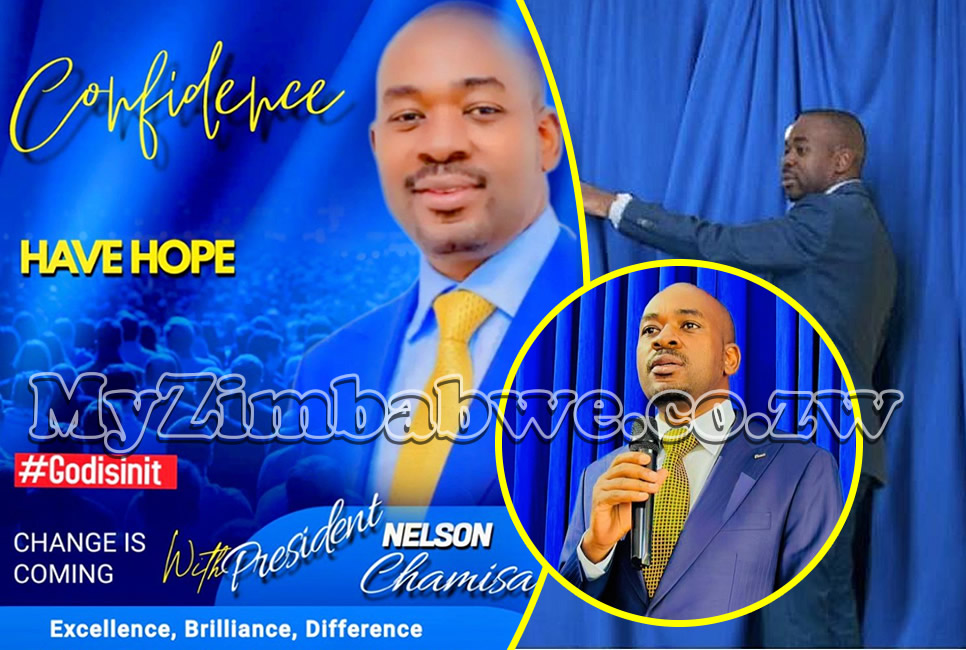
Harare – Opposition leader Nelson Chamisa has re-emerged onto the political stage, igniting a fervent national debate with his call for a transitional government. This bold proposition comes at a time of heightened political tension in Zimbabwe, exacerbated by the controversial Constitution of Zimbabwe Amendment (No. 3) Bill, widely known as CAB 3, and persistent economic hardships that have left many citizens feeling a profound sense of hopelessness. While his supporters view this as a crucial intervention to address the nation’s multifaceted crises, critics are quick to dismiss it as a calculated manoeuvre to secure power outside the established electoral framework.
Chamisa, who recently stepped away from the Citizens Coalition for Change (CCC) citing its alleged contamination and hijacking by the ruling party, has positioned his latest move as a genuine response to what he describes as a “fundamentally flawed” political climate. His call for a transitional government is intrinsically linked to the demand for the withdrawal of CAB 3, a legislative effort by President Emmerson Mnangagwa’s administration that seeks to significantly alter the country’s constitutional landscape.
The Contentious CAB 3: A Bid for Extended Power?
CAB 3, gazetted in February 2026, is presented by the government as a technical reform aimed at streamlining electoral cycles and governance structures. However, a closer examination reveals a more profound agenda: a fundamental reordering of the constitutional system designed to augment presidential authority while simultaneously diminishing mechanisms for popular participation and democratic accountability. If enacted, this bill would extend presidential and parliamentary terms from five to seven years, potentially prolonging President Mnangagwa’s tenure until 2030. More controversially, it proposes replacing direct presidential elections with a parliamentary selection process, effectively insulating the presidency from direct popular vote.
The implications of CAB 3 are far-reaching. It seeks to consolidate executive control over key state institutions, including the judiciary and electoral bodies. For instance, the bill proposes restoring the responsibility for voter registration and voters’ roll compilation to the Registrar-General, an office historically implicated in practices contributing to voter disenfranchisement. It also transfers redistricting powers to the presidentially appointed Zimbabwe Electoral Delimitation Commission. These changes, critics argue, would allow the parliamentary-elected President to appoint officials responsible for voter registration, voters’ roll compilation, and constituency delimitation, thereby entrenching the ruling party’s dominance.
Furthermore, CAB 3 aims to overhaul the judicial system by removing public interviews for all judges and repealing the obligation to act on the Judicial Service Commission’s advice in promotions. This would grant the President unprecedented legal authority to appoint judges, even to the Constitutional Court, bypassing established institutional pipelines. Such provisions raise serious concerns about the independence of the judiciary and the erosion of checks and balances vital for a functioning democracy.
Chamisa’s Stance: A Necessary Evil or Political Opportunism?
Nelson Chamisa’s call for a transitional government is not a new concept in Zimbabwean politics, but its timing, amidst the CAB 3 debate, gives it particular weight. Writing on X (formerly Twitter), Chamisa articulated his concerns: “Everywhere I go, I meet Zimbabweans who are worried about the country’s direction and future. Regardless of age, profession, or location, many share a deep concern about the path the nation is taking and the dangers the country faces in the context of the unilateral, unpopular and anti-people constitutional amendment.” He further asserted, “The wisest thing is to withdraw this #CAB3 from parliament and constitute a transitional government that will address all the challenges our country faces. It’s doable”.
His proposal has been met with a spectrum of reactions. Supporters argue that a transitional government is the only viable path to address the nation’s deep-seated political and economic crises, particularly given the perceived illegitimacy of recent elections and the ruling party’s firm grip on power. They believe it could pave the way for genuine electoral reforms, national healing, and a more inclusive political future.
However, critics, particularly within the ruling ZANU-PF party and some political analysts, view Chamisa’s call with suspicion. They contend that it is an attempt to bypass the democratic process and gain power through extra-constitutional means. ZANU-PF Secretary for Legal Affairs, Cde Munyaradzi Paul Mangwana, has reportedly dismissed Chamisa’s calls, asserting that Zimbabwe does not require a transitional government.
Investigative journalist Hopewell Chin’ono, while acknowledging the need for political solutions, expressed reservations about Chamisa’s approach. He argued that a transitional authority or government “is not built around one individual. It requires political parties, institutions, organised constituencies and broad national consensus”. Chin’ono further suggested that Chamisa, currently lacking a functioning political party represented in Parliament, would find it difficult to justify participation in such an arrangement, and that joining a government created through a constitutional process opposed by the democratic movement would severely damage his political credibility.
Conversely, former CCC spokesperson Promise Mkwananzi defended Chamisa, stating that critics were premature in their conclusions and that the recalls of CCC legislators were illegitimate, implying that Chamisa still commanded significant political alignment. Mkwananzi also highlighted examples from other African nations, such as Mozambique, where opposition figures have engaged in political negotiations despite not holding formal parliamentary seats, suggesting a precedent for Chamisa’s involvement.
The Constitution Defenders Forum: A Bulwark Against CAB 3
Amidst this political maelstrom, the Constitution Defenders Forum (CDF) has emerged as a prominent voice against CAB 3. This civic group is actively campaigning to protect Zimbabwe’s democracy from what it views as constitutional manipulation. The CDF has been vocal in its opposition to the proposed amendments, organising protests and advocating for public hearings on the bill.
The forum’s activism has not been without consequences. In March 2026, Amnesty International condemned the arbitrary arrest and detention of CDF convener Tendai Biti, highlighting the risks faced by those who challenge the government’s constitutional agenda. Such incidents underscore the repressive environment in which civil society organisations operate in Zimbabwe, further intensifying the political climate.
The CDF’s efforts are crucial in mobilising public opinion against CAB 3, arguing that the bill undermines the very foundations of the 2013 Constitution, which was designed to curb authoritarianism and promote democratic governance after decades of Robert Mugabe’s rule. The forum’s focus on defending the constitution resonates with many Zimbabweans who fear a return to unchecked executive power.
Economic Hardship and the Cry for Change
The political manoeuvring around CAB 3 and the calls for a transitional government are set against a backdrop of severe economic challenges. Zimbabwe continues to grapple with high inflation, unemployment, and a struggling economy, leading to widespread public discontent and a pervasive sense of “hopelessness” among ordinary citizens. This economic distress provides fertile ground for calls for radical political change, as many believe the current government has failed to deliver on its promises of prosperity.
Chamisa’s narrative often taps into this disillusionment, portraying his proposals as a direct response to the suffering of the populace. The argument is that a transitional government, free from the perceived constraints and corruption of the current administration, could implement the necessary reforms to stabilise the economy and improve living standards.
The Path Forward: Uncertainty and the Quest for Inclusivity
The feasibility of a transitional government in Zimbabwe remains highly uncertain. The ruling ZANU-PF party enjoys a two-thirds majority in parliament, making the passage of CAB 3 highly probable despite opposition. This legislative dominance significantly limits the leverage of opposition forces and civil society. Regional mediation, often a crucial factor in resolving political impasses in Africa, could play a role, but its effectiveness would depend on the willingness of all parties to engage in genuine dialogue.
The implications for democratic processes and national reconciliation are profound. A transitional government, if successfully implemented, could offer a pathway to a more inclusive political future, fostering dialogue and rebuilding trust between fractured political factions. However, the risk of further political uncertainty and instability is equally significant, particularly if such a transition is not carefully managed and widely accepted.
As the debate intensifies, Zimbabwe stands at a critical juncture. Nelson Chamisa’s call for a transitional government, juxtaposed with Team Mnangagwa’s determined push for CAB 3, highlights the deep divisions within the country’s political landscape. The outcome of this struggle will undoubtedly reshape Zimbabwe’s trajectory, determining whether the nation moves towards greater democratic accountability and economic stability, or descends further into political turmoil.