


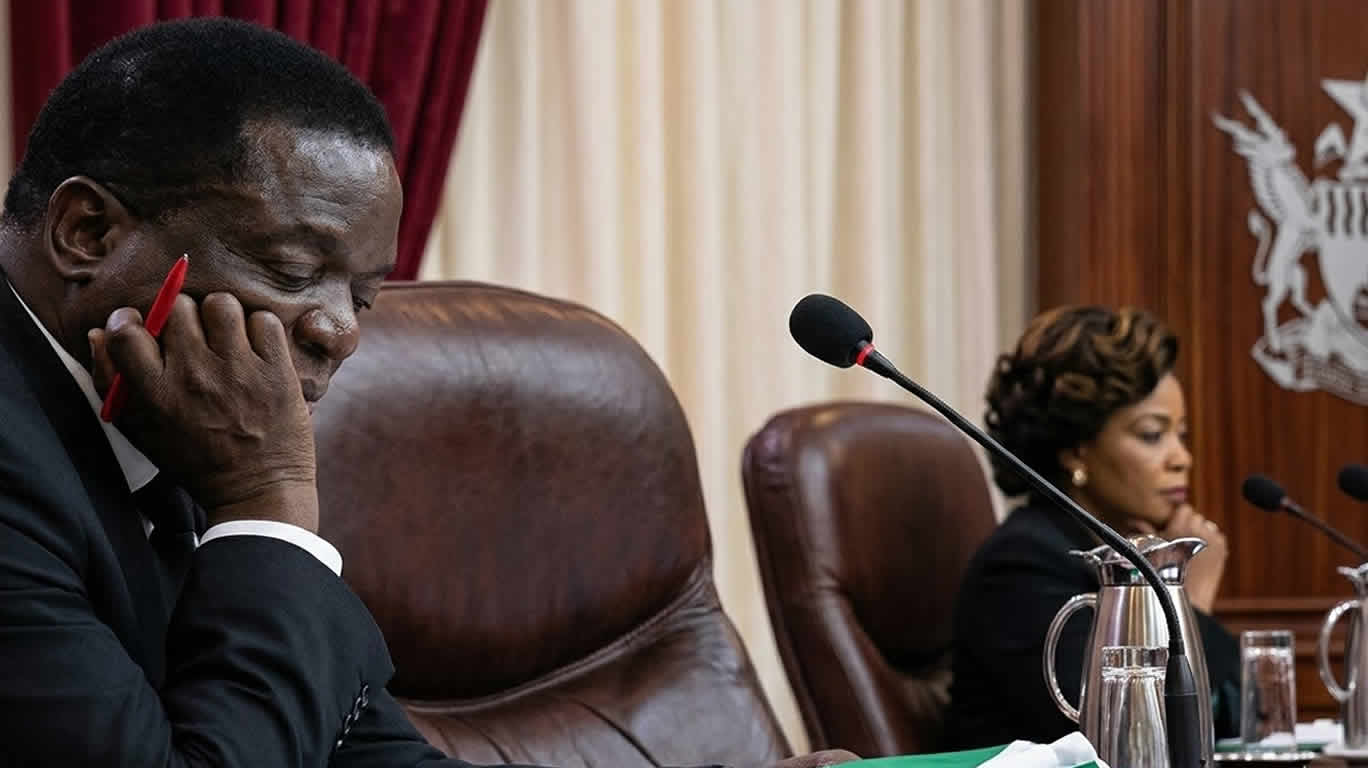
HARARE – In the corridors of power at State House in Harare, a profound silence has taken root—a silence that stands in stark contrast to the boisterous chants of “2030 ndizvo” (2030 is the goal) echoing from ZANU-PF rallies across the country. At the centre of this political storm is President Emmerson Mnangagwa, a man whose political brand has been built on the populist mantra: “The voice of the people is the voice of God.” Today, however, that very voice is demanding something the President and his inner circle may not be prepared to give: a national referendum.
The controversy surrounds Constitutional Amendment Bill No. 3 (CAB3), a piece of legislation that has been described by critics as a “constitutional coup.” If signed into law, CAB3 would extend the presidential term from five to seven years, effectively allowing the 83-year-old incumbent to remain in office until 2030 and potentially beyond. While the bill has already navigated the waters of a captured Parliament and a sympathetic Senate, it now faces its final and most formidable hurdle: the people.
The Referendum Trap: Section 328 and the ‘No-Benefit Rule’
At the heart of the legal battle is Section 328 of the Constitution of Zimbabwe, a provision specifically designed to safeguard the young democracy against the return of “Big Man” politics. Section 328(7) is particularly explicit: it states that any amendment to a term-limit provision cannot benefit the person who held the office at the time the amendment was made.
“Section 328(7) is more than just a legal clause; it is the soul of our democratic transition,” says a prominent legal expert who spoke on condition of anonymity. “The government is trying to treat this as a simple legislative tweak, but the Constitution is clear. To bypass the ‘no-benefit rule,’ they would need to amend Section 328 itself, and that requires a national referendum.”
Civic organisations like WeThePeople have been quick to call the President’s bluff. They argue that if the “Voice of the People” truly is the “Voice of God,” then the President should have no fear of putting CAB3 to a public vote. The demand for a referendum has placed Mnangagwa in a significant dilemma: listen to his party’s desire for extended power or respect the constitutional safeguards he swore to uphold.
Echoes of 2000: The Ghost of Mugabe’s Defeat
The reluctance of the ZANU-PF government to move towards a referendum is rooted in a deep-seated political trauma. In February 2000, the late Robert Mugabe suffered his first major political defeat when Zimbabweans famously voted “No” to a proposed new constitution that would have significantly expanded presidential powers.
“The government is terrified of a repeat of 2000,” says a former cabinet minister. “They know that a referendum is unpredictable. Even with their control over the media and rural structures, a national ‘No’ vote would be a devastating blow to Mnangagwa’s legitimacy. By pushing the bill through Parliament instead of a public vote, they are effectively silencing the very ‘Voice of God’ they claim to follow.”
The strategy currently being employed by the government appears to be one of “strategic silence” from the President, while his lieutenants do the heavy lifting in Parliament. Justice Minister Ziyambi Ziyambi has been the public face of the bill, framing it as a necessary step for “technical expertise” and “parliamentary oversight.” However, behind the scenes, high-stakes lobbying is reportedly taking place at State House, with secret letters and frantic meetings between legal advisors and party hawks.
The 2030 Ndizvo Movement vs. Constitutionalism
For the ZANU-PF faithful, the extension of Mnangagwa’s term is seen as essential for the completion of his “Vision 2030” economic agenda. The “2030 ndizvo” slogan has become a litmus test for loyalty within the party. However, this push for continuity at all costs has sparked a backlash not just from the opposition, but from a broad coalition of civil society, lawyers, and even some within the security establishment who fear that a “constitutional coup” could lead to long-term instability.
The Guardian has reported on claims that the approval of CAB3 by the Senate represents a fundamental betrayal of the 2013 Constitution—a document that was itself the product of years of cross-party negotiation and public consultation. Critics argue that by extending his own term, Mnangagwa is following the well-worn path of other African leaders who have dismantled term limits to maintain a grip on power.
The Hidden Legal Battle: A ‘Legal Loophole’ or a Dead End?
The government’s legal team is reportedly searching for a “legal loophole” that would allow them to bypass Section 328(9), which mandates a referendum for any amendment to the “entrenched” provisions of the Constitution. Their argument rests on a narrow interpretation of what constitutes a “term-limit provision.”
However, the consensus among independent legal scholars is that such an interpretation is flawed. “You cannot change the duration of a term without affecting the term limit,” explains a constitutional lawyer. “If you move from five years to seven years, you are changing the rules of the game mid-match. The ‘no-benefit rule’ was put there precisely to stop this kind of self-serving manipulation.”
The pressure on Mnangagwa to refer CAB3 to a referendum before signing it into law is mounting. NewZimbabwe has reported on the growing chorus of voices, including international observers, who are watching the situation with concern. The President’s legacy now hangs in the balance: will he be remembered as the man who restored constitutional order after the fall of Mugabe, or as the man who finished what Mugabe started?
The Voice of Power vs. The Voice of God
As the debate rages, the true meaning of Section 328 is becoming a rallying cry for every Zimbabwean who believes in the right to choose their leaders. The demand for a referendum is not just about CAB3; it is about the right to say “Yes” or “No” to the direction of the country.
The “Voice of God” is currently being tested. If the President chooses to ignore the demand for a public vote, he risks proving that his populist slogans were nothing more than a convenient mask for the voice of power. The “referendum trap” is set, and the final hurdle for CAB3 remains the most significant challenge of Mnangagwa’s presidency.
In the end, the question remains: is the President willing to listen to the people, or will the desire for 2030 outweigh the very principles he claims to hold dear? The world is watching, and the people of Zimbabwe are waiting for their chance to speak.