


MASVINGO – In a disturbing turn of events that has ignited fresh debate over the rule of law in Zimbabwe, a close relative of President Emmerson Mnangagwa finds himself embroiled in a police investigation following a violent incident in Gutu. Local reports paint a vivid picture of chaos, where David Mnangagwa, identified as a nephew of the President, allegedly embarked on a destructive rampage with a tractor, leaving a trail of damaged property and a community grappling with fear and a profound sense of injustice.
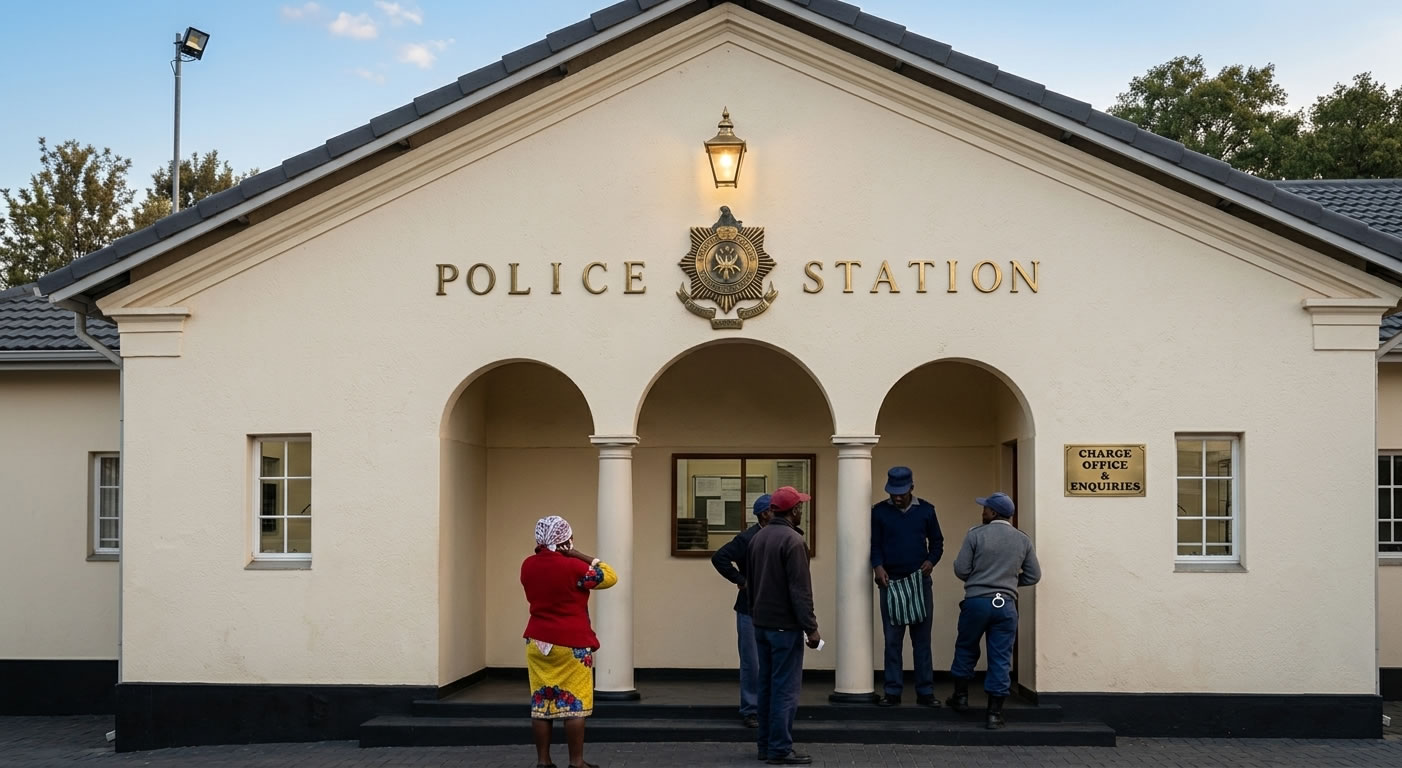
The incident, which unfolded on Christmas Eve in 2025 at Murairwa Business Centre in Gutu South, saw a heavy-duty tractor transformed into a tool of intimidation and destruction. According to case number CR163/01/26, lodged at Gutu Police Station, David Mnangagwa is accused of demolishing a blair toilet, a shop veranda, a perimeter fence, and a section of Chimombe Shop. The alleged destruction followed a heated altercation during which David Mnangagwa was reportedly struck with a switch by a man identified only as Thulani. This detail, while seemingly minor, underscores the volatile nature of the confrontation that escalated into such significant property damage.
Talent Mandivenga, the proprietor of a bar at the Murairwa Business Centre and the primary victim of the alleged rampage, has voiced profound frustration over the lack of progress in the police investigation. Six months on from the incident, Mandivenga asserts that he has heard nothing from the authorities, leaving him to count his losses and witness his business falter. “I have not heard from Police since the incident happened six months ago and I am still counting my losses,” Mandivenga stated, his words echoing the despair of many who feel that justice remains elusive when powerful figures are involved.
Sources close to the investigation, who requested anonymity due to the sensitive nature of the matter, suggest that the case is being deliberately suppressed. “The matter is being swept under the carpet because Police is afraid to prosecute a son of the President’s brother,” one source revealed. This sentiment highlights a pervasive concern within Zimbabwean society: the perception that individuals connected to the First Family operate above the law, enjoying a de facto immunity that undermines the principles of equality and accountability. Masvingo Provincial Police Spokesperson, Inspector Kudakwashe Dhewa, when questioned about the delay, merely stated, “I was looking into the matter,” a response that offers little reassurance to a community yearning for concrete action.
This incident is not an isolated event but rather a stark illustration of deeper, systemic issues plaguing Zimbabwe’s legal and political landscape. The alleged actions of David Mnangagwa, who reportedly resides at President Mnangagwa’s farm in Bikita, approximately seven kilometres from Murairwa, feed into a long-standing narrative of “untouchables”—individuals whose familial ties to the country’s leadership appear to shield them from the full force of the law. This perception is exacerbated by President Mnangagwa’s own history of appointing relatives to influential government positions, a practice that has drawn widespread criticism for fostering nepotism and entrenching a culture of impunity.
The incident, which unfolded on Christmas Eve in 2025 at Murairwa Business Centre in Gutu South, saw a heavy-duty tractor transformed into a tool of intimidation and destruction. According to case number CR163/01/26, lodged at Gutu Police Station, David Mnangagwa is accused of demolishing a blair toilet, a shop veranda, a perimeter fence, and a section of Chimombe Shop. The alleged destruction followed a heated altercation during which David Mnangagwa was reportedly struck with a switch by a man identified only as Thulani. This detail, while seemingly minor, underscores the volatile nature of the confrontation that escalated into such significant property damage.
Talent Mandivenga, the proprietor of a bar at the Murairwa Business Centre and the primary victim of the alleged rampage, has voiced profound frustration over the lack of progress in the police investigation. Six months on from the incident, Mandivenga asserts that he has heard nothing from the authorities, leaving him to count his losses and witness his business falter. “I have not heard from Police since the incident happened six months ago and I am still counting my losses,” Mandivenga stated, his words echoing the despair of many who feel that justice remains elusive when powerful figures are involved.
Sources close to the investigation, who requested anonymity due to the sensitive nature of the matter, suggest that the case is being deliberately suppressed. “The matter is being swept under the carpet because Police is afraid to prosecute a son of the President’s brother,” one source revealed. This sentiment highlights a pervasive concern within Zimbabwean society: the perception that individuals connected to the First Family operate above the law, enjoying a de facto immunity that undermines the principles of equality and accountability. Masvingo Provincial Police Spokesperson, Inspector Kudakwashe Dhewa, when questioned about the delay, merely stated, “I was looking into the matter,” a response that offers little reassurance to a community yearning for concrete action.
This incident is not an isolated event but rather a stark illustration of deeper, systemic issues plaguing Zimbabwe’s legal and political landscape. The alleged actions of David Mnangagwa, who reportedly resides at President Mnangagwa’s farm in Bikita, approximately seven kilometres from Murairwa, feed into a long-standing narrative of “untouchables”—individuals whose familial ties to the country’s leadership appear to shield them from the full force of the law. This perception is exacerbated by President Mnangagwa’s own history of appointing relatives to influential government positions, a practice that has drawn widespread criticism for fostering nepotism and entrenching a culture of impunity.
For instance, the appointment of David Kudakwashe Mnangagwa, the President’s son, as Deputy Minister of Finance, and his nephew Tongai Mnangagwa as Deputy Minister of Tourism, has been met with public outcry and accusations of creating a family dynasty.
The implications of such incidents extend far beyond the immediate damage to property. They erode public trust in institutions, particularly the police and the judiciary, which are seen as compromised by political influence. The community in Gutu, like many rural areas in Zimbabwe, is acutely aware of the power dynamics at play. The silence from law enforcement, coupled with the victim’s inability to secure reparations, reinforces the notion that ordinary citizens have little recourse when confronted by those with powerful connections. This creates a climate of fear and discourages reporting of crimes, further entrenching a cycle of impunity.
The international community has also taken note of the issues surrounding governance and corruption in Zimbabwe. In March 2024, the United States imposed sanctions on President Mnangagwa and his wife, Auxillia, citing their alleged involvement in corruption. Such measures, while targeting high-level officials, underscore the broader concerns about accountability and the rule of law within the country. The Gutu tractor rampage, therefore, becomes more than just a local dispute; it is a microcosm of the challenges Zimbabwe faces in its quest for equitable justice and transparent governance.
The incident also brings to mind other cases where politically connected individuals have been accused of land disputes or property destruction with little to no accountability. The history of political violence in regions like Gutu, including the unresolved killing of Nyasha Zhambe in 2022 where suspects remain at large, further illustrates the deep-seated issues of impunity. These historical precedents contribute to the community’s apprehension and their scepticism about whether the legal system will genuinely treat David Mnangagwa like any other citizen.
As Talent Mandivenga continues to grapple with the financial and emotional toll of the destruction, the eyes of Gutu, and indeed the nation, remain fixed on the police. Will the investigation into case CR163/01/26 proceed with the diligence and impartiality that all citizens deserve? Or will this incident, like so many others before it, fade into the annals of unresolved cases, further cementing the belief that in Zimbabwe, some are simply beyond the reach of the law? The answer will speak volumes about the true state of justice in the country and the government’s commitment to its foundational principles.