


ZANU-PF’s Enduring Grip: Mnangagwa’s ‘Donkeys Grow Horns’ Declaration Amidst Political Tensions and Human Rights Concerns
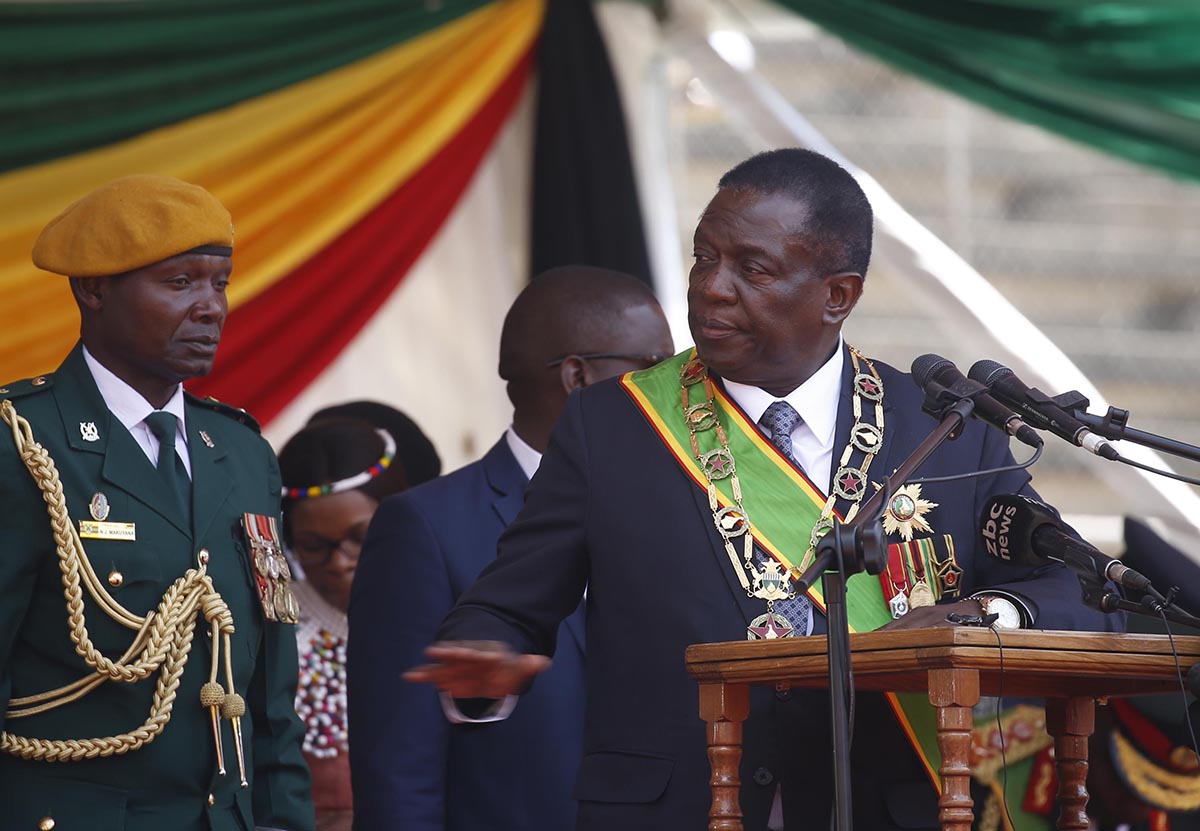
Harare – President Emmerson Mnangagwa, leader of Zimbabwe’s ruling ZANU-PF party, recently reiterated a powerful and historically charged declaration, asserting that the party’s dominance would persist until “donkeys grow horns.” This potent metaphor, originally coined by the late Vice President Simon Vengesayi Muzenda, serves as a stark reminder of ZANU-PF’s long-held conviction in its perpetual rule over the Southern African nation. Speaking at the 27th Ordinary Session of the National Consultative Assembly (NCA) in Harare, President Mnangagwa affirmed that his generation is committed to upholding this vision, ensuring the party’s continued dominance.
“Zanu PF is modernising; we are here to stay. As our late national hero and Vice President Cde Mzee’ Simon Vengesayi Muzenda once said, ‘Zanu PF ichatonga kusvikira madhongi amera nyanga’. This generation will do its part to realise this dream,” Mnangagwa told delegates, his words echoing through the assembly. This declaration is not merely a political slogan; it is a deeply ingrained ideology within the party, frequently invoked by its leaders to assert their unwavering control and dismiss any notion of an opposition takeover.
The phrase “Zanu PF ichatonga kusvikira madhongi amera nyanga” translates to “ZANU-PF will rule until donkeys grow horns,” an idiom signifying an impossibility, thus implying eternal rule. This sentiment has been a cornerstone of ZANU-PF’s political rhetoric for decades, symbolising their perceived divine right to govern. Various party officials, including Rtd Gen Anselem Sanyatwe, have publicly reiterated this statement, often in contexts that underscore the party’s firm grip on power and its readiness to maintain it indefinitely.
Mnangagwa’s recent pronouncement comes at a critical juncture for Zimbabwe, a nation grappling with persistent economic challenges, political polarisation, and ongoing human rights concerns. His address to the NCA, one of ZANU-PF’s highest advisory organs, was a call for unity, accelerated modernisation, and people-centred development. He emphasised the party’s unwavering commitment to empowering its citizens and improving their quality of life, asserting that the national development agenda continues to gain momentum.
However, beneath the surface of these declarations of unity and progress, Zimbabwe’s political landscape is fraught with internal party factionalism and external pressure from a struggling economy and a vocal civil society. The President’s vision for a modernised ZANU-PF and a prosperous Zimbabwe is often juxtaposed against the realities faced by many ordinary Zimbabweans, who continue to contend with high unemployment, inflation, and limited access to essential services.
The 2030 Agenda and Succession Battles
President Mnangagwa’s pronouncements are often linked to the broader “Vision 2030” agenda, which aims to transform Zimbabwe into an upper-middle-income economy. While this ambitious goal is frequently highlighted in official discourse, it is also intertwined with discussions surrounding Mnangagwa’s potential bid for a third term in office. Reports suggest that ZANU-PF is actively pushing to amend the constitution to allow Mnangagwa to remain in power beyond his current term, extending his rule to 2030.
This move has ignited significant debate and exposed deep-seated factionalism within ZANU-PF, particularly concerning the succession question. One prominent figure in this internal power struggle is Vice President Constantino Chiwenga, who played a pivotal role in the 2017 military intervention that led to Robert Mugabe’s ousting and Mnangagwa’s ascent to power. There are indications of a growing rift between Mnangagwa and Chiwenga, with different factions within the party aligning with either leader.
Chiwenga’s supporters are reportedly advocating for him to succeed Mnangagwa, creating a complex and often tense political dynamic. This internal jostling for power has led to speculation about a “constitutional coup” aimed at recycling Mnangagwa through constitutional amendments, effectively sidelining other contenders, including Chiwenga . The struggle for control within ZANU-PF is a critical factor shaping Zimbabwe’s political future, with potential implications for stability and governance.
Human Rights Under Scrutiny
The political rhetoric of eternal rule and the pursuit of ambitious development goals often overshadow persistent concerns regarding human rights in Zimbabwe. International organisations and human rights groups have consistently documented a pattern of arbitrary arrests, detentions, and repression of civil society and political opposition. The year 2024, for instance, saw several incidents that drew international condemnation.
In August 2024, human rights defenders Robson Chere, Namatai Kwekweza, and Samuel Gwenzi were arbitrarily detained while en route to a civil society workshop in Victoria Falls. They were charged with “disorderly conduct in a public place,” a charge that human rights organisations widely viewed as an attempt to stifle dissent and restrict civic space. Although they were eventually acquitted in September 2025 after a year-long trial, their case highlighted the challenges faced by activists in Zimbabwe.
These incidents are not isolated. Reports from organisations like Amnesty International and Human Rights Watch consistently detail a climate where democratic processes are undermined, and political pluralism is restricted. The government has been accused of using various legal and extra-legal means to silence critics, including the application of laws that grant broad powers to interfere with civil liberties. Such actions raise serious questions about the sincerity of ZANU-PF’s commitment to people-centred development and empowerment, particularly when fundamental freedoms are curtailed.
Economic Realities and International Standing
While President Mnangagwa highlighted Zimbabwe’s election to the UN Security Council for the 2027-2028 term and its forthcoming assumption of the COMESA Chairmanship as signs of growing international confidence, the country’s economic situation remains precarious. Despite rhetoric of modernisation and industrialisation, Zimbabwe continues to grapple with high unemployment rates, currency instability, and a significant informal sector. The promise of an upper-middle-income economy by 2030 appears distant to many who struggle with daily economic hardships.
The government’s efforts to attract foreign investment and stabilise the economy have been hampered by concerns over governance, corruption, and policy inconsistency. The disconnect between official pronouncements of progress and the lived experiences of many Zimbabweans creates a fertile ground for discontent and further challenges the narrative of ZANU-PF’s unshakeable rule.
Conclusion
President Mnangagwa’s declaration that ZANU-PF will remain in power “until donkeys grow horns” is a powerful assertion of the party’s enduring ambition and self-belief. It is a statement rooted in the party’s history and its perception of its role in Zimbabwe’s destiny. However, this assertion is made against a backdrop of complex internal political dynamics, including intense succession battles and persistent human rights concerns. The economic realities faced by ordinary citizens further complicate this narrative, creating a nuanced picture of a nation at a crossroads.
As ZANU-PF continues to navigate these challenges, the world watches to see how the party’s rhetoric of eternal rule will reconcile with the aspirations of a populace yearning for greater economic stability, political freedom, and respect for human rights. The path to 2030, and beyond, promises to be a defining period for Zimbabwe, testing the resilience of its institutions and the resolve of its leadership.