


HARARE – In a recent ruling that has cast a long shadow over Zimbabwe’s informal sector, a vendor, Joseph Hondo, found his pursuit of justice thwarted when his US$10,720 lawsuit against the Harare City Council for assault was dismissed. This case, a stark “David vs. Goliath” battle within Zimbabwe’s courts, highlights the immense challenges ordinary citizens face when attempting to hold state or local government entities accountable for alleged misconduct. The judgment has raised profound questions about the accessibility of justice and the systemic hurdles that often leave victims of state violence with little recourse.
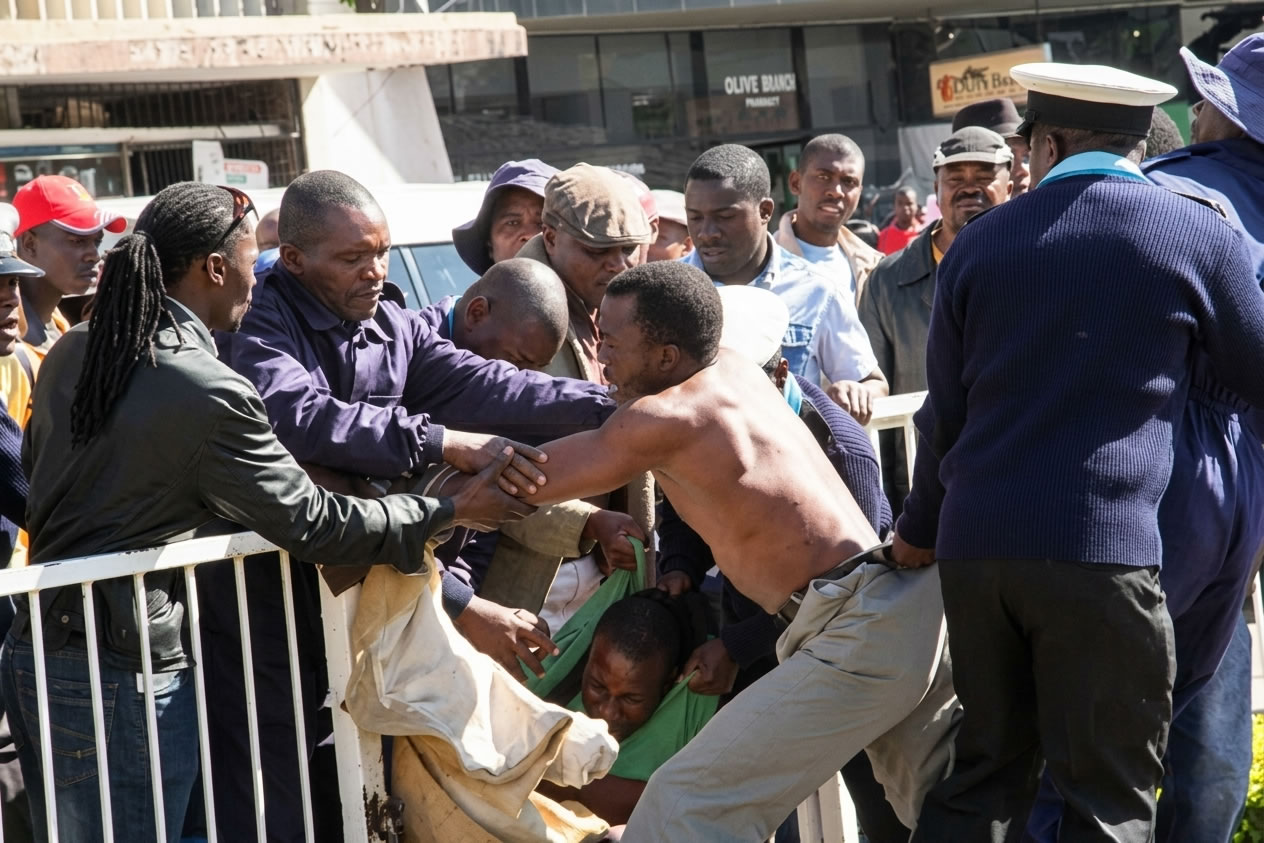
Joseph Hondo’s ordeal began on 3rd October 2018, a period marked by heightened political tensions in Harare and intensified operations against informal vendors in the central business district. Hondo, like millions of Zimbabweans, relied on street vending for his livelihood, selling his goods near the bustling Karigamombe Centre. It was here, he alleged, that he was brutally attacked by four municipal police officers during a routine operation targeting vendors. His account detailed how three officers restrained him while a fourth allegedly beat him with a baton and shocked him with an electric device, akin to a taser. The assault, he claimed, continued inside a municipal truck, where he was subjected to further violence involving fists, booted feet, and baton sticks. The physical and psychological toll was severe, leaving him with injuries to his head, shoulder, and face, alongside psychological trauma and depression that rendered him unable to work for two months.
Hondo sought redress through the courts, claiming US$10,720 in damages for pain and suffering, humiliation (contumelia), medical expenses, and loss of income. However, the Harare City Council vehemently denied liability, asserting that no municipal police officers were deployed to the specific area on the day of the alleged incident and disputing that any of its employees were involved in assaulting Hondo.
Justice Maxwell Takuva, presiding over the case, ultimately dismissed Hondo’s claim in its entirety, with costs awarded against him. The judge’s reasoning hinged on several critical points, primarily citing inconsistencies in Hondo’s testimony. Justice Takuva noted that Hondo’s initial statement to his doctor shortly after the alleged assault indicated he had been attacked by both uniformed riot police (Zimbabwe Republic Police, or ZRP) and plain-clothed municipal police. This version, confirmed during cross-examination, later shifted to primarily implicating municipal police. The judge concluded that “The change of plaintiff’s versions of what happened tilts the balance of probabilities in favour of the defendant.”
Furthermore, the court found it significant that Hondo was taken to Harare Central Police Station after the incident, which Justice Takuva deemed “consistent with him having been arrested by members of the ZRP.” While Hondo claimed to recognise some of the municipal officers by their nicknames, “Bhuru” and “Magaya,” he failed to report them to the police or establish their full identities for proper citation in the legal proceedings. This failure proved crucial, as the judge ruled, “Plaintiff failed to establish that he was assaulted by defendant’s employees. Therefore, plaintiff failed to prove that the defendant was vicariously liable for the assault.”
Beyond the alleged physical assault, Hondo’s claim for US$5,000 for humiliation also failed, with the court finding no evidence that the alleged assault was intended to degrade or embarrass him. “In the present matter, no such intention to embarrass, degrade and humiliate was proved. Consequently, the claim must fail,” Takuva stated. His claim for medical expenses similarly collapsed, as he could not produce receipts to prove payment, despite his own doctor testifying that he had received treatment free of charge. Justice Takuva concluded, “The claim is dead and buried. The claim cannot succeed, it has collapsed.”
This heartbreaking outcome for Joseph Hondo is not an isolated incident but rather a symptom of a deeper, more pervasive issue within Zimbabwe’s informal sector. The informal economy is a cornerstone of the nation’s survival, supporting over 80% of its population and contributing nearly 72% to the country’s gross domestic product. Street vendors, in particular, play a vital role, often filling gaps left by a struggling formal economy and providing essential goods and services to communities. However, their existence is frequently precarious, marked by constant threats of eviction, confiscation of wares, and, in many cases, violence at the hands of municipal authorities.
Municipal police operations against vendors in Harare are often characterised by suddenness and brutality. Vendors rarely anticipate the raids, which are executed by officers in both plainclothes and uniform. When they strike, panic ensues, leading to vendors scattering, trampling their goods, and desperately trying to salvage their stock. Saul Nhema, another informal vendor, vividly described the harsh reality: “They have no mercy at all. Once they take your stock, you’ll never get it back.” These confiscated goods are rarely, if ever, returned, representing a significant financial loss for individuals already operating on razor-thin margins.
The financial implications of these crackdowns are staggering, not just for the vendors but also for the city itself. In 2024, the Harare City Council’s revenue stood at a mere US$3 million. Yet, the cost of policing these vendor raids soared to US$24 million, an astonishing eight times the council’s income. The situation worsened in 2025 with the creation of a specialised police unit specifically tasked with targeting vendors, further escalating costs to approximately 12 times the projected revenue of US$2 million. This significant financial burden is largely shouldered by the central government, raising questions about the judicious use of public funds.
Critics argue that these vast sums of money could be far better utilised in developing infrastructure to support the informal sector rather than suppressing it. Reuben Akili, director of the Combined Harare Residents Association, articulated this sentiment, stating, “If we examine the funds allocated for enforcement covering salaries, fuel and operational costs, those resources could have been redirected toward rehabilitating markets or public restrooms in the city.” The continuous harassment and displacement of vendors not only destabilise their livelihoods but also hinder the potential for growth and formalisation within this crucial economic segment.
The legal landscape in Zimbabwe presents a formidable “legal black hole” for those seeking justice against state actors. The State Liabilities Act [Chapter 8:14] imposes stringent notice requirements, often demanding a 60-day notice period before any legal proceedings can be instituted against the state or its entities. This, coupled with complex procedural technicalities, such as the need for precise identification of officers and consistent evidentiary accounts, creates an almost insurmountable barrier for ordinary citizens. The case of Joseph Hondo exemplifies how even minor inconsistencies or procedural missteps can lead to the dismissal of a legitimate grievance, leaving victims with nothing but medical bills and broken dreams.
The concept of “sovereign immunity,” while not explicitly cited as the sole reason for Hondo’s dismissal, underpins many of the procedural hurdles that protect state actors. This legal doctrine, which shields the state from civil suit or criminal prosecution without its consent, often translates into a system where accountability is elusive. For individuals like Hondo, who lack the resources for high-priced legal representation, navigating this complex legal maze becomes an impossible task. The system, it appears, is heavily weighted against the vulnerable, making justice a commodity accessible only to those who can afford it.
In conclusion, Joseph Hondo’s failed lawsuit against the Harare City Council is a poignant illustration of the systemic injustices faced by informal vendors in Zimbabwe. It underscores the urgent need for comprehensive legal reforms that simplify the process of holding state actors accountable and ensure that justice is not merely a privilege for the affluent. Until such changes are implemented, the informal sector, the backbone of Zimbabwe’s economy, will continue to operate under the constant threat of brutality and with little hope of legal recourse, perpetuating a cycle where the vulnerable remain at the mercy of unchecked power.