


The Silent Shackles: Why Padlocks at the Mandela Statue are Stirring Fear of Dark Rituals
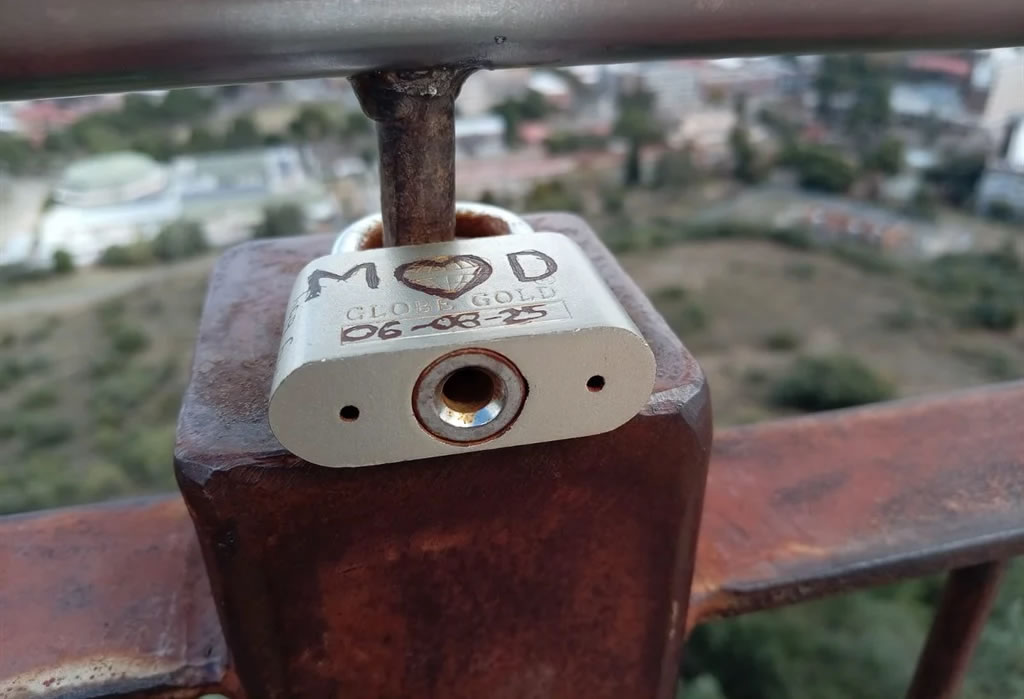
BLOEMFONTEIN — At the summit of Naval Hill, the bronze figure of Nelson Mandela stands tall, gazing out over the city of Bloemfontein. It is a place of pilgrimage, a monument to freedom and the “Long Walk” of a nation. But lately, a different kind of walk is taking place here — one that involves the clicking shut of metal shackles.
A growing cluster of padlocks has appeared, fastened to the railings and structures surrounding the statue of the late statesman. To a casual tourist, they might look like “love locks,” a trend popularised on the bridges of Paris. But to the residents of the Free State and the traditional healers who guard the spiritual gates of the community, these objects represent something far more sinister.
The Mystery at Naval Hill
The presence of these locks has sparked an intense debate about whether they are harmless symbols of commitment or tools of a darker trade. For those who live nearby, the sight has become a source of mounting anxiety.
“I’m a regular visitor to this statue as I enjoy standing next to our late former president,” says Kgololosego Matshediso, a resident who has watched the metal collection grow with unease. “It worries me to see the number of padlocks growing. I’ve never seen anyone put them there, but every now and then we find new padlocks with different designs. I’d like to have a clear understanding of what they mean and whether they’re linked to witchcraft or not.”
Another resident, Boitumelo Setlhabi, shares this sentiment. She notes that while some locks bear messages of love, their placement at a national monument is inappropriate and frightening.
“I also want to know the meaning of these padlocks. It’s frightening because there’re dangerous people out there,” Setlhabi says. “We come here with our kids, and if these padlocks are related to evil spirits, they could be negatively affected. Why are Mangaung Metro Municipality officials not removing these padlocks?”
A Spiritual Imprisonment
To understand why a simple piece of hardware can cause such distress, one must look toward the traditional belief systems that still hold significant sway in Southern Africa. Investigative inquiries into the practice reveal that in the world of izangoma (traditional healers), a padlock is rarely just a lock.
Sangoma Bolele Majake, a well-known figure in the spiritual community, warns that these objects are frequently used in witchcraft aimed at preventing people from achieving success or moving forward in their lives.
“Padlocks are sometimes used in evil deeds to spiritually lock a person’s life,” Majake explains. “They’re used for blocking their progress, opportunities and overall development. It might happen that they’re using the late president’s statue in the wrong way. We advise visitors to pray hard before visiting the statue.”
The choice of location—a monument to the man who “unlocked” South Africa from the chains of apartheid—is particularly galling to practitioners. By placing these “locks” at a site of such immense positive energy, it is believed that the ritual’s potency is amplified, or perhaps intended to subvert the very freedom Mandela represents.
Sangoma Mabadimo Lerato Mofokeng notes that the rituals aren’t always intended for malice, but they are almost always about control.
“Some women believe that by using padlocks in rituals, they can spiritually influence someone to develop romantic feelings for them or remain committed to a relationship,” Mofokeng says. “In some cases, people throw coins into buckets or other designated places because they believe doing so will bring them wealth, good fortune or lasting romantic relationships. These practices are often driven by personal beliefs and the hope that a spiritual act can influence their future.”
The Terror of ‘Central Locking’
While the padlocks at the Mandela statue are a public manifestation of this spiritual anxiety, there is a much more private and terrifying version of this practice known across the region as ulunyoka or runyoka—frequently referred to in modern slang as the “central locking system.”
This is not a metaphor. It is a traditional “fencing” of a spouse, usually a wife, intended to punish any act of infidelity with immediate, physical, and often gruesome consequences. The “lock” is cast through a ritual, and the results for any “unauthorised” intruder are the stuff of nightmares.
One of the most harrowing recent incidents occurred in the Manjolo area of Binga, in Zimbabwe’s Matabeleland North Province. A man, whose identity remains protected for his safety, found himself at the centre of a bizarre medical and spiritual crisis after allegedly romping with a married woman.
The consequences were immediate. His manhood began to grow uncontrollably, eventually reaching down to his knees. Along with this mysterious elongation, he suffered from severely enlarged testicles. The pain was so intense that the man could neither walk nor sleep.
“I have come here to get prayers so that I can be healed,” the man was heard saying in a video recorded during a cleansing ceremony. “The problem started after I slept with a married woman from the area. So, I hope I’m going to get help here.”
The man had to seek the help of Madzibaba Emmanuel Mutumwa, a cleric of the Johane Masowe eChishanu, after traditional prophets failed to reverse the condition. During the ritual, the man was seen shouting the name of the woman he had slept with, begging for the curse to be lifted.
A Life at the Mercy of the Key
The “central locking” phenomenon creates a situation where a person’s physical well-being is entirely dependent on the “owner” of the spell. If the husband who cast the ulunyoka does not return to “unlock” the victim, the consequences can be fatal.
In Bubi District, Nanzeni Moyo found herself living this nightmare. Her husband, Mark Moyo, suspected her of cheating and sought the services of a healer to cast the spell on her. In such cases, if another man attempts to have sex with the woman, the couple may become “stuck” together—a condition known as penis captivus, which many in the region believe is exclusively the result of such witchcraft.
“In most cases ulunyoka is placed on women, leaving their lives at the mercy of their husbands, who either choose to come and unlock them or let them die,” explains a report on the practice.
Gender activists have begun to speak out against what they describe as a gross violation of human rights. Tatenda Kombora of the Black Unika Foundation argues that the practice is a tool of patriarchal oppression.
“I believe ulunyoka in marriages must be done away with because it violates the principle of marriage and human rights,” Kombora says. “We live in a patriarchal society where men believe women are owned and the husbands are the ones who determine what happens to their women. This kind of mentality has ruined society, and it is a violation of women’s rights.”
Kombora points out a particularly dark possibility: “A report by the Zimbabwe Gender Commission in 2020 stated that at least 22 women are raped in a day, meaning that if a woman is raped, they will have to face these painful circumstances like those women who would have had extramarital affairs. I doubt if spiritually there would be any definition of whether it was a rape case or an affair.”
The Healers’ Stance
Even within the community of traditional practitioners, there is a growing movement to condemn these “locking” rituals. George Kandiero, the president of the Zimbabwe Traditional Healers Association (ZINATHA), has been vocal in his opposition.
“The practice of ulunyoka has always been there from time immemorial, and we feel that once you start using such practices, there is a serious problem. If things are not working out just leave,” Kandiero says. “People use it in different forms, others will get stuck to someone, others will develop a rash or a form of disease until you confess to the husband and others will start swelling, we don’t administer such things.”
He pulls no punches in his assessment of the morality of the act: “Love must not be forced, the use of ulunyoka is a form of slavery. This is like imprisoning your partner, it is witchcraft, and people must stop this practice.”
A Monument Under Siege?
Back at Naval Hill, the padlocks continue to catch the afternoon sun. For the authorities in the Mangaung Metro Municipality, the issue is a complex one. Removing them could be seen as a simple act of maintenance, but in a culture where the spiritual and the physical are so deeply intertwined, the act of “unlocking” a ritual object carries its own risks.
The izangoma have urged the public to be cautious. They advise visitors to the Mandela statue to seek guidance and to “pray hard” before approaching the monument. The fear is that the statue, meant to be a beacon of hope, is being turned into a focal point for those who wish to bind others in spiritual chains.
Whether these padlocks are the work of hopeful lovers or desperate practitioners of the dark arts, their presence has fundamentally altered the atmosphere at the site. The bronze Mandela continues to look out over Bloemfontein, but at his feet, the quiet click of a closing padlock serves as a reminder that for some, the walk to freedom is still being blocked by the ancient shadows of the past.
The mystery of who is placing them remains. No one has been caught in the act. They appear like ghosts in the night—different designs, different sizes, but all sharing the same silent, metallic grip on the railings. For the people of Bloemfontein, the question remains: what, or who, is being locked away at the feet of their greatest hero?
As the sun sets over the Free State, the shadows of the padlocks lengthen across the stone. In a world of modern cities and digital progress, the ancient fear of the “lock” remains a potent force, reminding everyone that sometimes, the most dangerous chains are the ones you cannot see.
Table: Comparison of Traditional ‘Locking’ Practices
|
Practice
|
Intended Purpose
|
Common Method
|
Physical/Spiritual Consequence
|
|
Love Locks (Symbolic)
|
Expression of eternal commitment.
|
Fastening a padlock to a public structure.
|
Generally considered harmless by practitioners.
|
|
Spiritual Blocking
|
Preventing a person’s success or progress.
|
Ritual use of padlocks to “lock” a person’s fortune.
|
Stagnation in career, finances, or personal growth.
|
|
Ulunyoka (Central Locking)
|
Punishing infidelity and “fencing” a spouse.
|
Ritual spells cast on a partner without their knowledge.
|
Genital swelling, elongation, or becoming “stuck” during sex.
|
|
Wealth Rituals
|
Attracting fortune or luck.
|
Throwing coins or using padlocks in designated spiritual spots.
|
Believed to influence future prosperity through spiritual acts.
|
The Legal and Social Fallout
The social implications of these practices extend far beyond the individuals involved. Nomalanga Moyo, another gender activist, highlights the permanent damage these rituals can cause.
“It is bad, people must think of the implications of this practice and ask themselves questions like what if the partner dies, how does the man or woman remarry?” she asks. “People cheat, and people die for no reason. It’s better to leave someone than to use ulunyoka. It violates women’s rights; it is sexual abuse. Especially if you leave the partner and they do not remove ulunyoka, it means the person will die.”
In the eyes of many, the use of such spells is a sign of deep-seated insecurity and a lack of trust that no ritual can truly fix. Nkosana Mathe, a resident interviewed about the trend, calls it “an archaic witchcraft practice.”
“Ulunyoka is an outdated concept,” Mathe says. “It is an indigenous knowledge system used by greedy and insecure women and men with trust issues. This is witchcraft, what if one dies in the process, what gain does the partner have in all this?”
Mcedisi Dumane adds, “The use of ulunyoka is selfishness, some people say that it is a good practice to ensure that you are protected from different infections, but however, l believe that if you and your wife love each other there is no need to go through that.”
Despite the condemnation from some quarters, the persistence of the padlocks at the Mandela statue suggests that the belief in the power of the “lock” is far from dead. It is a silent struggle between the light of a new South Africa and the lingering darkness of old ways, played out in the small, metallic clicks on a windy hill in Bloemfontein.