


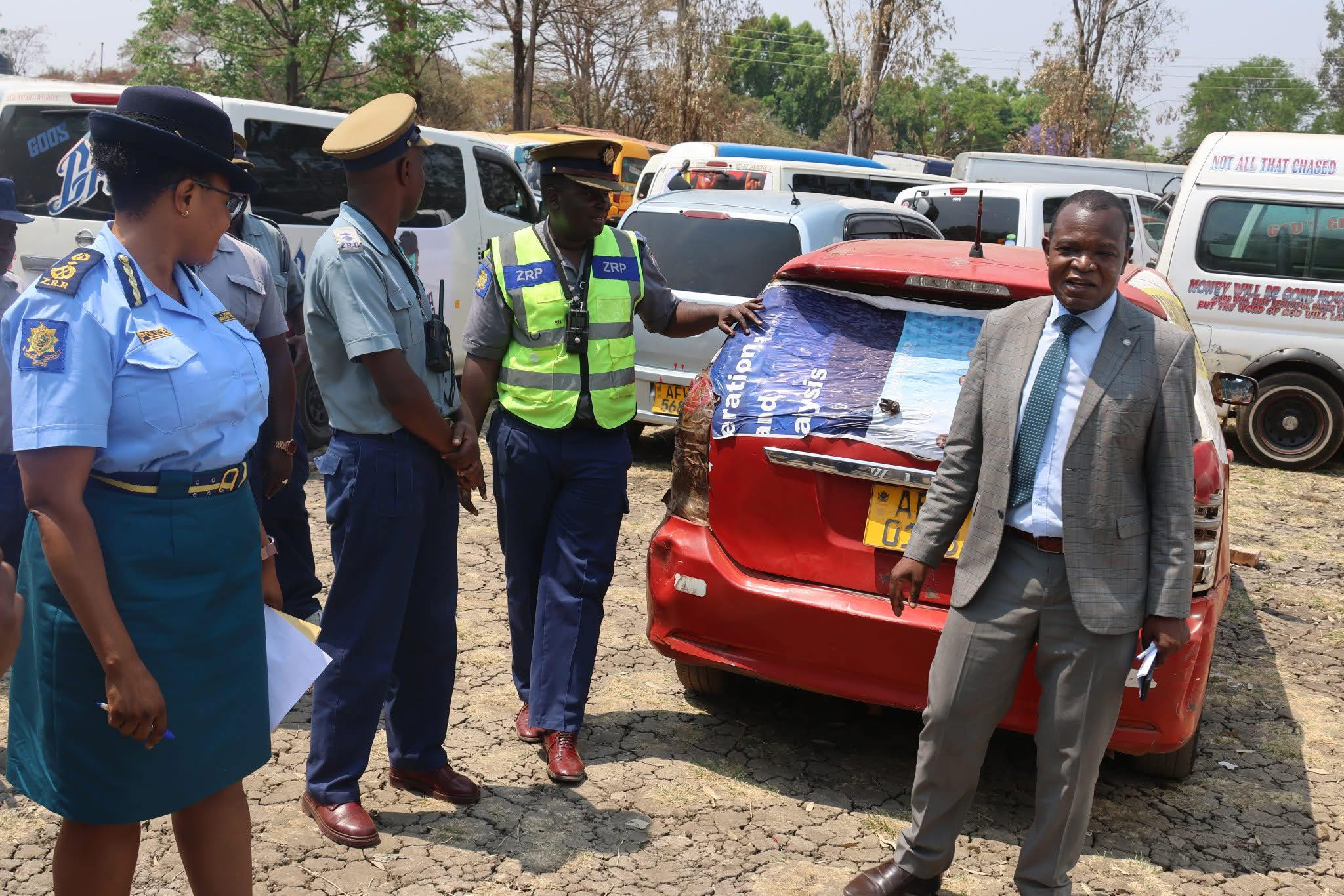
Harare – In a swift and sweeping operation that commenced on 13 July 2026, the Zimbabwe Republic Police (ZRP) announced the arrest of over 2,000 individuals within a mere 48 hours. Dubbed “Operation Lockdown” by some, and officially referred to as a “nationwide blitz” by authorities, this massive police action has raised significant questions about its true objectives. While the ZRP maintains its focus is on curbing serious crime and enhancing road safety, an in-depth investigation by this correspondent suggests a more complex and politically charged agenda at play.
National police spokesperson Commissioner Paul Nyathi confirmed the scale of the operation, stating that by 15 July 2026, a cumulative total of 2,069 arrests had been made. A staggering 1,809 of these arrests occurred on 14 July alone. Commissioner Nyathi articulated the official stance, asserting, “The Zimbabwe Republic Police has launched a nationwide operation targeting crimes of concern and traffic offences as part of its ongoing commitment to maintain law and order, protect lives and property, and enhance road safety across the country.” He further elaborated that the operation targets a broad spectrum of alleged offences, including murder, attempted murder, robbery, unlawful entry, theft, stock theft, rape, kidnapping, assault, drug and substance abuse, and smuggling. Traffic violations, such as the operation of illegal commuter vehicles known as mushikashika, driving unregistered or unlicensed vehicles, drink-driving, dangerous overtaking, and ignoring traffic signals, are also under scrutiny.
However, the timing of this extensive police action has not gone unnoticed by observers and civil society groups. It coincides precisely with the escalating discussions and preparations for the “July 31 Shutdown” campaign, a planned nationwide protest against various grievances, including the controversial Constitution Amendment Bill No. 3 (CAB3) and the country’s persistent economic hardships. This convergence of events has led many to believe that the police blitz is not merely a crime-fighting initiative but a calculated pre-emptive strike designed to neutralise potential dissent and instil fear among the populace, particularly in urban centres.
The suspicion of a hidden agenda gained further traction with the arrest of prominent opposition political activist Bhekimpilo Mbedzi on 15 July 2026. Mbedzi, reportedly apprehended in Beitbridge or linked to mobilising efforts in Matabeleland South, is believed to have been detained due to his active role in organising and recruiting participants for the impending 31 July shutdown. A social media post from Swaziland Democratic News highlighted this, stating, “His arrest is believed to be linked to his role in mobilising and recruiting people for a planned nationwide shutdown scheduled for 31 July 2026.” Such arrests of activists ahead of planned protests are a recurring pattern in Zimbabwe, often drawing condemnation from human rights organisations.
Indeed, the Zimbabwe Lawyers for Human Rights (ZLHR) has consistently voiced concerns over what they describe as a “clampdown on civil liberties.” While specific statements regarding Mbedzi’s arrest are yet to be widely publicised, past incidents reveal a troubling trend. Lawyers representing detained activists have frequently reported instances of their clients being “beaten during arrest, and further ill-treated, tortured, and denied them medical care.” This pattern of alleged abuse and denial of fundamental rights underscores the deep-seated concerns about the rule of law in Zimbabwe, a sentiment captured by activists who often lament, “In Zimbabwe, we have no rule of law but rule by law.”
The ZRP’s operational tactics further fuel the narrative of intimidation. Commissioner Nyathi confirmed the intensification of “patrols, roadblocks, stop and search blitz, compliance inspections and public awareness campaigns across the country.” While presented as measures to enhance public safety, these tactics, particularly the proliferation of roadblocks and stop-and-search exercises, create an environment of constant surveillance and restriction. For informal traders, transport operators, and youth in high-density suburbs – groups often at the forefront of socio-economic protests – such an environment makes movement nearly impossible and effectively stifles any plans for collective action. The poster for the July 31 Shutdown campaign itself, with its bold declaration “ALL CITIZENS. ONE VOICE. ONE PURPOSE. NO WORK. NO SCHOOL. NO BUSINESS AS USUAL. SHUT DOWN THE COUNTRY!” and the rallying cry “OUR COUNTRY OUR VOICE OUR FUTURE. TAKING IT TO THE STREETS!”, speaks to the widespread discontent that the authorities appear keen to suppress.
Beyond the political implications, the police blitz also appears to serve a significant revenue-collection function for a treasury under strain. Despite a reported drop in inflation to 4.1% in January 2026, the government is targeting an ambitious US$10 billion in revenue for the year. In this context, the ZRP seems to have been repurposed, in part, as a de facto tax agency. Motorists, particularly those operating mushikashika or with minor vehicle infractions, report being subjected to arbitrary fines, often for fabricated offences. The official breakdown of arrests from 14 July, which includes 63 for unlawful possession of dangerous drugs, 26 for theft, 3 for robbery, 7 for unlawful entry, 1 for murder, and 1 for stock theft, pales in comparison to the sheer volume of traffic-related arrests and the “admission of guilt fines” that are a major focus of such operations. These fines, while seemingly minor individually, accumulate to substantial sums, providing a much-needed boost to state coffers.
Voices from the ground paint a grim picture. Drivers speak of lost livelihoods, their vehicles impounded or their meagre earnings depleted by incessant fines. Families in high-density suburbs, such as Mbare and Chitungwiza, recount instances where their breadwinners have been “disappeared” into the system, detained without clear charges or access to legal representation. These personal accounts underscore the human cost of “policing by intimidation” and the devastating impact on ordinary citizens struggling to make ends meet in a challenging economic climate.
In conclusion, while the Zimbabwe Republic Police frames its “nationwide blitz” as a legitimate effort to combat crime and improve road safety, the evidence suggests a dual purpose. The operation, with its mass arrests, targeting of activists, and aggressive revenue-collection tactics, appears to be a calculated manoeuvre to quell potential unrest ahead of the July 31 Shutdown campaign. The question that remains for the citizens of Zimbabwe is a profound one: Is the ZRP truly protecting the public, or is it primarily safeguarding the interests of the ruling regime from its own people?