


The Sentence That Shook Zimbabwe: Life Ban for Bulawayo Drunk Driver Signals New Era of Accountability
BULAWAYO – For decades, the blood-stained tarmac of Zimbabwe’s highways has been treated with a sense of grim inevitability. Fatalities were often whispered away as “bad luck” or “the will of the heavens.” However, a landmark ruling in a Plumtree courtroom has shattered that complacency, sending a clear and uncompromising message to the transport industry: the era of treating passenger lives as collateral for profit is over.
Newtan Marova, a 47-year-old bus driver from Bulawayo’s Nkulumane suburb, stood before Plumtree Magistrate Mr Busani Sibanda last month, his head bowed as the weight of his actions finally caught up with him. Marova was not just being sentenced for a traffic violation; he was being made an example of in a nation weary of burying its citizens. The court’s decision to jail him for 12 months and ban him for life from ever driving a public service or heavy motor vehicle again has resonated across the country, sparking a fierce debate about responsibility, corporate greed, and the true cost of a bus ticket.
The Midnight Gamble
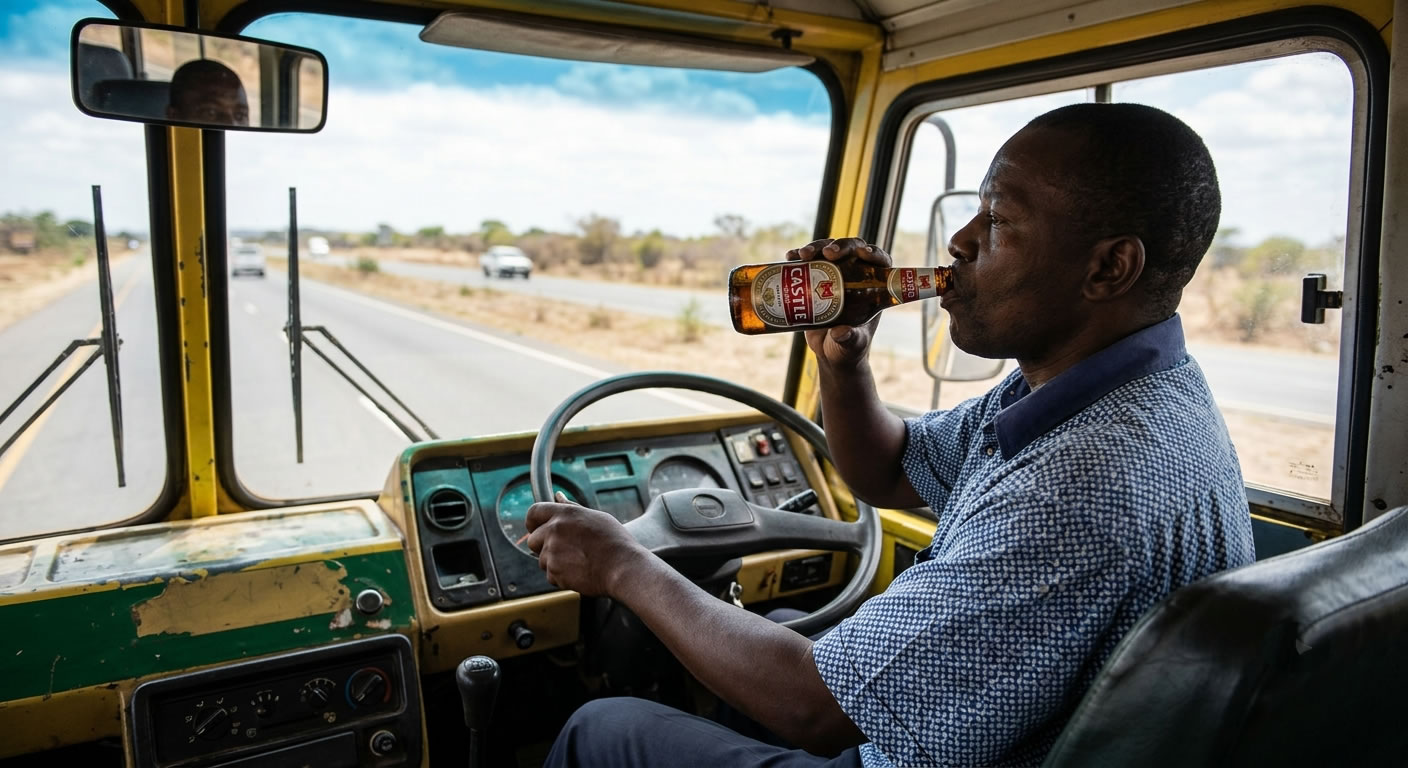
The events that led to this historic sentence began in the pre-dawn chill of 19 June 2026. At approximately 4:30 am, Marova was at the wheel of an AVM bus, navigating the Bulawayo–Solusi Road. Behind him sat 50 passengers, most of them likely asleep, unaware that their lives were being held in the hands of a man who was significantly intoxicated.
Police officers stationed at a roadblock at the 39km peg noticed something amiss. The driver’s behaviour was erratic, his responses sluggish. When they administered a breathalyser test using an AT9000 device, the results were staggering. Marova’s alcohol concentration was recorded at 149mg per 100ml of blood.
In Zimbabwe, the law is absolute for those entrusted with public safety: the legal limit for public service vehicle drivers is zero. For ordinary motorists, the limit is 80mg. Marova had not just crossed the line; he had obliterated it.
“A Complete Disregard for Responsibility”
In the courtroom, the atmosphere was heavy. Prosecutor Ms Fezile Mpofu laid out the facts of the case, presenting the printed breathalyser result as a silent witness to Marova’s negligence. Marova, a father of two children aged six and 10, pleaded for leniency, citing his status as a first-time offender.
“Your Worship, I am truly sorry for driving under the influence of alcohol and putting the lives of my passengers at risk,” Marova told the court, his voice barely a whisper.
However, Magistrate Sibanda was unmoved by the plea for mercy. His sentencing remarks were a blistering indictment of the culture of negligence that pervades the transport sector.
“What makes the offender’s case particularly serious is that he was driving a bus carrying 50 passengers. One can only imagine the risk to which he exposed all these lives,” Mr Sibanda said. “He also endangered the lives of other road users. His conduct demonstrated a complete disregard for the responsibility expected of skilled drivers. These circumstances required him to be removed from our roads.”
The magistrate’s decision to impose a lifetime ban on driving heavy vehicles and public service vehicles is a rarity in Zimbabwean jurisprudence. It signals a shift from mere fines to a policy of permanent removal for those who prove themselves unfit for the road.
A Nation in Mourning: The Context of the Crackdown
The sentencing of Marova did not happen in a vacuum. It comes at a time when Zimbabwe’s roads have become synonymous with tragedy. Only a week ago, on 22 July 2026, the nation was plunged into mourning yet again following a horror crash on Seke Road that claimed 17 lives. The mangled wreckage of a minibus and the wails of bereaved families served as a haunting backdrop to the government’s sudden appetite for judicial severity.
Statistics provided by the Zimbabwe Republic Police (ZRP) paint a harrowing picture. On average, five people are killed every single day on the country’s roads, with another 38 sustaining injuries. While the total number of road fatalities saw a slight decline from 2,099 in 2023 to 2,015 in 2024, the frequency of “horror crashes”—accidents involving high death tolls—remains alarmingly high.
On 13 July 2026, just days before the Seke Road tragedy, the ZRP launched a massive nationwide anti-crime and traffic operation. Within the first 24 hours, over 1,800 suspects were arrested across various offences. The crackdown specifically targets the “two major killers” on the road: reckless driving and driving under the influence.
The Hidden Pressure: Targets, Fatigue, and “Mshikashika”
While the law focuses on the driver, an investigative look into the industry reveals a more complex and darker reality. We spoke to several bus and commuter omnibus (kombi) drivers in Bulawayo and Harare, many of whom requested anonymity for fear of losing their jobs. They described a high-pressure environment where safety is often sacrificed for “targets.”
“The owners set daily targets that are almost impossible to reach if you follow all the rules,” explained one driver who has worked the Harare-Bulawayo route for ten years. “If the target is $300 and you only bring $250, the difference comes out of your own pocket. You end up speeding, overloading, and driving for 18 hours straight just to make ends meet.”
This relentless pressure leads many to dangerous coping mechanisms. The use of “bronco” (a potent cough syrup), marijuana, and cheap, high-alcohol spirits has become an open secret at bus terminuses.
“You are tired, your eyes are closing, but you have one more trip to make,” the driver continued. “Some guys take a ‘kick’ of something to stay awake. They think it helps them focus, but we all know it just makes them dangerous.”
The rise of “mshikashika”—illegal pirate taxis—has only added fuel to the fire. These unregistered vehicles operate outside the law, often driven by unlicensed individuals who weave through traffic with reckless abandon, forcing legal operators to drive even more aggressively to compete for passengers.
Holding the “Big Men” Accountable
One of the most significant implications of the Marova ruling is the potential shift in legal liability toward bus owners. For years, owners have distanced themselves from the actions of their drivers, claiming that negligence was an individual choice.
Legal experts now suggest that the courts are moving toward a doctrine of vicarious liability that could see owners facing massive compensation claims or even criminal charges if it can be proven they fostered an environment of negligence.
“If an owner sets a target that necessitates speeding, or if they fail to verify that their driver is sober before a journey, they are just as responsible as the man behind the wheel,” says a Harare-based legal analyst. “The Marova case is a wake-up call. If you own a bus, you are now a guardian of 50 souls. If you fail in that duty, the financial and legal consequences will be ruinous.”
A Turning Point or a Temporary Headline?
As the news of Marova’s life ban circulates through the ranks of the Transport Operators Association of Zimbabwe, the question remains: will this actually save lives?
Magistrate Sibanda’s words in court were clear: “There is need to punish this kind of conduct. The offender was careless, to say the least, in failing to act as a responsible member of society. The courts expect drivers to refrain from driving when under the influence of alcohol or drugs.”
Road traffic accidents do more than just end lives; they shatter families, often depriving them of their primary breadwinners and leaving dependants in a cycle of severe hardship. The “needless loss of life, time, and resources” mentioned by the magistrate is a national wound that has yet to heal.
For the families of the 17 who died on Seke Road, or the 35 who perished in the 2022 Easter bus disaster, these judicial crackdowns may feel like they have come too late. But for the 50 passengers who walked away from Newtan Marova’s bus on that cold June morning, the intervention of the police and the subsequent severity of the court may well be the reason they are still alive today.
The sentence handed down in Plumtree was not just a punishment for one man; it was a demand for a change in the national character. Zimbabwe’s roads will only be safe when every driver, every owner, and every passenger understands that a bus is not just a vehicle—it is a responsibility that carries the weight of a nation’s future.