


HARARE – On the evening of 6 July 2026, a literal and metaphorical darkness descended upon Zimbabwe. A catastrophic technical failure on the Warren-Alaska 330kV transmission line triggered a nationwide grid collapse, plunging the country into a profound silence. As citizens across the nation fumbled for candles and the hum of diesel generators began to rattle through the suburbs, a far more permanent eclipse was being engineered within the mahogany-panelled corridors of the State House in Harare. By the time the morning sun rose and the lights flickered back to life the following day, the very foundation of Zimbabwean democracy had been fundamentally altered.
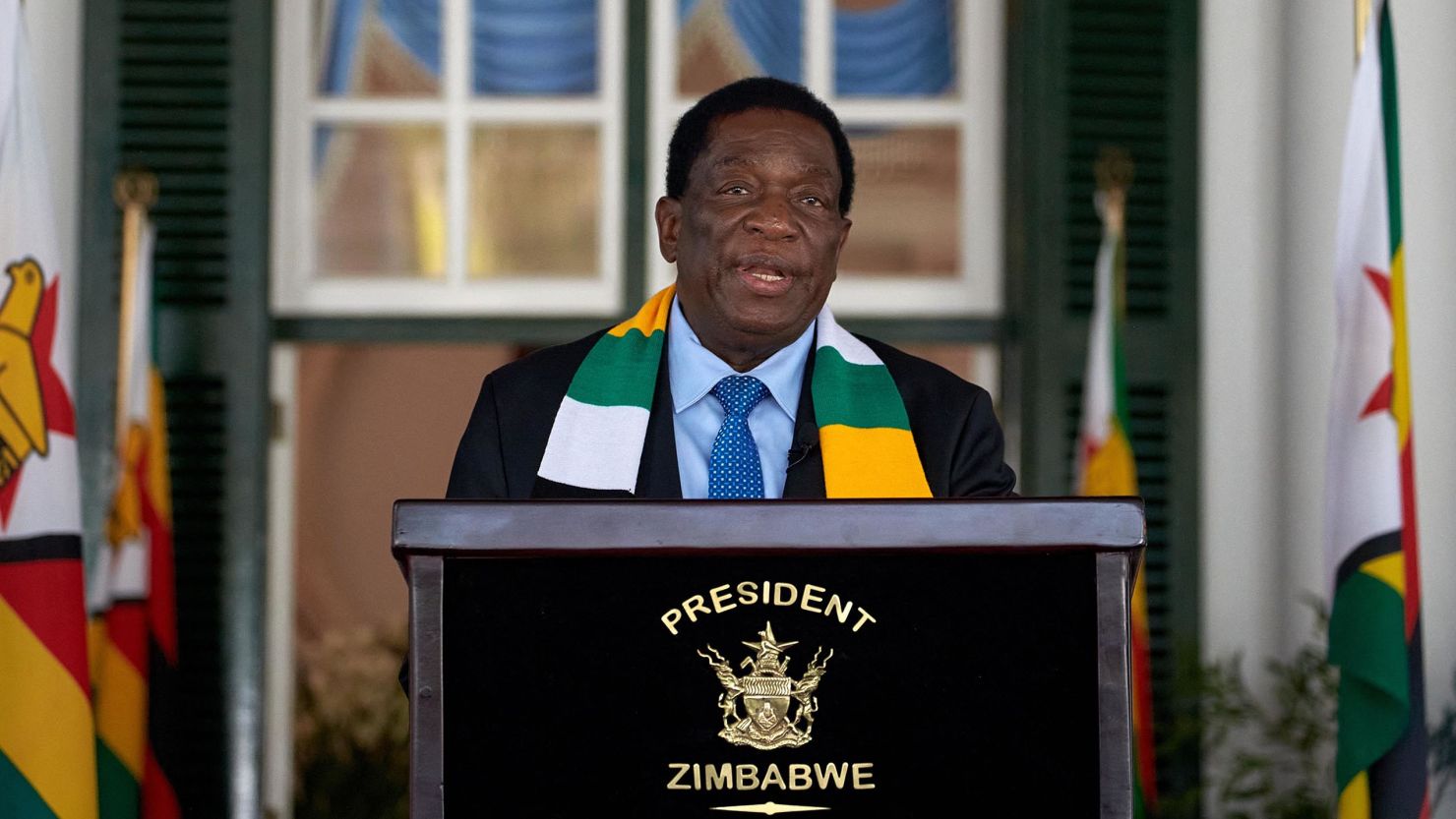
On 7 July 2026, President Emmerson Mnangagwa officially signed the Constitution of Zimbabwe Amendment (No. 3) Bill — colloquially known as CAB 3 — into law. With a single stroke of his pen, the 83-year-old leader, who once promised a “new democracy” following the dramatic ousting of Robert Mugabe in 2017, effectively dismantled the direct franchise. The legislation, now gazetted as the supreme law of the land, extends Mnangagwa’s tenure by two years and expands both presidential and parliamentary terms from five to seven years. Most critically, it abolishes the right of the Zimbabwean people to directly elect their head of state, transferring that power to a Parliament currently dominated by the ruling ZANU-PF.
The irony of this moment is not lost on those who remember the President’s words from February 2025. During a visit to Mutare, speaking with a measured tone that many took for sincerity, Mnangagwa attempted to douse the growing flames of suspicion regarding a third-term bid. He famously declared, “I will persuade the persuaders not to persuade me so that I remain constitutional.” He insisted that he was a stickler for the law and would retire at the end of his second term in 2028. “I have no intention of going beyond my two terms,” he added, a statement that was broadcast across state media and archived by hopeful citizens. It was a promise that brought temporary relief to a nation weary of “life presidencies.” The Zimbabwe Heads of Christian Denominations (ZHOCD) even issued a statement at the time, noting they took “relief from the consistent remarks made by His Excellency… affirming his commitment to the constitution.”
However, the “persuaders” were apparently not so easily swayed. Or perhaps, as many insiders suggest, the persuasion was a carefully choreographed theatre. Home Affairs and Cultural Heritage Minister Kazembe Kazembe, speaking in Shona during a ZANU-PF gathering in Mashonaland Central, provided a startling new narrative for the President’s actions. Kazembe claimed that the ruling party would have taken Mnangagwa to court had he refused to sign the bill. He praised the President for being a “true constitutionalist” who follows the will of the people and the party. “If he had refused, we would have taken him to court because he would have been refusing to do what the Constitution requires,” Kazembe said. “But he fulfilled his constitutional duty, and we thank him.”
This narrative of a President being “forced” by his own party to stay in power is a peculiar one, yet it serves a specific political purpose. It allows Mnangagwa to maintain the veneer of the reluctant leader, a man simply following the dictates of the law and the demands of his supporters. But beneath this surface lies a cold, calculated mathematical reality that effectively locks out the electorate for nearly two decades. If you are a young Zimbabwean voter today, the mechanical reality of this new law suggests you may not cast a meaningful vote for a President again until the year 2044.
To understand how the math leads to 2044, one must look at the progression of the new law. Firstly, CAB 3 extends the current presidential electoral cycle from five to seven years, retroactively moving the 2028 election to 2030. This is the “bonus” period already secured. Secondly, in 2030, instead of a national election, the ZANU-PF-dominated Parliament will sit to “elect” the President. Under the new law, this term lasts seven years, taking the leadership to 2037. In 2037, the process repeats, locking the winner in until 2044. For sixteen years beyond the original 2028 departure date, the electorate will be reduced to mere spectators. The ballot box has not been removed, but it has been emptied of its power, replaced by a show of hands in a whipped Parliament.
The enactment of CAB 3 did not happen without significant internal friction. In March 2026, as the bill began its rapid ascent through the National Assembly, an unexpected source of dissent emerged from the military establishment. Retired generals and war veterans, the very individuals instrumental in the 2017 transition, began to voice their alarm. Reports surfaced of a private meeting where senior figures warned that “tinkering with the supreme law for personal gain” would invite instability. One retired colonel, speaking on condition of anonymity, stated: “We did not march in 2017 to replace one life president with another. The constitution is not a piece of scrap paper to be rewritten every time a leader fears the people.”
More explosive were the allegations of a $31 million bribery fund aimed at ensuring Members of Parliament would vote in favour of the amendment without question. Investigative sources have linked this fund to prominent businessman Kudakwashe Tagwirei, often described as the financial engine behind the ruling party’s most controversial moves. Furthermore, recent allegations have surfaced involving another controversial figure, Wicknell Chivayo, who is said to have paid ZANU-PF US$3.6 million to initiate the CAB 3 process, purportedly under the guise of providing US$10,000 to each MP as a “consultation fee.”
The public hearings for CAB 3, held across the country in early 2026, were intended to demonstrate popular support but instead highlighted deep divisions. In Bulawayo and Gweru, hearings erupted in chaos as hired thugs reportedly disrupted citizens who tried to speak against the bill. In one incident in Mutare, a grandmother was shouted down by youths in party regalia when she asked why her grandchildren would no longer be allowed to vote for the President. In Harare, the hearings were packed with supporters who arrived in buses and were given pre-written scripts, drowning out any dissenting voices with songs of praise for the “Vision 2030” agenda.
Beyond the legal jargon and the chaos of the hearings lies a labyrinth of political intrigue involving the highest offices in the land. The relationship between Mnangagwa and Vice President Constantino Chiwenga, the architects of the 2017 move against Mugabe, has reportedly evaporated into a cloud of suspicion and purges. Mnangagwa’s move to extend his term to 2030 is seen by many as a direct strike against Chiwenga’s ambitions, as the Vice President was widely expected to take the reins in 2028.
Insiders suggest a scenario that would sideline Chiwenga entirely — the “Auxillia Scenario.” The theory posits that Mnangagwa could retire after Vice President Kembo Mohadi — who has reportedly expressed a desire to retire and has no ambitions for the top job — has been the most recent to act as President. Under the new provisions, if a President resigns, the last Vice President to have served as Acting President assumes the role of interim leader for up to 30 days. During this window, a meeting of Members of Parliament is convened to vote for a new President. This would bypass Chiwenga, allowing for the installation of First Lady Auxillia Mnangagwa as the new President, should Zanu PF want Auxillia to be the next president. It would create a unique power structure: Auxillia heading the government while her husband continues to pull the strings of the party.
The response from the opposition has been a mixture of outrage and desperation. Nelson Chamisa, the former leader of the Citizens Coalition for Change (CCC), broke a long silence to call for a “transitional government.” “The wisest thing is to withdraw this CAB 3 from parliament and constitute a transitional government that will address all the challenges our country faces,” he wrote. However, political analysts like Tadini Masaya have argued that such proposals are “too little, too late,” noting that “when the enemy is actively breaching the outer wall, you do not send a delegation to discuss sharing the living room.” Meanwhile, activist Job Sikhala has urged citizens to “be prepared” as his National Democratic Working Group (NDWG) seeks to unite various factions against what they term the “assault on the 2013 Constitution.”
Justice Minister Ziyambi Ziyambi has remained steadfast in his support of the amendment, describing the constitution as a “living instrument, not a museum piece frozen in time.” He argued that the extended terms would eliminate the “perpetual election mode toxicity” that hampers national development. He candidly admitted that the cancellation of the 2028 elections was designed to avoid the disputes of a contested outcome. It is a startling admission: the solution to electoral disputes is to simply remove the election.
The 2013 Constitution was the result of years of painstaking negotiation, designed specifically to curb the excessive executive powers that defined the Mugabe era. CAB 3 effectively guts those protections. Investigative research into “parliamentary presidencies” in other failing democracies across the continent reveals a recurring pattern: when leaders fear the popular vote, they retreat into the controlled environment of the legislature. By removing the direct vote, the President is no longer accountable to the grandmother in Chipinge or the graduate in Bulawayo; he is accountable only to the party caucus.
The implications for Zimbabwe’s youth are profound. A teenager who is 16 today, full of hope and looking forward to their first vote in 2028, will be 34 by the time they are allowed to participate in a meaningful presidential election, should the current trajectory hold. A whole generation is being told that their voice does not matter, that the “mathematical reality” of the law is more powerful than their aspirations. The “constitutionalist” who once promised a new dispensation has delivered a system that is more rigid and less accountable than the one it replaced.
As the dust settles over the gazetting of the Constitution of Zimbabwe Amendment No. 3 Act, the nation’s trajectory is more uncertain than ever. The 2028 elections, once a beacon of hope for a democratic transition, have essentially been rendered moot. Zimbabwe has entered a new constitutional era — one where the “revolving door” for the elite is now protected by the supreme law of the land. Whether the electorate, the fractured opposition, or the increasingly sidelined judiciary can navigate this new reality remains to be seen.
The “persuade the persuaders” rhetoric now sounds like a cruel joke played on a hopeful nation. It was not the persuaders who were persuaded; it was the constitution that was broken. While the nation slept during the blackout of July 2026, the architecture of a generation-long presidency was completed. The ballot box has not been removed, but it has been emptied of its power. Until 2044, the “persuaders” have won, and the electorate is left to count the years of their displacement. The “New Dispensation” has become the “Old Reality,” and the road to 2044 looks very long indeed.
“The people’s right to choose their leader is a God-given right that no Parliament should have the power to seize. To take away the vote is to take away the soul of the nation.” — Unnamed Bishop, ZHOCD Pastoral Statement, 2026.