


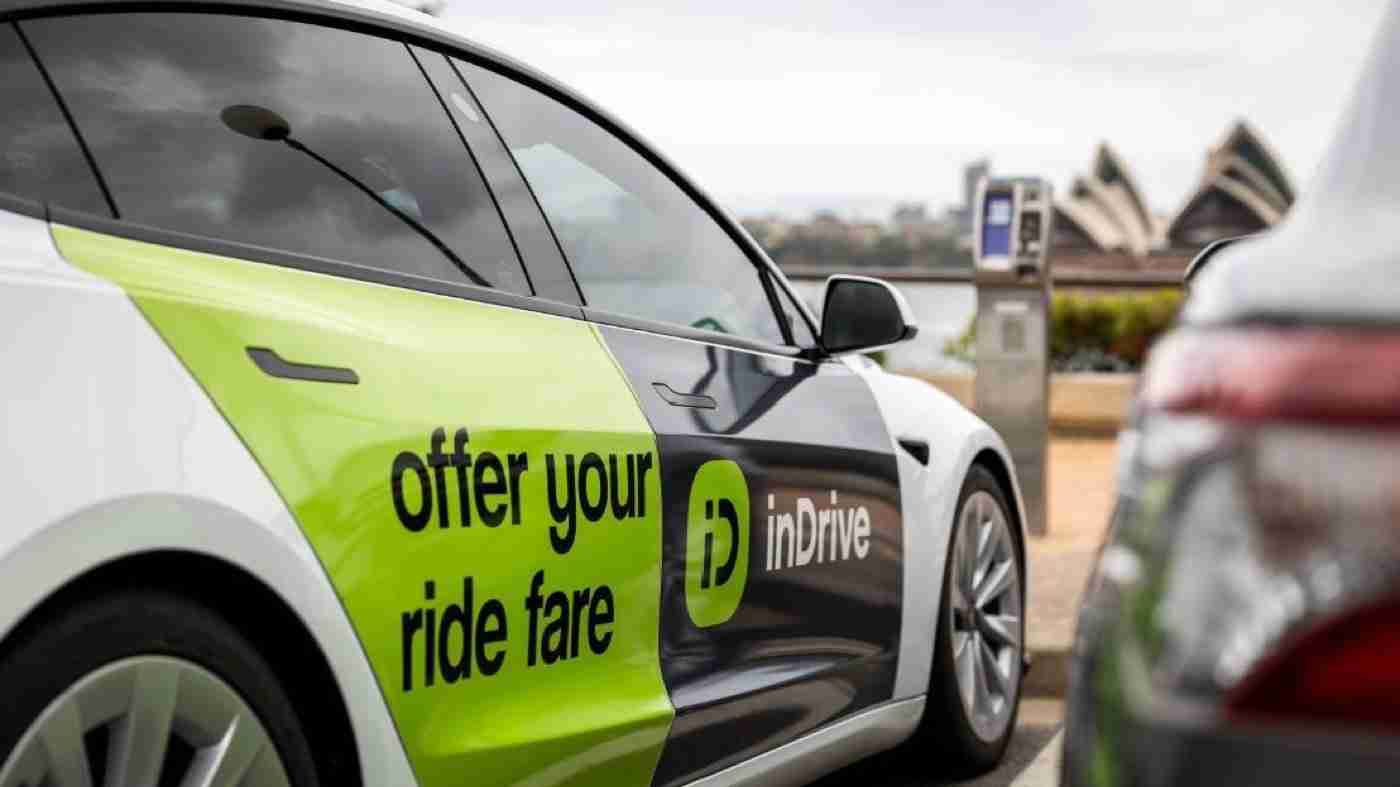
HARARE – In the fading light of a Harare evening, a silver sedan pulls up to a kerb in the Central Business District. The driver, a middle-aged man trying to supplement his meagre civil servant salary, checks his phone. The app, InDrive, tells him his passenger is waiting. A young man in a suit steps in, exchanges a polite greeting, and the car merges into the chaotic flow of Samora Machel Avenue.
But this is no ordinary commute. As the vehicle reaches its destination, the “passenger” reveals his true identity. He is not a tired office worker; he is a municipal police officer. Within minutes, the driver is surrounded. His crime? Operating an “illegal” taxi. His punishment? A staggering US$172 fine and the impounding of his vehicle.
This is the new reality on the streets of Zimbabwe’s capital. The City of Harare has launched a massive, clandestine transport operation—not to fix the broken public transit system, but to hunt down those who have stepped in to fill the void. In a city where the state-run bus service is a ghost of its former self, the council’s decision to pose as passengers in sting operations has ignited a fierce debate over the future of urban mobility.
The Cat and Mouse Game
The covert enforcement campaign has sparked anger among InDrive drivers, who accuse the local authority of using deceptive tactics instead of engaging the platform over licensing, taxation, and regulatory compliance. For the drivers, it is a “game of cat and mouse” that they feel they are destined to lose, even as the council tightens its grip.
“Some city council official requested a ride on the InDrive application and I accepted without knowing he was a council official,” one driver said on condition of anonymity, his voice thick with frustration. “When I arrived, he said, ‘You are under arrest for operating on InDrive using yellow number plates.’ If there are tax and VAT issues, shouldn’t the authorities also hold the owners of the application accountable instead of only targeting drivers?”
The fine of US$172 is a fortune in a country where the average monthly wage is often less than double that amount. Yet, the drivers keep coming back. There are simply too many drivers and commuters depending on the platform daily for a few sting operations to halt the momentum.
Other drivers warned that the alleged undercover operations were creating new security concerns, arguing that criminals could exploit the tactic by pretending to be municipal police officers. “We are now more cautious about accepting ride requests, especially those originating from the central business district,” another driver said. In a city where carjackings and robberies are on the rise, the line between a law enforcement operation and a criminal ambush is becoming dangerously blurred.
A System in Shambles
To understand why InDrive has become so popular, one must look at the wreckage of Harare’s public transport system. For years, the Zimbabwe United Passenger Company (ZUPCO) has been the subject of audits that read like post-mortems. Recent reports have highlighted a litany of failures: dozens of missing buses, a total lack of maintenance for existing fleets, and a failure to pay private operators who were contracted to help.
The government’s attempt to monopolise transport through ZUPCO has largely collapsed. Commuters are often left stranded for hours, waiting for buses that never arrive, or forced to squeeze into “mushikashika” — unregistered private vehicles that operate with little regard for safety or the law.
InDrive brought much-needed order, safety, and fair pricing to our roads. Unlike the chaotic kombis (commuter omnibuses) or the unreliable ZUPCO buses, e-hailing services offer a digital trail, a fixed price agreed upon before the journey, and a level of comfort that was previously reserved for the wealthy. Harare faces a massive public transport crisis—a reality leadership seems to ignore. Instead of criminalising everyday economic activity and demanding outdated taxi plates, the city needs practical, modern regulation.
The Master Plan vs. The Street Reality
The crackdown forms part of the city’s broader efforts to tighten control over the rapidly growing e-hailing sector as it begins implementing its newly adopted 2025-2045 Master Plan. This ambitious document seeks to overhaul the capital’s public transport system, proposing a future of 2,000 buses, a light rail network, and the total removal of kombis within three years.
Harare chief town planner and Acting Director of Urban Planning Services, Samuel Nyabeze, is blunt about the council’s motivations. “We are busy on the new master plan and we have realised the issue of InDrives. As a council, we have not been benefiting. There are now too many in our city and they need to be regularised,” Nyabeze said. “I cannot speak on behalf of the government, but as Harare City Council, we have not been benefiting from InDrives.”
The phrase “not been benefiting” is telling. In a city struggling to collect rubbish and provide clean water, the sight of thousands of digital transactions bypassing the municipal coffers is clearly an itch the council feels it must scratch. However, the cost of their proposed solution is eye-watering. The draft master plan estimates it will cost US$693.6 million just to remove kombis and replace them with a modern mass transit system.
Nyabeze stressed that the light rail project would require substantial support from the central government. “It is important to clarify that this is not a project that the City of Harare can implement on its own,” he said. “The development of a light rail system is a national-level infrastructural project. It will, therefore, be undertaken in collaboration with the relevant government ministries and State entities.”
But for the commuter standing in the rain at Copacabana bus terminus today, a light rail system in 2045 is cold comfort. They need a ride now, and InDrive is the only service answering the call.
How Others Found a Middle Ground
Zimbabwe is not the first country to grapple with the disruptive power of e-hailing. Across the continent and the globe, authorities have had to choose between banning the future or regulating it.
In South Africa, the government recently gazetted the National Land Transport Amendment Act. This law officially recognises e-hailing services like Uber, Bolt, and InDrive, moving them out of the legal “grey area.” Rather than conducting sting operations, South African authorities now require these platforms to register and ensure their drivers have specific permits. InDrive itself recently secured official approval to operate under this new framework, proving that cooperation is possible when the law is modernised.
Nigeria’s Lagos State took a more fiscal approach. They introduced a “Road Improvement Fund,” where e-hailing companies pay a small levy (about 20 Naira) for every trip made. This allows the city to benefit from the revenue without crushing the individual drivers. They also established licensing fees for the platforms themselves, scaled according to the number of drivers they manage.
In Kenya, the government moved to cap the commission that platforms can charge drivers at 18%, ensuring that those doing the hard work behind the wheel take home a fair share of the earnings. They also set base rates per kilometre to prevent a “race to the bottom” that could compromise vehicle safety.
These examples show a clear path forward: regulation through registration and digitisation, rather than harassment and deception.
The Path to Progress
Harare needs real transport solutions, not constant harassment of drivers earning an honest living. The current strategy of using municipal police to “trap” drivers is not only a waste of limited resources but also a betrayal of the citizens the council is supposed to serve.
If the City of Harare truly wants to “benefit” from e-hailing, it should stop fighting the technology and start using it. Here is what the municipality and the Zimbabwean authorities should consider:
First, create a specific “E-Hailing Permit.” The current requirement for “red” or “yellow” commercial taxi plates is outdated. A digital permit, linked to the driver’s national ID and vehicle registration, could be issued at a reasonable annual fee. This would bring drivers into the formal economy without the prohibitive costs of traditional taxi licensing.
Second, implement a per-trip municipal levy. By partnering with platforms like InDrive, Bolt, and Vaya, the council could receive a small, automated payment for every ride completed within city limits. This would provide a steady stream of revenue that could be reinvested into road maintenance—the very roads these drivers use.
Third, mandate data sharing. E-hailing platforms have incredible amounts of data on traffic patterns and transport demand. By requiring these companies to share anonymised data, the City of Harare could better plan its 2045 Master Plan, placing bus stops and rail links where people actually need them.
Finally, the government must acknowledge that the ZUPCO monopoly has failed. Liberalising the transport sector fully, while maintaining strict safety standards, is the only way to meet the demand of a growing urban population.
Conclusion
The “game of cat and mouse” currently playing out on Harare’s streets is a symptom of a deeper malaise. It is the friction between a 20th-century bureaucracy and a 21st-century economy. The City of Harare can continue to pose as passengers and collect their US$172 fines, but they will never be able to arrest their way out of a transport crisis.
The 2025-2045 Master Plan offers a glimmer of hope for a modern city, but that future cannot be built on the backs of harassed drivers. It is time for the leadership to stop ignoring the reality of the roads and start building a transport system that works for everyone—drivers, commuters, and the city alike. Until then, the clandestine transport operation will continue, not because the drivers want to break the law, but because the city has given them no other choice.