


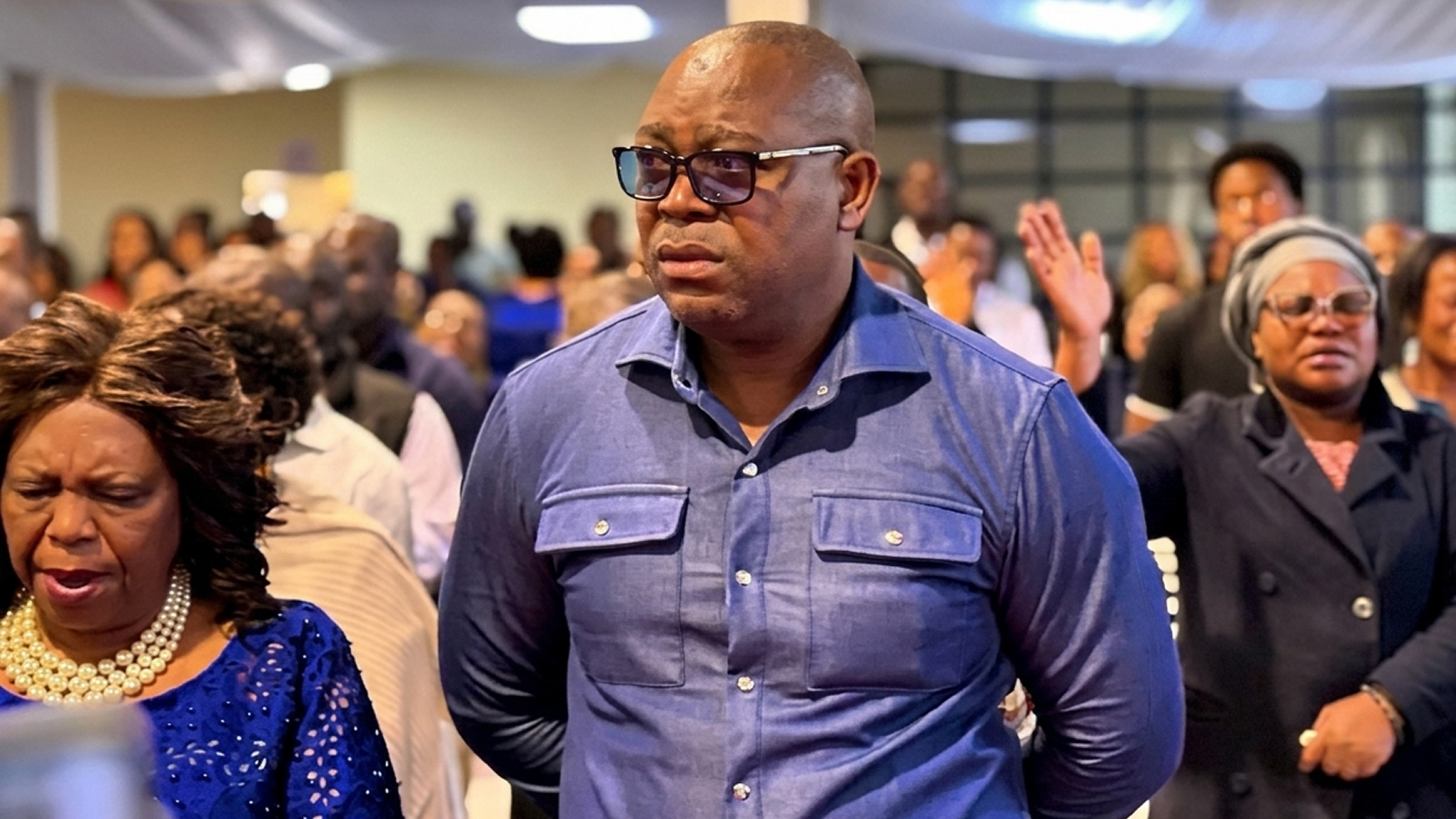
LUSAKA — Former Zambian minister and Lunte MP Mutotwe Kafwaya was shot and killed during a security operation at a residence linked to opposition presidential candidate Brian Mundubile, police have confirmed, bringing a violent and increasingly tense election period to a deadly climax.
Kafwaya’s death was announced after days of uncertainty over his whereabouts. His wife, Dinis Ng’andu, had made a public appeal for information and later went to the Lusaka High Court seeking an urgent order requiring authorities to bring her husband before the court, dead or alive. In her application, she described his continued detention as a matter requiring immediate judicial attention.
The former lawmaker was last seen during a joint operation involving police officers and soldiers at a house in Kabulonga, an affluent area of Lusaka being used by Mundubile, the National Reconciliation Party for Unity and Prosperity presidential candidate. Police said Kafwaya was the man fatally wounded in a shootout on the evening of August 14, the day after the presidential election. His identity was confirmed by his family, according to Inspector General of Police Graphel Musamba.
The operation has become the most serious security incident since the vote, with competing accounts from the authorities and the opposition. The government said the raid targeted a suspected militia that posed “a serious threat to State security”. Eleven people were rounded up, including opposition figures and three former commandos with what police described as extensive military experience.
Officials said the operation followed intelligence about an alleged insurrection plot involving foreign nationals, illegal military training camps and high-grade weapons. The security forces said they recovered automatic Uzi weapons, five AK-47 rifles and 60 rounds of ammunition, a Zastava pistol, four Beretta magazines, a bulletproof vest and a commando dagger. Night-vision binoculars, tactical gloves, two Taser-type devices, walkie-talkies, a digital video recorder and other electronic equipment were also listed among the items seized.
Police said officers met “gunfire and resistance from unknown individuals, resulting in the task force returning fire”. One unidentified man was fatally wounded and a firearm was recovered, the police statement said. The authorities’ account did not initially identify the casualty, but Kafwaya’s family later confirmed that he was the man who had been shot.
Mundubile has rejected the government’s description of the events. He said the raid took place at his home and denied that the property housed a militia or that his political alliance had any connection to insurgency, armed training or similar activity. He later told the BBC that armed personnel forced their way through the gate with an armoured vehicle, broke doors and windows and opened fire inside the residence.
“They were basically shooting indiscriminately. They directed two shots towards me. Like I’ve always said, it was just by God’s grace that I survived,” Mundubile said.
He said Kafwaya was shot while he and his wife were present. According to Mundubile, the former minister was bleeding and he urged the officers to take him to hospital. He said his children had witnessed Kafwaya “bleeding profusely” and being dragged from the house, describing the experience as deeply traumatic for his family. Mundubile said he and his relatives had not returned home and no longer felt safe.
The opposition leader went into hiding after the raid. His whereabouts became a subject of public speculation, while the government said the operation had uncovered a serious threat. At the same time, the arrests and the death of Kafwaya intensified concerns about the treatment of opposition figures after the election and about the use of security forces in a politically charged environment.
The Socialist Party condemned the killing and called for restraint, humanity and justice. Its president, Fred M’membe, described the death as “frightening, saddening and annoying” and said it had deeply affected the party’s leadership. He offered condolences to Kafwaya’s widow, children, relatives and friends.
M’membe said the country’s growing political division and intolerance had produced “this bloody drama”. He said no political doctrine, election dispute or law-enforcement operation could justify “the physical elimination of Kafwaya and any other citizen who might have died with him”.
“No crime can be committed in the name of elections or law enforcement,” M’membe said. “Let a sense of sobriety, humanity and justice prevail in our hearts and in our homeland.”
The killing came as Zambia waited for the final outcome of a presidential contest that had already been marked by disputes over the counting process, allegations of intimidation and clashes at polling stations. President Hakainde Hichilema was seeking a second term against Mundubile, who had previously served as a minister in the Patriotic Front government. Kafwaya had also served in that administration between 2016 and 2021 before becoming an opposition parliamentarian during Hichilema’s first term.
Mundubile initially claimed that his campaign’s parallel tally placed him ahead and raised concerns about irregularities. He referred to alleged problems at tallying centres, missing result forms and the presence of military personnel during parts of the results process. Authorities rejected the claims, while the electoral commission continued with the count and published results showing Hichilema in the lead.
The electoral process itself was interrupted on the Friday after polling. The Electoral Commission of Zambia suspended the counting and announcement of results for several hours after reports of violence against polling staff and the theft of marked ballot papers. The commission later said the security threat to the electoral process had been contained and resumed the count.
That pause triggered warnings from regional and international observer missions. The Southern African Development Community observer mission said it had received reports of intimidation, assault, abduction and property damage in five provinces, including submissions alleging injuries and at least one fatality. The mission said the suspension had created “uncertainty and anxiety” and called on all contestants and their supporters to remain calm.
The European Union observer mission also raised concerns about the conditions in which the candidates competed, including what it described as constrained democratic space and heavily biased state media coverage. Its chief observer, Michael McNamara, said the remaining stages of the process should be conducted calmly, transparently and in accordance with Zambian law.
Police separately arrested nine people over the killing of a 57-year-old polling agent in a township outside Lusaka on election day. Authorities maintained that voting had otherwise passed peacefully, but the death, reports of assaults and the temporary suspension of counting added to fears that the country’s reputation for orderly political transfers was under strain.
The Kabulonga raid then shifted the focus from disputed ballots to the conduct of the state’s security agencies. The government presented the operation as a response to an armed threat and displayed a list of weapons and equipment it said had been recovered. Mundubile and his allies described the incident as an assault on the opposition and rejected the militia allegations. Kafwaya’s death has placed those conflicting accounts at the centre of a national political crisis.
The government’s announcement ended the immediate uncertainty surrounding Kafwaya’s whereabouts but left urgent questions about how he was shot, what happened after he was wounded and why his family was unable to establish his condition for several days. His widow’s court application had been filed while the authorities’ account remained incomplete.
For Kafwaya’s family and supporters, the former minister’s death is now inseparable from the raid that followed the election. For the opposition, it is evidence of a dangerous escalation against political rivals. For the authorities, the incident remains a security operation against people alleged to have possessed military weapons and planned an armed insurrection. The competing accounts have deepened the uncertainty surrounding Zambia’s post-election transition and placed the conduct of the state, the opposition and the security forces under intense scrutiny.
Kafwaya’s political career ended in the middle of that confrontation. He was a former cabinet minister, a former member of parliament and a prominent opposition figure who was present at the home of the man challenging the election result. His death has made him the most visible casualty of the disputes and skirmishes that have accompanied Zambia’s 2026 election, while calls grow for the full circumstances of the Kabulonga operation to be established.