


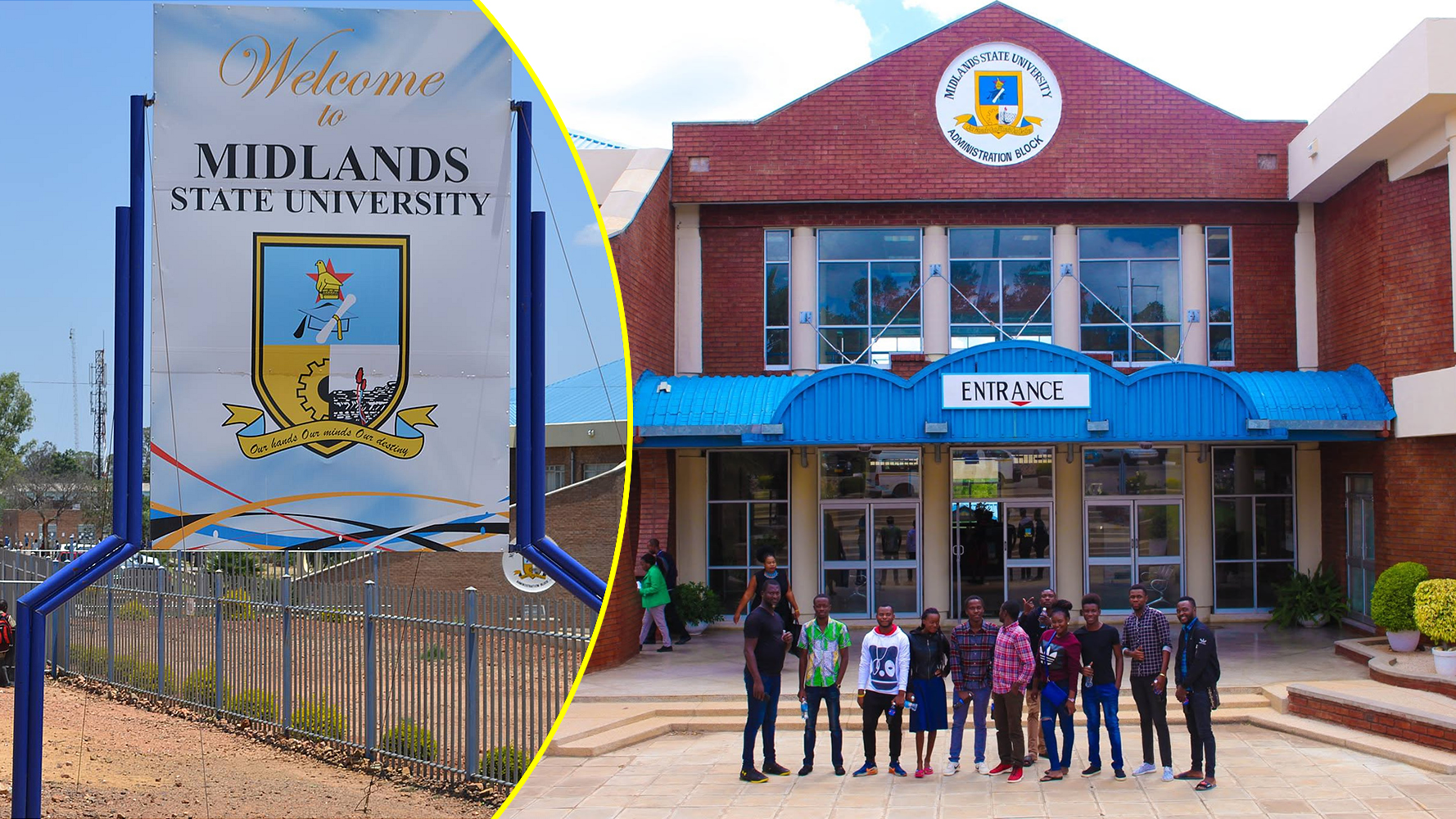
Midlands State University has FIRED nine lecturers from its Department of Media, Communication, Film and Theatre Arts. This decision followed an incident where examination papers given to students in May and June contained an instruction that allegedly required candidates to answer more questions than they were meant to attempt.
The dismissals have impacted some of the department’s most senior academics. Among those affected are the department’s chairperson, Dr. Hugh Mangeya, as well as Dr. Ernest Jakaza, Dr. Ephraim Vhutuza, Dr. Tariro Ndawana, Dr. Beauty Muromo, Dr. Nyasha Mapuwei, Muchineripi Cuthbert Gwarinda, Vhuyiswa Mukwananzi, and Patience Mushuku. Additionally, four other lecturers — Dr. Albert Chibuwe, Peter Mandava, Nancy Mutambo, and Chengeto Mkwendi — have been issued with final written warnings after disciplinary proceedings at the university.
The core of the dispute revolves around examination papers written by first-, second-, and fourth-year students. Information from within the institution suggests that the papers contained a common error in the instructions to candidates. Instead of directing students to answer all questions in Section A and two questions from Section B, the papers allegedly instructed them to answer all questions in both sections. Another account indicates that some papers directed students to answer all questions in Section B and all three questions in Section B, rather than requiring them to answer all questions in Section A and three questions in Section B.
The mistake in the instructions was not the only issue raised during the disciplinary process. A source revealed that the lecturers were also accused of failing to correct the errors in a timely manner and of not attending examination venues during the sitting of some of the affected papers. University regulations mandate attendance by lecturers at examinations.
“The question papers were found to contain numerous errors. Furthermore, some lecturers were absent from the examination venue during the sitting of their respective papers, contrary to university regulations, which make attendance compulsory. There was also a failure to address the mistakes in a timely manner,” said a source who preferred anonymity.
The source further explained that 13 lecturers were initially charged and brought before a hearing. Following these proceedings, nine were dismissed, while the remaining four received final written warnings.
Kudakwashe Bhowa, the MSU’s acting director of marketing and communications, declined to discuss the cases. He stated that they involve private contractual and human resources matters between the university and the staff members concerned.
“These are private contractual and Human Resources matters between the University and the individuals concerned. Consequently, in accordance with our duty of confidentiality and institutional policy, the University does not comment publicly on individual staffing affairs,” Bhowa explained.
Dr. Mangeya, one of the dismissed lecturers, also refrained from providing details, noting that processes connected to the decision were still ongoing. “The story is still ongoing and I am not at liberty to comment right now. There are processes that are taking place after the decision which was initially taken by the University,” he said.
This action has heightened concern among staff members who believe the examination-paper error was utilized to accelerate a broader reduction in the university’s workforce. Sources within MSU indicated that the department, along with several other faculties, was already experiencing a significant decline in student numbers. This left the institution with fewer students to support the staffing levels maintained during periods of higher enrolment.
One senior academic reported that the Department of Media, Communication, Film and Theatre Arts had seen a fall of more than 40% in its last two intakes. The department, which peaked with over 500 students in 2018, now has fewer than 200 students across all levels, according to internal university information. “The Department of Media Communication has seen enrolment drop by over 40% in the last two intakes. The media space is shrinking – newspapers are closing, TV is struggling, and students no longer see journalism as a viable career. The university can no longer sustain the staff complement it had,” the academic elaborated.
The decline in enrolment is not limited to the media department. Sources revealed that some programs at MSU are close to shutting down due to low enrolment. History and International Studies was described as being near closure, while Religious Studies reportedly has no full-time students. African Languages was said to have effectively ended after years of falling demand. At their peak, these affected programs reportedly attracted as many as 90 students per class. This change has resulted in departments that once had full classrooms now operating with small groups or, in some cases, without a regular full-time student intake.
The pressure facing journalism and communication programs mirrors a wider transformation in Zimbabwe’s media industry. Newspapers have scaled back operations, television has struggled with audiences and revenue, and digital platforms have reshaped news consumption. This contraction has reduced job opportunities for journalism graduates, making it more challenging for universities to maintain large specialist departments. Zimbabwean newsrooms have also endured years of financial pressure, with publications downsizing and reducing staff. Fewer permanent reporting jobs, declining advertising income, and the shift towards online news have all impacted the media employment market. For universities, these changes have made media-related courses harder to sustain at the size they reached during the industry’s stronger years.
This background has become central to the dispute at MSU. Staff members who questioned the dismissals suggested that the university may have capitalized on the examination-paper error at a time when it was already seeking ways to reduce its wage bill. They described the decision to remove nine lecturers, most of whom hold doctorates, as severe in relation to what they considered a shared mistake in examination instructions. The dismissed academics have not yet issued a public statement on the matter, but sources indicate that some are considering further action over the disciplinary process, arguing that it moved quickly and was used to justify a decision to reduce the department’s staffing complement.
This latest action is part of a period of change at MSU, where senior officials have previously left or been retired as the university reshaped its administration. Former registrar Erasmus Mupfiga and librarian Nyarai Patience Macheke were among officials who departed during earlier changes that staff described as a removal of the institution’s old guard.
MSU remains one of Zimbabwe’s largest universities, having produced nearly 100,000 graduates since its first ceremony in 2004 and currently enrolling more than 23,000 students across its campuses. The contrast between the university’s overall size and the shrinking numbers in individual departments highlights the pressure on programs that once seemed secure. A large institution can continue to attract tens of thousands of students even as individual courses lose their appeal, particularly when graduates face limited employment opportunities after completing their studies.
For the Media, Communication, Film and Theatre Arts department, the examination-paper dispute has thus unfolded alongside a broader struggle over its future. The immediate issue is the faulty instruction on papers sat by students in May and June. However, the larger concern for staff is whether the department will maintain its previous structure as enrolment declines and the media industry offers fewer clear routes into employment. For now, the nine dismissals and four final warnings have left one of MSU’s best-known departments facing an uncertain future at a time when both higher education and the media industry are under growing financial pressure.