


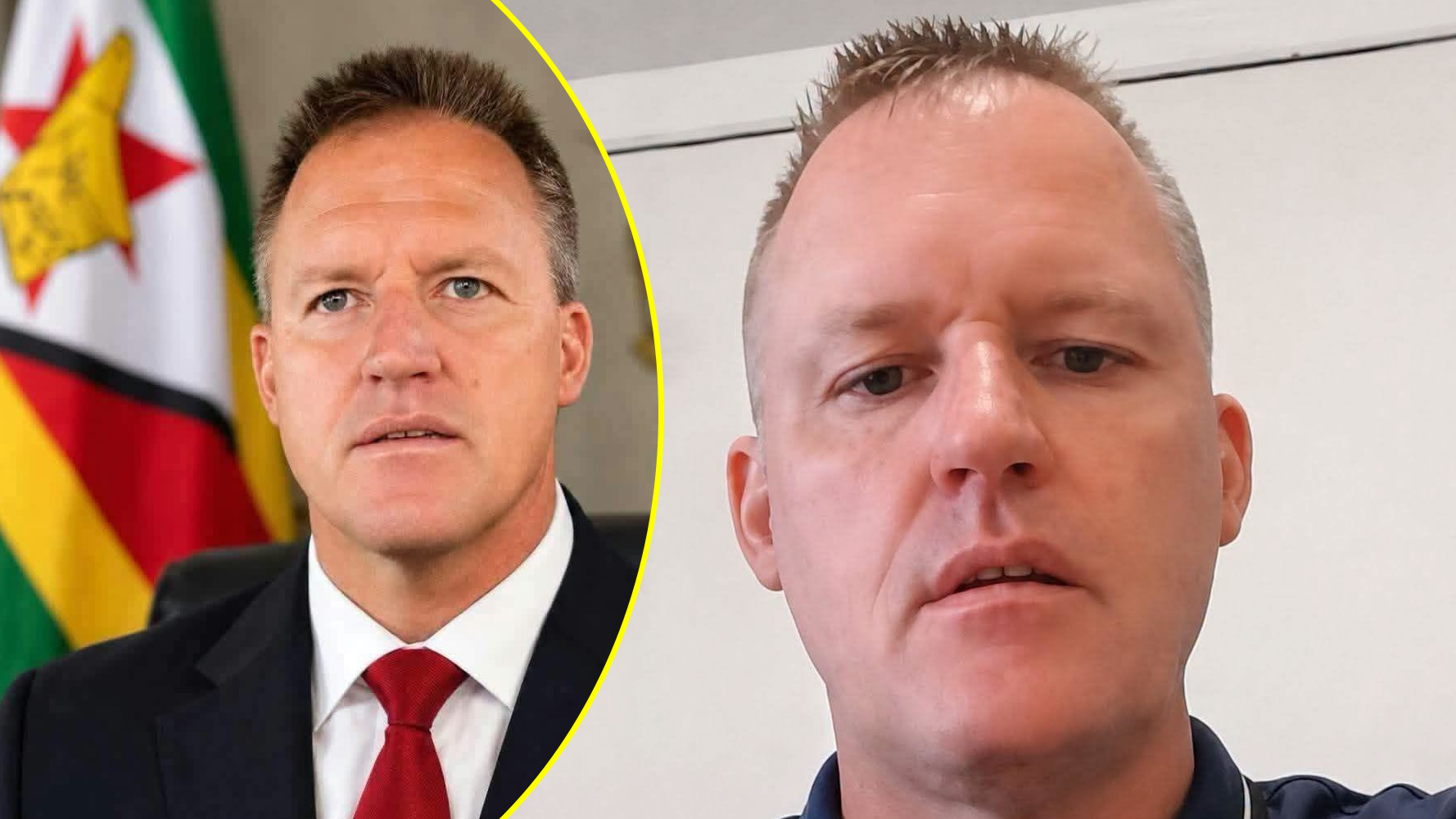
A Zimbabwean businessman and social-media personality has launched a new political movement from abroad, promising to build an alternative government and challenge President Emmerson Mnangagwa’s hold on power.
Brett Holley, widely known online as Brett “Muvet”, says he wants to establish a Government in Exile made up of Zimbabweans living outside the country. The proposed structure would organise supporters, prepare people for public office and develop plans for a future administration in Zimbabwe.
His movement, Varanda VeZimbabwe, or VVZ, means Servants of Zimbabwe. Holley says it was created to improve the lives of ordinary citizens and to offer a different style of leadership at a time when Zimbabwe’s opposition is divided and the country’s political system has become harder to challenge.
Holley has been building his public profile through political commentary on Facebook, YouTube and X. His videos are delivered largely in Shona, the language spoken by most Zimbabweans, and have attracted an online following of several thousand people. He is now seeking to turn that audience into a political organisation with offices, staff, fundraising networks and representatives in Zimbabwe and abroad.
The plan comes as the country faces a major change to its electoral system. Constitutional Amendment No. 3, which was signed into law in July 2026, extended the terms of the president, Parliament and local authorities from five years to seven years. It also replaced the direct election of the president with a system in which the president would be chosen by a joint sitting of Parliament.
The amendment applies to the current political cycle, meaning the next general election is expected in 2030 rather than 2028. The changes have been challenged by liberation-war veterans and civic activists, who argue that the constitutional safeguards were bypassed. Six veterans launched a court challenge in February, saying the proposed changes would prolong Mnangagwa’s time in office and should have been put to a referendum.
The constitutional dispute has added urgency to Holley’s message. He has described Zimbabwe’s political space as closed and says the usual routes into politics are no longer enough to bring about change. His answer is to organise Zimbabweans in the diaspora, where many citizens who left the country live and work, and use those networks to prepare for a future transfer of power.
Under his proposal, the Government in Exile would have an office, employees and training programmes. Holley has also spoken about training people in government and security-related areas. The movement plans representative offices in South Africa, the United Kingdom, the United States, Australia and Botswana, countries where large Zimbabwean communities have settled.
He has appealed to those communities for financial support, saying that offices, outreach programmes and leadership structures require money. The movement is being built without the established party machinery available to Zanu PF, which has ruled Zimbabwe for more than four decades and has a deep presence in Parliament, local government and communities across the country.
Holley’s message is based on the daily problems faced by ordinary Zimbabweans. He points to shortages of clean drinking water and medicine in hospitals, poor roads, inadequate classrooms, unemployment and a lack of economic opportunities. He has questioned why political leaders can live in large houses, drive expensive vehicles and travel in business class while many citizens struggle to obtain basic services.
He says his own lifestyle is modest. He describes himself as a man with a small house and an average car who still cleans his own home. He also says he has rejected offers of money and gifts because he does not want his political project to become a route to personal wealth.
“I am fighting so that other Zimbabweans can have the life that I have,” he says.
Holley has also linked the movement to the future of his family. He says his ambition is not driven by personal power, but by the example he wants to leave for his son.
“I want my son to know that his father stood for what is right,” he says.
Before launching VVZ, Holley published a self-published book titled “How to Fix Zimbabwe”. The book sets out a plan to restructure 18 government ministries, deal with 25 everyday national problems and create what he describes as a citizen-driven political movement. Its publication placed Holley’s policy ideas in the public domain before he announced the party, giving his political campaign a programme to present alongside his online profile.
His public identity is closely tied to the name “Muvet”. The name is a stylised form of the Shona word “muvheti”, a colloquial term for a white person. Holley’s use of Shona and his presentation of himself as a servant rather than a traditional political leader have made race an unavoidable part of the public discussion around his movement.
Zimbabwe’s history remains deeply shaped by race, from white minority rule in Rhodesia and the liberation war to the land reform programme of the 2000s. A white Zimbabwean now launching a political party aimed at governing the country faces a different kind of scrutiny from the black opposition leaders who have dominated national politics since independence.
Holley has tried to address that issue by presenting himself as a Zimbabwean who serves ordinary people rather than as a foreign figure imposing himself on the country. His use of Shona has helped him speak directly to a wider audience, but it has also placed his claims of belonging under close examination.
The political opening he sees has been widened by the collapse of the Citizens Coalition for Change. Nelson Chamisa won nearly two million votes in the 2023 presidential election, but the party later fractured. Chamisa resigned in January 2024, saying the CCC had been “contaminated” and “hijacked” by the government. Several MPs subsequently lost their seats, leaving opposition supporters without a single organisation around which to rally.
The Zimbabwe Electoral Commission declared Mnangagwa the winner of the 2023 presidential election with 2,350,711 votes, while Chamisa received 1,967,343. Zanu PF also won 175 of the 280 National Assembly seats, compared with 104 for the CCC. The opposition rejected the result, while election observers raised concerns about the conduct of the poll, including restrictions on rallies, voting delays and the use of state media.
Holley is not the first Zimbabwean to move from online protest into national politics. In 2016, pastor Evan Mawarire’s #ThisFlag campaign began with a video recorded in front of the Zimbabwean flag. A nationwide stay-away called by the movement later shut businesses and schools. Jonathan Moyo, then a government minister, dismissed the campaign as a “pastor’s fart in the corridors of power”.
The movement has not yet fielded candidates or demonstrated a nationwide electoral base. Its strength so far lies in Holley’s online following, his message of servant leadership, his policy book and his willingness to speak about the hardships that shape everyday life in Zimbabwe.
For now, Brett Muvet Holley is asking Zimbabweans to believe that an outsider with a phone, a political programme and a diaspora network can build the organisation needed to challenge a ruling party that has controlled the country for generations. His stated destination is the presidency!