


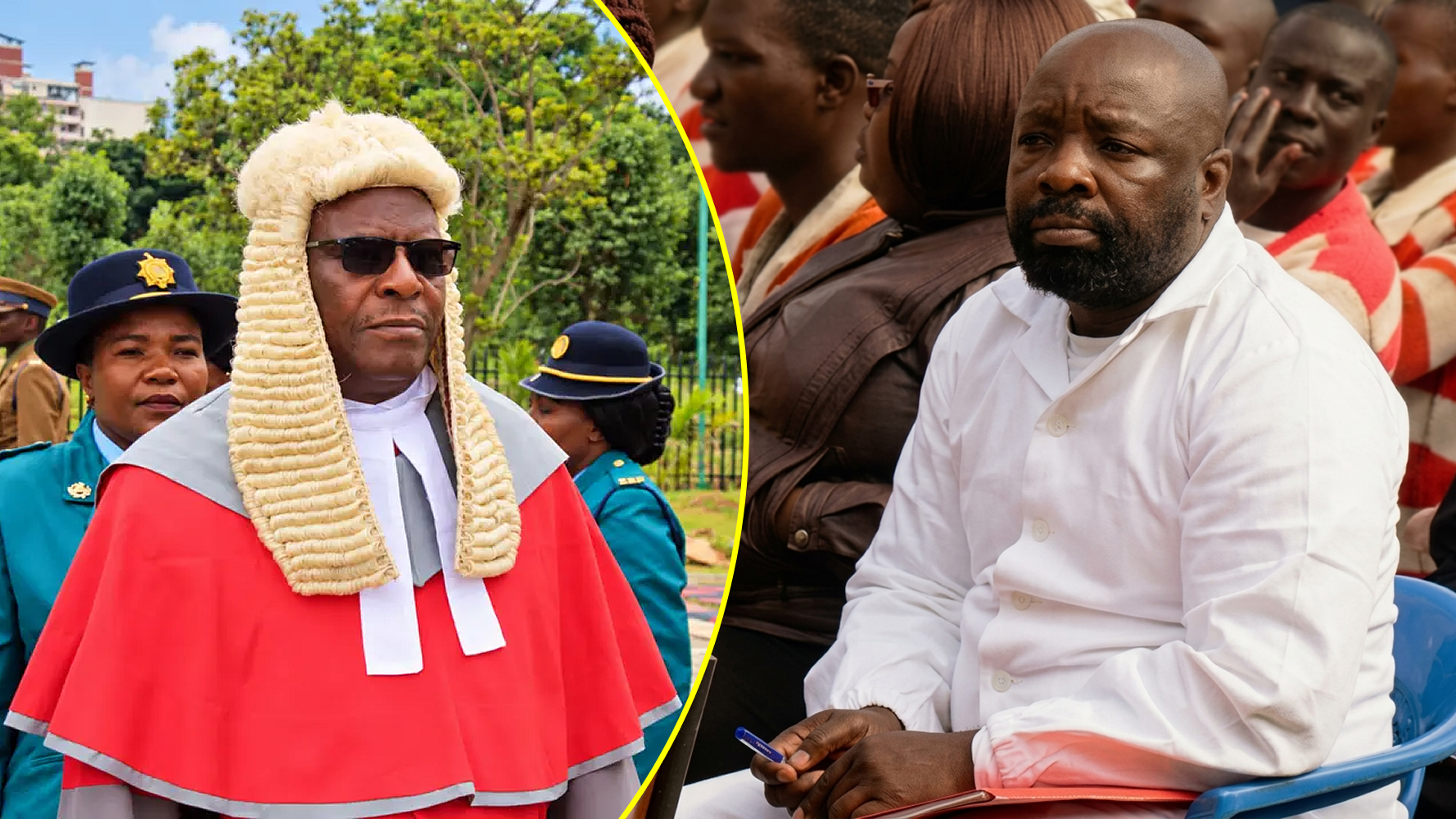
HARARE – Supreme Court judge George Mutandwa Chiweshe is facing a Judicial Service Commission disciplinary hearing after former Bikita West MP Munyaradzi Kereke accused him of misconduct, financial dealings and improper relationships with two of his wives while he was serving a prison sentence.
The hearing is scheduled for 9 September 2026, but Chiweshe has approached the High Court seeking to stop the proceedings. He argues that the disciplinary committee has expanded the investigation beyond the issues originally referred to it by Chief Justice Elizabeth Gwaunza.
Chiweshe filed an urgent chamber application on 4 September, together with a separate review application. He wants the High Court to preserve the current position and suspend the disciplinary process until the court decides whether the inquiry has been given a lawful scope and whether he was allowed enough time to respond to the allegations.
The dispute arises from a 10-page formal report dated 18 June 2026 and addressed to President Emmerson Mnangagwa and the Chief Justice. Kereke titled the document a report of “gross misconduct and criminal abuse of duty”. He named Chiweshe and fellow Supreme Court judges Samuel Kudya and Tendai Uchena, who sat with Chiweshe on the appeal arising from his criminal conviction.
Only Chiweshe was referred for a disciplinary investigation. The papers before the High Court indicate that Kudya and Uchena were cleared, although they do not set out the reasons for that decision or explain what became of the allegations against them.
Kereke says he waited until after his release to file the complaint “out of strategic necessity”, arguing that he needed to remain safe while he was still in prison. He completed his sentence on 8 January 2026, after the Supreme Court dismissed his appeal on 31 May 2024.
The three judges had unanimously upheld his conviction and sentence for raping his 14-year-old niece. Kereke was sentenced to an effective 10 years in prison. His case became one of Zimbabwe’s most closely watched criminal matters after the victim’s grandfather, Francis Maramwidze, and lawyer Charles Warara pursued a private prosecution when the then Prosecutor-General, Johannes Tomana, declined to prosecute, citing insufficient evidence.
The successful private prosecution established an important precedent in Zimbabwe’s criminal justice system. Kereke was later granted bail pending appeal in August 2021, but the Supreme Court rejected his appeal in full in May 2024 and ordered him back to prison. A month later, he received a presidential amnesty from Mnangagwa under a remission category intended for open-prison inmates who had demonstrated good behaviour.
Kereke is also facing a separate fraud case involving allegations that he and the suspended chief executive of the Harare Municipal Medical Aid Society defrauded the organisation of US$400,000. He was arrested in November 2023 and later applied for removal from remand in that matter.
Claims of money and a gold mine
The disciplinary inquiry originally authorised by the Chief Justice focused on four issues: a motor vehicle transaction, requests for or receipt of money, the provision of company documents and discussions about a gold-mining interest.
On 30 July, Gwaunza wrote to Justice Anne Mary Gowora, who chairs the disciplinary committee, saying she had “formed the opinion that the alleged conduct may have violated section 7(1) of the Judicial Service (Code of Ethics) Regulations, 2012”.
The original terms of reference concerned whether Chiweshe had maintained private contact or conducted financial or business dealings with Kereke or his associates while Kereke’s criminal appeal was pending before the Supreme Court.
The committee was initially made up of Gowora, Justice Benjamin Hlatshwayo and Justice Faith Mushure. On 4 August, Justice Bharat Patel replaced Mushure. The Chief Justice said the committee’s terms of reference and mandate remained unchanged.
Kereke’s account goes beyond the four financial and business matters. He alleges that Chiweshe told him the three appeal judges believed that his conviction was wrongful, but wanted to know what he would offer in return for being released from the case.
In the words attributed to Chiweshe in the complaint: “Justices of Appeal Tendai Uchena, Samuel Kudya and myself we have looked at your appeal and have all agreed… that your conviction by the lower courts was wrongful. But my colleagues and I we are saying to you Kereke what are you going to do for us so we take you off the hook?”
Kereke says he initially refused the demand. He alleges that in 2022 Chiweshe sent an old Mercedes-Benz to his home in Glen Lorne and instructed him to sell it and hand over US$25,000. He says the judge warned him, in Shona, that refusing to help sell the vehicle would count against him “pa case yako”, meaning “on your case”.
Kereke says he then asked his cousin, Tinashe Mureyani, to look for a buyer. The vehicle was eventually sold for US$24,000, paid in instalments, and the money was passed on to Chiweshe, according to the complaint.
He further alleges that he handed Chiweshe US$4,000 in cash during a series of meetings arranged at Highland Park Shopping Centre. On one occasion, Kereke says, he was accompanied by an employee, Oliver Ruwoko.
The complaint also alleges that Chiweshe later raised the issue of a gold mine and wanted it registered through a special-purpose company. Kereke says he was asked to make a final payment of US$20,000 for each of the three appeal judges.
A company called Flickstone Investments (Private) Limited is listed in the complaint. Kereke says Chiweshe personally gave him the company’s registration documents, certified by a commissioner of oaths, as part of the proposed arrangement for the mining interest.
Chiweshe accepts that a vehicle sale took place in 2022 and that there were discussions about a possible gold claim and company documents. He denies bribery, extortion, corrupt purpose and conspiracy.
His affidavit says the disciplinary record contains material that appears to contradict or fail to corroborate important parts of Kereke’s account. It refers to evidence attributed to Mureyani, Ruwoko, law professor Lovemore Madhuku, Kereke’s two wives and his cousin, but does not disclose the substance of those accounts in the sections before the court.
Allegations involving Kereke’s wives
The most personal allegations in the complaint concern Kereke’s two wives, Patience Taruvinga Muswapadare and Isabel Chirapura.
Kereke alleges that Chiweshe, who was then Judge President of the High Court, repeatedly summoned Muswapadare to his offices while Kereke was in prison. He claims that the relationship “eventually broke my marriage”.
He makes a similar allegation about Chirapura, saying that Chiweshe summoned her and would “allegedly offer… whisky and other illicit drinks well into the night”. The complaint says an “intimate bond” between Chiweshe and Chirapura also placed strain on that relationship.
The claims involving the two women were not part of the four matters listed in the Chief Justice’s original referral. Chiweshe’s court challenge therefore focuses heavily on the committee’s authority to investigate them. He says the allegations were added later without a fresh referral from the Chief Justice.
A notice served on Chiweshe on 26 August contained six allegations instead of four. It added the claims involving Kereke’s wives and another allegation concerning his passport. Kereke says Chiweshe had the passport removed from his home and kept at the High Court without a court order, ostensibly to prevent him from leaving the country. He says it was later released, apparently in error, to lawyers who had already been terminated.
The notice also widened the relevant period. Instead of concentrating on the time when Kereke’s criminal appeal was before the Supreme Court, it included periods when he had matters pending before the High Court.
Chiweshe says these are new ethical accusations and cannot be introduced into the existing inquiry without a separate referral. He also objects to the time allowed for his response. He was given seven calendar days, effectively five working days, to answer a 166-page record.
His lawyer, Advocate Lewis Uriri, requested an extension until 2 October, or 21 days after full particulars had been supplied. He also asked that the 9 September hearing be postponed.
JSC secretary Joseph Mundondo replied that the hearing would deal with preliminary and procedural issues, including the applicable rules and the timetable. The extension request, he said, would be considered at that hearing.
Chiweshe said he was not seeking immunity from disciplinary accountability. “I seek no immunity from disciplinary accountability and invite no finding on Dr Munyaradzi Kereke’s credibility or the merits,” he said.
A judge with a long military and judicial career
The complaint has placed renewed attention on Chiweshe’s unusually long public career. Born on 5 June 1953, he studied law at the University of Rhodesia before leaving the country in 1975 to join the Zimbabwe African National Liberation Army. He trained in Mozambique and used the nom de guerre “Yasser Arafat”.
During the liberation war, he served as a political commissar and deputised Constantine Dominic Guvheya Nyikadzino Chiwenga, who later became commander of the Zimbabwe National Army. Chiweshe also commanded fighters including the late Brigadier General Charles Tigwe Gumbo. Some sections of the media actual claim that Chiweshe has been General Chiwenga’s ally from the time they worked together during the liberation war.
After independence, he joined the Ministry of Justice as a prosecutor in 1980 and became a magistrate three years later. In April 1983, he joined the army as a major. He rose through the ranks and became Brigadier General and Judge Advocate General in 1996.
He retired from the army in April 2001 after President Robert Mugabe appointed him to the bench. In September 2004, he became chairman of the Delimitation Commission. The following year, he was appointed chairman of the Zimbabwe Electoral Commission, which supervises and co-ordinates national elections.
Chiweshe later became a High Court judge and rose to become Judge President. Then this year, Mnangagwa appointed him to the Supreme Court.
The JSC, which is handling the disciplinary process, is an independent constitutional body established under section 189 of the 2013 Constitution. Its stated responsibilities include advising the government on the judiciary and the administration of justice, while its core values include independence, fairness, accountability and transparency.
The immediate question before the High Court is not whether the allegations should be upheld, but whether the JSC committee can examine all six issues listed in the later notice and whether Chiweshe was given a fair timetable to answer them. The judge is asking the court to halt the hearing until those questions are resolved.
The JSC, meanwhile, maintains that the scheduled sitting can address the preliminary objections and procedural questions. The outcome of the High Court application will determine whether the disciplinary committee proceeds on 9 September, is postponed, or is required to narrow its investigation to the four issues originally referred by the Chief Justice.